Welcome to the final module of your course, Designing Your Personal Performance System. Over the past nine modules, we've explored the psychological pillars of high performance: motivation, goal setting, habits, mindset, focus, decision-making, and resilience. In our last lesson, you created a personal recovery plan, establishing the foundation of rest and stress management that is essential for sustained effort.
Now, we begin the capstone project of this course: synthesizing all you've learned into a single, cohesive system tailored to you. This module is where the theory becomes a concrete plan of action to help you achieve the "immense results" you're aiming for.
Our journey begins with the most critical first step. The learning outcome for this lesson is to select a primary long-term goal to serve as the foundation for your performance system. This goal will act as your "north star," providing the direction and purpose for every other part of the system we will build together.
1. The Power of a Single Priority
A common mistake people make is trying to pursue too many goals at once. They have a list of "priorities," but this diffusion of effort often leads to feeling busy but not making meaningful progress on what matters most. To achieve exceptional results, you must channel your energy with singular focus.
Strategy, in its essence, is the prioritization of limited resources (your time, energy, focus) against unlimited options. The very origin of the word "priority" implies that there can only be one first thing.
Alex Hormozi drives this point home in his video, 'You're Setting Goals Wrong.' He uses powerful analogies to explain why being busy on too many things is counterproductive and how true progress comes from singular focus.
Watch the first three and a half minutes of the video (00:00 - 03:31). Pay close attention to: The magnifying glass and party analogies for concentrating effort. His definition of strategy as 'the prioritization of limited resources against unlimited options.' The crucial distinction between 'priority' (one first thing) and 'priorities' (a list that neuters the term's power).
As Hormozi explains, spreading your effort across multiple "parties" means none of them gain the critical mass to succeed. Your performance system needs a single destination to be effective. All the habits, focus techniques, and resilience strategies you've learned are tools, but they are most powerful when aimed at a single, well-defined target.
2. From Values to Mission: Finding Your "Why"
If you are to commit to a single long-term goal, it must be the right one—a goal that is deeply meaningful and intrinsically motivating. The most resilient and powerful goals are not just things you want to achieve; they are expressions of who you are and what you stand for.
This means we don't start by picking a goal from thin air. We start by looking inward, at our core values.
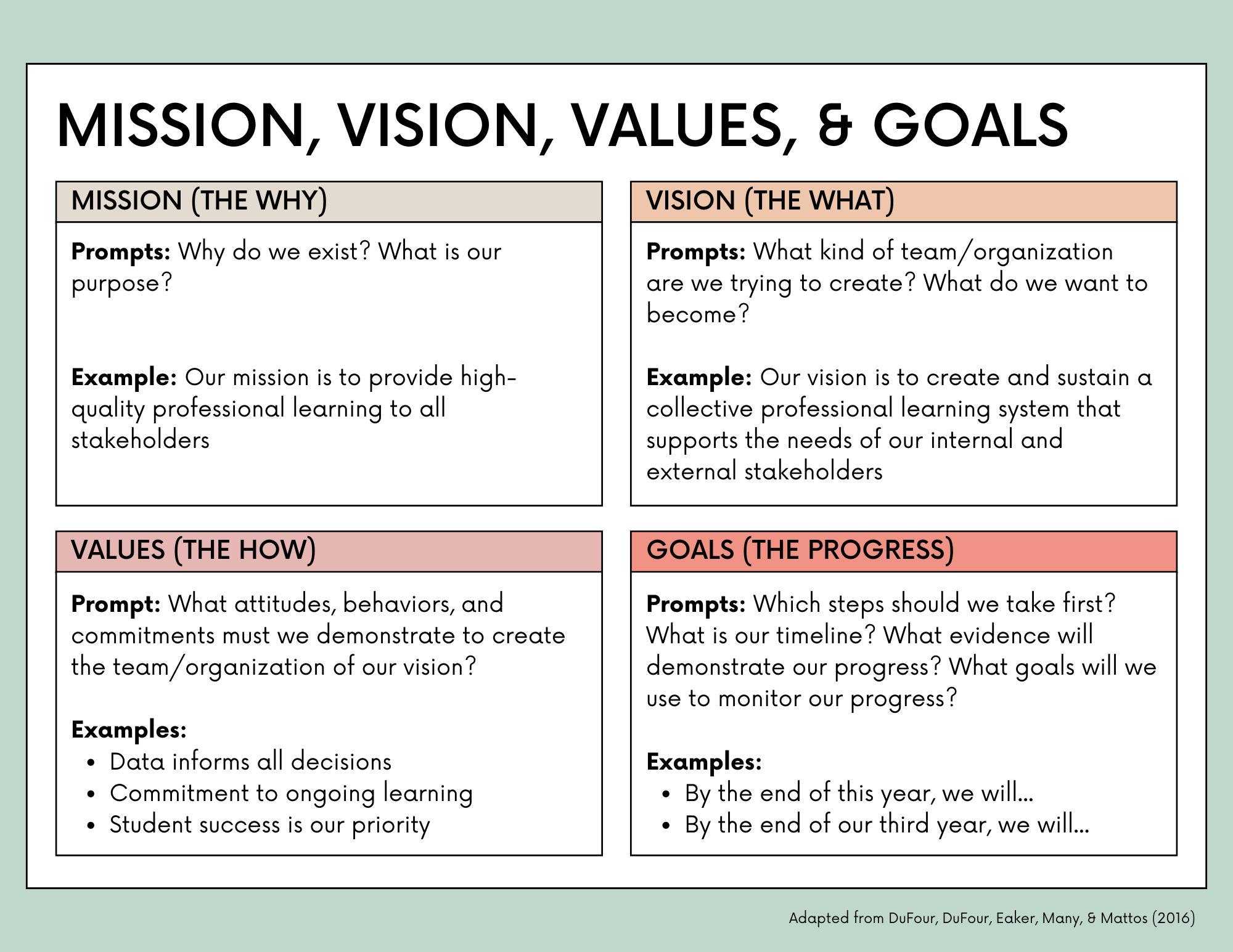
Step 1: Uncover Your Core Values
Core values are your fundamental beliefs and the guiding principles for your life. They define what is most important to you and serve as an internal compass for your decisions. A goal aligned with your values will feel purposeful, and you'll be more motivated to persevere through challenges.
How To Map Out Your Core Values To Create The Life You Want
The article 'How To Map Out Your Core Values To Create The Life You Want' provides an excellent, structured process for this self-reflection.
Please read the sections 'What are core values?', 'How to map out your values', and 'Set value-driven goals'. The core of the exercise is in the 'How to map out your values' section. Follow its steps: Reflect and Brain-dump: Think about moments you felt most proud, happy, or fulfilled. What were you doing? What was important about those moments? Identify Resonant Values: From your reflections, pull out the underlying values (e.g., achievement, connection, growth, creativity). Narrow Your List: The article suggests a tally-mark method to compare values against each other and identify your top 5. This forces you to prioritize.
Take a few minutes now to follow that process. In a notebook or a document, complete the value-identification exercise. At the end, you should have a list of your top 5 core values. This is the bedrock of your performance system.
Step 2: Formulate a Personal Mission
With your core values identified, you can now articulate your overarching purpose or "why." A personal mission statement translates your values into a short, clear declaration of your direction and purpose.
How to Build Your Personal Mission Statement
The article 'How to Build Your Personal Mission Statement' explains how to bridge the gap between your values and a guiding mission.
Read the sections 'What Is a Personal Mission Statement?', 'How to Create Your Personal Mission Statement', and 'Step 4: Draft Your Statement'. Focus on the three core questions a mission statement answers: 'Who am I?', 'What do I value?', and 'Where am I going?'. Then, use the provided structure to draft a preliminary mission statement: 'My mission is to [what you do] for [who or what you serve] in order to [the impact you want].'
This mission statement isn't your final, specific goal. It's the qualitative direction—the "why" that will guide the selection of your "what."
3. Brainstorming and Selecting Your Primary Goal
You now have your compass (values) and a sense of direction (mission). It's time to identify a concrete destination—your primary long-term goal. This should be a significant goal that might take 5-10 years to accomplish.
Step 1: Generate Possibilities
Let's open up your imagination. Don't limit yourself yet. The goal here is to explore what a fulfilling future could look like for you.
How To Find Your Long-Term Goals
In his video 'How To Find Your Long-Term Goals,' productivity expert Carl Pullein offers a simple yet powerful framework for brainstorming.
Watch the segment from 04:57 to 09:25. Pullein outlines five key questions to spark your imagination. As you watch, open a new note and jot down answers to each: What do I want to do? (career, hobbies, skills) Who do I want to be? (identity, character) What do I want to see? (experiences, travel) What do I want to have? (material things, relationships) Where do I want to go? (places to live, explore)
After this brainstorming exercise, you should have a list of several potential long-term goals.
Step 2: Select Your Priority
Now, you must choose one. This is the most important decision in this process. Refer back to your list of brainstormed goals. To select your single primary goal, use the following two filters:
- The Alignment Filter: Read your list of core values and your personal mission statement. Which of the goals on your list is the strongest and most direct expression of your values and mission? Cross out any that feel misaligned.
- The Leverage Filter: Look at the remaining goals. Ask yourself the question we implicitly took from Alex Hormozi's video: "If I had a magic wand and could accomplish only ONE of these things with 100% certainty in the next 5-10 years, which one would get me the furthest or make all the others easier to achieve?"
The goal that best satisfies both of these filters is your primary long-term goal.
Your Task: Define Your Foundational Goal
You have done the reflective work. Now, it's time to formalize your choice. In your notebook or a new document, clearly lay out the foundation of your performance system.
My Performance System Foundation
1. My Top 5 Core Values:
[Value 1][Value 2][Value 3][Value 4][Value 5]
2. My Personal Mission Statement:
[Your drafted mission statement, e.g., "My mission is to use my analytical skills to build innovative systems that help people achieve their full potential."]
3. My Primary Long-Term Goal (5-10 Year Horizon):
[Your single, specific, long-term goal, e.g., "To build and scale a technology company that reaches 1 million users," or "To become a published author and recognized expert in the field of human performance."]
4. Justification:
[Write 1-2 sentences explaining why this goal is your priority. Example: "This goal directly aligns with my core values of 'Impact' and 'Growth'. Achieving it will provide the skills and resources that would make pursuing my other aspirations significantly easier."]
Take about 10 minutes to complete this. The clarity you gain from this exercise will be invaluable.
Conclusion
Congratulations on completing this foundational lesson. You have done the deep, reflective work required to set a direction that is both ambitious and authentic.
Key Takeaways:
- To achieve immense results, you must focus your efforts on a single primary goal.
- The most powerful goals are not arbitrary but are grounded in your core values and a sense of personal mission.
- A practical process for finding your goal is to first uncover your values, then draft a mission, brainstorm possibilities, and finally select the one goal that offers the most leverage and alignment.
Preview of the Next Lesson:
Having a "north star" is the first step. But a 10-year goal can feel intimidating and abstract. In our next lesson, we will begin the process of making it actionable. You will learn to structure the goal into a hierarchy of outcome, performance, and process goals, creating a clear roadmap from where you are today to where you want to be.