Hello! Welcome back to our study of Order Blocks.
In the previous lesson, you learned the crucial skill of identifying bullish and bearish order blocks on a price chart. We established that an order block is the last opposing candle before a strong, impulsive move (displacement), and that this displacement validates the zone as an area of significant institutional interest.
Today, we answer the question we finished with last time: what happens after an order block is formed? This brings us to the core of this lesson and our learning outcome: to describe order block mitigation and how price interacts with these zones. Understanding mitigation is what begins to transform a simple colored box on your chart into a high-probability area for a potential trade.
1. What is Order Block Mitigation? The "Why"
Once smart money initiates a major move from an order block, the story isn't over. Due to the sheer size of their positions, they often cannot get all their orders filled in that initial push. They need to bring price back to their point of origin to "mitigate" their position—that is, to fill remaining orders or manage their overall exposure at a favorable price.
This return trip is what we call mitigation.
Master ICT Order Block Strategy for Prop Firm Success
For a concise definition, let's look at the 'Master ICT Order Block Strategy' guide by Phidias Propfirm. It clearly defines mitigation in the context of other key order block concepts.
First, find the summary table in the 'Order Block Essentials Summary' section and look at the row for 'Mitigation'. Then, read the section titled 'Order Block Mitigation Patterns' for a more detailed explanation of the institutional reasoning behind it.
As the resource states, mitigation is the return of price to the order block zone. The institutional logic is simple: if they bought aggressively, creating a bullish order block, they want to buy more if price returns to that same cheap level. If they sold aggressively, they will want to sell more if price rallies back to that expensive level. Our job as retail traders is to identify these zones and anticipate this return.

2. How Price Interacts with an Order Block: The "How"
Now that we understand why price returns to an order block, we need to analyze how it interacts with the zone. This interaction isn't always uniform.
The article from Phidias Propfirm you just read introduced two key patterns:
- Partial Mitigation: Price only needs to touch the edge of the order block or enter it slightly before reversing. This often signals a very sensitive level and an aggressive continuation of the original move.
- Full Mitigation: Price trades through the entire range of the order block, from its entry point (the high of a bullish OB) to its exit point (the low of a bullish OB).
This distinction is important, but it also raises a practical question: if price can react anywhere from the edge to the very end of the zone, how can we refine our point of interest? This is where a key ICT concept comes into play.
3. The Mean Threshold: An Order Block's Center of Gravity
Within the range of an order block candle, the most important level is its equilibrium point, or 50% level. ICT calls this the Mean Threshold. Think of it as the center of gravity for the order block. While price can react anywhere in the zone, it has a particular affinity for this halfway point.
Consequent Encroachment & Mean Threshold – ICT Trading
To understand this crucial concept, we will turn to the article 'Consequent Encroachment & Mean Threshold' from WritoFinance.
Read the sections that define 'Mean Threshold'. Pay close attention to how it is identified as the 50% level of an Order Block. Also, read the sections on 'Trading Mean Threshold' and the FAQ 'How to mark mean threshold of an order block?' to understand its practical application and how to find it using the Fibonacci tool.
As you've just read, the process to find this critical level is straightforward:
- Identify a valid order block (as you learned in the previous lesson).
- Select your Fibonacci tool.
- For a bullish order block (a down-candle), draw the Fibonacci tool from the candle's high to its low.
- For a bearish order block (an up-candle), draw the Fibonacci tool from the candle's low to its high.
- Mark the 0.5 (or 50%) level. This is the Mean Threshold.
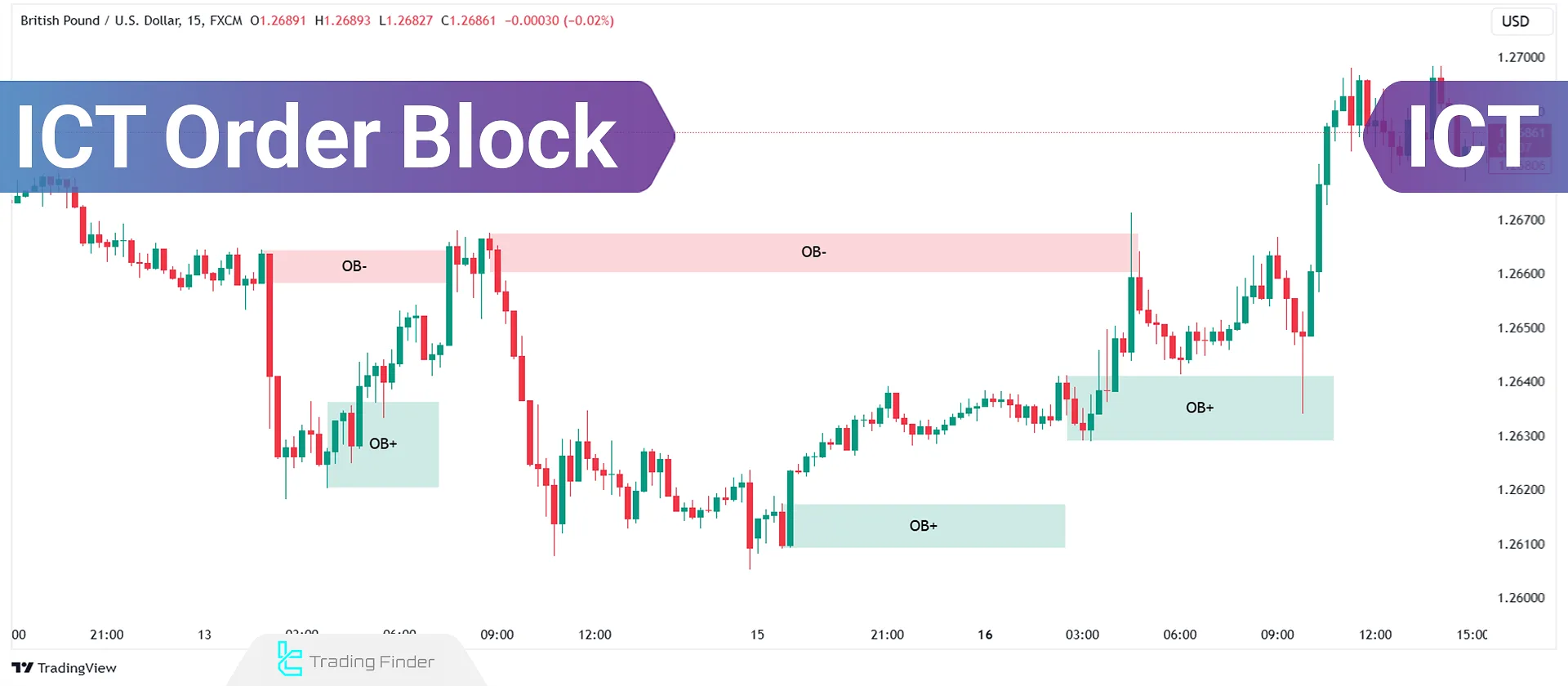
By identifying the Mean Threshold, you are pinpointing the equilibrium of the institutional action. This is often the exact level institutions are defending or re-accumulating at, making it a highly precise point of interest for a potential trade entry.
Conclusion
Today you've added a critical layer to your understanding of order blocks. You've moved beyond simply identifying them to understanding the dynamic process of mitigation.
Key Takeaways:
- Mitigation is the return of price to a previously formed order block, driven by institutions needing to fill remaining orders.
- Price can partially mitigate (touching the edge) or fully mitigate (trading through the whole block).
- The Mean Threshold is the 50% equilibrium level of an order block's candle. It is a highly sensitive level where price frequently reacts.
- You can use the Fibonacci tool to precisely identify the Mean Threshold, giving you a more refined point of interest than the entire order block zone.
Preview of the Next Lesson:
We've now described what should happen when price returns to an order block: it should respect the zone (and particularly its Mean Threshold) and continue in the original direction. But what happens when it doesn't? In our next lesson, we will "Distinguish between valid and invalidated order blocks based on price delivery." We'll explore what it means when price disrespects an order block and slices right through it, and how this price action itself gives us valuable information about future market direction.