In our previous lesson, we established a framework for defining service excellence by linking your brand's goals to specific, trainable associate behaviors. This "standard of excellence" is the destination for your training program. Now, we'll draw the map to get there.
This lesson will outline the core skills required for each stage of the in-store customer journey. By breaking down a customer's visit into distinct phases and mapping the necessary skills to each one, you'll have a clear, logical structure for the training modules you need to build.
Understanding the In-Store Customer Journey
Before you can train your team, you need a shared understanding of the path a customer takes inside your store. This path is often called the "customer journey." Visualizing this journey helps identify the critical moments—or "touchpoints"—where an associate's actions can make or break the experience.
Companies often create detailed maps to visualize this process. The example below shows a journey map for Starbucks, illustrating the stages from a customer first hearing about the brand to becoming a loyal regular.
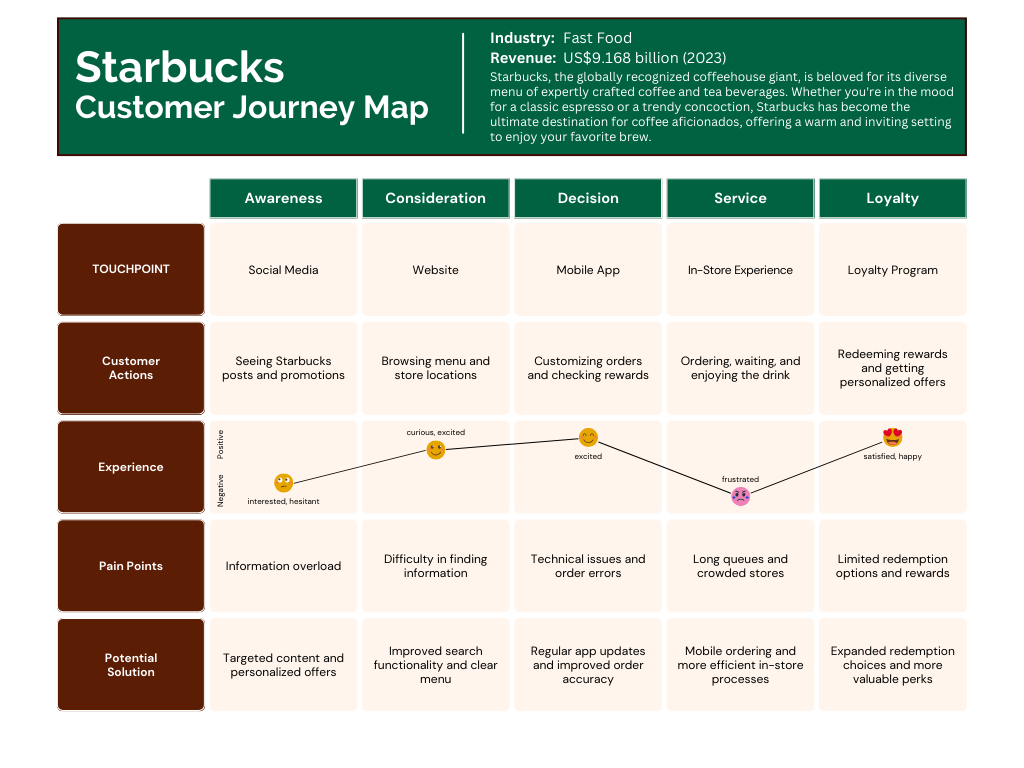
For your in-store retail team, we can simplify this into three core phases. An article from BSPK, a retail solutions company, provides a clear and concise model.
This article breaks down the in-store experience into a simple, three-part structure. This will serve as the backbone for organizing your training content.
Focus on the section Enhancing the Store Customer Journey. The author identifies three distinct phases of the in-store journey: Entry and Engagement, Product Exploration, and Checkout and Departure. As you read, think about how these stages play out in your own retail environment.
Now that we have our three stages, let's identify the specific associate skills needed to excel at each one.
Stage 1: Entry and Engagement — The First Impression
The moment a customer walks through the door is the most critical part of the journey. A positive initial interaction makes a customer feel welcomed and relaxed, making them more open to browsing and buying. The key skill for this stage is the greeting.
However, a great greeting is more than just saying hello. It's about building immediate rapport. Two short videos offer a masterclass on how to train this crucial skill effectively.
First, watch this video from RETAILMavens to understand the psychology behind the greeting and what common phrases to avoid.
How to Greet Customers in Retail - Never Say This!
This video explains why certain greetings fail and provides a step-by-step process for a successful opening conversation.
Watch from the beginning of the video to understand why common greetings make customers defensive. Then, focus on the actionable steps: how to start a conversation by acknowledging, giving space, and using icebreakers, and the specific questions to avoid and what to say instead ("What brings you into the store today?").
Next, The Retail Doctor reinforces these ideas and emphasizes the importance of a positive, open attitude.
How to Greet A Customer In A Retail Store
This video provides further examples of effective and ineffective greetings, focusing on sincerity and tone.
Pay attention to the emphasis on adopting the right attitude before even speaking. The video also gives clear examples of what to say, like "Good morning," and what to avoid, like the generic "Can I help you?".
Key Training Points for Entry & Engagement:
- Skill: Proactive, sincere greeting.
- Behavior: Make eye contact and smile. Acknowledge every customer.
- Technique: Avoid closed-ended questions like "Can I help you?". Instead, use open-ended, rapport-building questions or a simple, warm "Good morning."
- Goal: Make the customer feel seen and welcomed, not pressured.
Stage 2: Product Exploration — Discovering the Solution
Once the customer is comfortable, the journey moves to its central purpose: finding a product. Here, the associate's role transforms from host to consultant. The goal is to understand the customer's needs and present products as the perfect solution.
The following skills are paramount in this stage.
Retail Customer Service Training: 14 Ideas, Plus Examples | ICSC
This article from ICSC provides a practical list of essential retail skills. We will focus on the ones most relevant to the product exploration phase.
Please read the following three sections: Listening and Empathizing: This reinforces the importance of active listening to understand the customer's true needs, not just what they initially ask for. Engaging with Customers: This provides techniques for interacting with customers who say they are "just looking." Understanding Features Versus Benefits: This is a critical sales skill. It teaches associates to connect a product's features (what it is) to its benefits (what it does for the customer).
Key Training Points for Product Exploration:
- Skills: Active listening, empathy, product knowledge, and benefit-oriented communication.
- Behavior: Ask open-ended questions to uncover needs.
- Technique: When a customer describes a problem or a goal, explain how a product's features provide the benefits that solve their problem. For example, "This jacket is made of Gore-Tex (feature), which means it will keep you completely dry during your commute (benefit)."

Stage 3: Checkout and Departure — The Final Impression
The final stage of the in-store journey is the checkout. This is your last chance to ensure the customer leaves on a high note. A smooth, efficient, and friendly closing can solidify a positive experience, while a clunky or impersonal one can sour it. This is also an opportunity to build on the sale.
Retail Customer Service Training: 14 Ideas, Plus Examples | ICSC
We return to the ICSC article to look at the skills needed to successfully conclude the customer's visit.
Please read the final two sections on this topic: Upselling and Add-Ons: This explains how to enhance the customer's purchase by suggesting relevant additional items. Closing a Sale: This focuses on making the final transaction feel like a natural continuation of the relationship, not a rushed, impersonal procedure.
The journey doesn't truly end when the customer leaves. The post-purchase phase includes everything that happens after the sale, such as returns, product support, and feedback. Skills for handling complaints and processing returns efficiently are vital here and will be covered in depth in a future module. For now, the focus is on a positive departure that encourages a return visit.
Key Training Points for Checkout & Departure:
- Skills: Efficiency, suggestive selling, and relationship closing.
- Behavior: Process the transaction smoothly. Use the information gathered during exploration to suggest relevant add-ons.
- Technique: End with a sincere thank you, using the customer's name if appropriate. Reinforce their purchase decision ("You're going to love that jacket").
Conclusion
By deconstructing the in-store experience into a journey, you can create a targeted and effective training plan. You now have a clear outline of the key skills your team needs at each crucial touchpoint.
Key Takeaways:
- The in-store customer journey can be broken down into three main stages: Entry & Engagement, Product Exploration, and Checkout & Departure.
- Entry requires the skill of a sincere and effective Greeting to build immediate rapport.
- Exploration relies on Active Listening and presenting Product Benefits, not just features, to guide the customer to the right solution.
- Checkout is about efficiency and a positive Closing, with opportunities for Upselling to enhance the sale.
In our next lesson, we will address a critical question: How do you know if your training is working? We will identify key performance indicators (KPIs) for customer service and explore methods for measuring them, giving you the tools to track your team's progress toward excellence.