Welcome to the third and final lesson of our foundational module. In our first two lessons, we defined what service excellence looks like and mapped the core skills your team needs across the entire in-store customer journey. We've set the standard. Now, we'll answer the crucial question: How do you know if you're meeting it?
This lesson will focus on identifying the Key Performance Indicators (KPIs) that measure the quality of your customer service. We will explore both direct customer feedback metrics and internal business metrics. Furthermore, we'll examine the practical methods you can use to gather this data, such as surveys and mystery shopping. Mastering this will allow you to track your team's performance, prove the value of your training, and make data-driven decisions to continually improve the customer experience.
What to Measure: Key Performance Indicators (KPIs)
To manage performance, you first need to measure it. In customer service, we use KPIs to translate the abstract concept of "good service" into concrete, trackable numbers. These indicators help you understand what's working and what isn't.
KPIs can be broadly categorized into two types: those that capture the customer's direct opinion and those that reflect the business impact of the service provided.
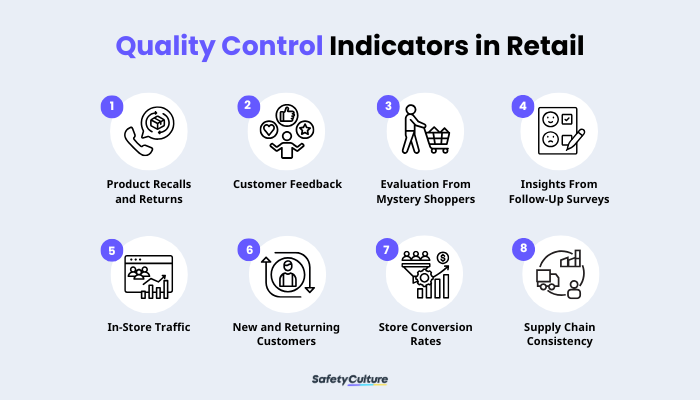
1. Customer-Facing Metrics: The Voice of the Customer
These metrics are derived directly from asking customers about their experience. A short video from Klaus, a quality assurance platform, provides an excellent overview of the most common metrics in this category.
Customer Service Quality Metrics That Actually Matter
This video clearly defines three of the most important customer-facing metrics: CSAT, NPS, and CES.
Please watch the following segments: The explanation of CSAT (Customer Satisfaction Score), which measures satisfaction with a specific interaction. The definition of NPS (Net Promoter Score), which measures overall loyalty and willingness to recommend your store. The overview of CES (Customer Effort Score), which measures how easy it was for the customer to get what they needed.
To summarize these crucial metrics:
- Customer Satisfaction Score (CSAT): A transactional metric asking "How satisfied were you with your experience today?". It gives you immediate feedback on a specific visit or interaction.
- Net Promoter Score (NPS): A relationship metric asking "How likely are you to recommend us?". It measures long-term loyalty.
- Customer Effort Score (CES): A process metric asking customers to rate the ease of their experience. A low-effort experience is a strong driver of loyalty.
2. Business-Oriented Metrics: The Impact on Performance
While customer opinions are vital, you also need to track how service quality affects business results. These metrics are often found in your sales and operational data and are powerful for demonstrating the return on investment (ROI) of your training program.
An article from TruRating, a customer feedback platform, details several of these practical, in-store metrics.
How to Measure Customer Service – Metrics & Tools | TruRating
This article explains several KPIs that directly link customer service to store performance.
Please read the section titled "Customer service metrics." Focus on these three metrics that are highly relevant for an in-store environment: Conversion Rate: The percentage of visitors who make a purchase. Good service directly boosts this number. Average Transaction Value (ATV): The average amount spent per transaction. Effective upselling and product recommendations by your team will increase ATV. First Response Time (FRT): In-store, this is how quickly an associate greets or assists a customer. This is something you can observe and measure directly.
By tracking both customer-facing metrics like CSAT and business-oriented metrics like Conversion Rate and ATV, you get a complete picture. You can see not only how customers feel but also how their feelings translate into tangible business outcomes.
How to Measure: Data Collection Methods
Now that we know what to measure, let's explore how to gather the data. As a leader, you have several tools at your disposal.
1. Surveys and Direct Feedback
Surveys are the most direct way to capture CSAT, NPS, and CES. As you'll see in the following reading, there are several ways to implement them in a retail setting.
How to Measure Client Satisfaction in Retail - The People In Retail Awards
This article from The People In Retail Awards outlines various methods for collecting customer feedback and analyzing data.
First, read the section on Customer surveys, paying attention to the different types like in-store surveys (using kiosks or QR codes) and post-purchase surveys (sent via email or SMS). Then, briefly review the section on Data analysis to see how you can use existing data like return rates and sales transactions as indirect measures of satisfaction.
Modern point-of-sale (POS) systems, as mentioned in the TruRating article, can even integrate a quick question at checkout, capturing feedback with very high response rates.
2. Observation and Evaluation
Some things can't be captured by a survey. Direct observation is critical for evaluating whether your team is performing the specific behaviors you've trained them on.
Mystery Shopping is a powerful technique where a trained, anonymous evaluator acts as a customer to provide a detailed, unbiased report on their experience.
How to Measure Client Satisfaction in Retail - The People In Retail Awards
We return to the same article to focus on this specific method.
Read the section on In-store observation and mystery shopping. Note what mystery shoppers typically look for, such as staff friendliness, product knowledge, and store cleanliness.
To make this concept more concrete, here is an example of what part of a mystery shopper's report might look like.

Finally, you can formalize your own observations. The video we watched earlier introduced a powerful concept for this: the Internal Quality Score (IQS).
Customer Service Quality Metrics That Actually Matter
Let's revisit the Klaus video to learn about a metric designed for managers.
Watch the segment explaining the Internal Quality Score (IQS). This is essentially a scorecard you create based on your own service standards. You can use it to review interactions and provide specific, consistent feedback to your team.
The IQS is a perfect tool for you as a leader. It allows you to define what "good" looks like—based on the standards of excellence we discussed in lesson one—and then measure your team's performance against that specific benchmark.
Conclusion
In this lesson, we've equipped you with the framework for measuring customer service excellence. You now have a toolkit of KPIs and methods to assess your team's performance and the impact of your training.
Key Takeaways:
- Key Performance Indicators (KPIs) are essential for tracking service quality. They fall into two main categories: customer-facing metrics (CSAT, NPS, CES) and business-oriented metrics (Conversion Rate, ATV).
- Measurement methods provide the data for your KPIs. These include direct customer feedback through surveys (in-store, post-purchase) and observational tools like mystery shopping and your own Internal Quality Score (IQS).
- By combining these different metrics and methods, you gain a holistic view of your service performance, enabling you to identify strengths and pinpoint areas for improvement.
You are now able to define, map, and measure service excellence. With this foundation in place, we are ready to move into the practical application: designing the training itself. In our next lesson, we will begin Module 2 by focusing on how to structure a training session for the first critical stage of the customer journey: initiating customer interactions.