Introduction
In our last lesson, we examined the midpoint, the structural pivot where the protagonist is forced to shift from a reactive to a proactive stance. This is where they stop simply responding to the conflict and begin to formulate and execute their own plan to win. Everything in the story's second half is driven by this new, proactive approach.
Today, we arrive at the culmination of that effort: the climax. This is not merely the biggest battle or most emotional moment; it is a precisely engineered sequence designed to resolve the story's central conflict. Our goal is to structure a climax as a sequence of: forced decision, decisive action, and irreversible outcome. We will break this mechanism down into its component parts to understand how it provides a logical and satisfying conclusion to the narrative's primary tension.
1. The Architectural Blueprint of a Climax
Before we zoom in on the core mechanism, it's useful to see the overall structure in which it operates. The climax is a multi-stage event, a sequence of beats that leads the protagonist to their final, defining moment.
A practical way to model this is through a series of narrative beats that build pressure methodically.
Achieving a Lasting Impact with Your Story's Climax
The article 'Achieving a Lasting Impact with Your Story's Climax' from The Novelry provides a clear, step-by-step framework for building a climax. This gives us a high-level blueprint for the entire sequence.
Please read the section titled 'How to structure a climax.' Focus on the six beats presented: 1. Realization dawns, 2. Preparing for battle, 3. Executing the plan, 4. Setback, 5. A final choice, and 6. All-or-nothing action.
As you can see, the climax is not a single event but a process. Let's formalize these steps into a logical flow:
- Realization & Preparation: The protagonist gains the final piece of knowledge needed and prepares their plan. This is the result of the proactive investigation they began at the midpoint.
- Execution: The protagonist puts their plan into motion.
- Setback / Twist: The plan fails or is complicated by an unforeseen event. This is a critical step; it invalidates the protagonist's prepared solution and strips them of their safety net.
- The Final Confrontation: The setback forces the protagonist into a direct, final confrontation with the opposing force. It is within this confrontation that our core mechanism—the decision-action-outcome sequence—is triggered.
The first three steps bring the protagonist to the threshold. The setback pushes them over it, leaving them with no plan and no easy way out. This is where the true test begins.
2. The Core Mechanism: Decision, Action, Outcome
The "final confrontation" is not a chaotic brawl. It is a structured test of the protagonist, built on a chain of causality. Let's dissect this core mechanism using a more granular, scene-level framework.
How to Write a Well-Structured Scene
While the previous resource gave us the macro-structure of the climax sequence, 'How to Write a Well-Structured Scene' by Savannah Gilbo gives us the micro-structure of the decision itself. We'll borrow its 'Commandments' of Crisis, Climax, and Resolution to define our three key components.
Please read the sections for 'Commandment #3: There needs to be a crisis moment,' 'Commandment #4: There needs to be a climax,' and 'Commandment #5: There needs to be a resolution.' We are applying these scene-level concepts to the specific, high-stakes scene of the story's climax.
This reading gives us precise, functional definitions for each part of our sequence.
Component 1: The Forced Decision (The Crisis)
This is the moment the setback has engineered. The protagonist is cornered and must make a choice. A structurally sound climactic decision has two properties:
- It's a true dilemma: As the resource explains, the choice should be between two equally weighted options—two "bads" (a "best bad choice") or two "goods" (sacrificing one for the other). If one option is clearly better, the choice is predictable and carries no weight.
- It's unavoidable: The protagonist cannot abstain or find a third option. The preceding plot events have eliminated all other paths.
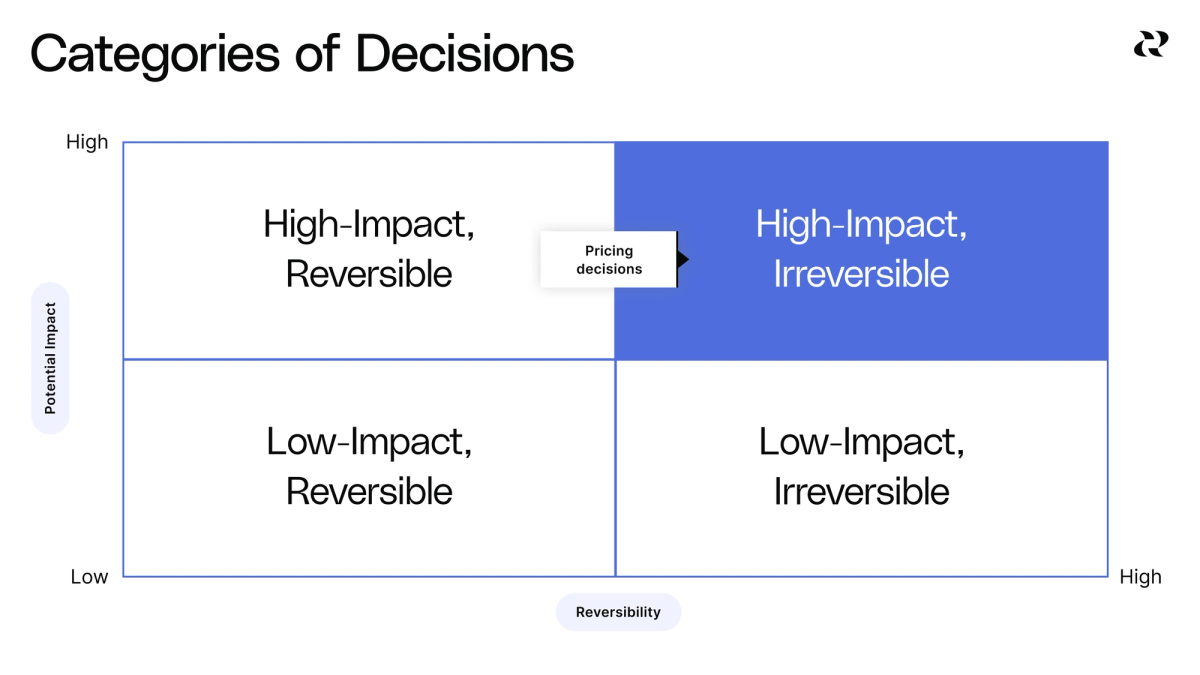
The decision must be high-impact and irreversible. There is no "undo" button.
Component 2: The Decisive Action (The Scene's Climax)
This is the protagonist acting on their choice. It is the physical manifestation of their decision. This action is "decisive" because it is what directly resolves the central conflict.
Critically, as the resource notes, this action must be taken by the protagonist. If a side character or a coincidental event resolves the conflict, the protagonist is denied agency, and the climax fails. The action is the proof of the protagonist's change (or failure to change) over the course of the story.
Component 3: The Irreversible Outcome (The Resolution)
This is the immediate, direct consequence of the decisive action.
- The bomb is disarmed... or it detonates.
- The villain is defeated... or they triumph.
- The relationship is saved... or it is irrevocably broken.
The word "irreversible" is key. The outcome must lock in the result of the climax, settling the central story question once and for all. This change of state provides the sense of finality and satisfaction that readers expect from a conclusion.
3. Deconstructing the Mechanism: Examples
Let's apply this three-part model to the examples provided in our first reading. This will allow us to see the abstract mechanism in a concrete context.
Achieving a Lasting Impact with Your Story's Climax
We will now return to the article 'Achieving a Lasting Impact with Your Story's Climax' to analyze its examples through the lens of our Decision -> Action -> Outcome model.
Please review the three examples provided: The Hunger Games, Heartburn, and Such a Fun Age. As you read the breakdown for each, try to identify the specific moments that correspond to the Forced Decision, Decisive Action, and Irreversible Outcome.
Let's perform a systematic breakdown of The Hunger Games example:
- Context: Katniss's plan to win with Peeta is shattered by the final Setback: the Gamemakers announce the rules have changed back and only one can survive.
- Forced Decision (Crisis): Katniss faces a choice between two "bads":
- Kill Peeta, obeying the Capitol's rules and sacrificing her own morality and love.
- Refuse to kill Peeta, defying the Capitol and facing certain death for both of them.
- Decisive Action (Climax): She chooses neither. She creates a new choice that stems from defiance. She takes out the poisonous nightlock berries, and she and Peeta move to eat them. This is her action, taken to force a different outcome.
- Irreversible Outcome (Resolution): The Gamemakers concede. They are forced to change the rules again and declare two victors. The Games are broken, Katniss and Peeta both survive, and the seeds of a rebellion are sown. This outcome cannot be taken back; the Capitol has shown weakness, and Katniss has become a symbol.
Test your understanding!
A detective has been hunting a serial killer. He finally corners the killer in a warehouse. The killer reveals he has a "dead man's switch" wired to bombs in three hospitals. If the detective shoots him, the bombs detonate. If the detective lets him go, the killer promises to disappear forever, but the detective knows he will kill again.
Which of the following scenarios best demonstrates the Forced Decision -> Decisive Action -> Irreversible Outcome sequence?
- The detective shoots the killer in the leg, disabling him without killing him. He deactivates the switch and arrests the killer.
- The detective, believing he has no choice, lets the killer walk away. The bombs are not detonated. The detective is disgraced, but lives are saved for now.
- The detective realizes the killer is bluffing about the bombs and shoots him dead. It turns out the killer wasn't bluffing, and the bombs detonate.
Show answer
Scenario 2 is the strongest example of the required structure.
- Forced Decision: It presents a perfect "best bad choice." Let a killer go (a moral and professional failure) OR cause the deaths of hundreds of innocent people (an unbearable catastrophe). Both options are terrible.
- Decisive Action: The detective makes the choice and acts on it by lowering his weapon and letting the antagonist leave.
- Irreversible Outcome: The killer escapes justice, and the detective's career and self-image are permanently destroyed. He cannot undo the fact that he let a murderer go free. The central conflict (catching the killer) is resolved in failure.
Why the others are weaker:
- Scenario 1 avoids the choice. The detective finds a "third option" that has no negative consequences. This deflates the tension and dodges the dilemma, making for a weak climax.
- Scenario 3 contains the sequence, but the decisive action is based on a guess, not a true choice between two known, terrible outcomes. The outcome is more of a surprise twist than a direct, understood consequence of the detective's choice at the moment he makes it. Scenario 2 forces the detective to choose between two clearly understood, guaranteed-to-be-awful results, which is a stronger crisis.
Conclusion
Today we have treated the climax not as an amorphous explosion of action, but as a precise narrative machine. By understanding its structure, we can ensure it delivers a logical and emotionally resonant conclusion.
Key Takeaways:
- The climax is a sequence, not a single moment, often beginning with a setback that invalidates the protagonist's initial plan.
- The core of the climax is a three-part causal chain: Forced Decision -> Decisive Action -> Irreversible Outcome.
- The Forced Decision must be a true dilemma with no easy escape, forcing the protagonist to choose between equally weighted, high-stakes options.
- The Decisive Action is the protagonist's execution of their choice, demonstrating their agency and values under ultimate pressure.
- The Irreversible Outcome is the direct consequence of the action, which permanently resolves the story's central conflict.
Preview of the Next Lesson:
The climax provides the answer to the story's core question. But what happens after? In the next lesson, we will explore the final phase of narrative structure and distinguish between resolution (answering the core question) and denouement (showing the new normal). We'll see how the denouement gives the reader a chance to process the irreversible outcome of the climax you've just engineered.