Introduction
In our last lesson, we established a precise, functional definition for the protagonist: they are the primary agent of causal change, driven by intentionality. This means their pursuit of a goal is what generates the plot. A story happens because of what the protagonist actively does.
Today, we will define that core intention. A vague intention leads to a meandering plot and a passive character. A sharply defined intention creates a powerful engine for your story. Our objective is to learn how to formulate a protagonist's desire as a specific, measurable, external goal. This is the first and most critical step in engineering your character's "operating system."
1. The External Mandate: A Goal Must Be Visible
The most common mistake in defining a character's desire is making it internal and abstract. Goals like "to find happiness," "to come to terms with grief," or "to be a better person" are not functional plot drivers. They are feelings, not objectives. They are like trying to nail Jell-O to a wall—there's nothing for the plot to push against.
A story's plot is a sequence of actions and consequences that happen in the physical world. Therefore, the goal that drives this plot must also be external and observable.
How to Write Compelling Characters: The Hero’s Goal [Screenwriting Tips]
The video 'How to Write Compelling Characters: The Hero’s Goal' by Screenright with James A. Hurst provides an excellent explanation for why a goal must be visible and active.
Please watch the segment from 01:27 to 02:42. Pay close attention to the distinction between an internal emotional goal (redemption) and a visible, external goal (get the wives to the green place).
As the video explains, Furiosa's internal state is one of seeking redemption, but her plot-driving goal is a literal, physical journey. We can see her making progress toward or being pushed away from "the green place."
This principle is not limited to action films. In fact, the quieter and more character-focused a story is, the more critical a clear, external goal becomes.
How to Write Compelling Characters: The Hero’s Goal [Screenwriting Tips]
Let's continue with the same video to see how this applies to a character-driven drama.
Now watch from 02:42 to 04:10. Notice how Ladybird's simple, external goal—'get into an East Coast college'—provides the energy and conflict for every scene, even though the stakes aren't life-or-death.
The key takeaway is that an internal need (like Ladybird's need to escape and reinvent herself) must be attached to an external pursuit. This gives the character something concrete to do.
A simple, effective diagnostic tool for this is the "Can I film it?" test.
How to Write Compelling Characters: The Hero’s Goal [Screenwriting Tips]
The same video provides a concise three-question test to validate a character's goal. We'll focus on the first question.
Watch the clip from 11:57 to 12:21, focusing on the first question of the test.
If you cannot visualize a camera recording the character actively pursuing their goal, the goal is too internal.
- You cannot film someone "finding themselves."
- You can film someone trekking across a continent to find a lost temple, which represents them finding themselves.
2. A Systematic Framework: SMART Goals for Characters
To ensure a goal is specific, measurable, and external, we can borrow a highly effective framework from the world of business and project management: SMART goals. This provides a systematic, mechanical way to construct a powerful character desire.
How To Write SMART Goals For Your Characters - Shannan E. Johnson
In this clip, screenwriter Shannan E. Johnson explains how she adapted the SMART acronym for character development.
Watch the introduction from 00:13 to 00:47 to understand the components of the acronym.
The acronym stands for:
- Specific
- Measurable
- Attainable
- Relevant
- Time-Bound
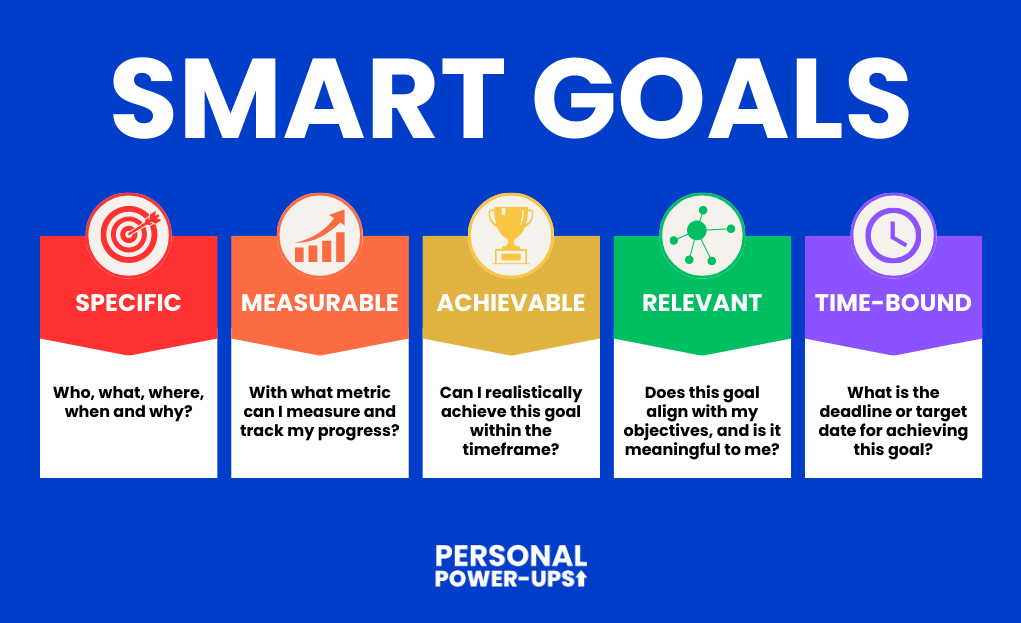
Let's deconstruct each component from a writing perspective, using Johnson's analysis.
How To Write SMART Goals For Your Characters - Shannan E. Johnson
Now let's examine what each part of the SMART framework means for a character's goal.
Please watch from 00:47 to 03:25. As you watch, consider how each component forces an abstract idea into a concrete, plot-driving objective.
Here is a breakdown of how to apply this system:
Specific
A vague goal is a character trait or a theme, not a plot engine. "Finding love" is vague. "Winning the heart of the town's mayor," as suggested in the article Quest or Quarry, is specific. It names a target and implies a series of actions.
- Bad (Vague): A detective wants justice.
- Good (Specific): A detective wants to identify and arrest the person who killed her former partner.
Measurable
This is the binary success/failure condition. The audience must know definitively whether the goal has been achieved by the story's end. This provides the satisfaction of closure. Measurability allows you to track progress.
- Bad (Not Measurable): A chef wants to become great.
- Good (Measurable): A chef wants to earn a Michelin star for her new restaurant. (She either gets the star or she doesn't.)
Attainable
The audience must believe the protagonist could achieve the goal, even if it's incredibly difficult. This means they must have, or be able to acquire, the necessary skills. If a character wants to win a programming competition, they should probably know how to code, or the story must be about them learning to code under pressure.
Relevant
Why does this character want this goal? The goal must be deeply connected to the character's internal life and personal stakes. A scientist trying to cure a disease becomes more compelling if her own child has that disease. This relevance is what creates emotional investment for the reader.
Time-Bound
This component is optional but highly effective for creating tension. Adding a deadline or a "ticking clock" forces the protagonist to act with urgency.
- Good: The detective must find the killer before they strike again at the full moon.
- Better: The chef must earn a Michelin star within one year, or the restaurant's investors will pull their funding.
3. Formulation and Diagnostics
With this framework, we can now establish a formal rule for phrasing the protagonist's desire, or "want."
Mastering Character Development in Storytelling
The article 'Mastering Character Development in Storytelling' provides a very clear, technical instruction for how to phrase a character's desire.
Please read the paragraph under the heading 'A Clear Character Spine Creates a Causal Story Engine'. Focus on the sentence that begins, 'Phrase the want as an active, externally legible outcome...'
The rule is to phrase the desire as an active, externally legible outcome.
Let's put this all together with a practical exercise.
Test your understanding!
Your character's initial, vague desire is: "To escape their boring life."
This goal is internal and fails the "Can I film it?" test. Your task is to reformulate this into a strong, plot-driving goal using the SMART framework. Define each of the five components for your new goal.
Show answer
Here is one possible reformulation:
New Goal: To win the annual "Round the World" yacht race and use the prize money to leave their hometown forever.
SMART Breakdown:
- Specific: The goal is not just "escape," but to win a specific event (the yacht race) for a specific purpose (prize money to fund their departure).
- Measurable: They either win the race or they don't. Progress is tracked by their position in the race.
- Attainable: The character has been sailing recreationally for years, but has never competed at this level. They have the foundational skills but must train intensely to become a true contender.
- Relevant: The character feels trapped by family obligations in a dead-end town. Winning the race isn't just about adventure; it's their only perceived path to freedom and self-determination.
- Time-Bound: The race takes place over three months. The story has a clear start and end date.
Conclusion
In this lesson, we have moved from the abstract concept of protagonist intentionality to the concrete mechanics of formulating their desire. A well-defined goal is the central pillar of a character-driven story.
Key Takeaways:
- A protagonist's desire must be external, specific, and measurable. It must be something we can see them actively pursuing.
- Vague, internal goals (e.g., "find happiness") are motivations, not plot-driving objectives. They are the why behind the external goal.
- The SMART framework (Specific, Measurable, Attainable, Relevant, Time-Bound) provides a robust system for engineering a character's goal.
- A powerful diagnostic question is "Can I film it?" If the answer is no, the goal needs to be more concrete.
Preview of the Next Lesson:
We have now defined the protagonist's forward vector. In physics, every action has an equal and opposite reaction. In storytelling, every driving goal needs a powerful source of opposition. In our next lesson, we will engineer that opposing force by learning how to formulate an antagonist's goal to be in direct opposition to the protagonist's desire.