Introduction
In our last lesson, we established that a scene is a goal-driven unit. The Point-of-View (POV) character enters a scene with a concrete, immediate Goal, which acts as the engine for all subsequent action. This gives the scene its purpose and makes the character proactive.
We are building a scene using the mechanical formula: Goal -> Conflict -> Disaster. Today, we focus on the second, and arguably most crucial, component: Conflict.
The learning outcome for this lesson is to identify the opposing force in a scene, whether it's another character, the environment, or an internal conflict.
Conflict is not just argumentation or violence; from a structural standpoint, it is any force that obstructs the character's path to their goal. If the Goal is the character's intention, the Conflict is the obstacle. No obstacle means no struggle, and no struggle means no story.
1. Defining Conflict: The Obstacle to the Goal
At its core, a scene's conflict is the series of obstacles the POV character must overcome to achieve their goal.
Let's begin with a concise, technical definition of conflict within the scene structure we are using. The article 'Writing The Perfect Scene' provides this.
Please read section '2. Conflict'. Note the definition: 'Conflict is the series of obstacles your POV character faces on the way to reaching his Goal.' This is the key principle. The text correctly states that a goal reached without conflict is boring for the reader.
This opposition is so fundamental that you can think of it as a simple equation: Story = Intention + Obstacle. An opposing force is what turns a character's plan into a narrative.
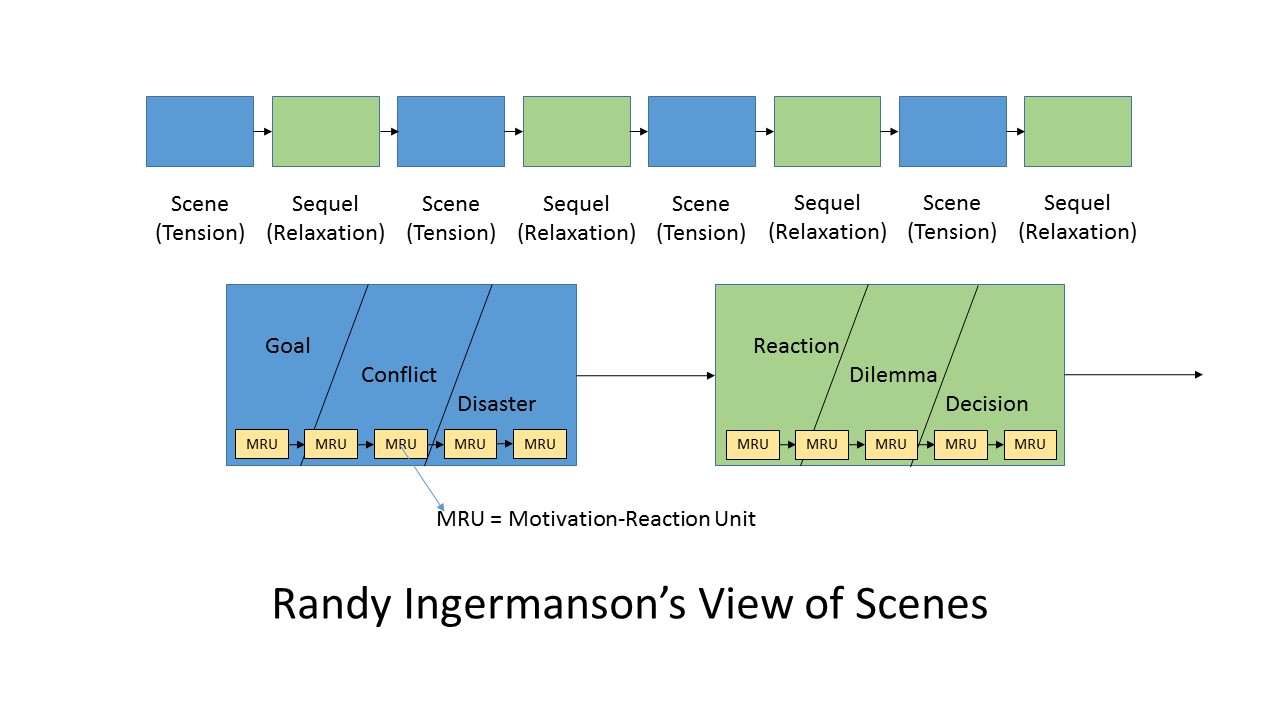
To analyze these opposing forces systematically, we can sort them into three distinct categories.
2. A Taxonomy of Opposing Forces
Opposing forces are not random. They can be classified based on their origin. A clear understanding of these categories allows you to consciously design and layer conflict for greater impact.
How to Write the Main Conflict of the Story — The Engine of a Narrative
The video 'How to Write the Main Conflict of the Story' by StudioBinder offers an excellent classification system for conflict. It divides opposing forces into three types that we will use as our framework.
Watch the video from 01:01 to 11:31. Pay close attention to the three categories presented: Inner conflict (man vs. self) Personal conflict (man vs. man) Extrapersonal conflict (man vs. nature/society) As you watch, notice the specific examples used for each category. We will deconstruct them next.
Let's break down these three categories of opposing forces with our own precise definitions.
A. Opposing Force: Another Character (Personal Conflict)
This is the most common and often the most dynamic source of opposition. The obstacle is another character with their own goals that are irreconcilable with the protagonist's.
- Antagonist: The classic villain whose primary goal is to stop the protagonist. (e.g., Darth Vader wants to crush the rebellion, which opposes Luke's goal to save it).
- Ally/Friend: A friend might oppose the protagonist's goal out of concern for their safety or a disagreement on method. (e.g., Samwise Gamgee opposes Frodo's attempts to trust Gollum).
- Romantic Interest: Two potential lovers often have conflicting desires or values that keep them apart.
- Bureaucrat/Gatekeeper: A character who isn't necessarily evil but whose function is to obstruct. (e.g., A security guard whose job is to prevent the hero from entering a building).
The key is that the opposition stems from the agency of another human (or human-like) being.
B. Opposing Force: The Environment (Extrapersonal Conflict)
Here, the obstacle is a non-sentient or collective force that is external to the protagonist.
- Nature: A storm, a desert, a wild animal, a disease. The protagonist's goal is survival or passage, and the environment itself is the antagonist. (e.g., A mountain climber's goal is to reach the summit; the opposing force is the blizzard).
- Society: Societal laws, norms, prejudices, or institutions that stand in the character's way. (e.g., In a historical novel, a woman's goal to become a doctor is opposed by a society that forbids it).
- Technology: A malfunctioning spaceship, a security system, an AI gone rogue. The protagonist must overcome the inanimate system. (e.g., The crew of Apollo 13's goal is to get home; the opposing force is their damaged spacecraft).
These forces are often immovable and indifferent, forcing the character to adapt or find a clever way around them rather than defeating them head-on.
C. Opposing Force: Internal Struggle (Inner Conflict)
In this case, the obstacle is the character themself. The conflict arises from a clash between the character's goal and their own fears, flaws, morals, or past trauma.
- Fear/Cowardice: A soldier's goal is to charge the enemy line, but his opposing force is his own crippling fear.
- Moral Code: A detective's goal is to get a confession, but her own moral code prevents her from using illegal or brutal methods, even if they would work.
- Misbelief/Flaw: A character's goal is to find a loving relationship, but his internal misbelief that "I am unlovable" causes him to sabotage any potential connection.
- Conflicting Duties: A character's goal is to save their company, but doing so requires firing their best friend, creating a conflict between professional duty and personal loyalty.
Internal conflict is what creates complex, three-dimensional characters. Often, the most powerful stories layer internal conflict on top of external ones.
Test your understanding!
A firefighter has the scene goal: "Rescue the child from the top floor of the burning building."
Categorize the primary opposing force in each of the following scenarios:
- The staircase collapses, blocking the firefighter's path.
- The firefighter, who lost their own child in a similar fire years ago, freezes in a moment of traumatic flashback.
- A rival firefighter, wanting the glory for themself, deliberately gives a false report that the floor is clear, trying to get the protagonist to leave.
Show answer
- Environment (Extrapersonal Conflict): The obstacle is the physical structure of the burning building.
- Internal Struggle (Inner Conflict): The obstacle is the firefighter's own past trauma and fear.
- Another Character (Personal Conflict): The obstacle is the deliberate, goal-oriented action of another person.
3. Opposing Forces in Action: The Scene Level
How do these abstract forces manifest within the beat-by-beat structure of a scene? They appear as Motivations in the Motivation-Reaction Unit (MRU) cycle.
Recall that an MRU consists of:
- Motivation: An external, objective event the character sees, hears, or feels.
- Reaction: The character's internal and then external response.
The opposing force is what generates the negative Motivations that complicate the character's path to their goal.
Let's analyze a practical example.
Crime Writing: Scene Structure and MRUs in Action
The article 'Crime Writing: Scene Structure and MRUs in Action' by Sue Coletta provides a fantastic, annotated excerpt that shows exactly how this works. It explicitly labels the GOAL, CONFLICT, and the MRUs.
Read the excerpt from 'Wings of Mayhem' carefully. The POV character's goal is to enter her motel room. Notice how the opposing force (an unknown intruder) generates a series of 'MOTIVATION' beats: 'Movement inside the room...' 'Someone was running water.' The clerk saying, 'I gave the spare key to your friend.' 'The door swung open.' Each of these is a manifestation of the conflict, forcing a new reaction from the character and escalating the tension.
As the example demonstrates, the opposing force isn't a single event. It is a continuous source of pressure that creates a chain of cause and effect (Motivation -> Reaction -> new Motivation) that is the conflict of the scene.
To see how all three types of opposing forces can be woven together to create a complex and compelling narrative, let's examine one final case study.
🌲how to write interesting conflict // THE TREE OF CONFLICT
The video 'how to write interesting conflict' by Lynn D. Jung provides a detailed hypothetical scenario that is perfect for analysis. It breaks down a warrior's quest and shows how different layers of conflict interact.
Watch the section from 14:40 to 23:11, which details the 'warrior quest' example. As you watch, identify the different opposing forces at play in each beat of her journey: The Bandit: This is a clear 'Personal' conflict. The Bandit's Motivation (Poverty): This stems from the king's ineptitude, an 'Extrapersonal' (societal) conflict. The Warrior's Choice: Her hesitation to harm the child-bandit and her subsequent guilt are 'Internal' conflicts, stemming from her conscience vs. her duty. Notice how the external events force the character to confront her internal state and her relationship with the wider societal problem.
Conclusion
Today we dissected the 'Conflict' component of our scene-writing algorithm. We have moved from a vague notion of struggle to a precise, classifiable system of opposing forces.
Key Takeaways:
- Conflict is Obstruction: It is any force that stands between the POV character and their scene goal.
- A Taxonomy of Forces: Opposing forces can be systematically categorized as Personal (other characters), Extrapersonal (environment/society), or Internal (the character's own psychology).
- Layering for Depth: The most compelling scenes often layer multiple types of conflict, where an external obstacle forces the character to confront an internal one.
- Manifestation as Motivation: In the micro-structure of a scene, the opposing force generates the Motivations that the character must react to, driving the action forward beat by beat.
Preview of the Next Lesson
We have now defined the Goal and the Conflict. A character wants something, and a force stands in their way. But what is the outcome of this struggle? In fiction, victory is rarely simple. In our next lesson, we will analyze the final part of our formula: the Disaster. We will explore how a scene's conclusion, far from resolving the problem, should make things worse and propel the character into the next sequence of events.