Introduction
Welcome to your next lesson on the mechanics of dialogue. In our previous session, we deconstructed desire masking, where a single character intentionally hides their true want behind a surface-level request. This was about how one person manages their own internal world to navigate a conversation.
Today, we shift from a single character's internal strategy to the dynamic failure that occurs between characters. Your learning outcome is to construct deliberate miscommunication where characters interpret the same words through different personal frameworks.
Think of it this way: in the last lesson, the character was running a form of internal encryption. Now, we're studying what happens when two characters try to communicate using incompatible decryption keys. The words are the same, but the meaning that is reconstructed on the other end is completely different. This "system incompatibility" is not random; it's a direct result of each character's unique goals, fears, and history. Mastering this allows you to create dialogue that is rich with realistic, character-driven conflict.
1. The Core Mechanism: The Interpretive Filter
Effective dialogue rarely involves perfect, frictionless information transfer. Instead, every word a character speaks or hears is processed through a personal "filter." This filter is shaped by their immediate goals, emotional state, past experiences, and core beliefs. When two characters' filters are fundamentally different, miscommunication is the inevitable and logical result.
The following video introduces this concept of the "human filter" as the core mental model for approaching dialogue.
The Key to Writing Freakishly Good Dialogue | Video Essay
Watch this brief segment from the video 'The Key to Writing Freakishly Good Dialogue' by HARTWELL THE WATCHER. It defines the central idea of dialogue as 'information through a human filter,' which is the foundation of today's lesson.
Watch from 01:15 to 02:41. Focus on how the speaker defines a character as a 'filter' and the example of Bob, the optimist who can't directly express his sadness.
This filter means that a character isn't just listening to what is said; they are actively interpreting what it means in their personal context. The tension in miscommunication comes from the disconnect between the speaker's intent and the listener's interpretation.
Let's examine a breakdown of this mechanism.
How to Create Tension with Dialogue and Subtext
The article 'How to Create Tension with Dialogue and Subtext' provides an excellent, granular analysis of this disconnect. It will show you how a simple question can be interpreted in vastly different ways depending on the listener's internal framework.
Read the beginning of the article, from the start down to the line, 'Her response also seems straightforward, but it too suggests an undercurrent of additional meaning...' Then, read the full, extended example of the mother-son exchange that follows.
As the article demonstrates, the son's question, "Mom, have you seen my maroon shirt?" is filtered through his context (wanting to impress someone) while his mother filters it through hers (feeling overworked, worried about his entitlement). The same eleven words trigger two completely different internal narratives.
These different "personal frameworks" can be categorized. Understanding the type of filter at play helps in systematically constructing these scenes.
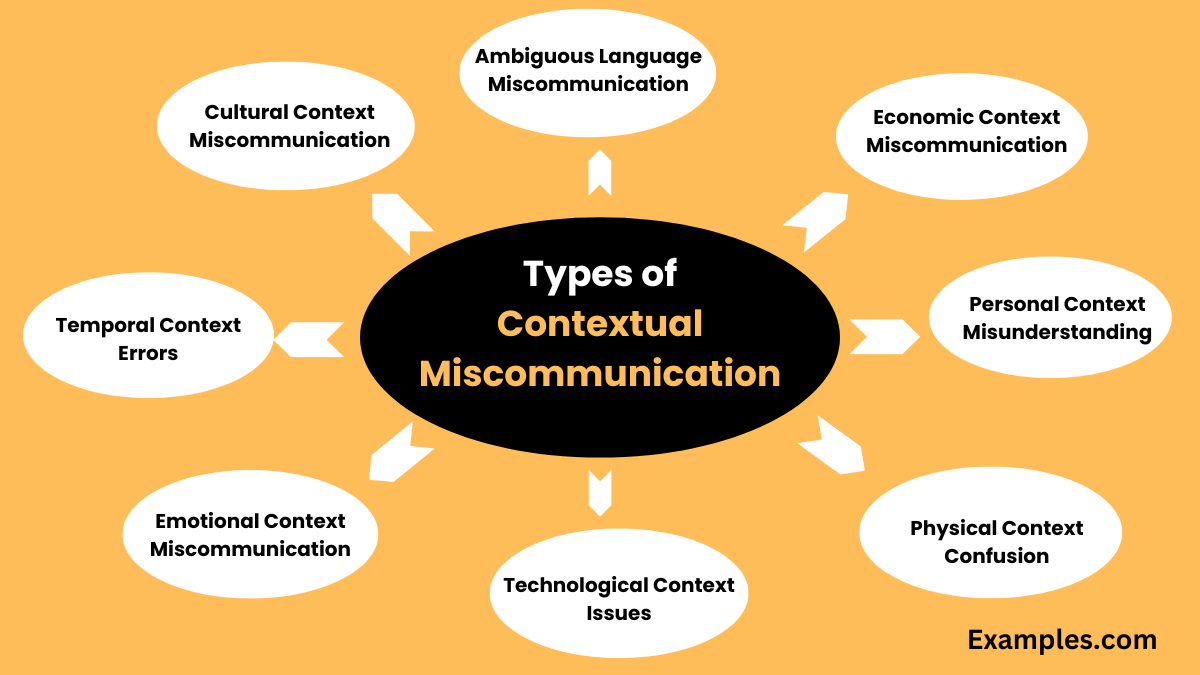
For example, the mother-son conflict arises from Personal Context (their history of arguments about chores) and Emotional Context (the son's nervousness, the mother's fatigue). A character's filter is rarely just one thing; it's a combination of these contextual layers.
2. Deconstructing a Scene of Miscommunication
Now, let's analyze a complete scene built around this principle of clashing interpretive frameworks. We'll return to the HARTWELL THE WATCHER video, which constructs a scene between Philip and Kima from the ground up.
First, let's define their filters:
- Philip's Framework: He is an "avoidant" personality focused on a positive future. His filter is set to Emotional Avoidance + Career Ambition. He interprets any attempt at emotional discussion as a negative drag on his forward momentum.
- Kima's Framework: She is heartbroken and needs closure. Her filter is set to Emotional Need + Relationship History. She interprets his logistical talk as a callous dismissal of their shared past.
With these incompatible frameworks established, watch how their conversation systematically breaks down.
The Key to Writing Freakishly Good Dialogue | Video Essay
This section of the video walks through the creation of a scene where two characters are completely at cross-purposes. Pay close attention to how each line of dialogue is interpreted differently by the speaker and the listener.
Watch the segment from 02:41 to 08:38. Track how Philip's attempts to talk about the Icarus mission are received by Kima, and how her attempts to inject sentiment are received by Philip.
Let's break down the miscommunication points:
| Speaker & Line | Speaker's Intent (Through their filter) | Listener's Interpretation (Through their filter) |
|---|---|---|
| Philip: (Rattles off facts about the Icarus mission.) | "This is what I'm excited about. This is my life now." | "He doesn't care about me at all. He's already moved on." |
| Kima: "How's your mom?" | "Let me connect us to our shared past and feelings." | "She's trying to make this sentimental and difficult. I need to shut this down." |
| Philip: "You're gonna cry and you're gonna beg me to stay..." | "You're trying to trap me in negative emotions." | "He sees my valid feelings as manipulative and weak." |
| Kima: "I just want it to be real." | "Acknowledge the pain and importance of what we had." | "She wants me to wallow in sadness with her ('mope')." |
The entire conflict is generated by them talking past each other. They are not arguing about the same topic. Philip is arguing against being made to feel bad, while Kima is arguing for her feelings to be acknowledged. This is a direct consequence of their opposing personal frameworks.
3. A Toolkit for Constructing Miscommunication
While the clash of frameworks is the source of miscommunication, you can use specific conversational tactics to make that clash visible on the page. These are the tools you use to engineer the breakdown.
The following resource provides a clear, practical list of these techniques. Think of them as subroutines you can call to execute a specific type of conversational block or diversion.
Realistic Dialogue Exchanges: Showing Communication Breakdowns
This article, 'Realistic Dialogue Exchanges,' offers a concise list of techniques for showing communication breakdowns. These are the practical mechanics of writing miscommunication.
Read the section titled 'Specific techniques that can enhance a sense of realism.' Focus on understanding each of the six bullet-pointed techniques.
Here is a summary of your toolkit for manufacturing miscommunication, based on the article:
- Changing the Subject: A character ignores the other's point and pivots to their own agenda. (Philip does this repeatedly, pivoting back to the mission).
- Giving Unsolicited Advice: A character reframes the other's statement as a problem they can solve, which feels dismissive.
- Topping the Other's Story: A character minimizes the other's experience by claiming to have a more extreme one. ("You think that's bad? Let me tell you...")
- Finishing Their Sentences: A character asserts dominance by implying they already know what the other will say, often getting it wrong.
- Interpreting What They Really Mean: A character claims to understand the other's subtext better than they do, imposing their own interpretation. (Philip interprets Kima's sadness as an attempt to make him "mope").
- Asking a Question, then Ignoring the Answer: A character feigns interest to control the conversation, but their lack of attention reveals their true priority.
By choosing a tactic that logically flows from your character's framework, you can construct a scene where the dialogue feels both natural and deliberately broken.
Test your understanding!
A lead architect, Anya, is reviewing blueprints with a junior structural engineer, Ben.
- Anya's Framework: Her priority is the building's aesthetic vision and innovative design. She wants to create a landmark.
- Ben's Framework: His priority is structural integrity, safety margins, and proven, reliable methods. He wants to avoid any potential risk.
Ben points to a complex cantilevered section and says: "This element is creating some significant shear stress challenges. We might need to add a supporting column here."
How does Anya, filtering this through her "aesthetic vision" framework, likely interpret Ben's statement? Using one of the techniques from the toolkit, write Anya's response that creates miscommunication.
Show answer
Anya's Interpretation: Anya likely hears Ben's practical concern as an attack on her artistic vision. She interprets "shear stress challenges" not as a technical problem to be solved, but as a lack of imagination or a desire to compromise the design's most daring feature. "Add a supporting column" translates to "make it boring and conventional."
Example Response (Using "Changing the Subject" and "Interpreting"):
"You mean to tell me you want to ruin the defining feature of the facade? The whole point is the feeling of weightlessness. Don't focus on the problems, Ben. Focus on the solution that preserves the design. I need you to think like an artist, not just an engineer. What about using a post-tensioned slab instead?"
This response does two things:
- It interprets Ben's technical feedback as an attempt to "ruin the feature."
- It changes the subject from his immediate concern (shear stress) to a more abstract demand ("think like an artist") before proposing an alternative without fully engaging his initial point. This creates a conflict rooted in their clashing professional frameworks.
Conclusion
Today, we've moved beyond individual subtext to the friction between characters. By understanding that dialogue is processed through personal filters, you can systematically construct scenes where miscommunication generates conflict.
Key Takeaways:
- Miscommunication is caused by clashing interpretive frameworks. Characters hear the same words but derive different meanings based on their personal context, goals, and emotional state.
- A character's filter is their personal context. This includes their emotional state, personal history, immediate goals, and worldview.
- You can engineer miscommunication. Use tactical tools like changing the subject, unsolicited advice, or reinterpreting the other's words to make the clash of frameworks explicit in the dialogue.
Preview of the Next Lesson
We've seen how different frameworks can lead to unintentional clashes. In the next lesson, we will explore a more deliberate form of conversational maneuvering. Your learning outcome will be to analyze how power dynamics are revealed through who asks questions versus who gives answers. We will shift from how characters misinterpret each other to how they actively use the structure of conversation to establish control, dominance, or subordination.