Introduction
Welcome to today's lesson. In our previous session, we deconstructed the mechanics of suspense and surprise, focusing on what information you provide to the reader. We established that suspense is an engineered state of anticipation built on giving the reader more knowledge than the character, while surprise is a sudden recontextualization of events.
Today, we will address a related but distinct engineering problem: managing the rate and method of information delivery. Your learning outcome is to manage cognitive load by controlling the rate of new information introduced to the reader. We will treat "cognitive load" as a technical constraint on the reader's working memory. Your goal as a writer is not simply to convey information, but to do so in a way that minimizes processing friction, ensuring the reader remains immersed in the story rather than struggling to comprehend it.
1. The Core Concept: Cognitive Load as a System Constraint
In cognitive psychology, "cognitive load" refers to the total amount of mental effort being used in a person's working memory. Because working memory is a finite resource, overloading it leads to processing failures. Your job is to optimize the reader's cognitive load, minimizing what is unnecessary so they have maximum capacity to engage with the story itself.
This can be modeled as an optimization problem:

The consequence of failing to manage this is not just mild confusion; it's a catastrophic drop in comprehension and engagement.
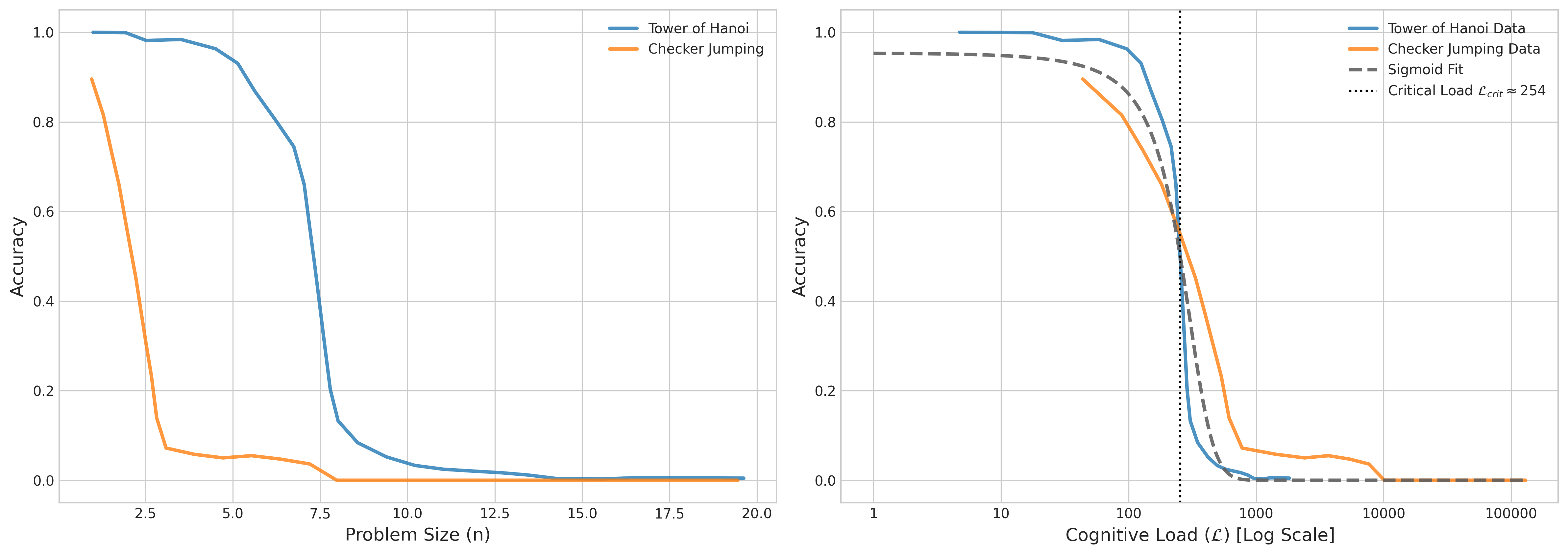
A classic writing failure that triggers this collapse is the exposition dump. You must avoid stopping the story to deliver a lecture on your world's history or a character's backstory, especially at the beginning. As the resource "Mastering Pacing" notes, this is a "classic amateur move" that kills a story before it starts because the reader doesn't yet have a reason to care. Information must be woven into the narrative, not dumped onto the page.
2. Macro-Control: Pacing and Strategic Information Release
The primary system you use to control the rate of information is pacing. Pacing is not just about speed; it's about control.
Mastering Pacing: How to Control Your Story's Rhythm and ...
The article 'Mastering Pacing' provides a precise, technical definition of pacing that we will use as our foundation. It also outlines the different narrative 'gears' you can use to control the speed of information.
Please read the sections 'Pacing Isn't Speed—It's a Pressure Cooker' and 'Dialogue, Summary, and Description: The Three Speeds'. Focus on the core principle that defines pacing as the rate of information release, and understand how the three narrative modes function as different speeds of delivery.
From this reading, we can extract two sets of controls:
A. Strategic Information Release Models
You have several strategies for deciding when to release information to manage the reader's cognitive load and narrative tension.
Pacing and Tension Within Structures: Keeping Readers ...
The article 'Pacing and Tension Within Structures' details these strategic models for information flow.
Read the subsections under 'Strategic Information Revelation' and 'Balancing Clarity and Mystery'. This will give you a clear framework for the different ways you can schedule the delivery of information.
Based on this, your main strategies are:
- Gradual Revelation: The default and safest method. You provide information as it becomes relevant, keeping cognitive load low and steady. This maintains mystery while ensuring clarity.
- Delayed Revelation (Surprise): You intentionally withhold a crucial piece of information until a climactic moment. This creates a surprise that recontextualizes past events. This was the focus of our previous lesson.
- Front-Loading (Suspense): You give the reader important information early, often before the character knows it. This creates dramatic irony and suspense. While powerful, this method carries the highest risk of cognitive overload if not handled with precision. The information must be compelling and directly tied to an impending conflict.
B. Narrative Modes as Gears
As "Mastering Pacing" described, your narrative modes function like gears in a transmission, each delivering information at a different rate:
- Summary (Overdrive): Compresses time and information. "The next month was a blur of training." This is the fastest way to convey information but offers the lowest reader immersion. Use it to skip non-essential periods.
- Dialogue (High Gear): Occurs in real-time, making it feel fast and immediate. It's an efficient way to introduce information and conflict simultaneously.
- Description (Low Gear): Expands time, slowing the narrative to focus on sensory details. This can increase immersion but delivers plot-critical information at a very low rate. Overusing it can bog down the story and feel like an information dump of a different kind.
3. Micro-Control: Creating "Flow" at the Sentence Level
Managing cognitive load also happens at the sentence and paragraph level. The goal is to create flow, which can be defined as the absence of resistance for the reader. A text that flows well minimizes the extraneous cognitive load required to simply process the sentences, freeing up the reader's mental bandwidth for the story itself.
The following video provides a set of clear, actionable algorithms for achieving this "semantic flow."
Make Your Writing Flow | Ideas: Cohesion, Coherence, and Organization
The video 'Make Your Writing Flow | Ideas' by Writing with Andrew breaks down the abstract concept of 'flow' into three concrete principles for organizing ideas, which directly maps to reducing cognitive load.
Watch from 02:32 to 15:15. Pay close attention to the three core strategies discussed: Cohesion ('Old before New'), Coherence ('One Idea per Unit'), and Structure ('Logical Order'). Notice how the 'before' and 'after' examples demonstrate the reduction in reader effort.
The three principles for reducing cognitive friction are:
- Cohesion (The "Old Before New" Principle): Begin sentences with familiar information that links to what came before, then introduce the new information at the end. This creates a logical chain for the reader, preventing the mental "reset" that occurs when a sentence starts with a completely unfamiliar concept.
- Coherence (The "One Idea per Unit" Principle): Ensure that each paragraph is focused on a single, clear purpose. If the reader has to work to figure out why a group of sentences are together, you are increasing their cognitive load unnecessarily.
- Structure (The "Logical Order" Principle): Organize your ideas in a sequence that makes intuitive sense for the context (e.g., chronologically for a history, step-by-step for a process, cause-then-effect for an argument).
Test your understanding!
Here is a paragraph that violates the principles of flow, increasing cognitive load:
The starship Venture accelerated toward the anomaly. A strange energy reading had been detected by the ship's sensors, unlike any previously cataloged phenomenon. Captain Eva Rostova was on the bridge. Her family had a long history of military service, which often made her seem stern. The anomaly pulsed with a soft, green light, distorting the space around it.
Rewrite this paragraph to improve its flow using the principles of cohesion ("old before new") and coherence.
Show answer
Here is one possible revision:
Captain Eva Rostova stood on the bridge of the starship Venture as it accelerated toward an anomaly. The ship's sensors had detected a strange energy reading, one unlike any previously cataloged phenomenon. Visually, the anomaly pulsed with a soft, green light that seemed to distort the space around it. Rostova, whose family had a long history of military service, watched the phenomenon with a stern expression.
Analysis of Changes:
- Cohesion: The paragraph now starts with the character and ship, then connects to the anomaly they are approaching. Each sentence links back to the previous one ("anomaly" -> "energy reading" -> "pulsed with light").
- Coherence: The detail about Rostova's family history is now directly linked to her "stern expression" while observing the event, rather than being an abrupt, disconnected fact. This makes the paragraph feel more unified.
4. Syntactic Tools for Optimizing Flow
Finally, let's zoom to the most granular level: the syntax of the sentences themselves. Specific sentence structures can either create smooth transitions or jarring stops, impacting the reader's momentum.
Make Your Writing Flow | Sentences: Transitions, Subordination, and Modification
This second video from Writing with Andrew, 'Make Your Writing Flow | Sentences,' focuses on the specific syntactic structures you can use to reduce friction between sentences.
Watch from 02:05 to 11:02. This covers transitions, subordination, modification, and a crucial warning about overdoing it. Think of these as low-level functions you can call to manage the reader's processing state.
The key syntactic tools for creating flow are:
- Transitions: Words and phrases (
however,therefore,in fact) act as explicit signposts, telling the reader exactly how the next sentence relates to the previous one. They eliminate ambiguity and reduce interpretive effort. - Subordination: Using dependent clauses (
Although...,Because...,While...) creates a smoother connection between ideas than using a series of short, independent clauses. The video likens this to using a ramp instead of stairs—it's a less jarring transition. - Modification: Using participial phrases (
Having cracked the eggs...) or other modifiers allows you to embed information without forcing the reader to stop and start with a new, complete sentence. This maintains momentum.
Crucially, the goal is not maximum flow, but optimal flow. A story with relentless, uniform flow can become monotonous and put the reader to sleep. Short, simple sentences have impact. They are like "croutons or peanuts," as the video suggests—textural contrasts that provide emphasis and variety. You must vary your sentence structures to control rhythm and maintain reader attention.
Conclusion
Today we framed the delivery of information as a technical problem of managing a reader's finite cognitive resources. We moved from high-level strategy down to low-level syntax, establishing a clear hierarchy of controls.
Key Takeaways:
- Cognitive Load is a System Constraint: Overloading the reader's working memory leads to a catastrophic failure in comprehension and engagement.
- Macro-Control via Pacing: You control the primary rate of information with strategic release models (gradual, delayed, front-loaded) and by shifting between narrative "gears" (summary, dialogue, description).
- Micro-Control via Flow: At the sentence level, you reduce cognitive friction using cohesion ("old before new"), coherence (one idea per unit), and syntactic tools like transitions and subordination.
- Optimization over Maximization: The objective is not to make prose maximally "smooth," but to optimally manage the reader's cognitive load, using a variety of sentence structures to control rhythm and maintain engagement.
Preview of the Next Lesson
Having explored several key aspects of building tension and managing the reader's experience, we will now transition into the next major phase of the writing process: revision. In our next lesson, we will begin Module 12, "Revision and Diagnostic Analysis." Our first task will be to learn how to diagnose plot holes by identifying events that lack a clear preceding cause. This shifts our perspective from that of an architect to that of a structural engineer, testing the integrity of the finished draft.