Hello! Welcome to your fifth lesson.
In our last session, we established the clear and separate responsibilities of management and the auditor. We learned that management is responsible for preparing the financial statements and maintaining internal controls, while the auditor is responsible for expressing an opinion on those statements.
Today, we'll delve deeper into how this relationship is formally established at the very start of an audit. Our focus is on SA 210, "Agreeing the Terms of Audit Engagements". This lesson directly addresses the learning outcome: Explain the preconditions for an audit and the purpose of agreeing on the terms of engagement as per SA 210.
You've likely seen engagement letters during your articleship. This lesson will connect that practical experience to the underlying principles of SA 210, giving you the conceptual clarity and technical language needed for your exams. We will explore why these initial steps are so critical and what an auditor must confirm before even agreeing to perform an audit.
1. The 'Why' Behind SA 210: Preventing a Mismatch of Expectations
Imagine accepting an audit, spending weeks on the work, and then presenting the report, only for the client to say, "This isn't what we asked for!" This is the exact problem SA 210 is designed to prevent. Its primary purpose is to ensure there is a clear, common understanding between the auditor and management about the engagement from the outset.
Let's start with a short, engaging story that illustrates what can happen when terms are not clearly agreed upon.
SA 210 || Agreeing the terms of audit engagement || CA INTER || CA FINAL || CA HARSHAD JAJU
This video from CA Harshad Jaju begins with an excellent real-world scenario of a misunderstanding between a client and an auditor. It perfectly sets the stage for why SA 210 is so crucial.
Watch the video from the beginning until 04:57. Focus on the story and the problem it highlights. This will help you understand the fundamental purpose of agreeing to terms before commencing any work.
As the video illustrates, agreeing on the terms is not just administrative paperwork; it's a foundational step that protects both the auditor from professional risk and the client from receiving a service that doesn't meet their needs.
2. The First Hurdle: Preconditions for an Audit
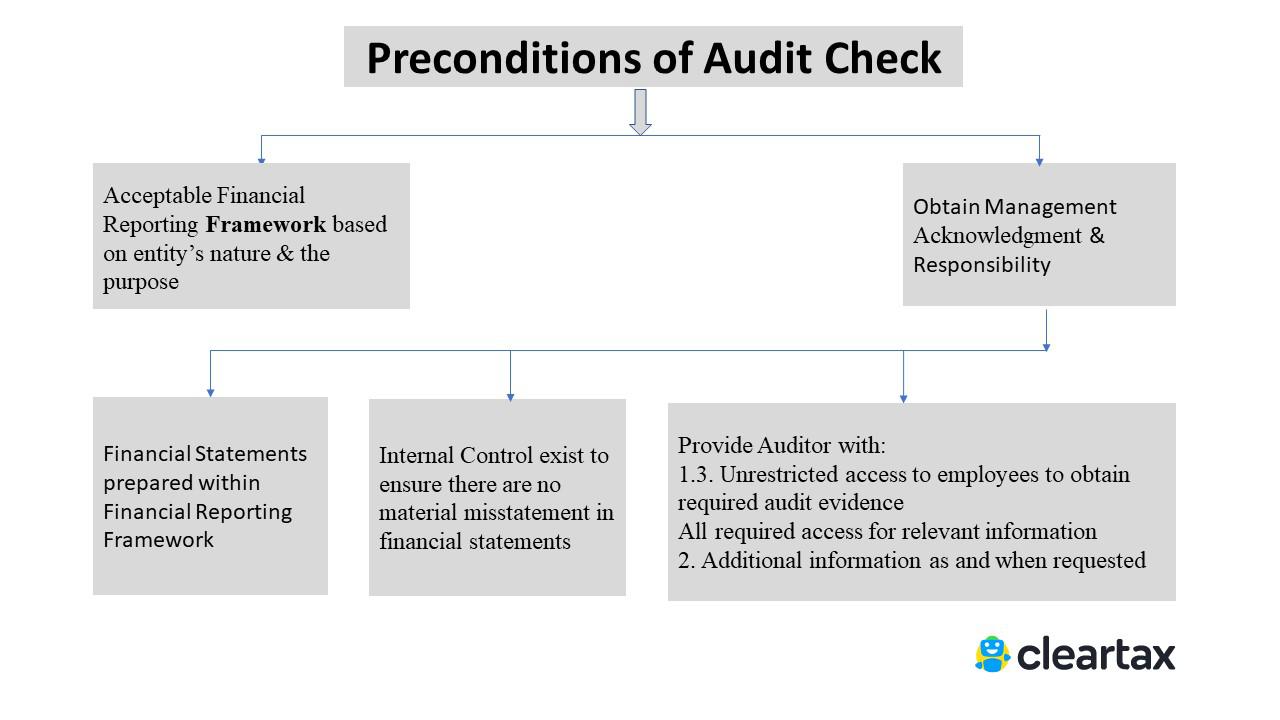
Before an auditor can accept an engagement, they must first establish that certain preconditions are present. Think of these as the non-negotiable foundations upon which a quality audit can be built. If these are not in place, the audit cannot proceed.
As per SA 210, the auditor must determine two key things:
- Is the Financial Reporting Framework (FRF) acceptable? The auditor needs to confirm that the framework used by management to prepare the financial statements (e.g., Ind AS as per Schedule III) is appropriate for the entity's nature and the purpose of the financial statements.
- Has management agreed to its responsibilities? The auditor must obtain management's agreement, acknowledging their fundamental responsibilities.
This second point builds directly on our previous lesson. Management must formally agree that they are responsible for:
- The preparation of financial statements in accordance with the applicable FRF.
- The design and implementation of internal control necessary to ensure the financial statements are free from material misstatement.
- Providing the auditor with all necessary access:
- To all relevant information, records, and documents.
- To any additional information the auditor requests.
- To persons within the entity from whom the auditor needs to obtain evidence.
The following video breaks down these preconditions clearly.
SA-210 "Agreeing the terms of Audit Engagement" in English | CA Inter & Final
This video from Bhavana's Online Academy provides a very structured explanation of the preconditions for an audit.
Watch from 02:22 to 07:22. The first part (until 04:06) explains the objectives of SA 210, and the second part details the two main preconditions we've just discussed. Pay close attention to the breakdown of management's responsibilities.
This flowchart provides a helpful visual summary of these crucial checks:
What if Preconditions Are Not Met?
SA 210 is very clear on this. The auditor shall not accept the proposed audit engagement if:
- The financial reporting framework is determined to be unacceptable.
- Management does not agree to acknowledge and accept its responsibilities.
Additionally, if management imposes a scope limitation before the engagement is even accepted, and the auditor believes this limitation would result in a disclaimer of opinion, the auditor must not accept such a limited engagement (unless required by law to do so).
3. Formalizing the Agreement: The Audit Engagement Letter
Once the preconditions are confirmed to be present, the understanding between the auditor and the client must be formalized in a written document. This is the audit engagement letter.
The engagement letter is a contract that outlines the terms of the engagement. It serves as a record to prevent misunderstandings and clarifies the scope and responsibilities for both parties.
The principal contents of an audit engagement letter include:
- The objective and scope of the audit.
- The responsibilities of the auditor (e.g., to express an opinion).
- The responsibilities of management (confirming the preconditions).
- The identification of the applicable financial reporting framework.
- Reference to the expected form and content of the audit report, with a caveat that the final report may differ based on audit findings.
To ensure you have the precise technical language, let's turn to the official ICAI guidance.
[PDF] Implementation Guide to Standard on Auditing (SA) 210, “Agreeing ...
The ICAI's Implementation Guide to SA 210 is an excellent resource for exam preparation. The FAQ section provides concise, authoritative answers.
Please read 'Question 20: What should be the form and content of an audit engagement letter?' on page 15 of the PDF. This provides a comprehensive list of what should be included. Compare this list with your practical experience.
The engagement letter may also include other important details, such as:
- Arrangements concerning audit fees and billing.
- The expectation that management will provide written representations (a topic we will cover later under SA 580).
- Arrangements involving other auditors or experts.
- A mention of the inherent limitations of an audit.
4. Practical Considerations: Recurring Audits and Changes in Terms
The process isn't always about a brand new client. SA 210 also guides us on continuing engagements.
-
Recurring Audits: For a client you audit every year, you don't necessarily need to send a new, detailed engagement letter each time. However, you must assess if circumstances require a revision. You should send a revised letter if there's been, for example:
- A significant change in senior management or ownership.
- A change in the nature or size of the business.
- A change in legal requirements or the financial reporting framework.
- Any indication that the client misunderstands the objective and scope of the audit.
-
Acceptance of a Change in Terms: What if, during the audit, management asks you to change the engagement to one that provides a lower level of assurance (e.g., from an audit to a review)? The auditor must assess if there is a reasonable justification for the change.
- Reasonable Justification: A change in circumstances, like the entity's requirements changing, could be reasonable.
- Unreasonable Justification: A request to change the engagement because the auditor is unable to obtain sufficient evidence (e.g., for receivables) is not a reasonable justification. This is often a red flag that management is trying to avoid a modified opinion. If there is no reasonable justification, the auditor should refuse the change and, if not permitted to continue the original engagement, withdraw.
Conclusion
This lesson focused on the critical first step in any audit engagement: agreeing on the terms. By applying SA 210, the auditor establishes a solid foundation for the audit, ensuring clarity and preventing future conflicts.
Key Takeaways:
- The primary purpose of SA 210 is to ensure a common understanding between the auditor and management, thereby avoiding misunderstandings.
- Before accepting an audit, the auditor must verify that preconditions are present: an acceptable FRF and management's explicit agreement to its core responsibilities.
- If preconditions are not met or a significant scope limitation is imposed upfront, the auditor must not accept the engagement.
- The agreed-upon terms are documented in an audit engagement letter, which serves as the formal contract outlining the scope, objectives, and responsibilities of both parties.
- For recurring audits, the need for a new engagement letter is assessed based on whether circumstances have changed.
Preview of the Next Lesson
Now that we have formally accepted the engagement and agreed on the terms, the real work begins. The very first phase of an audit is planning. In our next lesson, we will move to Module 2 and dive into SA 300, "Planning an Audit of Financial Statements". We will explore the key activities an auditor undertakes to develop an effective audit plan.