Hello! Welcome to your next lesson in our journey through Audit Planning and Risk Assessment.
In our last lesson, we focused on distinguishing between business risks and the risks of material misstatement (RoMM). We established that understanding the entity's environment, including its internal controls, is the foundation for identifying and assessing RoMM. This understanding is what separates a mechanical, checklist-based audit from a responsive, risk-based one.
Today, we will take a deep dive into that very foundation. The learning outcome for this lesson is to explain the significance of understanding the entity's internal control components relevant to the audit.
This isn't just about memorizing a list. For your CA Final exams, you need to articulate why these components matter and how they interlink. This conceptual clarity is exactly what you've aimed for—moving beyond rote learning to grasp the logic of the Standards on Auditing. Your practical experience during articleship has likely exposed you to many individual controls; this lesson will provide the framework (as per SA 315) to structure that knowledge.
1. What is Internal Control and Why is it Relevant to the Auditor?
First, let's establish a clear definition. Internal control is a process designed and implemented by management to provide reasonable assurance about achieving the entity's objectives.
For a concise and practical explanation of this definition, including the key objectives of internal controls, please watch this short video.
SA 315 Revision | CA Final Audit | CA Shubham Keswani (AIR 8)
This clip from CA Shubham Keswani's revision series provides a clear, exam-oriented definition of internal control. He uses the mnemonic 'SCORE' to explain the objectives, which can be a helpful memory aid.
Watch the segment from 09:10 to 12:08. Focus on: The definition of internal control as a 'process'. Who is responsible for it (management, TCWG). Why it provides 'reasonable' and not 'absolute' assurance. The 'SCORE' objectives: Safeguarding assets, Compliance, Operations, and Reliability of Financial Reporting.
As the video highlights, an entity has many controls for various purposes (e.g., operational efficiency). However, as an auditor, your focus is specific. SA 315 clarifies that you are primarily concerned with controls that are relevant to the audit. These are the controls that have a bearing on the reliability of financial reporting.
In the Indian context, this is often referred to as Internal Financial Controls over Financial Reporting (IFCoFR). The Companies Act, 2013, makes it a specific responsibility for both directors and auditors to report on the adequacy and effectiveness of this system. This legal mandate is a primary reason why understanding these controls is so significant.
2. The Five Components of Internal Control
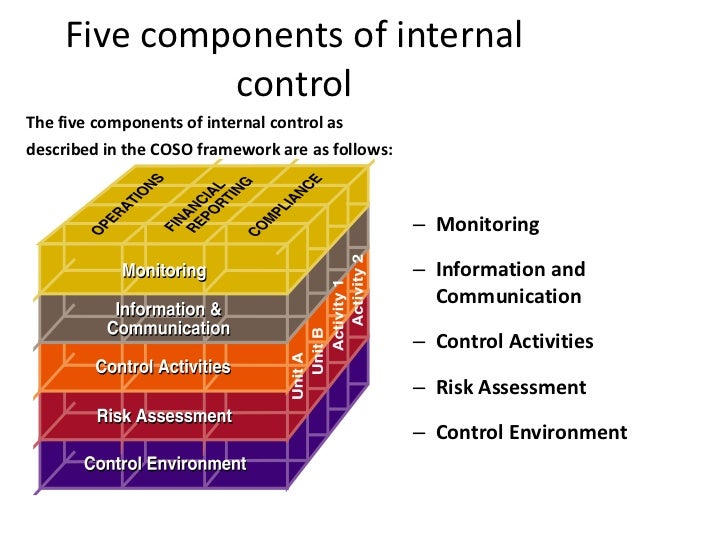
SA 315 adopts a framework for internal control that consists of five interconnected components. This framework, originally developed by the Committee of Sponsoring Organizations of the Treadway Commission (COSO), is the global standard. Understanding these five components allows you to systematically analyze an entity's entire control system.
To get a detailed walkthrough of each component with practical examples, let's turn to a video lecture.
4 | CA FINAL AUDIT REVISION SERIES|Risk assessment, internal control &materiality| CA Mahamood Shaik
This segment from a CA Final revision lecture by CA Mahamood Shaik breaks down each of the five components of internal control in a structured manner, directly aligning with the requirements of SA 315.
Watch the video from 01:01:06 to 01:15:53. This is the core of our lesson. As you watch, focus on understanding the purpose of each of the following five components: Control Environment: The 'tone at the top'. Entity's Risk Assessment Process: How management identifies its own risks. Control Activities: The specific policies and procedures. Information System & Communication: The flow of information. Monitoring of Controls: How management ensures controls are working.
Let's unpack these components further, connecting them to what an auditor looks for.
A Closer Look at the Components
1. Control Environment
This is the foundation. It’s about the culture of honesty and ethical behavior that management creates. A strong control environment, or a good "tone at the top," can significantly lower the overall risk of misstatement. As an auditor, you assess this by looking at:
- Management's integrity and ethical values.
- The competence and independence of Those Charged With Governance (TCWG), like the Audit Committee.
- A clear organizational structure and assignment of authority.
- Human resource policies that emphasize competence and ethical conduct.
Controls within this component are often called Entity-Level Controls (ELCs) because they have a pervasive effect on the entire organization.
2. The Entity's Risk Assessment Process
This is management's process for identifying and responding to its own business risks (which we discussed in the last lesson). You, as the auditor, need to understand this process to see:
- How management identifies risks relevant to financial reporting.
- Whether their process is appropriate for the entity's size and complexity.
- How they address identified risks.
If management has a weak or non-existent risk assessment process, it's a red flag that risks of material misstatement may go unaddressed.
3. Control Activities
These are the specific policies and procedures that help ensure management's directives are carried out. These are the controls you most likely interacted with during your articleship. They can be preventive or detective and include:
- Segregation of Duties: Ensuring no single person can perpetrate and conceal an error or fraud (e.g., the person who handles cash doesn't also record cash transactions).
- Authorisation: Requiring approval for transactions (e.g., a manager must approve all purchase orders over ₹50,000).
- Performance Reviews: Comparing actual results with budgets or prior periods.
- Information Processing Controls: IT controls that check the accuracy and completeness of data (e.g., application controls in an ERP system).
- Physical Controls: Securing assets (e.g., locks on a warehouse, CCTV cameras).
4. Information System and Communication
This component focuses on how the entity captures and processes information and communicates roles and responsibilities. The auditor needs to understand the information system relevant to financial reporting, including:
- The classes of transactions that are significant.
- The procedures by which transactions are initiated, recorded, processed, and reported.
- The related accounting records and supporting information.
- How the system captures significant events and conditions other than transactions.
- The financial reporting process itself, from journal entries to the final statements.
5. Monitoring of Controls
This is management’s process for assessing the effectiveness of internal control performance over time. It's about asking, "Are our controls working as intended?" Monitoring can include:
- Ongoing activities, such as regular management reviews.
- Separate evaluations, such as those performed by the internal audit function.
A robust monitoring function provides assurance that control deficiencies are identified and corrected promptly.
3. The Significance for the Auditor: A Practical Perspective
So, why is understanding this five-component framework so significant? It's not just a theoretical exercise; it directly drives your audit work.

Here are three key reasons why this understanding is crucial:
1. To Identify and Assess the Risk of Material Misstatement (RoMM)
Your understanding of the five components is the primary tool for assessing RoMM at both the financial statement and assertion levels.
- A weakness in the Control Environment (e.g., an overly dominant CEO who can override controls) indicates a high risk at the financial statement level. This is a pervasive risk.
- A weakness in a Control Activity (e.g., no one reconciles the bank account) indicates a high risk for specific assertions related to the cash balance, such as existence and completeness.
2. To Design the Audit Strategy (SA 330)
Once you've assessed the risks, you must design your audit procedures in response. Your understanding of internal controls dictates this strategy:
- If controls are well-designed and implemented, you may decide to test their operating effectiveness. If they prove effective, you can rely on them and reduce the extent of your substantive testing (e.g., performing fewer detailed checks on transactions). This is a controls-based approach.
- If controls are weak or non-existent, you cannot rely on them. You must perform extensive substantive procedures (e.g., detailed testing of balances and transactions) to obtain your audit evidence. This is a substantive approach.
3. To Fulfill Legal and Reporting Obligations
As mentioned earlier, under Section 143(3)(i) of the Companies Act, 2013, the auditor must explicitly state in their report whether the company has an adequate IFCoFR system and whether it is operating effectively. Without a thorough understanding of the five components of internal control, it would be impossible to form this opinion. This makes the entire exercise not just a matter of professional standards but a direct legal requirement.
The following reading summarizes how auditors approach this evaluation, linking the components to the practical steps of an audit.
Evaluation and Reporting of Internal Financial Controls (IFC)
This presentation slide deck from an ICAI event provides a concise summary of the five components and then maps them to the auditor's evaluation methodology. It reinforces the practical importance of your understanding.
First, review the section 'Understanding Internal Financial Controls (IFC)' which lists and defines the five components. Then, read the section 'Auditor's Evaluation Methodology: Phase 1 - Design Assessment'. Notice how the steps—like 'Understand Entity & Environment' and 'Document Controls'—are direct applications of the understanding you gain from analyzing the five components.
Conclusion
Today we've deconstructed the concept of internal control into its five core components as required by SA 315. We've moved beyond a simple definition to see how this framework is the bedrock of a risk-based audit.
Key Takeaways:
- Internal control is a process managed by the entity to achieve its objectives; auditors focus on controls relevant to reliable financial reporting (IFCoFR).
- The internal control system consists of five integrated components: Control Environment, Risk Assessment, Control Activities, Information & Communication, and Monitoring.
- Understanding these components is significant because it is the primary basis for identifying and assessing RoMM.
- This understanding directly informs the auditor's decision to adopt a controls-based or a substantive audit strategy.
- In India, it is a legal requirement under the Companies Act, 2013, for the auditor to report on the adequacy and effectiveness of IFCoFR.
Preview of the Next Lesson
We have now learned how to identify, assess, and categorize risks by understanding the entity and its internal controls. The logical next step in the audit process is to decide what to do about those risks.
In our next lesson, we will move into Module 3: Responding to Assessed Risks. We will begin by exploring how an auditor designs overall responses to address risks at the financial statement level and designs further audit procedures (tests of controls and substantive procedures) for risks at the assertion level, as prescribed by SA 330.