Hello! Welcome back to our case study module on analyzing soundscapes in Moroccan film.
In our last two lessons, we built our theoretical foundation. First, we explored R. Murray Schafer's environmental approach to soundscapes, learning to identify keynotes, signals, and soundmarks. Then, we delved into Michel Chion's perceptual framework, defining the crucial concepts of added value and synchresis to understand the powerful fusion of sound and image.
Today, we will synthesize these ideas to address a core theme of your PhD research: the construction of identity. Our goal is to analyze how diegetic sound elements—specifically ambient sound, music, and language—are used to construct a sense of place and cultural identity. We will move from the contemporary hip-hop videos we've been studying to the foundational period of Moroccan cinematic modernism, examining how early filmmakers consciously used sound to articulate a new, postcolonial identity.
1. The Sonic Terrain of Morocco
Before we analyze specific films, it's essential to understand the cultural and sonic raw materials that filmmakers draw upon. A film's soundscape doesn't emerge from a vacuum; it is built from the real-world sounds of a place, which are already rich with social and historical meaning.
To establish this context, let's turn to a section of the "Hearing the Houma" article that provides a concise overview of the key sonic elements shaping Moroccan identity.
Hearing the Houma: Sound, Vision, and Urban Space in Moroccan ...
This reading from Chris Vandermeulen's article, which we've consulted before, offers a rich description of the historical and cultural context that informs Moroccan soundscapes. It will ground our subsequent film analysis.
Please read the section titled 'A Brief History of Urban-Rural Relations and Hip-Hop’s Moroccan Vernacular'. Focus on three key themes discussed: the urban/rural divide (bled al-makhzen vs. bled al-siba), the emergence of politically charged music like Nass al-Ghiwane, and the significance of 'lhouma' (the neighborhood) and the use of 'darija' (Moroccan Arabic dialect).
This reading highlights three diegetic components that are fundamental to building a Moroccan sense of place:
- Language: The choice of language is never neutral. The article mentions the use of darija, but Morocco's linguistic landscape is far more complex, including various Amazigh (Berber) languages, Modern Standard Arabic, and French. The map below illustrates the significant geographic and cultural presence of the Amazigh people. In a film, the specific language or dialect spoken by a character immediately places them within a social, cultural, and even political context.

- Music: The article points to Nass al-Ghiwane as a pivotal example of music that blended local traditions (Gnawa, Berber music, malhun poetry) to create a new, politically resonant sound. This act of sonic synthesis is a powerful way to assert cultural identity. The choice between using indigenous musical forms, transnational genres like jazz or pop, or a fusion of both, is a key authorial decision in sound design.
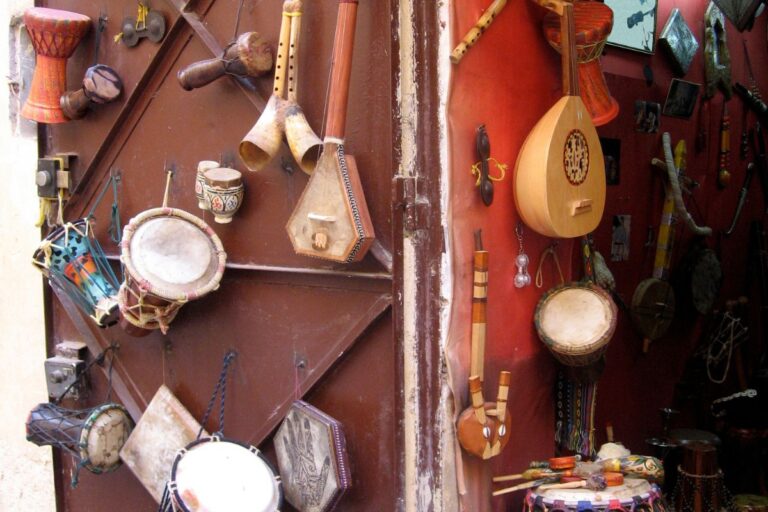
- Ambient Sound: The concept of lhouma (the neighborhood) comes with its own distinctive soundscape—what Schafer might call its keynote sounds. Similarly, the historical and cultural opposition between the urban (bled al-makhzen) and the rural (bled al-siba) is also a sonic one. The ambient sounds of a bustling Casablanca market are profoundly different from the sounds of the Atlas Mountains. These ambient soundscapes are primary tools for establishing a film's setting and sense of place.
With this framework in mind, let's examine how early Moroccan filmmakers experimented with these elements.
2. Case Studies in Moroccan Cinematic Modernism
The post-independence period of the 1960s and 1970s was a time of intense artistic experimentation in Morocco. Filmmakers, many trained in Europe, grappled with how to create a cinema that was both modern and distinctly Moroccan, breaking free from colonial models. Peter Limbrick's article, "Vernacular Modernism, Film Culture, and Moroccan Short Film and Documentary," provides an excellent analysis of how sound became a critical tool in this project.
We will explore three examples from Limbrick's work.
Case Study 1: Juxtaposition and Place in Retour à Agadir (1967)
Mohamed Afifi's short film about the city of Agadir after its devastating 1960 earthquake is a masterclass in using sound to create a complex sense of place. Let's read Limbrick's analysis.
[PDF] Vernacular Modernism, Film Culture, and Moroccan Short Film and ...
This section of Limbrick's article provides a detailed breakdown of the sound design in 'Retour à Agadir'. It's a prime example of how juxtaposing different types of sound can generate profound meaning about a place.
Please read the paragraph analyzing Afifi’s film 'Retour à Agadir/Return to Agadir'. It begins 'Afifi’s film Retour à Agadir/Return to Agadir (MA, 1967)...' and ends just before the discussion of Moumen Smihi's film. Focus on the specific diegetic and non-diegetic sounds mentioned and how they are paired with the visuals of the ruined city.
Let's unpack this using the theories we've learned:
- Diegetic vs. Non-diegetic: The film creates a deliberate tension. It opens with the expected diegetic sounds of the coast ("crashing waves"). However, it then layers the sounds of a living city ("car horns, children playing") over images of near-total destruction.
- Added Value: This juxtaposition is a powerful use of what Chion calls added value, but in a counter-intuitive or "contrapuntal" way. The "impossibly lively soundtrack" doesn't just add to the image; it contradicts it. This creates a complex emotional and intellectual response. Is it a sound of memory? Of hope for rebirth? Of a ghostly presence? The place of "Agadir" becomes not just a physical ruin but a site of trauma, memory, and resilience, all constructed through the soundtrack.
- Cultural Identity: The choice of a "nondiegetic bebop jazz soundtrack" further complicates this. It situates the film within an international modernist movement, suggesting that Morocco's post-colonial experience is part of a global story of modernity and its ruptures.
Case Study 2: Oral Tradition and Cultural Memory
The work of Ahmed Bouanani is central to this period. His films show a deep engagement with recovering and re-presenting Moroccan oral traditions and histories that were suppressed during the colonial era.
[PDF] Vernacular Modernism, Film Culture, and Moroccan Short Film and ...
The next reading focuses on two of Ahmed Bouanani's films. This analysis reveals how he used sound to reconnect with and reclaim Moroccan popular culture and history.
First, read the two paragraphs discussing 'Tarfaya, ou la marche d’un poète'. This section starts with 'Tarfaya, ou la marche d’un poète/Tarfaya, or A Poet’s Journey...' Focus on how the film uses music and poetry. Then, read the section on 'Mémoire 14', starting with 'Bouanani’s later film, Mémoire 14 (MA, 1971)...' and paying close attention to the direct quote from Bouanani about the film's soundtrack.
Bouanani's approach demonstrates two distinct strategies for using sound to construct cultural identity:
-
Re-centering Indigenous Culture (Tarfaya):
This film uses diegetic elements like "musical interludes" and "passages of poetry" to immerse the viewer in Moroccan popular traditions. The soundtrack is not just accompaniment; it is the subject. By focusing on the Amazigh tradition of amarg (sung poetry), Bouanani uses sound to perform an act of cultural recovery. The film's soundscape asserts the value and "wisdom" of indigenous art forms, creating a "vernacular modernism" that is rooted in local practice rather than imported aesthetics. -
Re-interpreting the Colonial Archive (Mémoire 14):
Bouanani's statement is a crucial insight for any scholar of postcolonial sound: "As for the soundtrack, it permitted me to express what I couldn’t show directly in the text." He took French colonial newsreels—the visual "text"—and used sound to "resituate these fragments into an alternative optic."
While Limbrick doesn't detail the specific sounds used, we can infer the strategy. By layering these silent colonial images with Moroccan music, poetry, or newly recorded narration in darija, Bouanani could critique the original footage, give voice to the silenced Moroccan subjects on screen, and construct a counter-narrative of cultural memory and resistance. The sound literally reclaims the image.
Conclusion
Today, we've moved from abstract theory to concrete analysis, exploring how filmmakers use the fundamental diegetic elements of language, music, and ambient sound to shape our understanding of place and identity.
Key Takeaways:
- Diegetic Sound is Authorial: The choice of which ambient sounds, languages, or musical pieces to include in a film's world is a powerful act of authorship that shapes its meaning.
- Constructing Place: A sense of place is built not just through visuals, but through a curated soundscape. This can be achieved through realistic ambient sound or through complex juxtapositions that create a more layered, conceptual place, as seen in Retour à Agadir.
- Articulating Cultural Identity: Language and music are primary carriers of cultural identity. Filmmakers can use them to root a story in a specific tradition (Tarfaya), comment on transnational influences (the jazz in Afifi's film), or create a complex social tapestry.
- Sound as Counter-Narrative: As Ahmed Bouanani powerfully demonstrated, sound can be used to talk back to, critique, and reclaim visual histories, making it a vital tool in postcolonial filmmaking.
Your practical experience as a sound mixer gives you a distinct advantage in recognizing these choices. You know that the final mix is the result of countless decisions about what to feature, what to suppress, and how to layer these sonic elements to guide the listener's experience.
Preview of the Next Lesson
In this lesson, we focused on the individual elements of diegetic sound. In our next session, we will broaden our scope to address the learning outcome: Analyze how a film's overall sound design engages with postcolonial themes such as memory, displacement, or exile. We will synthesize what we've learned about soundscape composition and audiovisual perception to see how the entire sonic architecture of a film can explore these complex and resonant themes.