Introduction
Welcome to Module 8. In our last lesson, we defined 'aural postcoloniality' as a critical framework for analyzing how colonial power dynamics persist within the sonic realm. You now have a sophisticated theoretical tool to investigate how soundscapes can be sites of political meaning, historical memory, and cultural resistance.
This module, "Moroccan Cinema: Socio-Sonic Context," is where we begin to apply that theory to your specific area of research. To do so effectively, we first need to understand the history of the medium itself within its national context.
This lesson addresses the learning outcome: Outline the key periods and movements in the history of Moroccan cinema. We will trace the evolution of filmmaking in Morocco from its colonial origins, through the struggles of post-independence pioneers, to the diverse landscape of contemporary production. Understanding this trajectory is the essential first step before we can analyze the soundscapes these films create.
1. The Colonial Gaze and the Political Backdrop
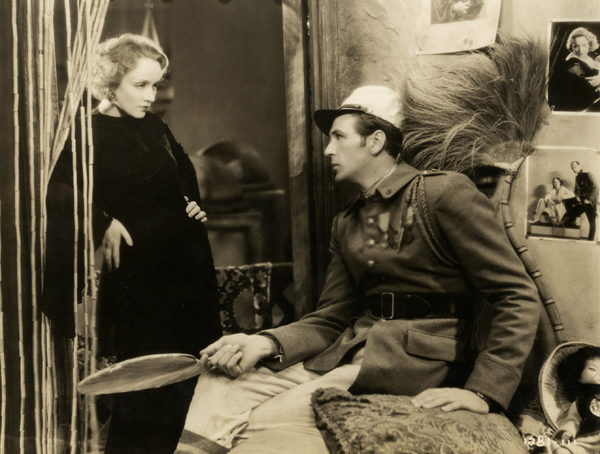
Cinema arrived in Morocco not as a local art form, but as a technology of the French Protectorate. For decades, Morocco was not a producer of its own cinematic stories but rather a subject—an exotic setting for Western narratives.
To understand the cinema that emerged after independence in 1956, we must first appreciate the political climate that shaped its creators. The period was defined by a complex struggle for national identity, not just against the colonial past but also within a new, highly controlled political reality.
Morocco’s Hidden History: How the Monarchy Crushed Its Opposition
To grasp the atmosphere in which the first generation of Moroccan filmmakers worked, it's essential to understand the political events following independence. This video provides a concise overview of the consolidation of monarchical power and the subsequent period of political repression known as the 'Years of Lead' (Anoual ar-Rasas).
Please watch the following segments from the video 'Morocco’s Hidden History': The Post-Independence Power Shift (01:00 - 02:51): Focus on the events following independence in 1956 and the consolidation of power under King Hassan II. The 'Years of Lead' (04:37 - 07:58): This segment details the 1965 protests and the beginning of a period characterized by intense state repression and censorship. Cultural Rebellion (08:33 - 11:09): Pay attention to the mention of cultural movements like the journal Souffles/Anfas and the regime's suppression of intellectual and artistic dissent.
The "Years of Lead" created a paradoxical environment for artists. On one hand, there was a powerful postcolonial desire to "free the Moroccan image" from the colonial gaze. On the other, direct political critique was dangerous, forcing filmmakers to develop symbolic, allegorical, and innovative cinematic languages to express their reality.
2. The Pioneers: Forging a Moroccan Cinema (1960s–1970s)
The first generation of Moroccan filmmakers emerged in this climate. Many were educated abroad—in Paris, Poland, or Moscow—and were deeply engaged with international art cinema movements. They returned to Morocco with the ambitious goal of creating a national cinema from a Moroccan perspective.
The following reading provides a detailed narrative of this foundational period.
[PDF] Cinema's proximity to Morocco
The essay 'Cinema's proximity to Morocco' by Latif Adnane offers a comprehensive history. We'll begin with the sections covering the colonial legacy and the first generation of post-independence filmmakers.
Please read the following two sections: 'Breaking from the colonial past': This section discusses how early Moroccan filmmakers, as a postcolonial bilingual elite, sought to create new forms of expression to counter the dominant commercial and colonial imagery. 'Pioneer Moroccan cinema...': This part focuses on the theoretical and practical work of filmmaker Moumen Smihi, who articulated the need for a new film language rooted in national culture, breaking from Western narrative traditions.
This period is not defined by a single style but by a shared ambition and intellectual fervor. Two key currents emerged:
Vernacular Modernism
Scholar Peter Limbrick uses the term vernacular modernism to describe this movement. It was a cinema that engaged with international avant-garde aesthetics but adapted them to a local Moroccan context, incorporating national history, oral traditions, and popular arts. It was modern, but not a mere imitation of the West.
Filmmakers like Ahmed Bouanani and Mohamed Afifi are central to this trend. In his influential short films 6 et 12 (1968), a "city symphony" of Casablanca, and Mémoire 14 (1971), a radical re-editing of colonial-era newsreels, Bouanani sought to create a new historical memory through experimental montage.
The Emergence of a New Wave
Several films from this era are considered foundational, marking a "revolution in Maghrebian cinema."
- Wechma (Traces, 1970) by Hamid Benani is often cited as the true beginning of Moroccan art cinema.
- El Chergui (The East Wind, 1975) by Moumen Smihi tackled the status of women through a highly symbolic and non-linear narrative structure inspired by classical Arabic literature.
- A Thousand and One Hands (1972) by Souheil Benbarka offered a powerful critique of the exploitation of carpet weavers.
These early films were often experimental and intellectually dense, signaling a clear break from both the colonial travelogue and commercially driven cinema.
3. Social Realism and Heritage Cinema (1980s–1990s)
As Moroccan cinema matured, it branched into distinct thematic and stylistic movements, largely shaped by the continuing political constraints of the "Years of Lead."
[PDF] Cinema's proximity to Morocco
Continuing with the same PDF, we'll now explore the two major, and somewhat opposing, trends that characterized Moroccan cinema from the late 1970s through the early 1990s.
Please read the following sections: 'Realism: ‘traces’ not to be erased': This section details the rise of a socially committed realist cinema, focusing on themes of social injustice, identity, and the struggles of ordinary people. Note the key filmmakers mentioned, such as Jillali Ferhati, Ahmed El Maânouni, and Mohamed Reggab. 'Cinema of Heritage: toward a constructive positive nostalgia': This part describes a turn away from bleak realism towards films that engaged with Moroccan heritage, family themes, and humor, exemplified by the work of Mohamed Abderrahman Tazi and Farida Benlyazid.
This period can be broadly characterized by two movements:
-
Social Realism: A dominant stream of socially committed cinema emerged, exposing the realities of postcolonial Morocco.
- Filmmakers: Jillali Ferhati (The Beach of Lost Children, 1991), Ahmed El Maânouni (Alyam, Alyam, 1978), and Mohamed Reggab (The Barber of the Poor Quarter, 1982) were key figures.
- Themes: They focused on the lives of marginalized people, social injustice, and the clash between tradition and modernity. El Maânouni's documentary Trances (1981), about the legendary band Nass El Ghiwane, is a landmark work that captures the raw energy of this popular cultural expression of dissent.
-
Heritage Cinema: As a counterpoint to what some critics called the "miserabilism" of social realism, this movement explored Moroccan culture with a "constructive positive nostalgia."
- Filmmakers: Mohamed Abderrahman Tazi's Looking for My Wife's Husband (1993) was a massive commercial success that used humor and a family drama to explore polygamy and patriarchy. Feminist filmmaker and screenwriter Farida Benlyazid explored themes of female identity and spirituality in films like A Gateway to Heaven (1987).
Throughout this period, direct political critique remained largely taboo. As director Mustapha Derkaoui noted, filmmakers learned to be critical metaphorically, making cinema "a means of denunciation and not a force with the goal of blind and intolerable subversion."
4. The New Moroccan Cinema (Post-1999)
The death of King Hassan II in 1999 and the ascension of King Mohammed VI marked the end of the "Years of Lead" and ushered in a new era of political openness. This profoundly impacted Moroccan cinema, allowing filmmakers to tackle formerly forbidden subjects and reflecting a more diverse and complex society.
[PDF] Cinema's proximity to Morocco
The final sections of Adnane's essay, supplemented by a short video mentioning key contemporary films, will guide us through this modern period.
Please read the final two sections of the essay: 'Neorealist new Moroccan cinema': This section covers the period after 1999. Focus on the new themes that emerged, such as the direct cinematic treatment of the 'Lead Years' and the rise of a new 'street-margin realism.' 'Amazighi and MRE Films...': This part is crucial for your research. It discusses the new linguistic diversity in Moroccan film (especially the inclusion of Amazigh languages) and the significant role of 'MRE' filmmakers (Moroccans Living Abroad) in shaping a transnational cinema.
5 Essential Moroccan Films | Omar Berrada
This clip from a talk by Omar Berrada provides names for some of the essential films and filmmakers of both the pioneering era and the more contemporary period, helping to make the history more concrete.
Watch the segment from 00:38 to 03:05. Listen for the names of filmmakers like Faouzi Bensaïdi and Leila Kilani, who represent the 'New Moroccan Cinema.'
Key characteristics of the New Moroccan Cinema include:
- Confronting the Past: A wave of films directly addressed the trauma of the "Years of Lead," such as Saad Chraibi's Jawhara (2003) and Jilali Ferhati's Memory in Detention (2004).
- New Realism: Filmmakers like Nabil Ayouch (Ali Zaoua, 2000; Horses of God, 2012) and Nour-Eddine Lakhmari (Casanegra, 2008) brought the marginalized worlds of street children and the urban underclass to the screen with unprecedented rawness, often using the uncensored vernacular of Darija (Moroccan Arabic).
- Linguistic and Cultural Diversity: For the first time, the Amazigh (Berber) languages and cultures found their way onto the big screen, challenging the monolithic Arab-Islamic identity promoted for decades.
- Transnational Voices: The contributions of MRE (Marocains Résidant à l'Étranger) filmmakers became increasingly significant. Directors like Faouzi Bensaïdi (A Thousand Months, 2003), Leila Kilani (On the Edge, 2011), and Ismail Ferrouki (Le Grand Voyage, 2004) explore themes of migration, hybrid identity, and the relationship between Morocco and Europe, creating a cinema that is at once local and global.

Conclusion
This lesson has provided a historical map of Moroccan cinema, charting its course through distinct periods of political and artistic change.
Key Takeaways:
- Colonial Period (pre-1956): Morocco served primarily as an exoticized backdrop for Western films.
- Pioneering Era (1960s-70s): Shaped by post-independence nationalism and the political repression of the "Years of Lead," this period saw the emergence of a "vernacular modernism" as filmmakers sought to create an authentic Moroccan cinematic language. Key figures include Hamid Benani, Moumen Smihi, and Ahmed Bouanani.
- Social Realism & Heritage (1980s-90s): Cinema was dominated by two trends: a socially critical realism exploring the struggles of ordinary Moroccans, and a "heritage cinema" that turned to cultural history and family drama.
- New Moroccan Cinema (Post-1999): Following an era of political liberalization, filmmakers began to tackle taboo subjects like the "Years of Lead," explore marginalized communities with a new rawness, and reflect the nation's linguistic diversity, including the voices of the Amazigh people and the transnational MRE diaspora.
Preview of the Next Lesson:
Having outlined the history of the cinematic medium in Morocco, we will now turn to the raw material of your research: sound itself. In our next lesson, we will describe the characteristic sonic environments of Morocco's key geographic regions. This will provide the crucial environmental and cultural context needed to begin analyzing how these real-world soundscapes are represented, transformed, and given meaning in the films we have just historicized.