Hello, and welcome back.
In our previous lesson, we framed the study of sound through an ecological lens, understanding the soundscape as a dynamic system of relationships. We established that the goal of acoustic ecology, the field pioneered by R. Murray Schafer, is to foster a "functional balance" within this system.
Today, we will examine a crucial development of that idea. This lesson addresses the learning outcome: Describe Barry Truax's communicational model of the soundscape and how it extends Schafer's framework.
While Schafer gave us the foundational language and the ecological metaphor, his student and colleague Barry Truax developed a more systematic model to analyze how meaning is actually generated and exchanged within the soundscape. Truax's work is pivotal because it builds a bridge between Schafer's listener-centered, qualitative approach and the objective world of acoustics, offering a more robust framework for analyzing all sonic environments, including the technologically mediated soundscapes of cinema that are central to your research.
1. Context: Schafer's Listener-Centered Model
To appreciate how Truax extends Schafer's work, we first need to recall the core tenets and limitations of Schafer's original model. The following reading provides an excellent summary and critique, setting the stage for Truax's intervention.
The Acoustic Environment Model
This text, written by Barry Truax himself, revisits Schafer's soundscape model. As you read, pay close attention to how Truax characterizes it as subjective, listener-centered, and particularly how it treats electroacoustic technology.
Please read the section titled 'The Soundscape Model'. Focus on three key aspects: the model's emphasis on the listener's subjective perception, its qualitative methodology (relying on concepts like keynote and signal), and its characterization of electroacoustic technology as 'schizophonic' and often negative.
As the reading highlights, Schafer's model is powerful but has certain leanings:
- It is unapologetically subjective, placing the individual listener at the center.
- Its methodology is qualitative, based on perceptual distinctions that can't be easily measured (e.g., what constitutes a foreground 'signal' versus a background 'keynote' can shift).
- It often regards electroacoustic technology with suspicion, framing its ability to separate sound from source ("schizophonia") as a primary contributor to the degradation of the soundscape into a "lo-fi" state.
It is in response to these points—particularly the need to integrate objective analysis and to better account for modern, mediated soundscapes—that Truax developed his own model.
2. The Acoustic Communicational Model
Barry Truax sought to create an integrated framework that honored Schafer's listener-centric approach while also incorporating the realities of signal processing and information theory. His solution is the Acoustic Communicational Model.
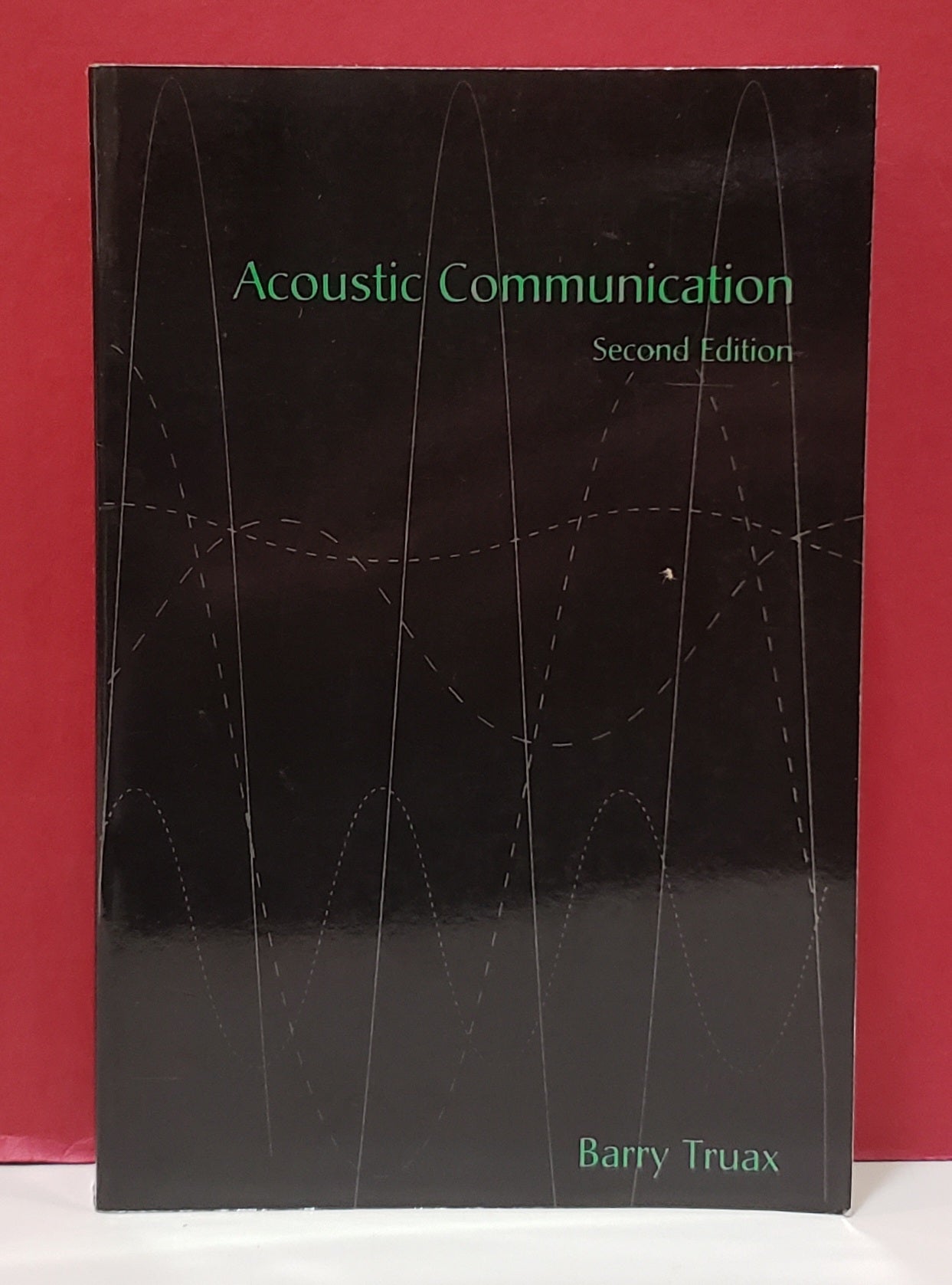
The following reading is the core of today's lesson. It details Truax's model, which he also refers to as the "Acoustic Community Model."
The Acoustic Environment Model
Here, Truax outlines his own model. He presents it as a necessary integration of the objective (energy transfer) and subjective (soundscape) models. Your goal is to understand the structure and purpose of this new framework.
Please read the section titled 'The Acoustic Community Model'. As you read, identify and define the two levels of his model: the micro-level and the macro-level. Also, take note of how he redefines the role of 'noise' and the design goals that emerge from this communicational perspective.
Let's break down the key components of Truax's model based on the reading:
Core Concept: The Acoustic Community
Truax reframes the soundscape as an acoustic community: a system defined by the shared acoustic experience among its participants. Within this community, sound functions as a form of communication—a system for creating and exchanging information.
His model operates on two distinct but interconnected levels:
-
Micro-Level Model: Meaning Extraction
This level describes how the listening process extracts meaning from sound. It's a two-way relationship between the sound's structure and its context.Meaning isn't just in the sound; it's produced when a listener recognizes patterns in the sound (structure) and interprets those patterns based on their knowledge of the world (context). This is a process of information exchange.
-
Macro-Level Model: Relationship Mediation
This level focuses on how sound mediates the relationship between an individual and their environment (be it the self, others, or society).Here, the focus is not just on the information exchanged, but on the function of that exchange. Does it create a stable, binding relationship (e.g., the sounds of a vibrant community) or an unstable, alienating one (e.g., the stress-inducing noise of a factory)?
A New Definition of Noise
Within this model, noise is more than just "unwanted sound." It is anything that degrades communication. Specifically, noise:
- Obscures the auditory image, reducing the information available to the listener.
- Creates negative relationships, fostering alienation and stress.
This definition elegantly synthesizes the subjective experience of annoyance with the objective fact of signal degradation.
3. How the Communicational Model Extends Schafer
Truax's model is not a rejection of Schafer's work, but a significant extension and systematization of it. It takes Schafer's foundational concepts and places them within a more dynamic and comprehensive framework.
This final reading explicitly connects Truax's theory of acoustic communication back to Schafer's original terminology.
[PDF] Soundscape Composition as Global Music
In this excerpt from a different paper, Truax directly explains how his theory of acoustic communication builds upon Schafer's concepts of keynote, signal, and soundmark.
Please read the section titled 'IV. Basic Soundscape Concepts'. Focus on how Truax re-interprets keynote, signal, and soundmark in terms of their communicative function and how his theory accounts for modern, mediated forms of listening.
Synthesizing what we've learned, we can see several ways Truax extends Schafer's framework:
-
From Categories to Functions: Schafer's terms (keynote, signal, soundmark) are primarily perceptual categories. Truax redefines them by their communicative function. Keynotes provide background continuity; signals provide foreground information. This shifts the analysis from "what is it?" to "what does it do?" in the information exchange.
-
From Environment to Process: Schafer's focus is on the soundscape as an environment to be preserved or improved. Truax's model focuses on acoustic communication as a process to be understood. This process-oriented view is better equipped to handle complex, layered sonic events, like a film soundtrack.
-
Integrating Technology: Where Schafer was often critical of "schizophonia," Truax's model is more agnostic. It provides a framework for analyzing all acoustic communication, whether it's face-to-face or mediated by technology. Electroacoustic media are not inherently bad; they are simply another context for communication. They can create "surrogate relationships" and "distracted listening," but they also enable "heightened, analytical listening" and new forms of creativity, such as soundscape composition. This nuanced view is essential for analyzing film sound, which is, by its very nature, a schizophonic art form.
-
Formalizing Relationships: Schafer spoke passionately about the listener's connection to the environment. Truax's macro-level model gives this a formal structure, allowing for a more systematic analysis of how sonic relationships can be binding or alienating, functional or dysfunctional.
Conclusion
This lesson has introduced a pivotal theoretical tool for your work. By shifting the focus from the soundscape-as-environment to acoustic-communication-as-process, Barry Truax provides a more versatile and systematic framework for analysis.
Key Takeaways:
- Barry Truax's communicational model views the soundscape as an "acoustic community" where information is exchanged between listeners and their environment.
- The model has two levels: a micro-level analyzing how meaning is extracted from sound structure and context, and a macro-level analyzing how sound mediates social and environmental relationships.
- This model extends Schafer's work by reframing his concepts (keynote, signal) in terms of their communicative function and by providing a more nuanced framework for analyzing electroacoustic and mediated sound.
- Crucially, Truax's model moves beyond a simple positive/negative judgment of technology, viewing it as a tool that can both create surrogate realities and enable new forms of creative and analytical listening.
Preview of the Next Lesson:
This lesson concludes our initial module on the foundations of soundscape theory. You now have a solid grasp of the key concepts from Schafer and Truax. In our next lesson, we will put this knowledge to use to "Critically assess the strengths and limitations of soundscape theory as a framework for analyzing mediated sound." We will synthesize what we've learned to evaluate how well these theories apply to complex media like film, which will serve as a perfect transition to our next module on specific film sound theory.