Olá! Welcome to our fourth lesson in the Foundations for Medical English module.
In our last lesson, you learned how to communicate objective findings, such as vital signs and the results of a physical exam. We focused on the standard English terminology used in oral presentations and written reports.
Today, we'll build on that by focusing on the tools of medical intervention. Our goal is to identify English names and pronunciations for common medications and drug classes relevant to emergency care. As a physician working in APH, you already have deep pharmacological knowledge. Therefore, this lesson will concentrate on the English terminology, including generic and brand names, drug classifications, and pronunciation, which are essential for clear communication with international colleagues, understanding English-language protocols, and reading medical literature.
1. The Language of Pharmacology: Names and Classes
In English, as in Portuguese, medications have different names. Understanding the distinction between them is crucial. We'll also explore how drugs are grouped into classes.
EMT Basic Pharmacology: General overview of terms and medications
Let's begin with a video from Summit Healthcare Education that provides an excellent overview of basic pharmacology terms used in the pre-hospital setting. The speaker clearly explains the key concepts we'll be using today.
Watch the segment from 00:18 to 06:51. As you watch, focus on understanding the definitions and examples for these three key terms: Generic Name (e.g., naloxone) Trade Name (also called Brand Name) (e.g., Narcan®) Drug Class (e.g., analgesics, bronchodilators)
As the video explained, the generic name is the official medical name, while the trade name is the commercial brand name. In your work and when reading papers, you will encounter both.
Recognizing Drug Classes by Suffixes
One very useful skill is to recognize a drug's class by its common suffix (the ending of the word). This can help you quickly identify the function of a medication even if you don't recognize the specific name.
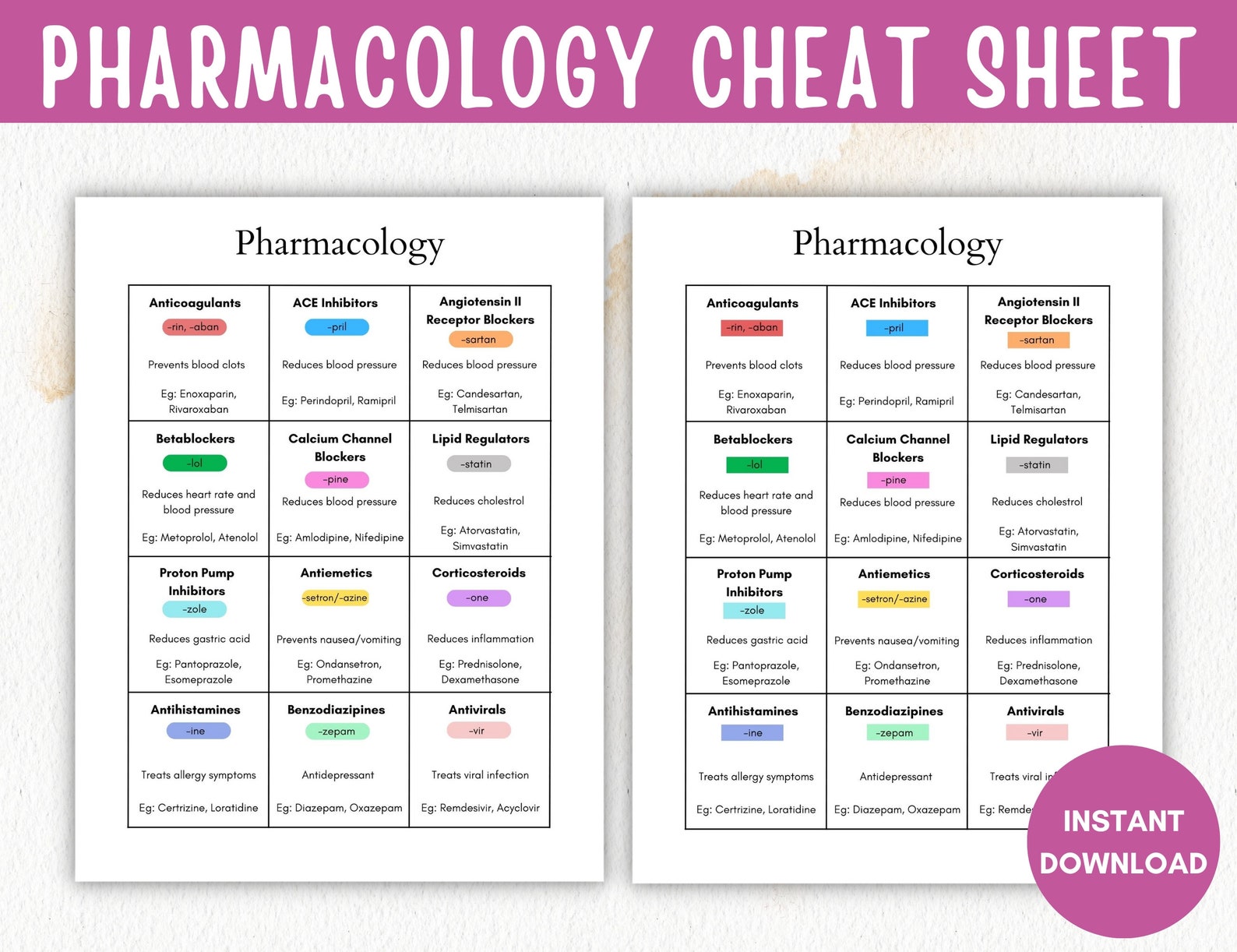
Look at the image above. You can see patterns that are very helpful. For example:
- -olol: Beta-blocker (e.g., Metoprolol, Labetalol)
- -caine: Local anesthetic (e.g., Lidocaine, Tetracaine)
- -dipine: Calcium channel blocker (e.g., Amlodipine, Nicardipine)
- -pril: ACE inhibitor (e.g., Enalapril, Lisinopril)
Familiarity with these patterns will significantly speed up your ability to process medical information in English.
2. Common Pre-Hospital (BLS) Medications
Now let's focus on some of the most common medications used in pre-hospital care. These are drugs you likely use frequently. We will use the same video to hear their names, classes, and uses described in English.
EMT Basic Pharmacology: General overview of terms and medications
Let's return to the 'EMT Basic Pharmacology' video. This time, we will focus on specific medications commonly administered by pre-hospital providers.
Please watch the following segments: Epinephrine: 18:54 - 24:18 Naloxone: 24:18 - 29:46 Nitroglycerin: 29:46 - 36:44 For each medication, listen carefully and try to identify its generic and trade names, drug class, primary indication, and route of administration (e.g., IM, IV, sublingual).
Let's summarize the key information for those medications in a table. Notice the pronunciation and phrasing used.
| Generic Name | Common Trade Name(s) | Drug Class | Primary Emergency Indication | Common Phrasing |
|---|---|---|---|---|
| Epinephrine | Adrenaline, EpiPen® | Sympathomimetic | Anaphylaxis, Cardiac Arrest | "Give 0.3 milligrams of epi IM." |
| Naloxone | Narcan® | Opiate Antagonist | Opiate Overdose | "Administer 2 milligrams of Narcan IN (intranasal)." |
| Nitroglycerin | Nitrostat®, Nitro-Bid® | Vasodilator | Chest Pain (cardiac origin) | "The patient can have 0.4 milligrams of sublingual nitro." |
3. Key Advanced Cardiac Life Support (ACLS) Medications
In addition to the core pre-hospital drugs, your APH work certainly involves Advanced Cardiac Life Support (ACLS). The medications used here are critical. Let's review the English names and uses for some of the most important ones.
This video from The Resuscitation Coach focuses specifically on ACLS drugs. The speaker's accent is different from the previous video, which is good practice for understanding English from various regions.
Please watch the segments on these three key antiarrhythmic drugs: Amiodarone: 02:27 - 06:03 Adenosine: 06:03 - 08:54 Atropine: 08:54 - 10:09 As you watch, pay attention to the name of each drug, the specific arrhythmia it is used to treat (e.g., VF, SVT, bradycardia), and the initial adult dose mentioned.
Textbook and reference materials are crucial for reinforcing what you hear. The Merck Manual is a highly respected resource worldwide. Let's use it to review the information.
Cardiopulmonary Resuscitation (CPR) in Adults
Now, let's look at a table from the Merck Manual Professional Version. This is a typical way you will see medication information presented in English medical texts. It's a great tool for quick reference.
In the article, find the table titled 'Medications Commonly Used for Resuscitation*'. Locate Amiodarone, Adenosine, and Atropine. Compare the 'Adult Dose' and indications with what you noted from the video. Also, take a moment to scan the other medications listed, such as Lidocaine and Dopamine.
To help you visualize, here is a simple chart summarizing some of these key emergency medications.

4. Practice and Reference
The best way to become comfortable with this new vocabulary is to use it. This reference guide is an excellent tool for your self-study. It's a real-world document used by EMS providers.
[PDF] EMS Pharmacology Reference Guide
This 'EMS Pharmacology Reference Guide' from the Rhode Island Department of Health is a comprehensive resource. We will use it for a brief practical exercise.
First, take one minute to scroll through the 'Table of Contents' (pages 4-5) to see the wide range of medications listed. Then, choose two drugs you often use in your practice that we haven't covered yet (for example, Midazolam, Fentanyl, or Ketamine). Find their entries in the guide and read the 'Classification' and 'Protocol Indication(s)' sections. This will help you get used to finding and reading this type of information in English.
This kind of practice—actively searching for and reading about familiar medications in English—is one of the most effective ways to build your specialized vocabulary.
Conclusion
Great job today. We've covered a lot of essential terminology that forms the basis of pharmacological communication in emergency medicine.
Key Takeaways:
- You can now differentiate between generic and trade (brand) names in English.
- You have a tool to recognize drug classes using common suffixes.
- You can identify the English names, classes, and primary indications for crucial BLS medications (like Epinephrine and Naloxone) and ACLS medications (like Amiodarone and Adenosine).
- You have practiced locating and reading information in authentic English-language medical references.
Preview of the Next Lesson:
We will continue building your foundational vocabulary in our next lesson, which is the final one in this module. The learning outcome will be to recognize and correctly pronounce common abbreviations used in English medical contexts (e.g., BP, HR, IV, STAT). This is another critical skill for fast and accurate communication in emergency situations.