In our previous lesson, we established the legal and social architecture of the Jim Crow South, a world built on the principles of segregation and the political disenfranchisement of African Americans. Now, we turn to the economic engine that powered this system. If Jim Crow laws built the walls of the prison, the system we will discuss today locked the door, ensuring that for millions, there was no economic escape.
This lesson will describe the system of sharecropping. We will explore how it emerged from the ashes of the Civil War, how it was designed to function, and how, in reality, it became a trap that ensnared generations of African American families in a cycle of debt and poverty. Understanding this system of economic bondage is essential for grasping the world of Richard Wright's childhood, a world where hunger was not just a physical sensation but a fundamental condition of life.
A Broken Promise and a New Arrangement
The end of the Civil War and the abolition of slavery created a monumental challenge. Millions of formerly enslaved people were now free, but they had no land, no money, and few resources to build a new life. Conversely, the wealthy white landowners who had dominated the Southern economy still had their land, but they had lost their unpaid labor force and the capital to hire a new one.
In the initial chaos, there was a brief moment of hope. To address the crisis of the newly freed population, Union General William T. Sherman issued an order that would have redistributed land to former slaves—the famous but ultimately unfulfilled promise of "40 acres and a mule." The following short documentary clip explains what happened to this order and what new arrangement rose in its place.
Sharecropping in the American South
This clip from Daily Dose Documentary provides a concise overview of how the failure of land redistribution after the Civil War led directly to the rise of sharecropping as the South's new dominant labor system.
Please watch from the beginning until the overview of the system's emergence. Notice how sharecropping is presented as a solution for both cash-poor landowners and landless farmers.
As the video explains, with the promise of land ownership revoked, and with few other options available, many formerly enslaved people had little choice but to return to the very plantations where they had once been held in bondage, but now under a new contractual system: sharecropping.
What Was Sharecropping?
On the surface, sharecropping seemed like a step toward independence. It was not gang labor under the whip of an overseer. Instead, a family would rent a parcel of land, along with housing, tools, and seeds, from the landowner. In exchange for the right to work this land for themselves, they agreed to pay the owner a "share" of the harvested crop at the end of the year, typically half.
To understand the system as it was initially conceived, we'll turn to two excellent historical resources. First, an article from PBS's American Experience that defines the system and its context.
Sharecropping: Slavery Rerouted | American Experience | Official Site | PBS
This article provides a sharp, clear definition of sharecropping, framing it as a system that, while appearing to be a change, ultimately served to keep Black farmers from achieving true economic mobility.
Please read the section titled What is Sharecropping?. Pay attention to how it was "pitched as a solution for both groups" but was organized to maintain the old power structure.
While both poor white and Black farmers became sharecroppers, the system became the primary fate for the newly freed African American population. Theoretically, it offered a path to self-sufficiency. The American Battlefield Trust provides a useful breakdown of how this was supposed to work, and the different tiers of tenancy that existed.
Sharecroppers | American Battlefield Trust
This article explains the mechanics of the ideal sharecropping system and distinguishes between different types of tenant farming, which represented a theoretical ladder of economic advancement.
Read the section that begins with a description of how the system worked. Then, continue with the next short section that explains the difference between tenancy levels, from sharecropper to share-tenant to cash-tenant.
This "ladder of tenancy" was, for most African Americans, a phantom. While sharecropping offered the illusion of autonomy, it was in practice a system of economic entrapment, often referred to as debt peonage.
The Reality: A Vicious Cycle of Debt
The landowner, who was almost always white, held all the power in the sharecropping arrangement. The sharecropper, who was often illiterate, was entirely dependent on the landowner not just for land, but for everything needed to survive. This dependency was the mechanism of control.
Here’s how the trap worked:
- The "Furnish": Sharecroppers started each year with zero capital. The landowner would "furnish" them with food, clothing, seeds, and tools, all on credit from the plantation's own store, or "commissary."
- Inflated Prices and High Interest: The landowner could set the prices and interest rates as high as he wished. A bag of flour or a pair of shoes could be marked up to several times its actual value.
- The "Reckoning": At the end of the year, the sharecropper would bring his harvest to the landowner. The landowner would sell the crop and "settle up," calculating the value of the sharecropper's half against the debt accumulated over the year.
- Perpetual Debt: In this rigged system, the debt almost always exceeded the earnings. The sharecropper would end the year not with a profit, but with a debt that was carried over to the next year.
Because it was illegal to leave a tenancy while in debt to the landowner, this system effectively bound the farmer and their family to the land, in a state that has been called "slavery by another name."
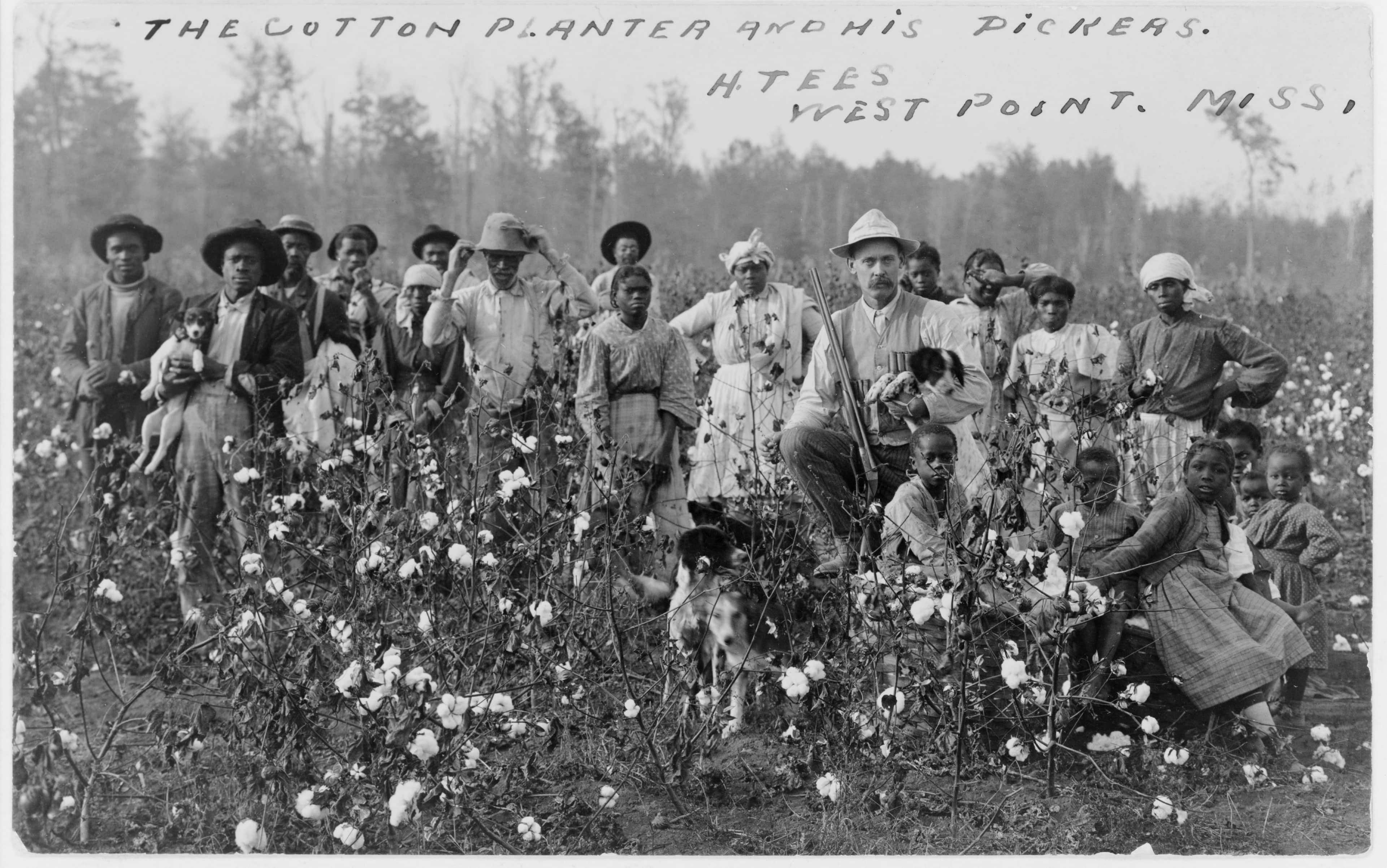
The following reading from the PBS article details the grim realities of this life.
Sharecropping: Slavery Rerouted | American Experience | Official Site | PBS
This section moves from the theory of sharecropping to its devastating practice, explaining precisely how the mechanisms of debt, credit, and legal restrictions created a system of neoslavery.
Please read the entire section titled Life as a Sharecropper. Focus on how the commissary, the crop settlement process, and restrictive laws worked together to eliminate any possibility of economic advancement or physical mobility.
To hear these mechanics explained and to understand the personal stakes involved, we will watch a segment from historian Steve Heimler. He not only reviews the cycle of debt but also shares the harrowing personal account of a sharecropper named Henry Blake, which reveals the violence that backed up the economic exploitation.
Did SLAVERY Continue After the Civil War? (Slavery and Sharecropping Compared)
In this video, Steve Heimler explains the transition to sharecropping and uses a powerful primary source account to illustrate the system's brutality.
Please watch from this section. Listen for his explanation of the credit system and the crushing story of Henry Blake, which demonstrates the lack of legal recourse available to Black sharecroppers.
The poverty created by this system was generational. Children born into sharecropping families received little to no education, as their labor was needed in the fields from a young age. They were born into a debt they could never hope to pay.

Conclusion
In this lesson, we have dissected the economic system that defined life for millions of African Americans in the post-Reconstruction South. We have seen that sharecropping, while presented as a step up from slavery, functioned as a system of control that achieved through economic means what could no longer be done through legal ownership of people.
The key takeaways are:
- Sharecropping arose after the Civil War to solve a labor crisis for white landowners and a survival crisis for landless freedmen.
- The system was based on a landowner renting land and supplies to a farmer in exchange for a large share of the future crop.
- In practice, it became a system of debt peonage, where landowners used plantation stores, inflated prices, and dishonest accounting to trap sharecroppers in an inescapable cycle of debt.
- This economic bondage was enforced by the same legal and social apparatus of Jim Crow we discussed previously, backed by the constant threat of violence.
This system of institutionalized poverty and hunger is the world into which Richard Wright was born. The gnawing emptiness in the stomach that he describes so powerfully in Black Boy is a direct product of this economic exploitation.
In our next lesson, we will move from the legal and economic structures of Jim Crow to its most brutal enforcement mechanism: extra-legal violence. We will examine the role that lynching and the ever-present threat of mob violence played in maintaining the South's rigid racial hierarchy.