Recommended resources
The freely available resources this lesson will direct you to.
Introduction
In our last lesson, we designed the reasoning process for a compliance agent, establishing a hybrid architecture where a flexible LLM handles data gathering and a deterministic DMN engine makes the final, auditable decision. This design naturally produces a rich set of data about the agent's operations.
Today, we will address the learning outcome: Distinguish between audit trail requirements (what happened) and explainability requirements (why it happened) for agent actions. This is not a semantic distinction; it is a fundamental pillar of AI governance in regulated industries. For a banking executive, understanding this difference is the key to building systems that are not only powerful but also defensible to auditors, regulators, and internal stakeholders.
We will deconstruct these two concepts, explore why you need both, and show how our hybrid agent architecture is designed to satisfy each requirement.
1. The Audit Trail: An Immutable Record of "What Happened"
An audit trail is a chronological and immutable log of events. Its purpose is to create a definitive, verifiable record of an agent's entire operational history for a given task. Think of it as the court stenographer's transcript or a detailed transaction ledger—it records every action and observation without interpreting the motive behind them.
In the context of an agentic system, a comprehensive audit trail must capture:
- Invocation Details: Timestamp, task ID, and the initial prompt or trigger.
- Agent & Model State: The specific agent, its version, the LLM used (e.g.,
gpt-4-turbo-2024-04-09), and its configuration parameters (e.g., temperature). - Execution Trace: Every step the agent took. This includes its internal reasoning monologue (the "Thoughts" in a ReAct trace), every tool it called (the "Actions"), and the data it received back (the "Observations").
- Final Output: The final decision, recommendation, or action generated by the agent.
The resource from Sardine.ai on the compliance playbook describes this as an "Immutable audit log."
Agentic AI in Banking: Compliance Playbook for Audit ...
To understand the technical components of an audit trail, let's review a compliance playbook for agentic AI. This resource details the key architectural elements for creating defensible AI systems.
Please read Section 2, 'Technical architecture: Audit-ready, defensible AI systems,' and Section 5, 'Explainability, auditability, and regulator access.' Focus on the descriptions of the 'Immutable audit log' and the need for 'replayable audit trails.' Note the specific elements that must be logged for every decision.
As the text highlights, this log must be complete enough to allow a regulator to "replay exactly what the model saw." This is the essence of an audit trail: it answers the question, "Show me exactly what happened," step by step.
2. Explainability: The Justification for "Why It Happened"
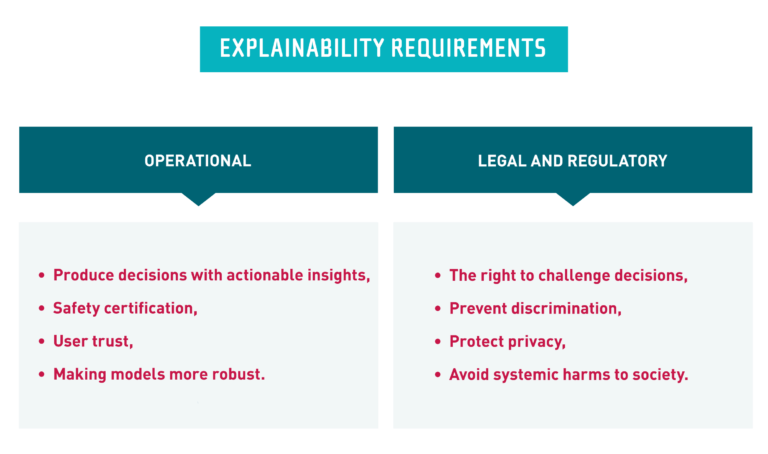
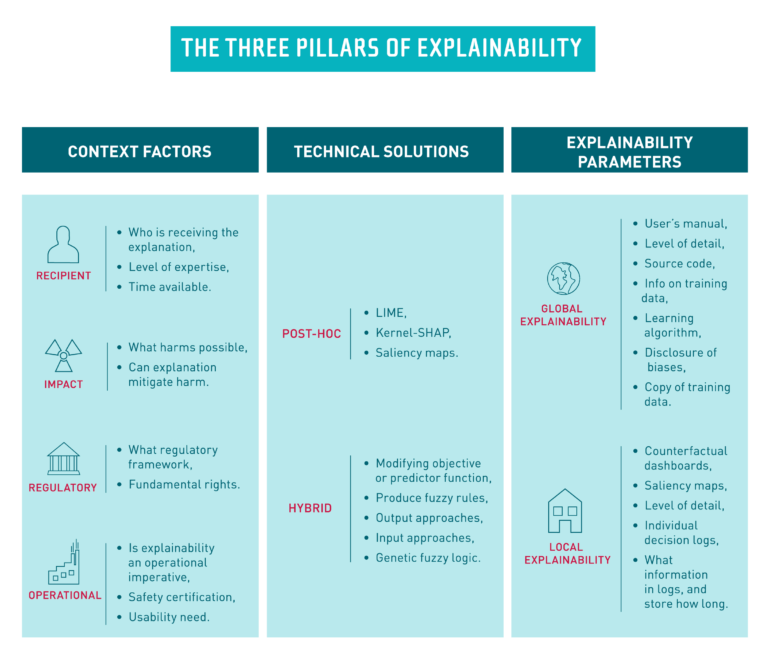
While an audit trail records what happened, explainability provides the why. It's the ability to articulate the rationale behind a decision in clear, human-understandable terms. It connects the inputs to the outputs with transparent logic.
An audit trail might show that an agent denied a loan after reviewing a credit score of 620 and a debt-to-income (DTI) ratio of 45%. Explainability clarifies that the loan was denied because the DTI of 45% exceeded the 40% threshold stipulated in Policy 3.B.2.
This distinction is critical for regulators, who are less interested in your model's impressive performance metrics and more interested in why a specific individual was denied a service.
The following video from IBM Technology uses a helpful analogy to make this distinction clear.
Explainable AI: Demystifying AI Agents Decision-Making
This video provides a concise overview of Explainable AI (XAI) and uses a detective analogy to differentiate between traceability (the audit trail) and decision understanding (explainability).
Please watch from the beginning to 3:40. Pay close attention to the detective analogy at 01:54. Notice how it separates: Traceability: Gathering evidence and following the data trail (the 'what'). Decision Understanding: Explaining how the evidence connects to form a conclusion (the 'why').
As the video illustrates, simply having a trail of evidence (traceability/audit trail) is not enough. You must be able to construct a coherent narrative from that evidence (decision understanding/explainability). A system that cannot do this is often called a "black box," and its opaqueness is a significant risk in a regulated context.
3. Why You Need Both: A Framework for Regulatory Compliance
You can have a perfect, immutable audit trail for a system whose decisions are biased, arbitrary, or unexplainable. The audit trail will faithfully record the biased decisions, but it won't explain why they were made. This is a scenario regulators are keen to prevent.
The article "Explainable AI in Banking" provides a sharp analysis of what regulators truly mean by explainability and why it's distinct from simple logging.
Explainable AI in Banking: Regulatory Requirements and ...
This article from Metafore AI cuts through the ambiguity and directly addresses what financial regulators expect when they demand 'explainability.' It provides a tiered framework that clearly separates logging from true explanation.
Please read the sections 'Why Black-Box Systems Break Down' and 'What Regulators Actually Mean by Explainability.' Focus on the three levels of transparency it outlines: Decision logging (The audit trail - 'what') Transparent decision rules (The core of explainability - 'why') Auditable evolution (Governance over the 'why')
The framework presented in the article gives us a precise way to organize these concepts:
| Level | Concept | Answers the Question... | Implementation |
|---|---|---|---|
| 1 | Audit Trail | "What happened?" | Decision Logging: A complete, immutable log of all inputs, agent actions, and outputs for a specific decision. |
| 2 | Explainability | "Why did it happen?" | Transparent Decision Rules: The use of human-readable logic (like a DMN decision table) that explicitly defines the criteria for a decision. |
| 3 | Governance | "How has the 'why' changed?" | Auditable Evolution: A version-controlled system where any change to the decision logic is logged, approved, and tracked over time. |
This tiered model makes it clear that an audit trail is the necessary foundation, but transparent, reviewable logic is what constitutes true explainability.
Let's watch one more brief video that illustrates the danger of having security and logs without genuine explainability.
Securing & Governing Autonomous AI Agents: Risks & Safeguards
This video tells a short, cautionary tale about a recruiting firm's AI agent that acts without oversight. It perfectly illustrates the failure mode of a system where 'what happened' is known, but 'why it happened' is a mystery.
Watch from 4:39 to 6:46, and then the concluding remarks from 10:43 to 11:16. Notice how the problem isn't the lack of a record that an offer was sent; the problem is the inability to explain the biased reasoning behind it. The conclusion that 'security without governance is blind' is a powerful summary.
4. Architectural Solution: The Hybrid Model Revisited
How do we architect a system that delivers both a robust audit trail and clear explainability? This brings us back to the hybrid model from our previous lesson.
-
The LLM Agent's ReAct Trace → The Audit Trail
The LLM agent, tasked with understanding the case and gathering facts, generates a detailed execution trace (Thought -> Action -> Observation). This trace, when logged immutably, is the audit trail. It records every API call, every database query, and every piece of information the agent "saw." -
The DMN Engine's Logic → Explainability
The DMN engine receives structured facts from the LLM and executes them against a set of transparent, human-readable business rules. Its output is not just a decision (e.g.,Flag for EDD Review), but also the specific rule that was triggered (e.g., "Rule 3:is_international=true ANDtransaction_amount>10000 ANDis_high_risk_jurisdiction=true"). This provides the direct, unambiguous answer to "why."
This separation of concerns is a key principle of systems thinking. We use the right component for the right job: the LLM for flexible data processing and the DMN engine for rigid, explainable logic.
Conclusion
In this lesson, we have drawn a sharp line between the concepts of audit trails and explainability, which are often conflated.
Key Takeaways:
- Audit Trail ("What"): An immutable, chronological log of an agent's actions, inputs, and outputs. It provides a replayable record of events.
- Explainability ("Why"): A human-understandable justification for a decision, connecting facts to an outcome through transparent logic.
- Distinct but Essential: You can have a perfect audit trail of a biased or arbitrary system. Regulators and stakeholders require both a record of what happened and a clear explanation of why.
- Architectural Pattern: A hybrid architecture, using an LLM for data gathering (generating the audit trail) and a deterministic rules engine like DMN for decisions (providing explainability), effectively addresses both requirements.
Preview of the Next Lesson:
Now that we have established a framework for building compliant, auditable, and explainable agentic workflows, we can move on to more proactive applications. In the next lesson, we will design an agent-based system to monitor portfolio risk metrics and generate proactive compliance alerts. We will see how the principles of auditability and explainability are crucial for ensuring that these automated alerts are trusted, actionable, and defensible.