Recommended resources
The freely available resources this lesson will direct you to.
Welcome to the final lesson of your course, "From Zero to Confirmed Accountant." This session serves as the capstone to your entire learning journey. In the previous lesson, you created a personal development plan, which is a vital tool for lifelong learning. This commitment to continuous improvement is, in itself, one of the core characteristics of the professional we will define today.
This lesson synthesizes everything you have learned by answering a fundamental question: What is a "confirmed accountant"? We will move beyond technical tasks to define the professional identity you have worked so hard to build. Our objective is to define the key competencies and ethical responsibilities of a 'confirmed accountant' within the Moroccan professional landscape.
By the end of this lesson, you will have a clear and holistic vision of the professional you are becoming—one defined by technical mastery, strategic capability, and unwavering ethical conduct.
1. The Confirmed Accountant: More Than a Title
In the Moroccan business environment, you will encounter various titles: comptable, fiduciaire, comptable agréé, and expert-comptable. While each has a specific legal and professional standing, the goal of this program is to help you embody the qualities of a "confirmed accountant" (comptable confirmé)—a standard of excellence recognized by employers and clients.
To understand this landscape, let's clarify the roles.
Expert-comptable à Casablanca : Pourquoi votre ...
The article 'Expert-comptable à Casablanca' provides an excellent overview of the roles and responsibilities of accounting professionals in Morocco. It clarifies the distinctions between different titles, which is essential context for your career.
Please read the section titled 'Expert-comptable ou fiduciaire : quelle différence ?' Focus on understanding the differences in 'Niveau de responsabilité' (Level of responsibility) and 'Missions autorisées' (Authorized missions).
As you've read, these titles represent different levels of qualification and responsibility:
- A Fiduciaire is a general term for an accounting firm, which may or may not be run by a qualified professional.
- A Comptable Agréé (Certified Accountant) is a regulated professional who has met specific legal requirements to practice.
- An Expert-Comptable (Chartered Accountant) has achieved the highest level of qualification, including a state diploma and professional training, and is the only professional authorized to perform statutory audits (commissariat aux comptes).
A "confirmed accountant" is a professional who, regardless of their specific title, possesses the comprehensive skills and ethical grounding to be a trusted partner for a business. This is the standard we will now define through two lenses: competencies and ethics.
2. The Core Competencies: What a Confirmed Accountant Does
A confirmed accountant moves beyond simple data entry to perform a range of critical functions. These missions form the technical core of the profession.
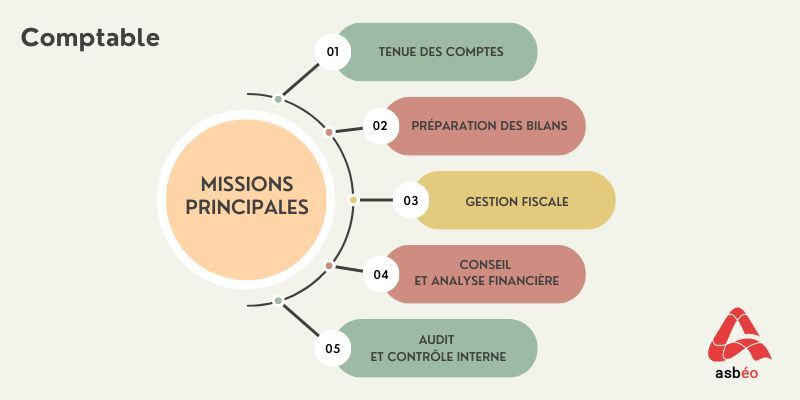
Let's break down these missions, which should be very familiar to you after completing this program:
- Tenue des comptes (Account Keeping): This is the foundation. It involves recording all business transactions accurately and systematically, as we covered in Modules 1 and 2. This ensures the data's reliability for all other purposes.
- Préparation des bilans (Financial Statement Preparation): At the end of a period, the accountant transforms raw data into meaningful financial statements (Bilan, CPC). This involves making period-end adjustments (Module 3) and preparing the final reports (Module 4) that communicate the company's performance and position.
- Gestion fiscale (Tax Management): This is a critical, high-value function. It involves calculating and declaring all taxes (VAT, IS, IR) in compliance with Moroccan law, a subject we covered in depth in Modules 6, 7, and 8.
- Conseil et analyse financière (Financial Advice and Analysis): This is where a confirmed accountant becomes a strategic partner. It involves analyzing financial statements (Module 4), interpreting performance indicators, advising on investment decisions, and helping management steer the company. As the article from Centre Chorfi notes, this is about providing "strategic advice" to support growth.
- Audit et contrôle interne (Audit and Internal Control): While external audit is reserved for experts-comptables, all confirmed accountants are involved in internal control—ensuring that company procedures protect assets and guarantee the accuracy of financial information.
Beyond what they do, their value lies in how they do it. This is where professional skills come into play.
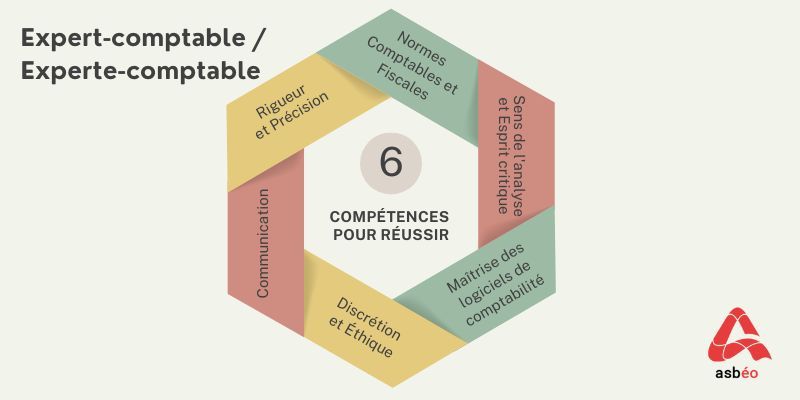
These six skills are the hallmarks of a confirmed accountant:
- Rigor and Precision: Accounting leaves no room for error. Every entry matters.
- Knowledge of Standards: A deep understanding of Moroccan GAAP and tax laws is non-negotiable.
- Analytical & Critical Thinking: The ability to see the story behind the numbers and question assumptions.
- Software Mastery: Proficiency with accounting software and tools is essential for efficiency and accuracy.
- Communication: As we practiced in Module 12, the ability to explain complex financial information to non-accountants is crucial.
- Discretion and Ethics: This skill is so fundamental that it forms the pillar of the profession. Let's explore it now.
3. The Ethical Responsibilities: The Foundation of Trust
Technical skills allow you to do the job. Ethics ensure you do it right. The accounting profession is built on trust. Without it, financial information is worthless. In Morocco, the profession is governed by a strict code of ethics (code de déontologie).
Comptables agréés: les apports du code de déontologie ...
The article 'Comptables agréés: les apports du code de déontologie' from Le360.ma discusses the official code of ethics for certified accountants in Morocco. It outlines the principles that you must uphold throughout your career.
Please read the article, focusing on the key principles mentioned. Pay special attention to the sections titled 'Indépendance et intégrité professionnelles,' the paragraph discussing 'secret professionnel,' and the section 'Mise à jour des connaissances et compétences professionnelles.'
From this reading and professional standards, we can distill several non-negotiable ethical duties:
- Professional Competence: You have a duty to maintain your knowledge and skills. As the article states, comptables agréés are required to undergo at least 30 hours of training per year. This links directly to the Personal Development Plan you created in our last lesson. You must only undertake work you are competent to perform.
- Integrity and Honesty: You must be straightforward and honest in all professional relationships. This means not being associated with reports or information that you believe are misleading. Your signature on a document is a promise of its integrity.
- Objectivity and Independence: You must not allow bias, conflicts of interest, or the undue influence of others to override your professional judgment. Your loyalty is to the principles of the profession and the true and fair representation of financial reality.
- Professional Secrecy (Confidentiality): As the article highlights, you are bound by a duty of secret professionnel. You must not disclose confidential information acquired as a result of your work, even after your professional relationship with the company or client ends.
- Professional Behavior: You must comply with relevant laws and regulations and avoid any action that discredits the profession. This includes maintaining a professional demeanor and respecting the institutions that govern the profession, such as the Ordre des Experts-Comptables (OEC).
These are not abstract ideals; they are practical rules that guide your daily decisions.
Test your understanding!
Imagine your manager at a Moroccan SME asks you to record the revenue from a large sale made on January 5th as if it occurred on December 30th of the previous year. The goal is to meet the annual profit target to secure a bonus for the management team.
Which ethical principles are at stake, and how should you respond professionally?
Show answer
Ethical Principles at Stake:
- Integrity and Honesty: Recording the sale in the wrong period is deliberately falsifying financial statements. It is a dishonest act.
- Objectivity: Your objectivity would be compromised by the manager's pressure and the incentive of a bonus (even if indirect). Your duty is to present a true and fair view, not to manipulate results.
- Professional Competence and Due Care: A competent professional knows and applies the revenue recognition principle and the cut-off principle correctly. Intentionally violating these is a breach of this duty.
- Professional Behavior: Falsifying accounts is illegal and would discredit both you and the profession.
Professional Response:
You should calmly and respectfully explain to your manager that you cannot comply with the request. You can frame your response based on professional rules, not personal opposition.
Example: "Je comprends l'importance d'atteindre notre objectif annuel. Cependant, les règles comptables, notamment le principe de séparation des exercices, exigent que cette vente soit enregistrée en janvier, date à laquelle elle a été effectivement réalisée. Enregistrer cette recette en décembre serait une erreur qui pourrait être remise en cause par le commissaire aux comptes ou l'administration fiscale. Je peux vous préparer une analyse de notre performance annuelle sans cette vente et nous pouvons discuter des commentaires à apporter au rapport de gestion."
This response is firm, educational, non-confrontational, and demonstrates your commitment to professional ethics.
Conclusion: Your Professional Identity
Today, we have defined the "confirmed accountant" not as a set of tasks, but as a complete professional identity built on three pillars:
- Core Missions: The technical functions you perform, from bookkeeping to strategic advising.
- Key Skills: The abilities you use to perform those missions with excellence, such as rigor, analysis, and communication.
- Ethical Responsibilities: The moral compass that guides your actions and builds the trust that is the currency of our profession.
A Final Word on Your Accomplishment
With this lesson, you have officially completed the "From Zero to Confirmed Accountant" program. You embarked on this journey with the goal of turning confusion into confidence, and you have systematically built a fortress of knowledge and skill.
From the foundational logic of debits and credits, you have climbed to master the complexities of Moroccan taxation, financial reporting, and strategic analysis. More importantly, you have learned what it means to be a professional—to act with integrity, to commit to lifelong learning, and to serve as a trusted guardian of financial truth.
The path of a true professional is one of continuous growth, and you are now exceptionally well-equipped to walk it. Carry the principles of competence, integrity, and objectivity as your guide. We wish you every success in your career as a confirmed accountant, where you will undoubtedly bring immense value to the businesses you serve. Congratulations.