Recommended resources
The freely available resources this lesson will direct you to.
- RagaQuest || Chapter 1 - 8 || What does the Tanpura do? It's importance in Indian Classical Musicwww.youtube.com
- The Sound of Silence - By Sandeep Maheshwari (in Hindi)www.youtube.com
- Tanpura Samples: 26 Divine Indian Dronesragajunglism.org
- Naad Yoga: The Search for Silence - New Acropolis Librarylibrary.acropolis.org
Introduction
In our last lesson, you thoughtfully assembled your "sonic toolkit" by selecting the Ṇamōkār Mahāmantra as your primary mantra and choosing a set of supporting ragas aligned with your spiritual objective. This was a critical step in consciously designing your personal sadhana. You've defined the core content of your practice.
Now, we will turn our attention to the context in which this content will be delivered. A powerful musical practice requires more than just a melody and a mantra; it needs a stable foundation and the space for its effects to be absorbed. This lesson addresses that need by explaining the foundational roles of the tanpura drone and strategic silence. These two elements are not mere accessories; they are the canvas and the frame for your musical meditation, creating the optimal environment for your sadhana to take root and flourish.
Part 1: The Tanpura Drone - The Unchanging Sonic Canvas
At the heart of any Indian classical music performance or deep listening session is a sound that is both omnipresent and unobtrusive: the drone of the tanpura.

The tanpura's role is not to play a melody but to create a continuous, harmonically rich sonic field. It endlessly cycles through a pattern of notes, most commonly the tonic (Sa), the fifth (Pa) or fourth (ma), and their octaves. This creates a stable, unchanging reference point.
To understand how this seemingly simple instrument creates such a profound effect, let's explore its mechanics and function.
RagaQuest || Chapter 1 - 8 || What does the Tanpura do? It's importance in Indian Classical Music
The video "What does the Tanpura do?" from the RagaQuest channel provides an excellent visual and auditory explanation of the tanpura's function. It breaks down how its physical construction leads to its unique sonic properties.
Please watch the following segments: Start with the introduction to understand its role as a moving screen of notes. Next, watch the explanation of its construction and the jivari, which reveals the "magical" process of generating rich harmonics. Finally, observe how a well-tuned tanpura generates a multitude of overtones, creating a dynamic soundscape from just a few fundamental notes.
As the video illustrates, the tanpura's unique design, especially the jawari or bridge, is engineered to produce a cascade of overtones. This creates what musicians call a "living" sound. This living sound serves two crucial functions in a sadhana: a psychoacoustic one and a spiritual one.
To delve deeper into these two aspects, let's turn to a more detailed text.
Tanpura Samples: 26 Divine Indian Drones
This article from Rāga Junglism provides a fantastic analysis of the tanpura's role, connecting its acoustic properties to its deep spiritual symbolism.
Please read two sections. First, find the section titled Basic Role. Read the two paragraphs starting from its description as a "colour framework" that provides stability. Then, continue to the next section, Spiritual Roots, and read the three paragraphs that explain its connection to the Vedic concept of nada brahma (the universe as sound).
From the reading, we can crystallize the foundational role of the drone in sadhana:
-
It is an Anchor for the Mind: Your mind, by nature, is in constant flux (chitta vritti). The drone, with its "outside of time" quality, provides a stable, unchanging sonic anchor. By resting your attention on it, you give the mind a steady object, helping it move from a state of distraction to one of focused awareness. It is the perfect antidote to the agitation of kashayas.
-
It Manifests Nada Brahma: The drone is the most direct, audible symbol of the eternal, underlying vibration of existence. In Jain metaphysics, this relates to the constant, subtle vibration inherent in pudgal. Listening to the drone is a practice of attuning your personal consciousness to this universal, unchanging substratum. As the article states, "in the internal absorption of the tanpura’s resonance, music happens."
-
It Establishes the Bhav (Feeling-State): The rich harmonics of the drone establish the emotional and energetic field of the raga even before the melody begins. For instance, a drone tuned to
Sa-Pafeels open and stable, while one tuned toSa-ma(used in ragas that omitPa, like Malkauns) creates a more profound, introspective mood. It prepares the psychic space for the raga and mantra to do their work.
In essence, the drone creates the sacred space for your practice. It is the constant hum of reality against which the specific vibrations of mantra and raga can be most clearly perceived.
Part 2: Strategic Silence - The Space for Integration
If the drone is the canvas, and the raga/mantra is the painting, then silence is the gallery in which the art is viewed. It is not an empty void but a pregnant space where the work of sound is truly done.
In the philosophy of sound, silence is the origin and the destination. It is the unmanifest from which all sound arises and to which it returns. We see this beautifully represented in the symbolism of Aum.
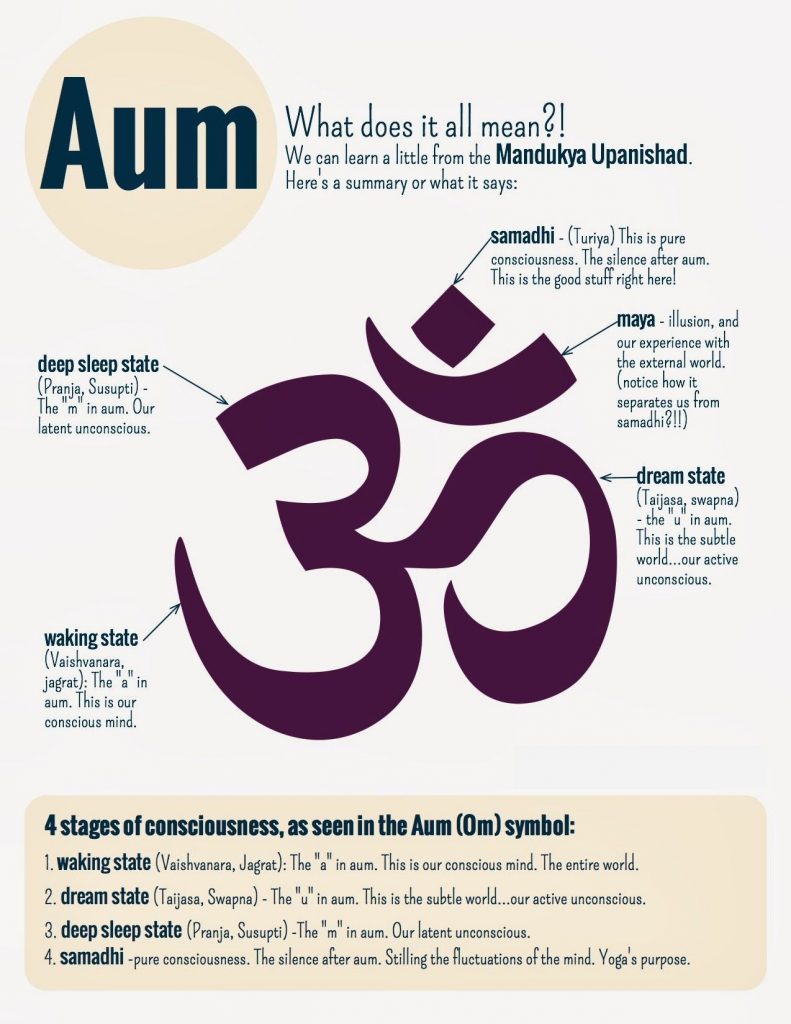
The goal of a musical sadhana is not just to experience sound, but to use sound to access this profound, generative silence. This is the journey from ahata nada (struck, external sound) to anahata nada (unstruck, internal sound). This "unstruck sound" is a core concept in many Indian spiritual traditions, described as a subtle, inner vibration that is always present but can only be heard when the mind becomes still.
A powerful, contemporary exploration of this concept is offered by Sandeep Maheshwari in a talk delivered in Hindi. He guides the audience to experience this "Sound of Silence" directly.
The Sound of Silence - By Sandeep Maheshwari (in Hindi)
In his talk "The Sound of Silence," Sandeep Maheshwari makes the esoteric concept of anahata nada practical and accessible. He explains how to listen for this inner sound and why it is foundational to peace and concentration.
Please watch the following key segments: First, watch his introduction to this inner sound, where he distinguishes it from external noise: Sound is there. Next, listen to his profound explanation of why this is neither sound nor silence in the conventional sense, but the "Sound of Silence": my biggest secret. Then, he explains how this inner sound acts as a natural aid to concentration, a concept directly applicable to sadhana: They say when studying. Finally, absorb his analogy of the ocean and waves to explain the relationship between the individual self (wave) and the underlying reality (water/sound): the root of all problems.
Maheshwari's talk powerfully illustrates that the silence you cultivate in your sadhana is not empty. It is an opportunity to listen inward for this ever-present vibration—the anahata nada.
In your daily practice, strategic silence serves three purposes:
- Absorption: After a period of chanting the Ṇamōkār Mantra or listening to a raga, a period of silence allows the subtle vibrations to permeate your consciousness. Without this pause, the sonic information is quickly overwritten by the next sensory input. Silence allows the effect to deepen and integrate.
- Observation (Sākṣī Bhāv): Silence creates the space to become a neutral witness to the effects of your practice. How has your emotional state shifted? What thoughts are arising? This non-judgmental observation is a cornerstone of ātma dhyān.
- Transition: The silence after ahata nada is the doorway to anahata nada. You consciously shift your listening from the external (the fading echo of the raga or mantra) to the internal (the subtle hum of your own consciousness).
This is why, in Naad Yoga, silence is considered as layered and profound as sound itself.
Naad Yoga: The Search for Silence - New Acropolis Library
This article from the New Acropolis Library beautifully contextualizes the role of silence within Naad Yoga.
Please read the final section of the article. Focus on the part that describes the different levels of silence and how mystics recognize it as the origin against which all sound is heard.
Synthesis: Weaving Drone and Silence into Your Sadhana
The tanpura drone and strategic silence are the two poles that create the energetic container for your practice. They are not opposites, but partners.
- The drone provides the stable, continuous sonic ground. It holds the space.
- The mantra and raga introduce specific, intentional vibrations into that space.
- The silence that follows allows those vibrations to settle, integrate, and reveal the even deeper, ever-present hum of anahata nada.
From your perspective as a software developer, you can think of it this way:
- The Tanpura Drone is like the underlying Operating System. It’s the stable, ever-present environment providing the foundational services and clock cycles.
- The Raga and Mantra are the applications you choose to run. They perform specific, high-intensity tasks designed to produce a particular output (a specific bhav or state of mind).
- Strategic Silence is the crucial garbage-collection and system-idle phase. After an application runs, the system needs a pause to de-allocate resources, integrate changes, and quiet down. It is in this quiet "idle" state that you can finally hear the subtle, low-level hum of the hardware itself—the anahata nada that was always there, but masked by the more demanding processes.
Without the stable OS (drone), the applications would be erratic. Without the idle phase (silence), the system would accumulate clutter and you would never perceive the fundamental hum of its existence.
Conclusion
You now understand that the tanpura drone and periods of silence are not passive elements but active and essential components of a deep musical sadhana. They provide the structure and the space necessary for the transformative power of mantra and raga to unfold.
Key Takeaways:
- The Tanpura Drone acts as a mental anchor and a sonic representation of Nada Brahma, providing a stable, harmonically rich foundation for your practice.
- Strategic Silence is not emptiness but a generative space for absorption, observation, and tuning into the subtle, internal "unstruck sound" (anahata nada).
- Together, the drone and silence create the container that holds, supports, and deepens the impact of your chosen mantra and ragas.
Having selected your sonic tools and understood the foundational environment they require, you are now ready to put it all together. In our next lesson, you will structure a daily 20-minute sadhana session, outlining the precise sequence and timing for your mantra, raga listening, drone, and silence to create a complete and powerful personal practice.