Recommended resources
The freely available resources this lesson will direct you to.
- How to Write Uppercase and Lowercase Letters - Kids Academywww.youtube.com
- Match capital letters with small letters | English Worksheet - Match capital and small alphabetswww.youtube.com
- Student Practice Activities for Letter Names and… | Reading Universereadinguniverse.org
- Phonics flashcardswww.teachyourmonster.org
Hello! This is the first lesson in a short alphabet start that will lead into letter sounds, speaking, and writing. The child already recognizes many letter shapes, so the aim is not to recite the alphabet again. It is to connect each capital letter with its small-letter partner and say its name even when the letters appear out of order.
Plan for about 40–45 minutes. You will need the paired-letter image below, two sets of small cards you make yourself (one uppercase and one lowercase), and the mixed-order letter sheet near the end. Keep the pace playful: a six-year-old will learn more from several short turns of looking, pointing, and speaking than from one long explanation.
One letter, two shapes
Show a pair and say, “This is uppercase A. This is lowercase a. They look different, but both are named A.” Then point to each shape separately and let the child say its name. Repeat with B–b and C–c. The important idea is same letter name, two written forms.
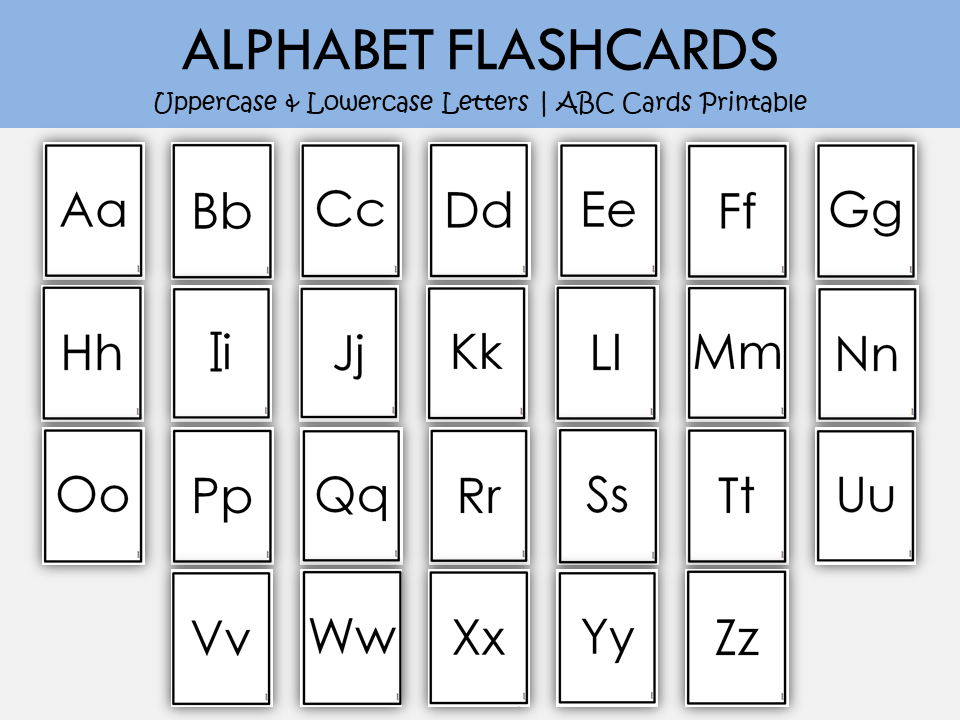
Spend about 7 minutes moving through the flashcards. Rather than giving a speech about every pair, alternate your prompts: “Point to lowercase m”; “What is this capital letter called?”; “Can you find the other G?” Let the child answer aloud. For American English, model the name of Z as “zee”; W is “double-u.”
A few pairs deserve a second look because their shapes differ noticeably: A–a, G–g, Q–q, and R–r. Also point out the dot on lowercase i when comparing I–i. At this stage, ask for letter names, not the sounds letters make in words. Those will have their own lessons.
See a match being made
Match capital letters with small letters | English Worksheet - Match capital and small alphabets
Watch “Match capital letters with small letters” from KahaniCart TV for a brief demonstration of pairing every capital with its lowercase form.
Watch all 26 matches. Invite the child to say the letter name just before each match is shown. The video goes in alphabet order; afterward, you will change the order so the child cannot rely on what letter comes next.
After the video, revisit two easily confused lowercase pairs with your cards: b/d and p/q. Place B, D, P, Q above them in a different order and model one match: “This is D. I’m looking for little d. Here it is—D, d.” If the child hesitates, show the correct pair briefly, separate the cards, and ask again a few turns later. A quick, calm correction is more useful than repeated guessing.
Mix, match, and say
Make 26 uppercase cards and 26 lowercase cards, with one letter on each card. Use clear print similar to the flashcards. This activity should take about 12 minutes, with a brief stretch or stand-up turn halfway through.
To keep the search manageable, begin with six or seven pairs at a time. Spread their uppercase and lowercase cards face up, shuffling each set independently. Hand the child an uppercase card chosen at random and ask, “What is its name? Find its small-letter partner.” When she finds it, point to both: “What is this one called? And this one?” Both answers should be the same letter name. On some turns, begin with a lowercase card and ask for its capital partner instead.
Continue until you have used all 26 pairs. Change the order each round, rather than working from A to Z. The child may touch, move, or hold up the cards while answering; the speaking is part of the task. If a pair causes difficulty, leave it among the next few cards for another try rather than stopping the game.
Check without the alphabet-order clue
The flashcards and video put the alphabet in order. This sheet does not: capitals and lowercase letters appear separately in mixed order. That makes it useful for seeing which names the child knows without help from an alphabet chant.

Allow about 10 minutes. Point to letters in a changing order across the two groups and ask simply, “What letter is this?” Make sure you eventually visit every uppercase and lowercase letter, including ones the child answered confidently during the card game. Keep a quiet note of any name she needs help with; do not turn the check into a race.
For a final visual match, point to a capital on the sheet and ask her to find its lowercase partner in the other group. Do this with several pairs of different shapes, especially any that were uncertain. If she cannot find one, return to the paired flashcard for a moment and then try the two shapes separately again. Independent naming in mixed order and correct pairing are the signs that this lesson’s goal is secure.
Today, the child practiced one central idea: A and a are two shapes for a letter with one name, and the same is true for every pair through Z and z. The card game gave her a chance to match and speak; the mixed-order sheet showed which letters still need a little practice. Keep those few cards for a short warm-up next time. The next lesson will distinguish a letter’s name from the sound it can represent—a new skill that builds on knowing which two shapes belong together.