Recommended resources
The freely available resources this lesson will direct you to.
Hello! Welcome to your next lesson.
In our last session, we delved into the practical techniques of conducting a rehearsal, focusing on how to guide performers through explorations of physicality, emotion, and space using methods like Laban and Viewpoints. We concluded that this kind of open, vulnerable work is only possible on a foundation of profound trust.
Today, we build that foundation. The learning outcome for this lesson is to establish a trusting and safe environment for performers to experiment openly. This is arguably one of the most crucial skills for a director, especially for the kind of artistically ambitious, performance-driven work you aim to create. For an artist like Rebecca Horn, whose work often involves the body in vulnerable and transformative states, the trust between artist and performer is not just a professional courtesy—it's the very medium of the art itself.
This lesson will give you the principles and vocabulary to consciously build that trust.
The Core of a Creative Environment: Psychological Safety
A safe creative space isn't just about physical safety; it's about psychological safety. It's the shared belief that the team is safe for interpersonal risk-taking. It means performers can show up, be vulnerable, try something audacious, and even fail, without fear of humiliation or punishment.
A useful model for this concept involves three key components:
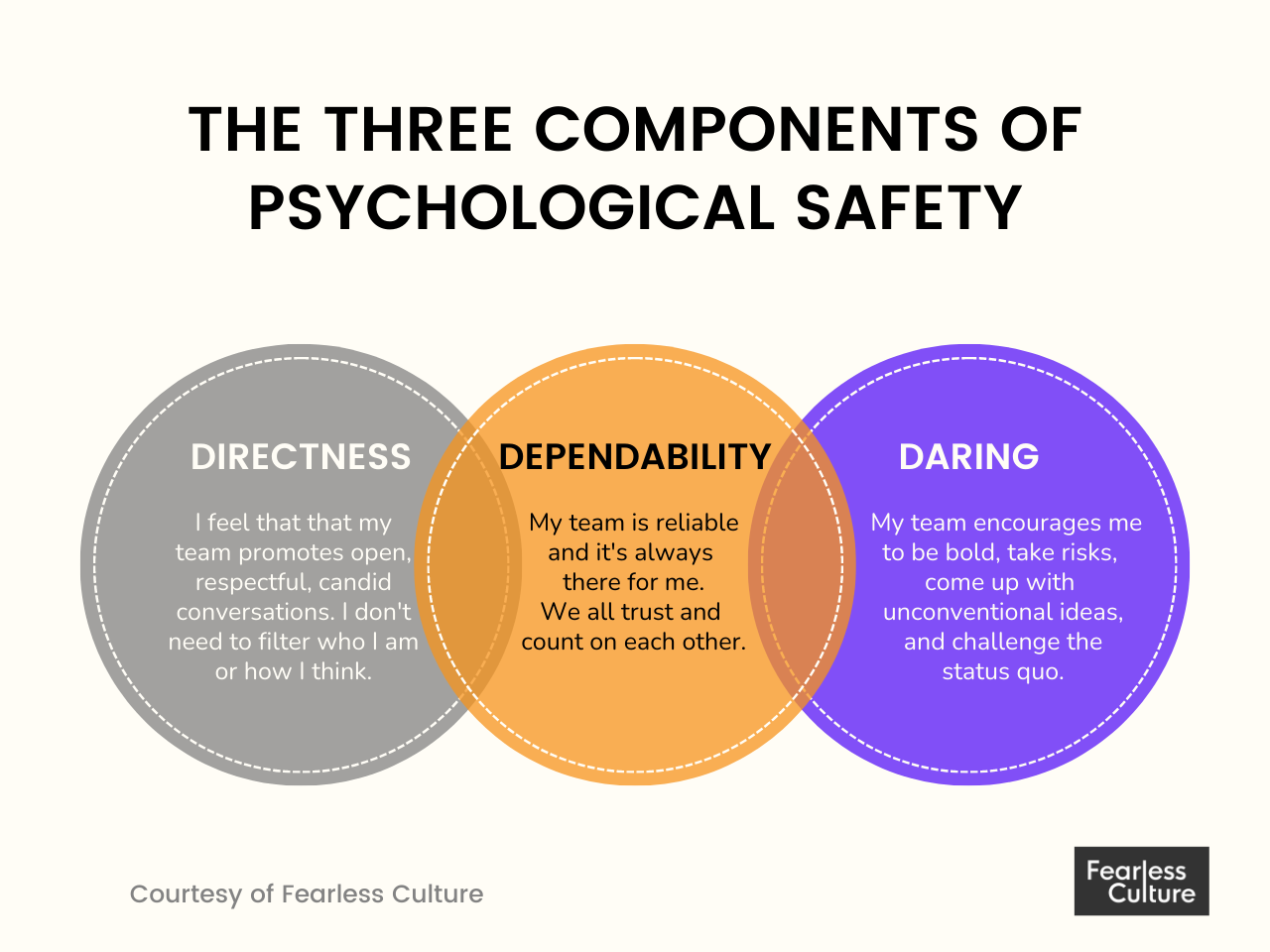
1. The Foundation: Dependability and Mutual Respect
Before you can ask a performer to be daring, you must prove yourself to be dependable. This foundation is built on professionalism, clear communication, and genuine respect for your actors as collaborators and artists. It starts long before you first call "action."
How to Direct Actors for Film — 12 Tips & Techniques Explained
This article, 'How to Direct Actors for Film,' from StudioBinder provides an excellent overview of the practical steps you can take to build this foundational trust.
Please read the following sections. As you read, think about how each point contributes to making a director seem dependable and trustworthy: 'Get to know your actors': Understand this as the first step in any collaboration. 'Create the right environment': Note the importance of tailoring the set's mood to the scene's needs. 'Trust your actor': Focus on how being open to an actor's input is a powerful act of building trust. 'Allow your actors to experiment': See this as the director giving permission for creative risk. 'Acknowledge the work of an actor': Pay close attention to the simple but vital act of saying 'thank you' after a take. 'You’re in this together': This section summarizes the collaborative mindset perfectly.
These points underscore that trust isn't magic; it's the result of consistent, respectful behavior. When you know your actors' process, listen to their instincts, and acknowledge their effort, you demonstrate that you are a reliable partner in the creative process. This is the bedrock of Dependability.
2. The Process: Encouraging Daring through Experimentation
A safe environment is one that is designed for discovery. For the experimental, performance-art-inflected work you're drawn to, this is essential. The rehearsal process shouldn't be about actors guessing what's in your head; it should be a shared journey into the unknown.
This is especially true when working without a conventional script, where the performance itself generates the material.

Let's explore this from the actor's point of view. What makes an actor willing to improvise a two-hour monologue or engage in radical physical performance?
| Acting In Experimental Film - James Devereaux
In his article 'Acting In Experimental Film,' actor James Devereaux describes his collaboration with experimental director Rouzbeh Rashidi. This provides invaluable insight into the actor-director trust required for non-narrative filmmaking.
Please read these three sections from the article, focusing on the theme of trust: Read the first two paragraphs, where Devereaux describes Rashidi's scriptless process and his own need for autonomy. Notice the phrase: "geared towards enabling good actors to do their best work." Read the next two paragraphs about the film Closure Of Catharsis. Pay close attention to why the actor wasn't nervous: "I had already seen most of Rashidi’s work and was confident that he would handle whatever I gave him with integrity." Finally, read the concluding paragraph. It advocates for ongoing collaborations to build trust over time, treating actors as creative partners, not 'expendable pieces.'
Devereaux's account highlights a key point: performers are willing to be Daring when they trust the director's artistic integrity and feel that their contributions will be valued and handled with care. Your role is to be the thoughtful container for their creative offerings. As Sam Mendes noted in the video from our last lesson, you have many imaginations in the room; your job is to create a process that invites them all in.
3. The Communication: The Language of Directness and Permission
How you speak to your performers is perhaps the most tangible way you create—or destroy—a safe environment. Micromanaging, giving confusing notes, or talking too much can make an actor feel like a puppet, not a collaborator. The goal is Directness: conversations that are open, candid, and respectful.
Renowned acting coach Judith Weston provides a powerful framework for this, emphasizing listening over talking and using a "language of permission."
How Directors Confuse Actors - Judith Weston
In this video from Film Courage, 'How Directors Confuse Actors,' Judith Weston explains common communication pitfalls and offers a more collaborative alternative.
Please watch the following segments. Notice how her advice empowers the actor and fosters a sense of partnership. 00:00 - 01:33: Weston's core advice: 'Listen more than you talk.' She identifies 'front-loading' and over-talking as key problems. 01:33 - 03:43: Listen to her distinction between micromanaging results (e.g., 'get angrier') versus defining the scene's emotional event and letting the actor find their way there. 05:58 - 07:38: This is crucial. Pay close attention to the 'language of permission' (e.g., 'Do you want to try...?'). It reframes direction as an invitation, not a command. 07:38 - 08:49: The idea of 'checking in' reinforces that directing is a dialogue. Even with intense energy, the underlying feeling is one of mutual respect.
Using the language of permission transforms the power dynamic. Instead of dictating, you are inviting collaboration. You are signaling that you trust the actor's intelligence and instincts, and that you are interested in what they will discover, not just in executing your own preconceived idea.
Practical Application: Designing a Safe Space
Let's put these principles into practice. Imagine you are preparing to direct a short, non-verbal film. The concept is inspired by your interest in Rebecca Horn and involves a performer interacting with a restrictive costume you've designed—perhaps one made of metal rods that limits their movement. The piece is about the struggle for self-expression within external constraints.
The performer will need to feel incredibly safe to explore the physical and emotional vulnerability this requires.
Based on what you've learned, answer the following in your notebook:
- Before Rehearsal (Dependability): What are three specific actions you would take before the first rehearsal begins to establish a foundation of trust and respect with your performer?
- During Rehearsal (Directness & Daring): What are three specific phrases you could use during the rehearsal to give direction, encourage experimentation, and respond to the performer's work in a way that reinforces safety and collaboration? (Think about Judith Weston's "language of permission").
Take about 10 minutes to reflect on this. This exercise will help you translate the abstract principles of psychological safety into concrete directorial actions.
Conclusion
Establishing a trusting and safe environment is not a passive state; it is an active, ongoing process built through every interaction. It is the invisible architecture that supports great performance.
Key Takeaways:
- Psychological Safety is Key: For experimental and vulnerable work, performers need to feel safe to take risks. This is built on Dependability, Daring, and Directness.
- Build Dependability First: Show up prepared, get to know your actors as artists, and demonstrate respect for their craft. Trust is earned through consistency.
- Design for Daring: Structure your rehearsals as labs for discovery, not as auditions for the right answer. Trust in your collaborators' integrity and creativity.
- Communicate with Directness and Permission: Use language that invites, rather than commands. Listen more than you talk, and focus on the "why" of a scene, not just the "what."
What's Next?
Having established a foundation of trust and explored ideas in the rehearsal room, the next step is to bring that work onto the film set. In our next lesson, we will begin the "Production: Executing the Vision" module with the learning outcome: Translate a scene from script to set by blocking actors and camera positions. We will look at how the collaborative spirit forged in rehearsal helps you make smart, efficient, and artistically coherent choices when the camera is rolling.