Recommended resources
The freely available resources this lesson will direct you to.
Introduction
Hello! In our last lesson, we focused on the power of self-explanation—the practice of teaching a concept to yourself to build a deep, intuitive understanding. We saw how active strategies like this are crucial for making sense of new information.
Today, we'll shift our focus from the active things you do while you're awake to a critical, and often underestimated, process that happens while you're not: sleep. You can't debug your learning process without understanding the hardware it runs on, and sleep is the brain's essential maintenance and upgrade cycle.
Our learning outcome for this lesson is to describe the crucial role of sleep in the memory consolidation process. We'll explore how sleep acts as the "save button" for your memories, transforming fragile, short-term knowledge into durable, long-term understanding. This lesson is fundamental to your goal of improving retention, as it provides the biological foundation upon which all other learning strategies are built.
The Three Stages of Memory
Before we dive into sleep, it's helpful to have a clear model of how learning and memory work. Cognitive scientists generally break this process down into three distinct stages. Think of it like managing files on a computer:
- Acquisition: This is the process of receiving new information—the "input." It's like creating a new document and typing in the information. This happens when you're reading an article about a new UX methodology, watching a coding tutorial, or listening to a lecture.
- Consolidation: This is the process where the brain strengthens and organizes memories, making them stable for the long term. It's like saving the document from a temporary state to a permanent, organized folder on your hard drive. This process happens largely, though not exclusively, during sleep.
- Recall: This is the ability to access the stored information later. It's like finding and opening the saved file when you need it.
Many people focus only on acquisition (studying more, reading faster) but neglect consolidation. Without effective consolidation, the information you worked so hard to acquire can be easily lost.
To solidify these definitions, please read the following brief section from a Harvard Medical School publication on sleep and memory.
Sleep and Memory - Division of Sleep Medicine - Harvard University
This article, 'Sleep and Memory' from Harvard's Division of Sleep Medicine, provides a clear and authoritative definition of the three stages of memory.
Please read the section titled 'Basics of Learning'. Focus on understanding the distinct definitions of acquisition, consolidation, and recall.
How Sleep Consolidates Memories
So, what exactly happens during sleep that makes it so crucial for memory? It's not just passive rest; your brain is incredibly active, working to process the day's experiences.
Neuroscientist Matt Walker provides a fantastic high-level explanation of this process. He uses two powerful analogies:
- Before learning, a well-rested brain is like a dry sponge, ready to absorb new information.
- After learning, sleep acts as a file-transfer mechanism, moving memories from short-term to long-term storage.
Watch the first few minutes of his popular TED Talk to understand these core ideas.
Sleep Is Your Superpower | Matt Walker | TED
In his talk 'Sleep Is Your Superpower', Matt Walker explains the dual role of sleep: preparing the brain for learning and consolidating memories after learning. The data he presents on memory deficits is particularly striking.
Watch from 01:03 to 05:25. Pay close attention to the experiment results showing a 40% learning deficit in the sleep-deprived group and the 'file-transfer' analogy for memory consolidation.
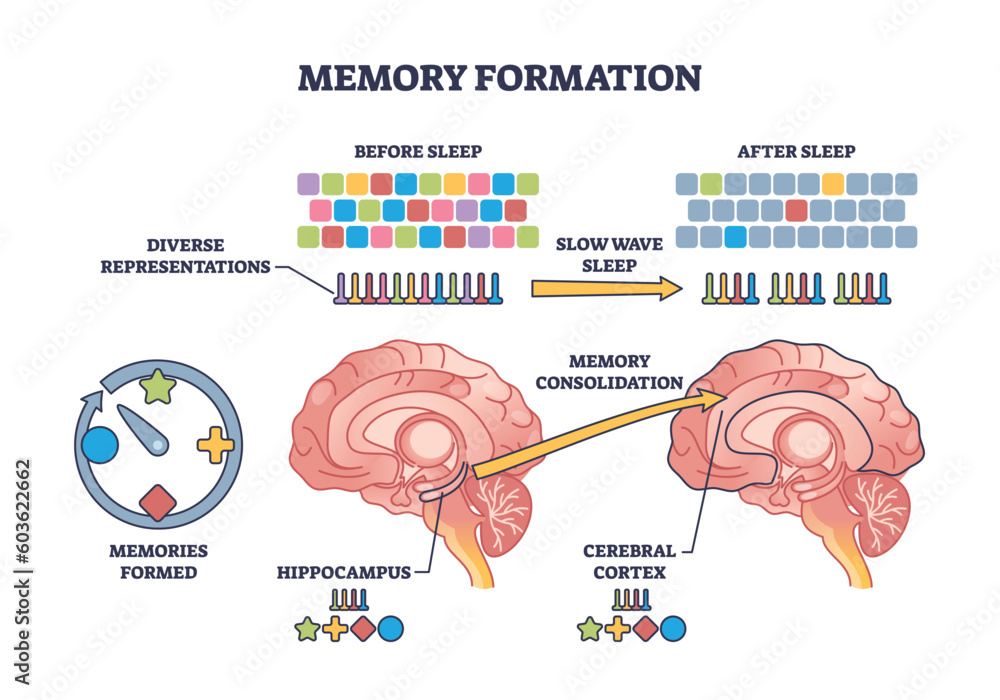
As Walker explains, sleep transfers memories from a temporary, vulnerable storage area—the hippocampus—to a more permanent and secure long-term storage site in the brain—the cortex. This process frees up your hippocampus to acquire new information the next day.
Different Sleep Stages for Different Memories
The consolidation process is even more sophisticated than a simple file transfer. Your brain actually prioritizes different types of memories during different stages of sleep.
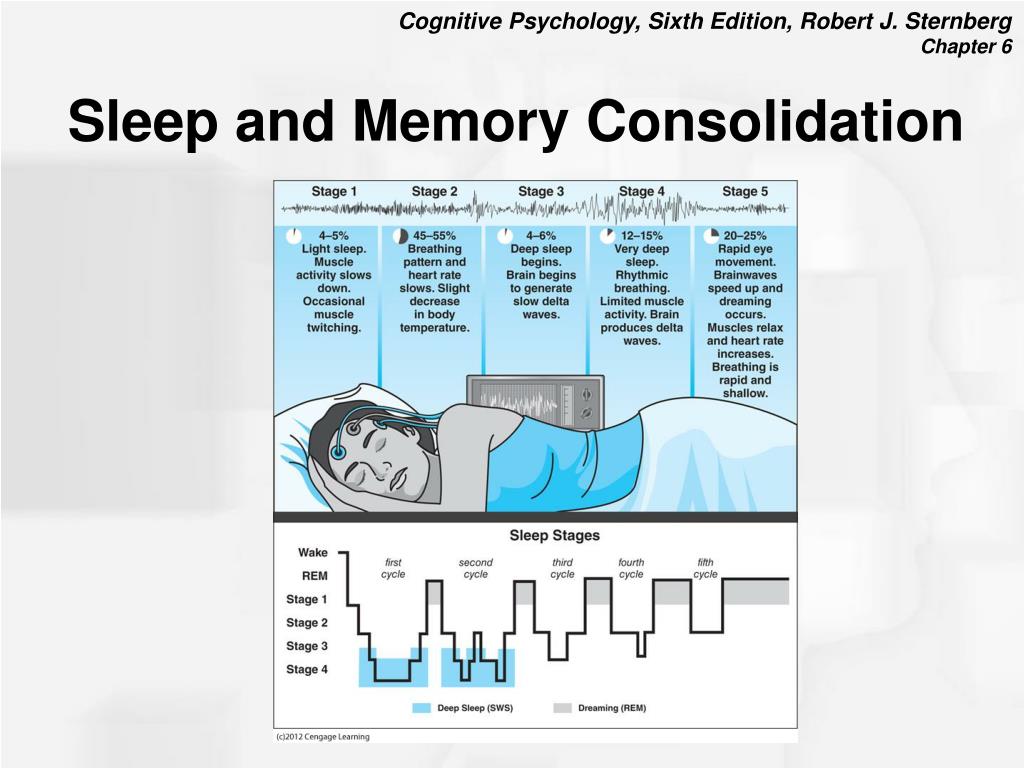
- Deep Sleep (Non-REM / Slow-Wave Sleep): This stage is crucial for consolidating declarative memory—the "what" of learning. This includes facts, concepts, and events. For you, this would be things like understanding the principles of accessible design, the definition of a new data analysis term, or the purpose of a specific JavaScript function.
- REM (Rapid Eye Movement) Sleep: This stage, where most dreaming occurs, is associated with consolidating procedural memory—the "how" of learning. This involves skills and motor patterns. This would apply to things like getting faster with Figma shortcuts, mastering the finger movements for typing a tricky piece of code, or internalizing the steps of a user research protocol.
Let's watch a short animated video that breaks this down.
The benefits of a good night's sleep - Shai Marcu
This TED-Ed video, 'The benefits of a good night's sleep', clearly explains how different sleep stages consolidate different memory types.
Watch from 03:39 to 05:05. Focus on the distinction between how non-REM slow-wave sleep helps with declarative memory and how REM sleep helps with procedural memory.
Understanding this distinction is powerful. It means that to effectively learn both concepts and skills—a key part of your goal to branch into coding and data analysis—you need full, healthy sleep cycles that include both deep sleep and REM sleep.
The Real-World Cost of Neglecting Sleep
Knowing the science is one thing, but connecting it to your daily experience is what makes it stick. The consequences of poor sleep on learning aren't just theoretical; they show up as tangible frustrations. You've likely experienced this yourself when trying to learn a new technical skill.
An article written for programmers, "The 12 AM Trap," perfectly captures how a lack of sleep sabotages the learning process. While the context is coding, the principles apply directly to learning any complex new skill.
The 12 AM Trap: How Late Night Coding Is Killing Your ... - Medium
This article provides a stark, practical look at how sleep deprivation affects a learner's ability to retain and apply new technical knowledge.
Read the sections titled 'Memory Consolidation Breakdown' and 'The Memory Consolidation Crisis', and the subsection 'Learning Plateau' under 'Short-Term Symptoms'. Notice how the author connects sleep deprivation to specific, frustrating learning experiences.
The key issues from the article—the "learning plateau," dependency on documentation, and failure to recognize patterns—are all symptoms of failed memory consolidation. You might put in the hours to acquire the information, but without sleep, the consolidation process breaks down, and your effort is largely wasted.
Crucially, you cannot simply "catch up" on this lost opportunity. As Matt Walker notes in the Q&A of his TED talk, sleep is not like a bank. You can't accumulate a large debt and pay it all back on the weekend. The memory consolidation that needed to happen after a specific day of learning is a window of opportunity that, once missed, is gone for good.
Test your understanding!
You have a colleague who is trying to learn data analysis with Python. They tell you they're frustrated because they spend hours every night after work (from 10 PM to 1 AM) studying, but the next day they can barely remember the syntax and have to re-read the same documentation over and over.
Based on what you've learned in this lesson, what is the most likely cause of their problem, and what single piece of advice would you give them?
Show answer
The most likely cause is a breakdown in memory consolidation due to sleep deprivation. By studying late and cutting their sleep short, they are missing the critical window for their brain to process and store the information they just learned. Their brain is not getting enough deep sleep and REM sleep to consolidate both the declarative memories (what a function does) and the procedural memories (how to type the syntax).
The single most effective piece of advice would be to prioritize a full night's sleep after their study session. This might mean they need to study earlier in the evening or study for a shorter, more focused period, but ensuring 7-9 hours of sleep is non-negotiable for making the learning stick. Pulling an "all-nighter" or "late-nighter" is one of the least effective ways to learn.
Conclusion
Today, we established that sleep is not a passive activity or a luxury; it is a fundamental and active part of the learning process. The hard work you do to learn new UX principles, coding languages, or data analysis techniques can only be secured and made permanent through the biological process of memory consolidation that occurs during sleep.
Key Takeaways:
- Memory formation has three stages: Acquisition (input), Consolidation (saving), and Recall (retrieval).
- Sleep is the brain's primary time for consolidation. It moves memories from the temporary hippocampus to the long-term cortex.
- Different sleep stages serve different purposes: Deep NREM sleep consolidates facts and concepts (declarative memory), while REM sleep consolidates skills (procedural memory).
- Neglecting sleep sabotages learning. It leads to a "learning plateau" where new knowledge doesn't stick, and this lost opportunity for consolidation cannot be easily recovered.
In our previous lessons, we've focused on strategies for encoding information effectively (generation, self-explanation) and now, the biological process for consolidating it. In our next lesson, we will begin a new module focusing on the most powerful method for strengthening those consolidated memories over time: retrieval practice. You'll learn why pulling information out of your brain is far more effective for long-term retention than passively reviewing it.