Recommended resources
The freely available resources this lesson will direct you to.
Hello! Welcome back to your course on designing security products.
In our previous lesson, we designed the "brain" of a security product: a generic rule engine. We established how to define logic for pattern matching, chaining rules together, and prioritizing their execution. Now that we have a mechanism for making decisions, we must address an equally critical architectural question: when and where do those decisions happen relative to the flow of data?
This lesson addresses the learning outcome: Contrast inline (synchronous) vs. out-of-band (asynchronous) analysis, evaluating their latency and security trade-offs. This is a foundational architectural choice that profoundly impacts a product's capabilities, performance characteristics, and security posture.
1. Two Fundamental Models: Prevention vs. Detection
At a first-principles level, a security product can either sit in the direct path of traffic and act as a gatekeeper, or it can stand to the side and observe a copy of the traffic. These two positions correspond to inline (synchronous) and out-of-band (asynchronous) analysis.
The classic examples that illustrate this distinction are the Intrusion Prevention System (IPS) and the Intrusion Detection System (IDS).
Intrusion Prevention - CompTIA Security+ SY0-701 - 3.2
To start, let's watch a concise explanation from Professor Messer that clearly defines these two modes of operation.
Please watch from 00:49 to 05:14. Pay close attention to: The description of inline, active monitoring (00:49 - 02:58). This is our definition of inline analysis. The critical discussion of fail-open vs. fail-close strategies and their impact on network availability. The description of passive monitoring using a copy of traffic (02:58 - 05:14). This is our definition of out-of-band analysis.
Let's formalize these concepts.
Inline (Synchronous) Analysis
An inline system sits directly in the data path and must render a verdict before the data is allowed to proceed to its destination. It operates synchronously with the data flow.
- Primary Goal: Prevention. It can block threats in real time.
- Architectural Analogy: A security guard at a building's entrance who inspects every person's ID before they can enter.
- Key Characteristics:
- Latency Impact: Every packet or request must pass through the analysis engine, adding latency. This is a primary design constraint.
- Single Point of Failure: The availability of the application is now tied to the availability of the security product. This forces a critical design choice:
- Fail-Close: If the security component fails, it blocks all traffic. This prioritizes security over availability.
- Fail-Open: If the security component fails, it allows all traffic to pass through uninspected. This prioritizes availability over security.
Out-of-Band (Asynchronous) Analysis
An out-of-band system receives a copy of the data for analysis. The original data proceeds to its destination without waiting for a verdict. The analysis happens asynchronously.
- Primary Goal: Detection. It can identify threats and raise alerts, but only after they have occurred.
- Architectural Analogy: A security camera system that records all activity for later review by a security team.
- Key Characteristics:
- No Latency Impact: Since it's not in the critical data path, it doesn't add latency to the application's traffic.
- Resilience: A failure in the analysis system does not impact the availability of the primary application.
- Data Reliability: The main challenge becomes ensuring that the telemetry (the copied data) is delivered reliably. Dropped events under high load can create dangerous security blind spots.
2. Evaluating the Architectural Trade-offs
The choice between inline and out-of-band is not about which is "better," but which is appropriate for the problem you are solving. This involves a careful evaluation of the trade-offs.
Latency vs. Analysis Depth
This is the most significant trade-off.
-
Inline systems are in a constant race against the clock. The latency they add directly impacts user experience and application performance. In extreme low-latency environments like 5G networking, this budget can be less than a millisecond. This forces specific engineering choices to build a high-performance data plane:
- Using kernel-bypass technologies like DPDK to avoid costly OS interrupts.
- Pinning processes to specific CPU cores to avoid context switching.
- Careful management of CPU cache and memory.
-
Out-of-band systems have the luxury of time. This allows for much deeper, more computationally expensive analysis that would be impossible inline. This includes:
- Correlating events from multiple sources over long periods.
- Running complex machine learning models for behavioral analysis.
- Enriching raw event data with external intelligence (e.g., threat feeds, geolocation data).
The following resource provides a deep, first-principles look at the extreme engineering required to build a low-latency inline security product.
5G QoS: Impact of Security Functions on Latency
This research paper, '5G QoS: Impact of Security Functions on Latency', investigates what it takes to run an IPS like Snort in an ultra-low-latency environment. It provides an excellent breakdown of the performance engineering challenges of inline analysis.
This paper is technical, but its insights are invaluable. Please focus on these sections: Section II, 'MOTIVATION': Read this short section and look at Figure 1. It shows how a simple inline security function can introduce huge, unpredictable latency spikes, motivating the need for specialized design. Section III-b to III-e: Skim these subsections ('Polling vs. interrupts', 'CPU features', 'OS features', 'Low-latency VM IO'). This will give you a fantastic overview of the low-level system design considerations for minimizing latency in an inline system. Section V-B, 'Measurements': Look at Table II. Compare the latency numbers for DPDK-l2fwd (the baseline) versus Snort-fwd and Snort-filter. This quantifies the latency overhead that the application logic of an inline security product introduces.
Security: False Positives vs. Blind Spots
The second major trade-off relates to the security posture.
-
Inline systems must be extremely precise. A false positive (incorrectly blocking legitimate traffic) has an immediate impact on availability and user trust. This often means inline rule sets are conservative, focusing on high-confidence, well-known attack patterns.
-
Out-of-band systems can tolerate a higher rate of false positives in their initial analysis because an alert doesn't immediately block a user. The main security risk is data loss. If the telemetry pipeline gets overwhelmed and starts dropping events, it creates blind spots where attacks can go completely unnoticed.
This next resource provides concrete data on this very problem.
IDS vs IPS: Which to Use and When
The video 'IDS vs IPS: Which to Use and When' from CBT Nuggets reinforces the core concepts and introduces the terminology of false positives and negatives, which is crucial for evaluating security trade-offs.
Please watch the segment from 03:20 to 04:52, which explains the concepts of true/false positives and negatives. Consider how a false positive in an inline IPS is much more disruptive than in an out-of-band IDS.
3. The Hybrid Model: The Best of Both Worlds
You don't have to choose just one. Most modern and sophisticated security products employ a hybrid architecture that combines the strengths of both models, often in a feedback loop.
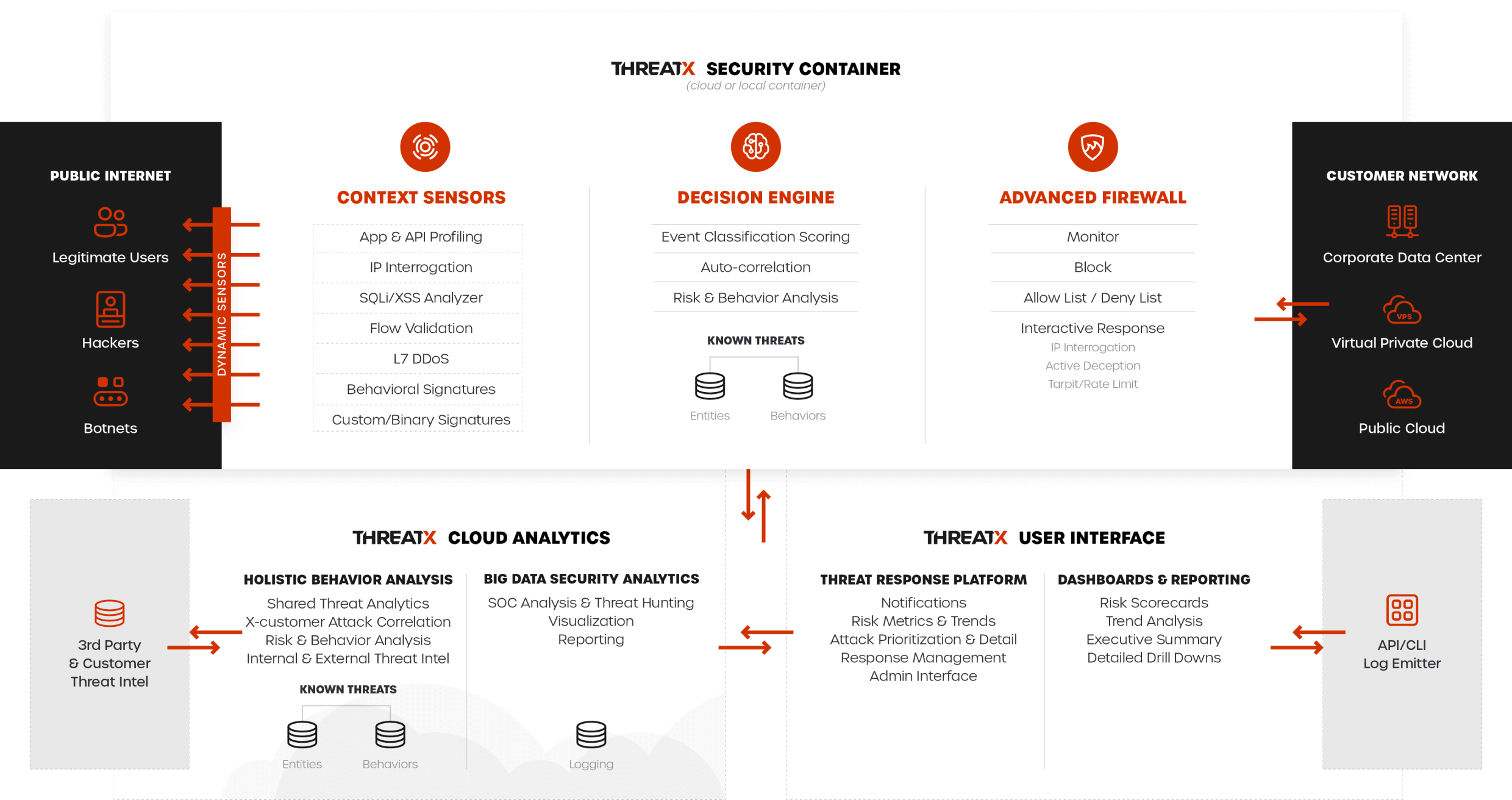
This hybrid approach works as follows:
- Inline Component: Sits in the data path. It handles high-speed, high-confidence decisions.
- Applies simple, low-latency rules (e.g., blocking IPs from a reputation list, matching simple attack signatures).
- Collects and forwards rich telemetry about the traffic to the out-of-band component.
- Out-of-Band Component: A powerful analytics engine, often cloud-based.
- Ingests telemetry from many inline sensors.
- Performs complex, stateful analysis (e.g., detecting a low-and-slow distributed attack, identifying anomalous user behavior over a week).
- Enriches data and correlates it with other sources.
- Feedback Loop: The out-of-band engine can dynamically update the inline component.
- If the analytics engine detects a new threat, it can push a new rule or IP to block to the inline sensors, effectively teaching them how to prevent this threat in the future.
This hybrid model allows a system to prevent known threats with low latency, while also detecting novel and complex threats through deep analysis, and then turning that detection into future prevention.
To see a concrete, low-level implementation of this hybrid pattern, we can look at the design of a modern system call monitoring framework.
Aquila: Efficient In-Kernel System Call Telemetry
The research paper on 'Aquila' describes a high-performance telemetry framework. While its domain is system calls, its 'dual-path' architecture is a perfect, first-principles example of a hybrid inline/out-of-band design.
This is a dense paper, so focus your reading on the high-level architecture and results: Section 2.4, 'Key Challenges': Read this section, paying special attention to Table 2. It perfectly summarizes the core trade-offs: 'Performance overhead' (the cost of inline), 'Event loss/backpressure' (the risk of out-of-band), and 'Limited semantic context' (the reason you need out-of-band). Section 3.2, 'Overview': Read this section and study Figure 1. This is the key. Understand how Aquila uses an in-kernel event pipeline (the fast, inline part) that separates data into a high-throughput buffer, while an enrichment layer in user-space performs slower, context-adding tasks (the out-of-band part). Section 5.4, 'Event Loss Rate': Skim this section and look at Table 5. This data shows the direct consequence of different architectural choices on reliability (event loss), a key concern for out-of-band systems.
The Aquila paper demonstrates that by thoughtfully separating the work—fast, simple tasks inline in the kernel, and slower, complex tasks out-of-band in user-space—you can build a system that is both highly performant and contextually aware.
Conclusion
In this lesson, we contrasted the two fundamental modes of security analysis and explored their architectural implications.
Key Takeaways:
- Inline (Synchronous) Analysis is for prevention. It operates in the data path, offering real-time blocking at the cost of added latency and becoming a single point of failure. Its design is dominated by the need for extreme performance and low false-positive rates.
- Out-of-Band (Asynchronous) Analysis is for detection. It operates on a copy of data, enabling deep, complex analysis without impacting application performance. Its design is focused on data ingestion throughput and reliability to avoid blind spots.
- The Critical Trade-off is between latency and analysis depth. Inline systems sacrifice depth for speed; out-of-band systems sacrifice real-time prevention for depth.
- Hybrid Architectures offer the most powerful solution by combining a fast, inline data plane for prevention with a powerful, out-of-band analytics plane for detection. A feedback loop allows the analytics plane to improve the prevention capabilities of the data plane over time.
Preview of the Next Lesson
We have now established three core architectural patterns: using proxies for interception, using rule engines for decisions, and choosing between inline and out-of-band analysis. The next logical step is to consider how we handle failures. Security products, especially inline ones, are critical infrastructure. What happens when they fail?
In our next lesson, we will evaluate fail-open vs. fail-close strategies for inline security products and their availability implications. This is a crucial risk management decision that balances security guarantees against application uptime.