Recommended resources
The freely available resources this lesson will direct you to.
Introduction
Welcome to the final lesson in our module on architecting for business impact. In our previous lesson, we explored the engineering patterns that create fault-tolerant and highly available systems, such as circuit breakers and redundancy. We established that making robust architectural decisions is a core responsibility of a senior engineer. However, a brilliant decision implemented in isolation is an opportunity lost. To truly have an impact, you must be able to persuade others of its value.
This lesson focuses on that crucial second half: how to present and justify your architectural decisions to both technical and non-technical stakeholders. This skill is the bridge between your technical expertise and your ability to influence the direction of a project, a key differentiator on the path to becoming a Senior Developer and Digital Manager. We will move beyond just listing technical facts and learn how to frame your decisions within compelling narratives that resonate with everyone from your developer peers to executive leadership.
The Architect as a Translator
As you transition into more senior roles, your responsibilities shift from solely solving technical problems to aligning teams around the right solutions. A powerful way to think about this is to see the senior engineer as a translator between different professional domains. Each stakeholder group speaks a different language, with its own priorities and vocabulary.
- Engineering speaks in terms of architecture, reliability, and scalability.
- Product speaks in terms of customer value, roadmaps, and delivery speed.
- Executives speak in terms of business outcomes, revenue, and risk.
A communication breakdown occurs when we speak our own language without translating it for our audience. A classic example is the concept of "technical debt." To an engineering team, it's a clear and present danger. To a business leader, the word "technical" might signal that it's "an engineering problem to solve," leading them to disengage.
To see this reframing in action, watch this short clip.
Technical Debt Is A Business PROBLEM
In this video from the Modern Software Engineering channel, the speaker discusses the challenge of communicating technical debt.
Watch the segment from "I think the terminology might be a little bit tricky". Notice how he explicitly reframes technical debt not as a technical problem, but as a business problem that constrains what the company can do.
This act of translation is at the heart of effective stakeholder communication. Your job is to connect your technical work to the outcomes that matter to your audience.
Structuring Your Narrative: The Five-Act Story Framework
To be an effective translator, you need more than just vocabulary; you need grammar and structure. The most effective way to structure a technical justification is to tell a story. Human brains are wired to process information through narrative, not through disconnected facts and data points.
Presenting an architectural decision as "we chose microservices" is a statement. Presenting it as "our monolithic system made it slow and risky to launch new features, so we explored ways to decouple our teams and deployments, ultimately choosing a microservices architecture to accelerate our time-to-market" is a story.
Building Better Stories: Architecture That Actually Engages
This article from Architect View Master provides an outstanding framework for turning dry architectural presentations into compelling narratives.
First, read the introduction and the section "Once Upon a Time in Architecture Land" to understand why storytelling is so critical. Then, carefully study the section "The Architecture Story Framework." Pay close attention to the Five-Act Structure for Technical Decisions, which breaks down as follows: Act 1: The Status Quo (Where we are now) Act 2: The Inciting Incident (The problem or change that forced our hand) Act 3: The Rising Action (The options we explored and the trade-offs) Act 4: The Climax (The final decision and why) Act 5: The Resolution (What success looks like afterward)
This five-act structure provides a powerful and repeatable template for any architectural justification, whether it's for a presentation, a document, or a meeting. It builds credibility by showing your work (Act 3) and culminates in a decision that feels like a logical conclusion, not an arbitrary choice.
Tailoring Your Story to the Audience
A great storyteller knows their audience. The five-act structure is your template, but you must emphasize the parts of the story that are most relevant to the people in the room.
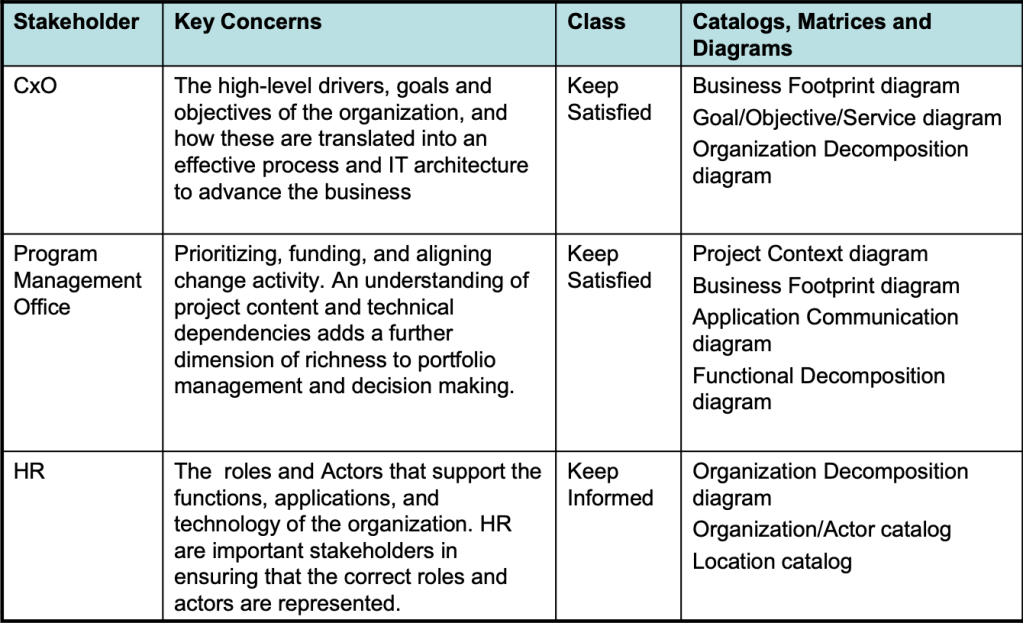
Let's break down how you would tailor the same story for different groups.
Cross-Functional Communication for Technical Leaders: A Practical ...
This guide from Refactor Talent offers excellent, practical advice on adjusting your communication style for different stakeholders.
First, read the section on the "Technical Leader as a Translator" to see how information flows between business and technical teams. Then, read the section "Adjusting Communication for Your Audience." It provides specific guidance for communicating with executives, product managers, and fellow engineers.
Here's how to apply these ideas using our five-act framework:
- For Executives (e.g., your Digital Manager, a CTO):
- Focus: Acts 1, 2, and 5. They care about the Problem, the Business Impact, and the Resolution.
- Language: Translate technical concepts into business outcomes (cost, risk, speed, revenue). Use minimal jargon.
- Framework: The PEAR framework is a concise way to structure this conversation.

-
For Technical Peers (Your team, other engineers):
- Focus: Acts 3 and 4. They are most interested in the Rising Action (what options were considered, what were the technical trade-offs) and the Climax (the details of the chosen solution).
- Language: You can and should be technically precise. Discuss design patterns, performance benchmarks, and implementation details. Your goal is to build technical consensus and enable them to contribute.
-
For Product Managers:
- Focus: Acts 2, 4, and 5. They connect the problem to the user and want to know Why Now? (the Inciting Incident), What Changes? (the Decision), and What's the Impact? (the Resolution).
- Language: Focus on user impact, feature capabilities, and delivery timelines. Discuss trade-offs in terms of scope and schedule.
By consciously adapting your narrative, you ensure your message is not just heard, but understood and acted upon.
Making Your Story Engaging
A well-structured story is good, but an engaging one is unforgettable. This is especially important when communicating complex topics to non-technical audiences.
Explaining Technical Information to Non-Technical People
This Engineer Man video provides simple, effective techniques for explaining technical concepts clearly.
Watch the entire video. Pay close attention to the use of analogies to explain complex ideas like database indexing (a book's index) and load balancing (combining machines). Also, note the advice on adjusting your detail level based on how much technical exposure your audience has.
Here are two key techniques to make your architectural stories compelling:
-
Use Analogies That Resonate: As the video demonstrates, analogies are your best tool for explaining a "what" to a non-technical person. A circuit breaker is like a fuse in a house. A message queue is like a post office sorting mail. Your computer science background allows you to understand the system deeply; a good analogy allows you to share that understanding intuitively.
-
Embrace Concrete Examples and Contrast: Abstract principles are hard to grasp. Concrete stories are memorable.
- Instead of: "This refactoring will improve maintainability."
- Try: "Last month, a small change to the checkout process took two weeks because we had to coordinate three teams. With this new design, that same change would take one developer two days."
- This "before-and-after" contrast quantifies the value of your decision and makes the impact tangible.
From Theory to Practice: An Actionable Plan
Knowing these frameworks is the first step. The second is to deliberately practice them. Here's a 3-step plan to turn these concepts into a professional habit.
-
Adopt the Five-Act ADR: Start using the five-act structure for your technical documentation, especially for Architecture Decision Records (ADRs). An ADR that follows this narrative (Context, Problem, Options, Decision, Consequences) is incredibly valuable for future team members and serves as a perfect "paper trail of competence."
-
Prepare Multiple Versions: For any significant technical proposal, prepare three versions of your story in advance, as suggested in the "Building Better Stories" article.
- The 2-Minute Elevator Pitch: (Problem + Decision) For quick hallway conversations.
- The 10-Minute Executive Summary: (All 5 acts, light on technical details) For managers and non-technical stakeholders.
- The 30-Minute Deep Dive: (All 5 acts, heavy on technical trade-offs) For your engineering team.
-
Your Turn: Justify a Decision
Take the architectural decision to add a circuit breaker, which we discussed in the last lesson. Imagine you need to justify this to your non-technical manager.- On a single page, write a justification using the five-act structure.
- Act 1 (Status Quo): Our checkout service calls an external shipping-rate provider.
- Act 2 (Inciting Incident): Last week, the provider was slow, causing our checkout page to time out for 30% of users, resulting in lost sales.
- Act 3 (Rising Action): We considered retrying failed requests, but that would have overloaded the slow provider, making things worse.
- Act 4 (The Decision): We decided to implement a circuit breaker.
- Act 5 (Resolution): Now, if the provider is slow, the breaker will "trip," and we will instantly show a fallback message ("Shipping will be calculated at the next step") instead of making the user wait. This protects our system and the user experience, preventing lost sales during external outages.
This exercise transforms a technical pattern into a clear business case.
Conclusion
In this lesson, we've closed the loop on architectural design by focusing on its most critical, and often overlooked, component: communication. You've learned that making a sound technical decision is only the beginning. Getting buy-in and creating alignment requires you to become a translator and a storyteller.
Key Takeaways:
- Act as a Translator: Your role is to translate technical work into business impact, and business goals into technical requirements.
- Use a Story Framework: The five-act structure (Status Quo, Inciting Incident, Rising Action, Decision, Resolution) provides a robust template for justifying any architectural decision.
- Know Your Audience: Tailor your story by emphasizing the parts that matter most to your stakeholders—business outcomes for executives, technical trade-offs for engineers.
- Make it Engaging: Use concrete analogies, "before-and-after" contrasts, and tangible data to make your narrative memorable and persuasive.
Mastering this skill will dramatically amplify your impact. You will not only build better systems but also lead teams and influence your organization's technical direction—the true mark of a senior engineer and future manager.
This lesson concludes our module on Architecting for Business Impact. You are now equipped with the principles and patterns to design resilient systems and, just as importantly, to advocate for them effectively. In our next module, Engineering Leadership and Team Enablement, we will broaden our focus from influencing technical decisions to influencing and empowering people, starting with a look at different leadership styles and when to apply them.