Recommended resources
The freely available resources this lesson will direct you to.
Introduction
Welcome back. In the previous lesson, you moved from architectural design to practice, implementing the key components of your Proof-of-Concept (PoC) using simplified agent instructions and mock tool interfaces. You now have a functional, albeit simplified, agentic workflow.
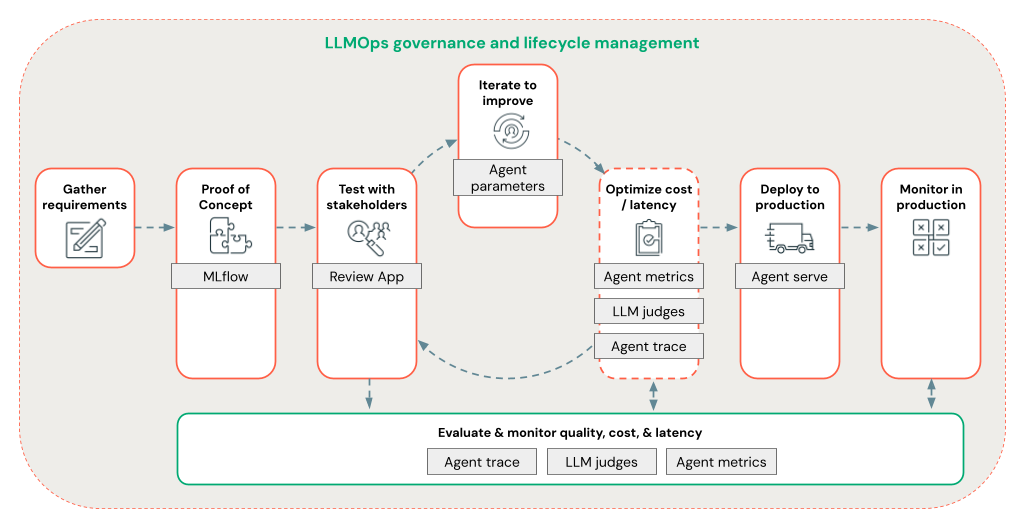
This lesson directly addresses the next critical step: Test the PoC against representative examples to validate core functionality for a client demonstration. A working prototype is insufficient; you must gather objective evidence that your approach solves the client's core problem. This process isn't just about debugging; it's about building a compelling, evidence-based case for your solution's value before you present it.
As you know from your computer science background, testing deterministic software involves verifying that a given input consistently produces an expected output. Agentic systems, however, are probabilistic and complex, demanding a new evaluation paradigm. We'll explore this paradigm, focusing on the strategies and methodologies for generating confidence in your PoC's performance.
1. A New Paradigm: From Software Testing to Agent Evaluation
First, we need to establish what it means to "test" an agent. It's a discipline that sits between traditional software testing and academic LLM benchmarking.
To understand this distinction, let's hear from developers at Google discussing the unique challenges of agent evaluation.
Agent evaluation with ADK & Vertex AI | The Agent Factory Podcast
The podcast 'Agent evaluation with ADK & Vertex AI' provides a concise explanation of how evaluating an agent differs from testing traditional software or benchmarking a base LLM.
Watch the segment from 01:32 to 04:06. Pay close attention to how the speakers differentiate between: Traditional software testing (deterministic, A == B) LLM evaluation (static Q&A, knowledge tests like school exams) Agent evaluation (system-level task effectiveness, a 'job performance review')
As the video highlights, we're not just checking a final answer. We're evaluating a system's behavior. For a PoC, this involves examining three key facets:
- Task Success: Did the agent achieve the overall goal defined in the PoC?
- Process Correctness: Did the agent use the correct reasoning and tools to reach the outcome? A right answer for the wrong reason is a failure waiting to happen.
- Output Quality: Is the final deliverable accurate, coherent, and in the correct format?
This multi-faceted view is essential. Your client demonstration needs to show not just that it works, but how it works reliably.
2. Creating Your Test Cases: The Golden Dataset
To test your PoC, you need "representative examples"—a set of test cases that cover the core functionality you intend to demonstrate. This is often called a "golden dataset" or evaluation set. A significant challenge, especially for novel client problems, is the lack of pre-existing, labeled data.
Let's look at the systematic process of building and using such a dataset.
Evaluating Agentic AI Workflows
The article 'Evaluating Agentic AI Workflows' from The Couchbase Blog outlines a clear, step-by-step process for agent evaluation, starting with the critical task of preparing ground truth data.
Read the sections 'Breaking down the agent evaluation process' and 'Prepare the ground truth'. Note the options for creating this dataset, particularly the concept of generating synthetic data.
For your PoC, you will create a small but high-quality golden dataset. You have two primary options:
-
Manual Creation (Preferred for PoCs):
- Work with a domain expert (or act as one) to create 10-20 representative input examples (e.g., sample documents, user queries).
- For each input, manually define the "ground truth" or expected outcome. This includes not just the final answer, but also the expected key steps, such as which tools should be called with which arguments.
- Example: For an invoice processing agent, an input would be a sample PDF, and the ground truth would be a JSON object with the expected extracted fields (
{"vendor": "ACME Corp", "invoice_id": "12345", "amount": 99.99}).
-
Synthetic Data Generation (More scalable):
- As mentioned in the article and the video LINK (section at 12:41), you can use a powerful LLM (like GPT-4o or Claude 3 Opus) to generate test cases from raw documents or a problem description.
- This is a powerful technique for scaling up evaluation later, but for the initial PoC validation, manually curated examples often provide more targeted insights into core functionality.

Your goal is not exhaustive coverage but representative coverage of the functionality you plan to show the client.
3. Measuring Success: PoC-Level Metrics and Methods
With a golden dataset in hand, how do you measure performance? We need to move beyond a simple "pass/fail". The recent "Measuring Agents in Production" paper confirms that practitioners rely heavily on nuanced, human-centric evaluation rather than simple automated checks.
Measuring Agents in Production
Let's turn to the research paper 'Measuring Agents in Production' to understand how professionals evaluate real-world agent deployments. This will inform our strategy for the PoC.
Read section 6, 'How Are Agents Evaluated For Deployment?', and the discussion point 'Human-in-the-loop as design principle' in section 8. Focus on these key findings: The low adoption rate of formal benchmarks for custom agents. The dominance of human-in-the-loop evaluation (74%). The strategy of combining LLM-as-a-judge with human review.
The paper's findings are clear: for bespoke agentic workflows, evaluation is not an off-the-shelf process. It's a custom-built one, centered around human expertise. For your PoC, we will adopt this best practice using a hybrid approach.
3.1. Key Evaluation Methods
You'll use three methods in concert:
-
Ground-Truth Comparison (Automated Check): For parts of the output that are structured, you can perform an automated comparison. For example, did the agent call the function
get_customer_detailsas expected? Did the final JSON output contain the requiredcustomer_idfield? This is fast but limited. -
LLM-as-a-Judge (Scalable Qualitative Check): This powerful technique uses a strong LLM to act as a grader. You provide it with the input, the agent's output, the ground truth, and a set of criteria (a "rubric"), and ask it to score the agent's performance.
-
Human-in-the-Loop (The Ultimate Arbiter): You, or a domain expert, will be the final judge. You will review the agent's trace (its step-by-step reasoning), its tool calls, and its final output to make a holistic judgment. For a PoC presentation, this qualitative analysis is often more valuable than raw numbers.
3.2. Essential Metrics for a PoC
The Couchbase article LINK (section "Picking the right metrics for your agentic system") provides an excellent, focused list. For your PoC, you should focus on evaluating:
- Tool Call Accuracy: Did the agent choose the right tool for the job? Were the arguments provided to the tool correct? This is a primary check on the agent's reasoning.
- Agent Response Correctness: Is the final answer factually correct and aligned with the ground truth? This measures the end result.
- Logical Coherence (Trace Analysis): This is a more qualitative metric where you, as the human evaluator, inspect the agent's step-by-step trace. Does the sequence of thoughts and actions make sense? Is the agent following the designed workflow?
For a client demonstration, being able to walk through a trace and say, "Here, the router correctly identified the request as a 'billing inquiry' and delegated it to the BillingAgent, which then correctly used the lookup_invoice tool," is powerful evidence.
4. The Iterative Evaluation Loop
Now, let's put it all together into a practical, iterative workflow for testing your PoC. This process is about more than getting a score; it's about diagnosing and fixing failures.
Stanford CME295 Transformers & LLMs | Autumn 2025 | Lecture 8 - LLM Evaluation
The Stanford lecture on LLM Evaluation provides an excellent breakdown of agent failure modes. Understanding what can go wrong is key to knowing what to look for during testing.
Watch the segment from 01:00:16 to 01:21:09. This section deconstructs an agent's workflow into tool prediction, execution, and synthesis, identifying common errors at each stage. As you watch, map these failure categories to your own PoC design: Tool Prediction Errors: Could your agent fail to use a tool, hallucinate a tool, or use the wrong one? Tool Execution Errors: How will you handle cases where a (mock) tool 'fails' or returns an empty response? Synthesis Errors: What if the agent gets the right data from a tool but misinterprets it in the final response?
The failure modes described in the video give you a concrete checklist for your analysis. The evaluation loop for your PoC should look like this:
- Run the Agent: Execute your PoC workflow for each test case in your golden dataset.
- Log Everything: Capture the full trace for each run: the initial input, every thought process or "Chain of Thought" from the agent, every tool call and its arguments, the data returned by the tool, and the final response. Frameworks like LangGraph do this automatically.
- Evaluate and Analyze: For each test case, perform your three-tiered evaluation:
- Automated Check: Run your ground-truth comparison scripts (e.g., checking for correct tool names).
- LLM-as-a-Judge: If applicable, run your judge prompt to score qualitative aspects.
- Human Review: Manually inspect the traces. This is where you'll find the most valuable insights. Look for the failure modes from the Stanford video. Did the agent use the
update_salesforce_recordmock tool when it should have usedquery_internal_database? Why?
- Root Cause Analysis: When a test fails, the trace is your debugging tool. The failure is rarely the LLM "being dumb"; it's usually a design flaw.
- Is the system prompt ambiguous? Does it give conflicting instructions?
- Is the tool description unclear? Do two different tools have descriptions that are too similar, confusing the agent?
- Is the information architecture flawed? Did the agent lack a piece of information it needed from a previous step?
- Refine and Repeat: Based on your analysis, make a targeted change to your agent instructions or tool descriptions. Then, re-run your evaluation set to see if the fix improved performance and didn't cause regressions.
This loop—Run, Log, Evaluate, Analyze, Refine—is the core engine of agent development. For a client demo, having gone through this loop 2-3 times on a small dataset will give you immense confidence and a clear story to tell.
Conclusion
In this lesson, you've learned how to systematically test an agentic PoC to validate its core functionality. This is a departure from traditional testing, focusing on system-level behavior and relying on a blend of automated checks, LLM-as-a-judge, and essential human oversight.
Key Takeaways:
- Agent Evaluation is a Unique Discipline: It assesses system-level task success, process correctness (reasoning and tool use), and output quality, not just a final answer.
- Start with a Golden Dataset: For a PoC, manually create a small, high-quality set of representative test cases with defined ground truth for both the final output and key intermediate steps (like tool calls).
- Use a Hybrid Evaluation Method: Combine automated ground-truth checks for structured data, LLM-as-a-judge for scalable qualitative scoring, and your own expert human review as the ultimate arbiter of success.
- Focus on Actionable Metrics: For a PoC, prioritize metrics like Tool Call Accuracy, Response Correctness, and Logical Coherence (via trace analysis).
- Embrace the Iterative Loop: The process of running tests, analyzing failures in the trace, and refining agent/tool designs is the fundamental workflow for improving agent reliability.
You have now designed, implemented, and tested a PoC. You have gathered the evidence needed to demonstrate its core value. In our next lesson, we will focus on how to present agent system capabilities and limitations to non-technical decision-makers with evidence, packaging your findings from this evaluation into a compelling narrative for your client demonstration.