Recommended resources
The freely available resources this lesson will direct you to.
- TOEFL iBT Reading Questions - Inference and Rhetorical Purpose │ Inside the TOEFL Testwww.youtube.com
- Analyzing tone through word choice | Reading | Khan Academywww.youtube.com
- Foundations of comprehension (video) | Khan Academywww.khanacademy.org
- Determining an author’s point of view | Guided practice (article) | Khan Academywww.khanacademy.org
नमस्कार! Last lesson, you kept a current-affairs claim separate from its evidence and its limits. That same habit helps with English comprehension: an inference must be supported by what a passage says, even when the answer is not stated word for word.
Today you will read an exam-style passage to identify meaning, argument, tone, and implication. These skills support objective reading questions and, later, the careful English writing needed in both Lok Sewa tracks. Allow about 40–45 minutes, including the short resources and a slow second reading of the passage. The examples here teach a reading method; they do not assume any particular rules for the next PSC examination.
Inference is supported reading, not guesswork
A passage rarely explains every consequence of its claims. Readers combine textual clues with relevant knowledge to understand what follows. But knowledge must help interpret the text, not supply facts that the text lacks.
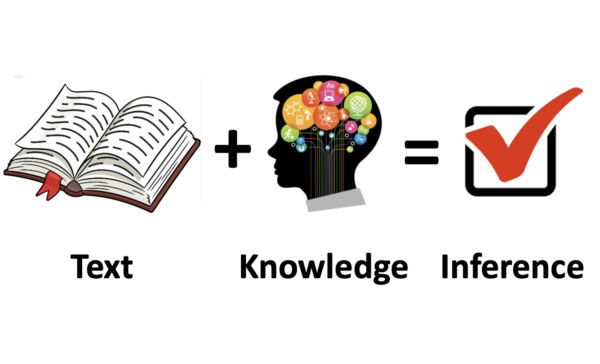
In a question, infer, imply, and suggest often signal that the correct answer will be a defensible conclusion rather than a copied sentence. A useful test is: Which words in the passage support this answer, and does the answer claim more than those words allow?
Watch the following short segments from TOEFL’s TOEFL iBT Reading Questions – Inference and Rhetorical Purpose. It uses a different examination, but its method of checking an inference against passage evidence is transferable.
TOEFL iBT Reading Questions - Inference and Rhetorical Purpose │ Inside the TOEFL Test
TOEFL’s video distinguishes what a passage implies from why an author includes a detail, then demonstrates how to reject answers that lack textual support.
Watch question types for the distinction between inference and rhetorical purpose. Then watch worked examples, focusing on why plausible-sounding alternatives fail. Finish with two-pass reading: first grasp the main point, then return for precise evidence.
That distinction matters. “What does this detail suggest?” asks for an inference. “Why does the author mention this detail?” asks what job the detail performs in the argument—perhaps illustrating a difficulty, acknowledging an objection, or supporting a recommendation.
Find the argument before judging a sentence
On a first reading, identify the subject and then the author’s position about it. “Online public services” is a subject, not an argument. “Online public services should be assessed by whether people can complete applications, not merely by submission counts” is an argument: someone could agree or disagree with it.
Most short argumentative passages contain some combination of a claim, support, a qualification or counterargument, and a conclusion. They need not appear in that order. Small words often reveal their relationships. For example introduces illustration; however and although mark a contrast or concession; therefore usually signals a conclusion. Read past the signal word to see exactly what is being contrasted or concluded.
An author’s point of view is not necessarily a sign of dishonesty. The question is how the author supports that point of view, treats competing considerations, and chooses words. Read the techniques in Khan Academy’s Determining an author’s point of view before we apply them to a passage.
Determining an author’s point of view | Guided practice (article) | Khan Academy
Read Khan Academy’s account of how word choice, selection of information, and treatment of counterarguments reveal an author’s position.
In “How do you determine an author’s point of view?”, read from the paragraph beginning “Some texts have a more obvious point of view than others” through the explanation under “Check for biases,” ending where dismissing counterarguments “may not be providing a balanced view of an issue.” This is the three techniques. Focus on the difference between identifying a stance and proving that its claims are true. Stop before the Alan Turing example.
Notice an important limit to the “missing information” technique: an omission may show what the passage cannot establish, but it does not, by itself, prove the author intended to mislead.
Read an exam-style passage in two passes
The following passage is written for this lesson. Its municipality is an illustrative case, not a report about a named local government. First read it for the overall position. On a second reading, attend to the qualifications—particularly could, though, solely, and before.
Several municipalities have introduced online applications for basic certificates. A resident can now submit a form without travelling to an office. This convenience is real, but the number of forms filed online is a poor measure of whether access has improved. Some residents lack reliable internet, while others need assistance to complete the form. A service can move onto a screen without becoming easier to use.
One municipality therefore retained a staffed counter when it launched an online portal. Staff recorded how long applications took to complete, not merely how many were submitted. They also compared outcomes for residents using the counter and the portal. These records could reveal where applicants encounter delays, though they cannot alone establish why a delay occurs.
Keeping a counter indefinitely may be costly, and some procedures will become simpler as more people gain digital skills. Nevertheless, closing it solely because portal submissions rise would be premature. Before withdrawing in-person assistance, officials should check whether residents can complete applications successfully, and whether those who need help have another usable route.
The central argument is not “online services are bad” or “every office must keep a counter forever.” It is narrower: rising online submissions alone do not justify withdrawing in-person assistance; officials should check whether people can complete the service and still have a usable way to obtain help. The first paragraph establishes the gap between filing a form and having meaningful access. The second offers a way to investigate that gap. The final paragraph acknowledges a cost objection before stating a conditional recommendation.
This is also why the counter matters to the argument. It is not mentioned merely to describe office furniture or staffing. It provides an alternative route for residents who need help and gives officials a basis for comparing service experiences. The passage does not say that keeping the counter has already solved every access problem.
Now look at meaning in context. Here, access means more than the existence of an online form: residents need a practical ability to complete the application. Retained means kept the staffed counter when the portal opened. Premature means not yet justified by the available information, not never justified. Nearby sentences narrow each word’s meaning more effectively than an isolated dictionary definition would.
Finally, consider implication. The passage supports the inference that a high online submission count might coexist with barriers for some residents: it explicitly mentions unreliable internet and the need for assistance. It does not support the claim that most residents face those barriers. Likewise, records of delays could identify where a problem occurs, but the author explicitly warns that they cannot, alone, establish its cause. The difference between could and proves is often the difference between a sound answer and an overstatement.
Hear the tone in the word choice
Tone is the author’s attitude toward the subject as expressed in the writing. It is related to, but distinct from, the argument. Two authors might both recommend improving a service while one sounds angry and the other sounds measured.
Watch Khan Academy’s Analyzing tone through word choice. Its example is informal, but the technique—using particular words as evidence for an attitude—works just as well in a formal policy passage.
Analyzing tone through word choice | Reading | Khan Academy
Khan Academy shows how diction, or word choice, signals an author’s attitude without requiring the author to name that attitude directly.
Watch tone and register for the basic distinction between attitude and level of formality. Continue through word choice; focus on how the presenter supports a description of tone with specific phrases rather than a general impression.
The municipality passage has a measured, cautiously supportive tone toward digital services. “This convenience is real” recognises a benefit. “May be costly” grants a concern about retaining the counter. Yet “poor measure” and “premature” express caution about drawing a policy conclusion too quickly. “Officials should check” offers a constructive next step. Those words support measured and cautious better than hostile, celebratory, or indifferent.
Tone answers should remain proportionate. One negative phrase does not make the whole passage angry; one positive phrase does not make it uncritical. Read the author’s attitude across the passage, especially where a concession is followed by a recommendation.
A reliable method under exam conditions
For a short passage, make two reading passes. First, state its central claim in one English sentence. Then locate the sentence or phrases relevant to the question. This prevents an attractive detail in one paragraph from replacing the passage’s overall point.
When choosing among possible answers, check three common traps:
- Too broad: “All online services exclude residents.” The passage identifies possible barriers for some residents, not all.
- Too strong: “Completion-time records prove why delays occur.” The passage says the opposite about establishing causes.
- Reversed position: “The author recommends closing counters as soon as submissions rise.” The recommendation is to check access before withdrawing assistance.
A defensible comprehension answer can often be expressed in a compact English pattern: “The passage suggests that … because …; it does not establish that ….” You may reason through the idea in Nepali first—पाठको आधार के हो?—but forming the final explanation in English will also prepare you for descriptive answers. Keep the claim, supporting words, and limit separate, just as you did in your evidence bank.
The key skill is disciplined inference: identify the argument, interpret words in context, support a description of tone with diction, and draw only implications the passage permits. A plausible answer is not enough if it silently changes some to all, could to will, or a conditional recommendation into an absolute rule.
Next lesson turns to grammar, sentence structure, punctuation, and formal usage. Clear sentences will help you express the careful interpretations you have practised here.