Hello! Welcome to the first lesson of Module 3: Niche Research and Book Planning.
In the last module, we built a solid legal and ethical foundation for your work. You now have a framework for navigating copyright, platform policies, and ensuring your content is respectful and inclusive. With those essential guardrails in place, we can now dive into the exciting strategic work of creating a book that has the best possible chance of success.
Today's learning outcome is to: Identify profitable book niches and sub-genres using Amazon bestseller analysis and keyword research tools.
This is one of the most crucial steps in your journey to becoming a successful self-publisher. A brilliant book on a topic nobody is looking for will not generate the passive income you're aiming for. Conversely, a good book in a well-chosen niche can sell consistently for years. This lesson will equip you with a systematic, data-driven process to find those winning topics, leveraging your comfort with analytical thinking from your IT background.
We will cover:
- The core principle of "supply and demand" on Amazon KDP.
- The free tools you need to conduct your research.
- A step-by-step process for brainstorming, filtering, and validating book ideas.
- How to "niche down" to find your profitable sweet spot.
Let's begin.
1. The Core Principle: Finding the Market Sweet Spot
A profitable book niche exists at the intersection of two key factors: demand and competition.
- Demand: Are there enough people actively searching for and buying books on this topic? We measure this primarily using the Best Seller Rank (BSR). Every book on Amazon has a BSR. A lower BSR means a book is selling more copies.
- Competition (Supply): How many other books are already targeting this topic? We measure this by looking at the number of search results on Amazon for a specific keyword or phrase.
The ideal niche has high demand (proven by books with low BSRs) and low competition (a low number of search results).
The key to finding this sweet spot is a process called "niching down." You start with a broad topic (e.g., "cookbooks") and progressively make it more specific (e.g., "vegetarian cookbooks" -> "vegetarian cookbooks for college students" -> "quick vegetarian air fryer recipes for college students").
The following article provides an excellent, practical overview of this entire process.
Most Profitable Amazon KDP Niches - Top 10
The article "Most Profitable Amazon KDP Niches" from LivingWriter.com clearly explains the supply-and-demand framework and how to use a free tool to measure it. This will form the foundation of our research method.
Please read the section titled "How To Find Profitable Amazon KDP Niches." It covers: How to gauge demand using Best Seller Rank (BSR). How to determine competition using the number of search results. The concept of "niching down" to find your spot. Pay close attention to the specific numbers they recommend: a BSR below 300,000 for demand and search results below 1,000 for competition.
2. Your Free Niche Research Toolkit
As per your preference, we will focus exclusively on free tools. Here’s what you'll need to set up:
- A Private Browser Window: Use Incognito (Chrome) or Private (Firefox) mode for your research. This prevents your personal search history from influencing Amazon's results.
- DS Amazon Quick View: This is a free Chrome extension mentioned in the article you just read. It displays the BSR of books directly on the Amazon search results page, saving you countless clicks. You can find and install it from the Chrome Web Store.
- Keyword Expander Tools: These free browser extensions show you additional keyword suggestions beyond what Amazon shows by default. They are fantastic for brainstorming and niching down.
- AMZ Suggestion Expander is a popular choice.
- The Self Publishing Titans extensions, which we'll look at below, also offer this functionality.
- A Spreadsheet: Use Google Sheets or Microsoft Excel to create a simple table to track your potential niches. You'll want columns for "Keyword/Niche," "Search Results," and "Notes on BSR."
The following resource introduces another set of free tools specifically for KDP.
2 FREE Keyword Research Tools From Self Publishing ...
The article "2 FREE Keyword Research Tools From Self Publishing Titans" introduces two highly useful Chrome extensions that can streamline your process.
Please read the sections "Meet the Extensions" and "How to Use These Extensions." This will introduce you to the KDP Research and KDP Keyword Expander extensions, which provide niche scores and generate extensive lists of keyword ideas directly on Amazon.
3. A Step-by-Step Niche Research Workflow
Now, let's combine these concepts and tools into a repeatable workflow.
Phase 1: Brainstorming (Going Wide)
The goal here is to generate a long list of potential ideas.
- Start with your interests: Write down broad topics you're knowledgeable about or interested in (e.g., from your list: business guidelines, startup mentoring, children's stories, psychology).
- Explore Amazon Categories: Go to the Amazon Best Sellers page, select "Kindle Store" or "Books," and start clicking through the categories and sub-categories. Look at the titles of the top-selling books. What problems do they solve? Who are they for?
- Use Keyword Expanders: Go to Amazon.com and type a broad term like "parenting guide." Let the keyword expander tools show you dozens of related searches that real customers are making (e.g., "parenting guide for toddlers," "parenting guide for new dads," "positive parenting guide"). Add any interesting ideas to your spreadsheet.
The article "Most Profitable Amazon KDP Niches" you read earlier also contains a list of 10 promising categories. You can review that list (Section 1 in the resource) for more inspiration.
Phase 2: Quick Filtering (Applying the Rules)
Now, take your long list of ideas and run them through the simple filter we learned from the LivingWriter article:
For each keyword in your spreadsheet:
- Search for the exact phrase on Amazon (in the "All" department).
- Record the number of search results. Is it under 1,000? If it's much higher, the niche is likely too competitive.
- Look at the first page of results. Using DS Amazon Quick View, check the BSRs. Do you see at least three books with a BSR under 300,000? If not, there may not be enough demand.
This filtering process will quickly eliminate most of your ideas, leaving you with a shortlist of niches that have a good balance of potential demand and manageable competition.
Phase 3: Deep Validation (Confirming the Opportunity)
A niche might look good on paper, but you need to confirm that a new author like you can actually succeed there. This phase is about looking for proof. The following video provides an outstandingly detailed method for this validation, which I'll summarize for you.
My FULL-PROOF Keyword Research Method For Amazon KDP (Find Winning Topics Fast)
The video "My FULL-PROOF Keyword Research Method For Amazon KDP" by Ken Fornari offers a masterclass in validating niches. While he uses a paid tool for demonstration, the principles and the process are what matter, and you can do it all manually with the free tools we've discussed.
Please watch the following clips, focusing on the methodology: 00:00 - 02:06: Introduction to key terms like BSR and the importance of a niche-down topic. 04:11 - 06:14: This part explains what to look for: clear, beginner-friendly topics that solve one problem for one person. It also explains what isn't a good keyword. 12:36 - 18:25: This is the most critical section. It explains the four validation metrics: Winning Books, Dead Books, Matching Search Results, and Authority Figures. Pay close attention to how he defines and uses these to evaluate a niche.
Here's a summary of the deep validation metrics from the video. For each niche on your shortlist, you are looking for:
- Winning Books (✅ Good): These are books with a low number of reviews (e.g., < 250) and a good BSR (e.g., < 30,000). Finding at least 3 of these is strong proof that new books from unknown authors can break in and sell well. This is your green light.
- Dead Books (❌ Bad): These are books that have a decent number of reviews (e.g., > 30) but a terrible BSR (e.g., > 150,000). They prove it's possible to fail in this niche even with some social proof. Too many of these is a red flag.
- Authority Figures (⚠️ Caution): These are books with a huge number of reviews (e.g., 500+) that dominate the top search results. If the first two rows are filled with these giants, it will be very difficult for your new book to get seen. A few are okay, but too many indicates a locked-down niche.
- Result Relevancy: Do the book titles and covers on the first page actually match the keyword you searched? If not, the keyword is too broad, and the data is misleading.
Your goal is to find a niche with a healthy ratio of winning books to dead books and a low number of authority figures. This is the data that tells you a real opportunity exists.
Test your understanding!
You've found a niche: "Python for Data Analysis Projects." You search it on Amazon and find the following on the first page:
- Search Results: 850
- Book A: 150 reviews, BSR 25,000
- Book B: 80 reviews, BSR 40,000
- Book C: 1,200 reviews, BSR 5,000
- Book D: 210 reviews, BSR 28,000
- Book E: 50 reviews, BSR 250,000
- Book F: 75 reviews, BSR 300,000
Based on the deep validation criteria, is this a promising niche? Why or why not?
Show answer
Yes, this looks like a very promising niche. Here's the analysis:
- Search Results (<1000): At 850, the competition is manageable.
- Winning Books: Book A and Book D are clear winners (low reviews, great BSR). Book B is borderline on the BSR but still a positive signal. You have at least two, arguably three, proofs that newish books can sell very well.
- Dead Books: Book E and Book F are dead books. They show it's possible to fail, but they are outnumbered by the winners. This ratio is healthy.
- Authority Figures: Book C is an authority figure, but there's only one. It doesn't dominate the entire first page, leaving room for others to rank.
Conclusion: The niche has proven demand, manageable competition, and clear evidence that newer authors can succeed. This is a green light.
4. A Note on Bestseller Analysis
Another way to analyze the market is to look at successful authors. When you find a profitable niche, look at the authors of the winning books. Do they have multiple bestsellers? Are their books often part of a series?
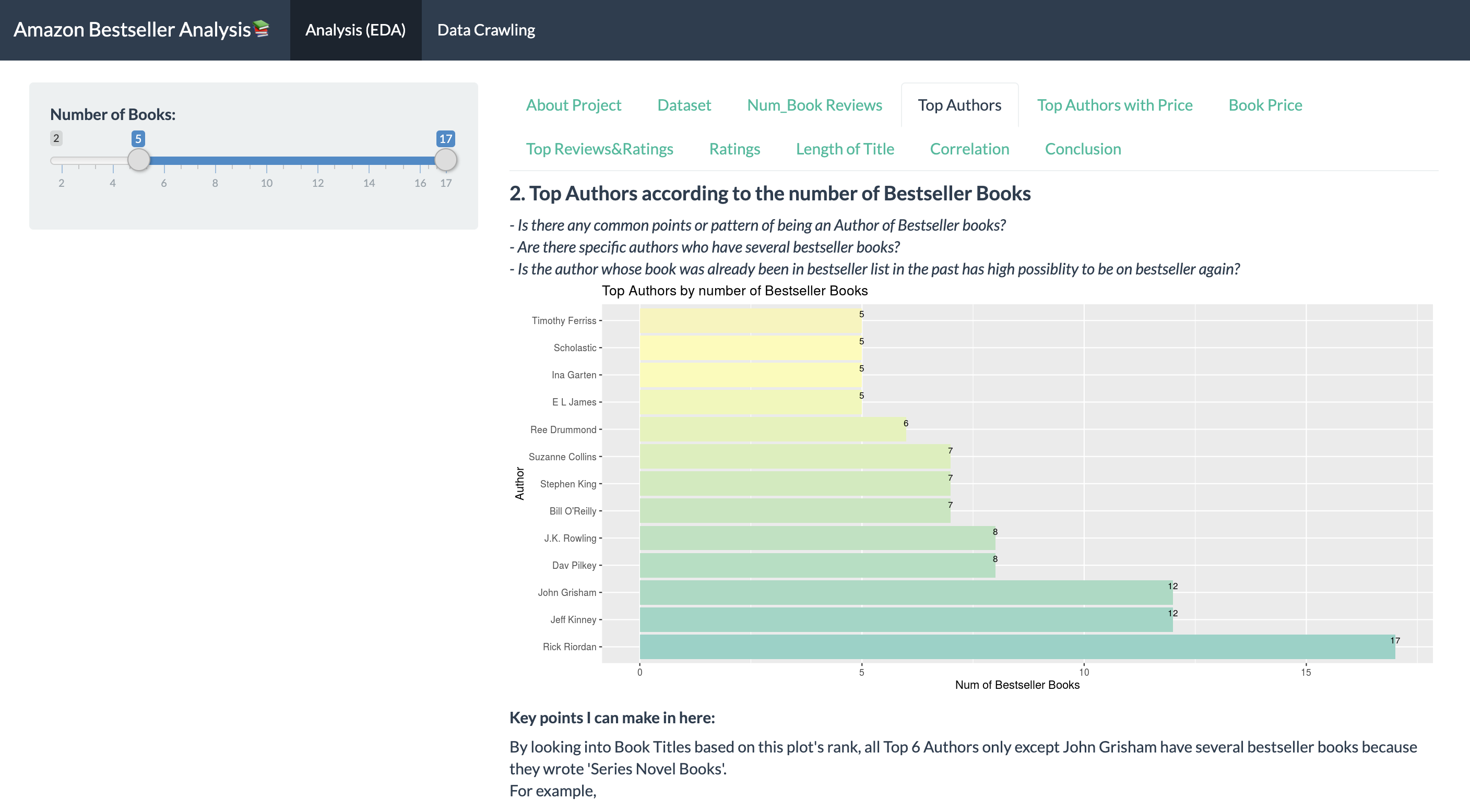
This is less about finding your first niche and more about validating its long-term potential. If you see authors successfully building a brand around a topic with multiple books, it's a strong sign of a healthy, sustainable market.
Conclusion
You now have a complete, systematic process for finding profitable book ideas. This isn't a one-time task; it's a fundamental skill for your author career. The more you practice this research, the better your intuition will become.
Key Takeaways:
- A profitable niche combines high demand (proven by low BSRs) with low competition (proven by low search result counts).
- The strategy is to niche down from a broad idea to a specific topic that serves a dedicated audience.
- Your free toolkit includes a private browser, DS Amazon Quick View, a keyword expander, and a spreadsheet.
- A true opportunity is validated by finding "winning books"—proof that new authors can succeed in that niche.
Preview of the Next Lesson:
Finding a profitable niche is the first half of the equation. The second half is deeply understanding the reader within that niche. In our next lesson, we will focus on how to define a target audience avatar, including their demographics, interests, and pain points. This will ensure that the book you create speaks directly to the people you want to reach.