Recommended resources
The freely available resources this lesson will direct you to.
Hello! Welcome back to the capstone module of our course.
In the previous lesson, you selected a contemporary policy problem and identified a 'utopian' or 'rationalist' approach to solving it, using the critical lens provided by Michael Oakeshott. You learned to spot the tell-tale signs: treating the state as an all-encompassing 'enterprise association' and privileging abstract, technical blueprints over practical, lived experience.
Today, we will take the analysis a step further. We will move from identifying the rationalist approach to systematically critiquing it. We'll add two of the most powerful intellectual tools from our course to your arsenal: Hayek's 'knowledge problem' and Deutsch's criteria for 'good explanations'.
Time to complete: Approximately 60 minutes.
A Brief Recap
Last time, we established that rationalist policies often fail because they ignore the 'practical knowledge' embedded in traditions and attempt to impose a universal blueprint. You chose a policy area and began to dissect its rationalist assumptions. Keep that chosen policy problem at the front of your mind, as it will be our case study for today's entire lesson.
Learning Outcome
By the end of this lesson, you will be able to:
Critique the selected 'utopian' approaches by applying Hayek's knowledge problem and Deutsch's criteria for 'good explanations'.
Part 1: The Epistemological Critique – Hayek's Knowledge Problem
While Oakeshott provides a superb political and philosophical critique of rationalism, F.A. Hayek offers a devastating economic and epistemological one. He explains precisely why the central plans of the Oakeshottian Rationalist are not just undesirable, but impossible to execute successfully.
The core of Hayek's argument is that the knowledge required for a complex society to function is fundamentally dispersed. It exists in millions of individual minds as unique, fleeting, and often tacit "knowledge of the particular circumstances of time and place." No central authority, no matter how powerful or intelligent, can ever gather and process this information.
1.1 Understanding Dispersed Knowledge
To grasp the full weight of this argument, let's go to the source and supplement it with a clear summary.
First, please watch this short video, which provides an excellent overview of Hayek's central thesis.

PhilosophyToons. Focus on the explanation of why knowledge is dispersed (01:29-03:20) and why statistics are an inadequate substitute for this knowledge (04:39-06:33).
Next, let's dive into Hayek's seminal essay. Your background in economics and statistics will allow you to appreciate the profound challenge he poses to the assumptions of much of the discipline.
- Reading (Approx. 15 mins): The Use of Knowledge in Society by F.A. Hayek. Please focus on these key sections:
- Part I & II: Hayek defines the true economic problem of society: not as a simple allocation of "given" resources, but as the utilization of knowledge that is "never given to a single mind."
- Part III: He draws a crucial distinction between "scientific knowledge" (the domain of experts, akin to Oakeshott's 'technical knowledge') and the "knowledge of the particular circumstances of time and place" (akin to 'practical knowledge').
- Part V & VI: Hayek explains the marvel of the price system. It is a communication mechanism that coordinates the actions of millions by transmitting just enough information, in an abbreviated form, for people to adapt to changes they don't even need to understand fully.
1.2 Applying Hayek's Critique
Now, let's apply this to the utopian policy you identified in the last lesson. Take about 10 minutes to consider the following questions:
- What specific "knowledge of the particular circumstances of time and place" does your chosen policy approach inevitably ignore? (e.g., A global carbon tax ignores a specific factory's unique retrofitting challenges, a farmer's local soil conditions, or a small business owner's relationships with their suppliers).
- How does this policy attempt to substitute abstract, statistical information for real, dispersed knowledge? (e.g., Relying on national GDP figures, aggregate carbon emissions, or standardized test scores, while ignoring the underlying individual realities).
- In what way does the plan disrupt or sideline an existing 'spontaneous order' (like the price system, common law, or cultural norms) that already communicates knowledge and coordinates behavior?
This Hayekian lens reveals that the utopian plan is not merely flawed; it is epistemologically arrogant. It proceeds on the false assumption that all relevant knowledge can be known and controlled by the planner.
Part 2: The Explanatory Critique – Deutsch's 'Good Explanations'
We've established that the utopian plan is practically impossible. But what about the idea behind it? Is the theory that justifies this grand project a good one? For this, we turn to David Deutsch and his crucial distinction between 'good' and 'bad' explanations.
A 'bad explanation' is easy to vary. Like an ancient myth, its details are arbitrary and can be tweaked endlessly to account for new facts without the whole story falling apart. A 'good explanation' is hard to vary. Its components are tightly constrained, each playing a functional, non-arbitrary role. If you change one detail, the entire explanation collapses.
2.1 Understanding 'Good Explanations'
David Deutsch's 2009 TED talk provides the clearest and most compelling introduction to this powerful idea.
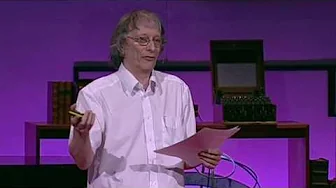
TED. Please watch from 05:58 to 16:36. Pay close attention to:
- The critique of simple testability using the myth of Persephone (08:35).
- The definition of a bad explanation as 'easy to vary' (11:58).
- The contrast between the 'easy to vary' myth and the 'hard to vary' scientific explanation for the seasons (13:13).
- His final warning against "explanationless theories" where "a wizard did it" (15:20).
This framework gives us a razor to cut through political and policy justifications. Many utopian plans are underpinned by explanations that are, in Deutsch's terms, profoundly 'bad'. They are collections of easily variable assertions and 'wizard' theories that assume complex outcomes without explaining the causal mechanisms.
For a slightly deeper dive, you can skim the section "Good Explanations" in this interview transcript. It reinforces the core ideas and adds the useful concept of 'criticize-ability'.
- Optional Reading (Approx. 5 mins): David Deutsch: Knowledge Creation and The Human Race ..., section titled "Good Explanations".
2.2 Applying Deutsch's Critique
Let's turn this critical eye on the explanation underpinning your chosen utopian policy. Spend about 10 minutes thinking through these points:
- What is the core explanation justifying the policy? Try to state it as a clear assertion about cause and effect.
- Is this explanation 'hard to vary' or 'easy to vary'? If a key prediction of the plan fails, can advocates easily "patch" the explanation with ad-hoc justifications (like the Greeks adding a rule about Demeter banishing heat to the other hemisphere)? Or would the failure force them to abandon the entire theory?
- Identify the 'wizards'. Where does the explanation rely on "explanationless theories"? (e.g., "Implementing this education reform will create a more equitable society" - how? What's the causal mechanism? "A planned economic transition will lead to green jobs" - what specific, hard-to-vary causal chain makes this happen?).
- Does the theory make 'narrow and risky predictions' that could decisively prove it wrong? Or are its promises vague, long-term, and its failures easily blamed on external factors or insufficient implementation?
A policy based on a 'bad explanation' is built on intellectual sand. It cannot lead to genuine progress because, like the ancient Greeks varying their myths, its proponents aren't forced by reality to get any closer to the truth.
Part 3: Synthesizing Your Critique
You have now analyzed your chosen policy through three distinct but complementary lenses. Let's bring them together. Take a final 10 minutes to synthesize your thoughts, perhaps by filling out a structure like this in your notes:
-
Policy Problem: [e.g., Climate Change]
-
Utopian Approach: [e.g., A global, top-down mandate for Net Zero by 2050, managed by an international body]
-
My Critique:
- Oakeshottian Lens: The policy incorrectly treats the entire world as a single enterprise association with a mandatory goal ('Net Zero'). It devalues the practical knowledge of individual communities, industries, and nations, in favour of abstract technical knowledge from climate models and expert committees.
- Hayekian Lens: The plan is impossible because it requires knowledge that is inherently dispersed. No central body can know the optimal energy solution for every single village, factory, and household. It disrupts the price mechanism, which is the only effective way to signal scarcity and incentivize innovation across billions of actors.
- Deutschian Lens: The underlying justification is a bad explanation. It's easy to vary; when deadlines are missed or costs spiral, new justifications are easily invented. It relies on 'wizards'—assuming that complex social and technological transitions will just happen because the plan dictates it, without a hard-to-vary explanation of the causal mechanisms.
Conclusion
In this lesson, you have moved from identification to a deep, multi-faceted critique of a utopian policy approach.
Key Takeaways:
- Hayek's Knowledge Problem demonstrates that rationalist plans are epistemologically doomed because they cannot access the vast, dispersed, local knowledge necessary for a complex society to function.
- Deutsch's criteria for 'Good Explanations' allow us to critique the intellectual foundation of these plans, revealing them to be 'bad explanations' that are 'easy to vary' and rely on 'wizard' theories rather than robust, causal mechanisms.
- Together, Oakeshott, Hayek, and Deutsch provide a comprehensive toolkit for understanding why utopian social engineering is politically undesirable, practically impossible, and intellectually bankrupt.
You are now equipped not just to spot a bad plan, but to articulate precisely why it is a bad plan from multiple philosophical angles.
Preview of the Next Lesson:
Critique is essential, but it is not enough. In our next lesson, "Formulate a 'piecemeal' policy intervention for the chosen problem," we will pivot from criticism to construction. Using the same policy problem, you will design a 'piecemeal' alternative—a testable, adaptable, and humble intervention that respects the principles we have discussed today.