Recommended resources
The freely available resources this lesson will direct you to.

Hello! Welcome to your next lesson.
In our previous lessons, we've been gathering the building blocks of your unique cinematic language. We've explored how to structure a film around a metaphor, build thematic coherence with visual motifs, and use narration and on-screen text as poetic, expressive elements.
Today, we'll focus on bringing all these disparate ideas together into a coherent and communicable whole. The learning outcome for this lesson is to assemble a mood board and director's vision document to communicate artistic intent to collaborators. These two documents are the bridge between the film that exists in your mind and the one you will create with your team. For an interdisciplinary artist like you, who plans to blend film with design and performance, mastering these tools is essential for ensuring your collaborators—cinematographers, performers, and designers—are all aligned with your singular vision.
1. The Mood Board: Capturing the Intangible Feeling
Before you can explain your film, you need to evoke its feeling. A mood board is not a storyboard or a shot list; it is a collage of images, textures, colors, and references that communicates the film's tone and emotional atmosphere. Given your background in visual communication and textile design, this is a process that should feel very intuitive.
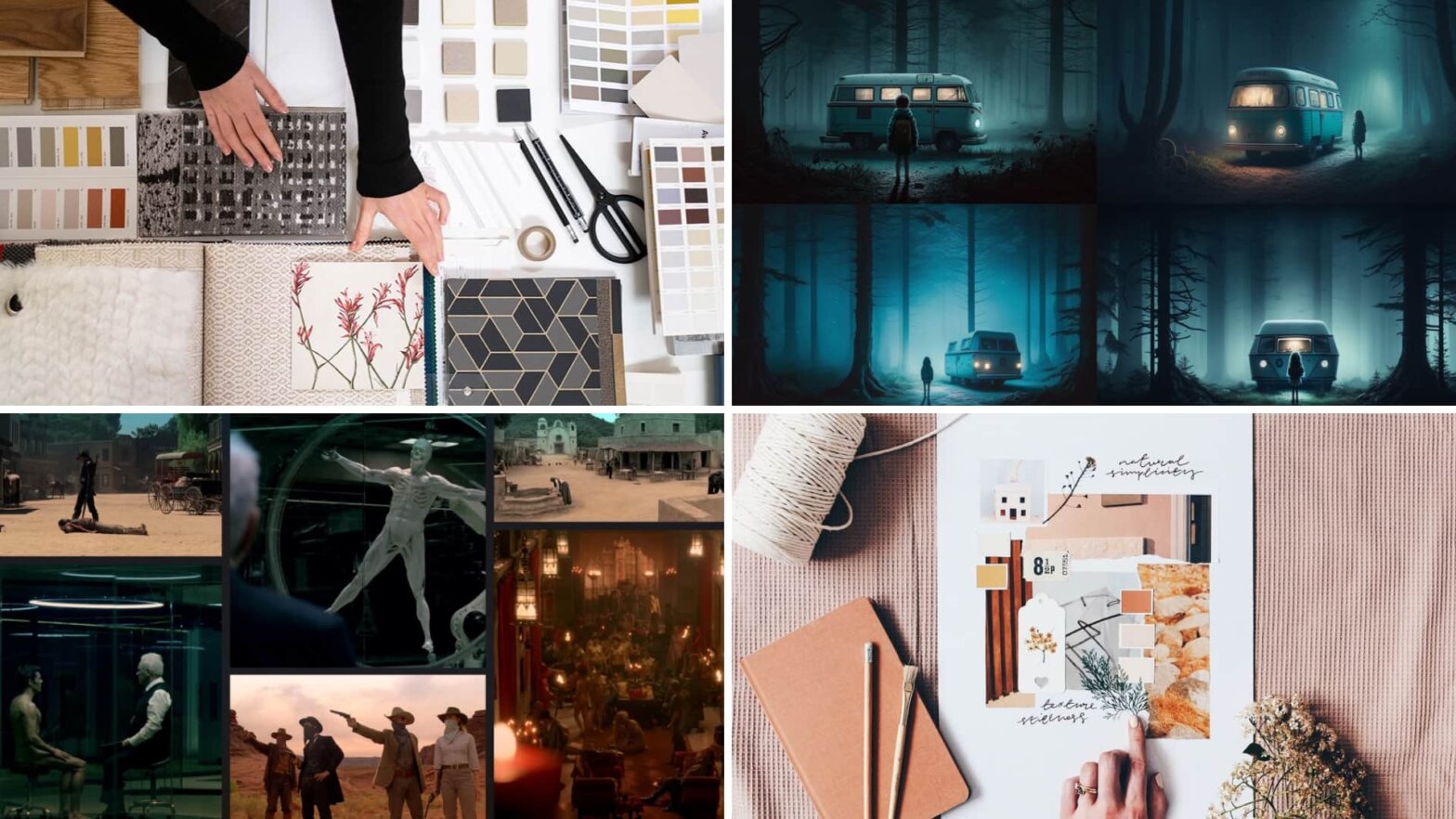
Let's watch a video that breaks down a practical process for creating a filmic mood board.
How To Make A Mood Board For Your Films!
This guide from Ryan Spenner in 'How To Make A Mood Board For Your Films!' offers a great step-by-step approach. It argues that a mood board's job is to conceptualize the intangible aspects of your film that a script alone cannot capture.
Watch the video from the beginning to 08:52. Pay close attention to the sequence of steps the creator suggests: Start with Music: Notice how he uses music to establish pacing and emotional tone before any visuals. Define a Color Palette: This guides wardrobe and location choices. Find Locations: Consider both 'creative' (aspirational) and 'real' (practical) locations. Gather Images Last: This may seem counterintuitive, but see how the previous steps help to focus the image selection process.
The process outlined in the video provides a clear structure:
- Music & Sound: Establishes the rhythm and underlying emotion.
- Color & Wardrobe: This is a key area for you. Your expertise in color analysis and textile design means you can build a palette that carries deep symbolic weight. This is where you begin to plan the integration of your own designs.
- Location: As you're inspired by Werner Herzog, you know that landscape is never just a backdrop. Your mood board should capture the character of the natural environments you plan to use.
- Imagery: This includes cinematic references, photography, and even paintings that capture the composition, lighting, and framing you envision.
The key is that the mood board serves as a visual compass for you and your entire team, ensuring everyone is navigating toward the same aesthetic and emotional world.
2. The Director's Vision Document: Articulating the Plan
While the mood board communicates the feel, the director's vision document (sometimes called a "lookbook" or "treatment") articulates the plan. It's a more detailed document that breaks down your artistic choices and explains how they serve the story and themes.

This next video provides an excellent overview of the essential components of a director's vision document.
Creating The Director's Vision
In 'Creating The Director's Vision,' the presenter outlines the core sections of a comprehensive vision document. Think of this as the architectural plan for your film.
Watch the sections from 00:48-01:29 and 03:22-08:09. As you watch, note down the key headings the presenter discusses (e.g., Story, Characters, Visual Look, Color, Lighting, Music, Sound, Themes, Camera). These will form the template for your own document.
This document forces you to move from general ideas to specific choices. For example, instead of just saying the film is "surreal," you would describe how you will achieve that surrealism through specific camera movements, lens choices, color grading, and sound design.
3. Case Studies: From Personal Vision to Collaborative Blueprint
A great vision document has two parts: the personal, passionate "why" (often called a Director's Statement) and the practical, detailed "how." Let's look at examples of both.
The Personal Core: The Director's Statement
A director's statement is the soul of your project. It explains your personal connection to the material and what you want the audience to feel.
What is a Director's Statement: Guidance for First-Time Filmmakers
The article 'What is a Director's Statement' includes a powerful example from director Mike Mills for his film Beginners. It is a masterclass in connecting a deeply personal story to universal themes and artistic intent.
Read the section titled 'BEGINNERS’ Director’s Statement'. Notice how Mills articulates his personal motivation, the film's core themes (love, change, history), and even speaks directly to his actors about the characters. This is the heart of the vision.
The Collaborative Blueprint: Aligning the Team
Now, let's see how a director's vision is translated into a shared plan that guides each department. The following resource is a collection of creative vision statements from the key crew members of a short film, showing how they all aligned their work to serve the director's core concept.
Creative Vision Statements - Presence
This page, 'Creative Vision Statements,' for the short film 'Presence' is an invaluable look at how a vision is shared. It contains statements from the director, production designer, and cinematographer.
Please read the statements from: Kristy Clinton (Director): Note how she establishes the central metaphor (kids as the ideal) and the core visual contrast (fluid/handheld vs. static/tripod). Larissa Bateman (Production Designer): See how she translates the director's theme into concrete ideas for costume (dull adult colors vs. vibrant splashes on kids' white t-shirts) and texture (natural vs. man-made). This is exactly how your design skills will integrate into your filmmaking. Nikki Spicer (Cinematographer): Observe how she plans to execute the director's vision using specific techniques like slow motion and shallow depth of field.
This example from the crew of "Presence" demonstrates the ultimate purpose of a vision document: to empower your collaborators to make their own creative contributions in service of a single, unified artistic goal.
4. Practical Exercise: Laying the Foundation for Your Vision
It's time to start assembling the vision for your own experimental short film. This exercise is about taking the first concrete steps.
Your Task (20 minutes):
-
Create a Mini Mood Board:
- Using a tool you like (Pinterest, Canva, or even just a document), create a small mood board for the film idea you've been developing.
- Find and include at least one image for each of the following categories:
- Color Palette: A swatch of colors that defines the film's look.
- Costume/Texture: An image that evokes the feel of the clothing or a key material. This could be one of your own designs or a reference.
- Atmosphere/Location: A photo of a landscape or interior that captures the film's mood.
- Composition: A film still or photograph that exemplifies the kind of framing you want to use.
-
Draft a Core Vision Paragraph:
- Drawing inspiration from the Mike Mills and Kristy Clinton examples, write one paragraph that serves as the heart of your director's vision.
- In this paragraph, try to answer these three questions:
- What is the central theme or emotion of the film?
- What is the core visual or conceptual metaphor you will use to explore it? (e.g., "The film juxtaposes X and Y to explore Z.")
- What feeling do you want the audience to be left with?
This is the first draft of your creative blueprint. It will evolve, but the act of writing it down makes the vision tangible.
Conclusion
In this lesson, we've distinguished between two critical documents for communicating your artistic goals: the mood board and the director's vision document.
Key Takeaways:
- A mood board is a visual collage that conveys the intangible feeling, tone, and atmosphere of your film.
- A director's vision document is a detailed blueprint that articulates the plan, breaking down specific artistic choices in cinematography, design, and sound.
- A powerful vision starts with a personal statement (the "why") and is then translated into a collaborative plan that aligns your entire creative team (the "how").
- Your background in design is a significant strength, allowing you to create deeply layered visual meaning through color, costume, and texture.
What's Next?
You have now created the foundational documents that will guide your project. In our next lesson, we will do a deep dive into an area that is central to your artistic identity: planning the integration of original costume designs into a film's visual and thematic concept. We'll build directly on the mood board and vision statement you began today, exploring how wearable art can function as character, theme, and story.