Recommended resources
The freely available resources this lesson will direct you to.
Introduction
In our last lesson, we uncovered a fascinating principle of Mantra Shastra: the Ṇamokār Mantra is not just a prayer, but a foundational sonic library. We saw how its vibrational structure is so potent that it serves as the origin point for even more condensed, powerful sounds like ॐ (Om) and ह्रीं (Hrīṁ). You learned that these are not arbitrary abbreviations but distilled essences of the larger mantra's power.
This lesson builds directly on that discovery. We will formally define what these potent, single-syllable sounds are and why they are called बीज मंत्र (bīja mantra), or "seed sounds." Your goal is to understand their fundamental structure and their specific function as powerful tools in Jain spiritual practice (sādhana). This exploration takes us closer to the core of your interest: understanding how specific vibrations can be intentionally used to elevate consciousness.
What is a Beej Mantra? The Seed of Sound
The term bīja (बीज) literally means "seed." A seed is a remarkable object: a tiny, compact package that contains the complete blueprint for a much larger, more complex reality, like a tree. A beej mantra operates on the same principle. It is a single, potent syllable that is considered the concentrated sonic essence of a larger spiritual concept, a deity, or a universal energy.
To draw an analogy from your software development background, you can think of a long mantra with translatable meaning as a high-level function with descriptive variable names and comments. It's readable and tells a story. A beej mantra, in contrast, is like a fundamental operator (+, *) or a core machine instruction. It has no narrative meaning but executes a very specific, powerful, and fundamental operation at a low level. It is pure function, stripped of all descriptive overhead.
The following video provides an excellent high-level overview, contrasting these potent "seed sounds" with longer, more structured hymns.
Beej Mantras vs Vedic Mantras | Mantra Science Explained | Sound, Vibration & Consciousness
This video, from the channel Path to Spirituality, explains the core difference between Beej Mantras and longer Vedic Mantras, describing them as "condensed vibrations" and "energetic shortcuts."
Please watch these key segments to grasp the core concept: Beej vs. Vedic Mantras: Notice the description of beej mantras as "single seed sounds" and "energetic shortcuts" whose energy is "direct." Practical Analogy: The speaker likens beej mantras to "instant energy keys," a perfect metaphor for their function. Energy Keys: This section reinforces the idea of beej mantras as "energy keys" that unlock specific vibrational doors.
As the video highlights, beej mantras are designed for direct, immediate impact. They are not meant to be analyzed for poetic meaning but to be used as sonic tools to produce a specific vibrational effect.
The Anatomy of a Beej: Seed and Power (बीज and शक्ति)
The construction of a beej mantra is not random. The science of phonemes, मातृका विज्ञान (mātṛkā vijñāna), provides a foundational formula for how these seed sounds are created. The core principle is the fusion of a consonant and a vowel, each playing a distinct role.
A key treatise on this subject explains the principle concisely.
This text from the Encyclopedia of Jainism explains the fundamental building blocks of beej mantras.
In the text, please locate the Sanskrit śloka (verse) that begins with ‘हलो बीजानि चौक्तानि...’. Read this verse and the sentence that follows it, which explains its meaning: the key principle. You'll note the following critical distinction: Consonants (व्यञ्जन), from क (ka) to ह (ha), are considered the बीज (bīja) - the seed. They provide the fundamental form and structure of the sound. Vowels (स्वर) are the शक्ति (śakti) - the power. They provide the activating energy or life-force that animates the seed.
This combination of bīja (seed-form) and śakti (activating-energy) creates the final, potent syllable. For example, the consonant ह (ha) is a seed associated with space and auspiciousness. The consonant र (ra) is the seed of fire and energy. When combined with the śakti of the vowel ई (ī) and the finalizing अनुस्वार (anusvāra) ं (ṁ), they form the powerful beej mantra ह्रीं (Hrīṁ). The seed consonants provide the raw material, and the vowel's power shapes its expression.
The Function of a Beej Mantra: A Vibrational Key
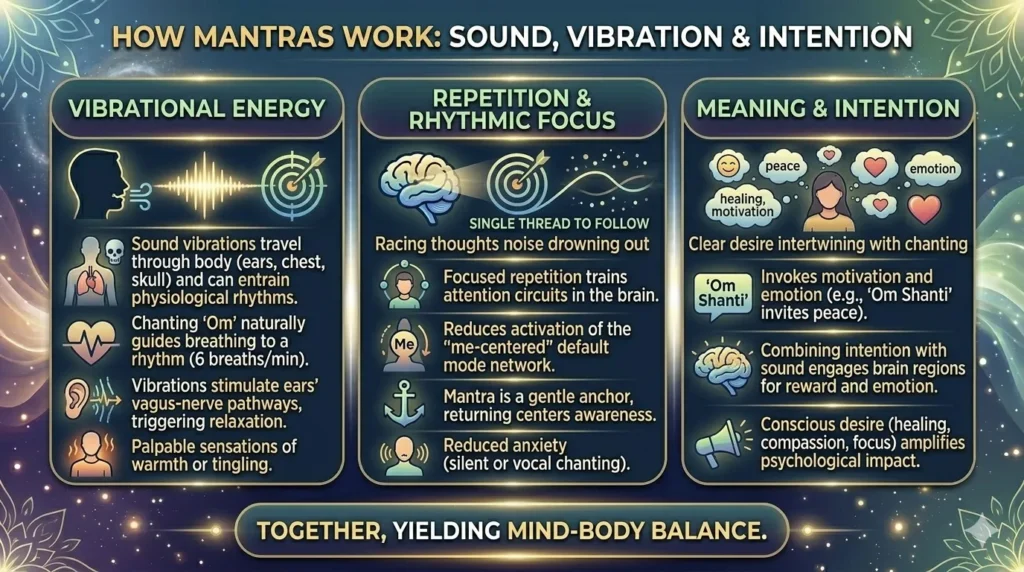
Now that we understand what a beej mantra is and how it's constructed, we can explore its function. As the video Beej Mantras vs Vedic Mantras called it, a beej mantra is an "energy key." Its purpose is to unlock a specific state of consciousness or activate a specific energy center within the practitioner through the principle of resonance.
The logic is as follows:
- Every spiritual state (e.g., peace, compassion) or energy center (
chakra) has a natural resonant frequency. - A beej mantra is a sound engineered to match a specific frequency.
- By repeatedly chanting the beej mantra, the practitioner creates a powerful vibrational field.
- Through sympathetic resonance, this field activates the corresponding energy center or induces the corresponding mental state, much like one tuning fork can cause another to vibrate without physical contact.
This makes beej mantras incredibly efficient tools for spiritual practice. They bypass the analytical, language-processing parts of the brain and work directly on the deeper, vibratory layers of our being. This is why the video Beej Mantras vs Vedic Mantras notes that they work "even without understanding meaning because vibration affects energy field directly."
The Function of Arham in Jain Practice
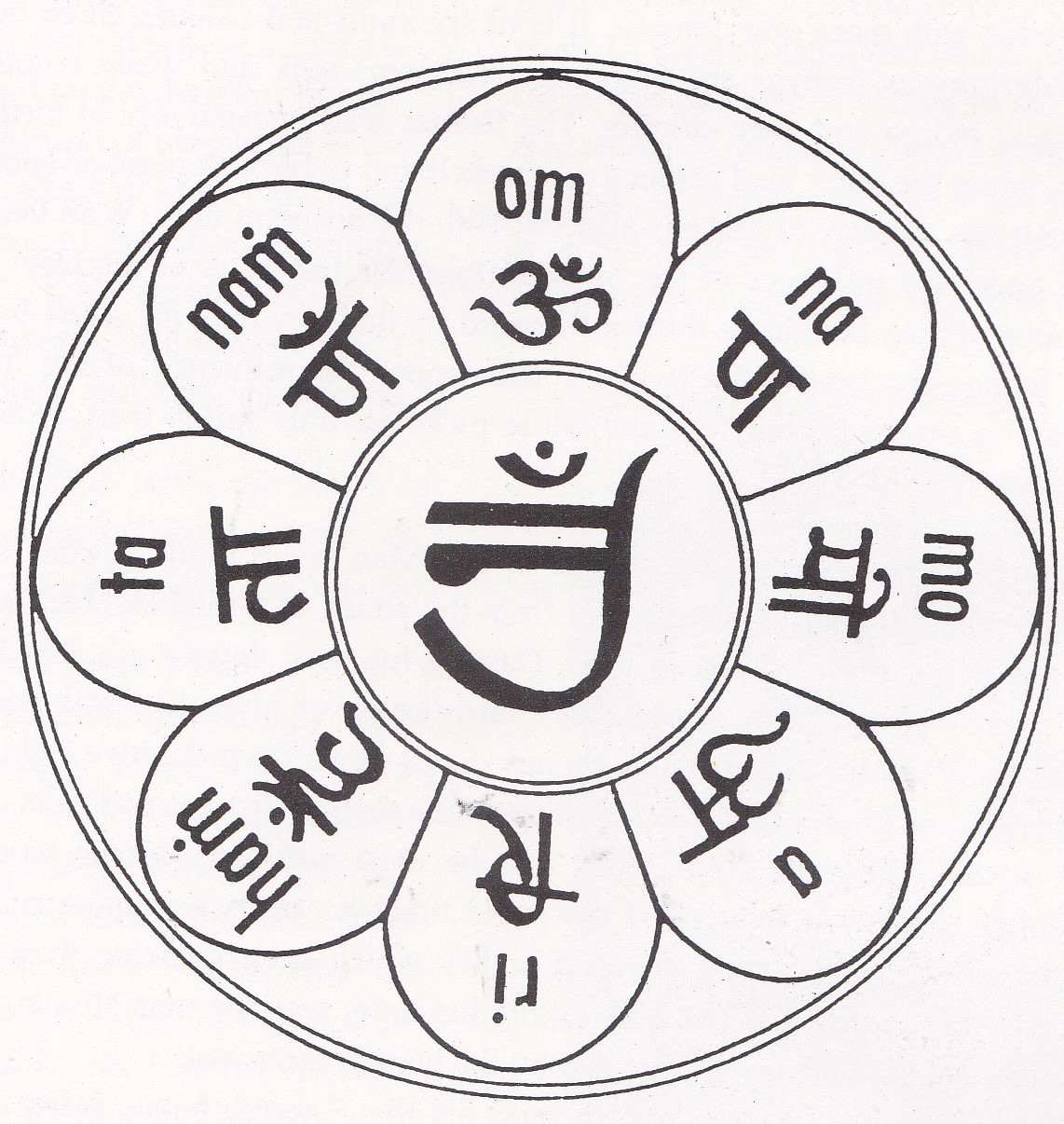
To make this concrete, let's examine a core beej mantra in Jainism: अर्हं (Arhaṁ). As we learned in the last lesson, this sound is derived from the first pada of the Ṇamokār Mantra, Ṇamo Arihantāṇaṁ. What is its function in practice?
अर्हं का अर्थ, क्या क्यों कैसे कितना? सुनो तो जाने
In this short clip from Arham Dhyan Yog, the speaker explains the practical meaning and function of the 'Arham' beej mantra.
Please watch these two short segments: The Core Purpose: The speaker immediately states that the purpose of such bījākṣaras (seed syllables) is to keep your kasāyas (passions like anger, pride, etc.) "cool" or pacified. The 'Nickname' Analogy: He gives a brilliant analogy, calling Arhaṁ the "nickname" for all the infinite pure souls (Siddhas). It's a direct, shorthand way to connect with the concept of ultimate purity.
This is a perfect illustration of a beej mantra's function in Jainism.
- It's a tool for
kashayareduction: ChantingArhaṁis a directpuruṣārtha(self-effort) to pacify the agitated mental states caused by anger, pride, deceit, and greed. This directly addresses your goal of managing mohnīya karma. - It's a point of focus (
ālambana): By invoking the "nickname" of the Siddhas, the practitioner's mind is immediately drawn toward the ideal of a pure, dispassionate soul, shifting focus away from worldly attachments and disturbances. - It's a vibrational anchor: The sound itself generates a vibration of purity and peace, which helps to transform the practitioner's inner environment.
Conclusion
In this lesson, we have formally defined the beej mantra and explored its profound function as a "seed sound." You've learned that these are not just random syllables but are precisely engineered sonic tools designed for maximum impact with minimal form.
Key Takeaways:
- A
bīja mantrais a single-syllable "seed sound," representing the concentrated vibrational essence of a larger spiritual principle. - It is constructed from a consonant (
bīja- the seed form) and a vowel (śakti- the activating power). - Its function is to act as a vibrational key, using the principle of resonance to unlock specific states of consciousness or activate energy centers, often bypassing literal meaning.
- In Jain practice, beej mantras like
Arhaṁserve as potent tools to pacifykashayas(passions) and to connect the practitioner's awareness with the qualities of enlightened beings, aiding in karmic purification.
You now have a solid theoretical understanding of what a beej mantra is and how it functions. In our next lesson, we will build upon this by identifying several primary Jain beej mantras (including Arhaṁ, Hrīṁ, Śrīṁ, etc.) and exploring their traditionally attributed functions in more detail.