Recommended resources
The freely available resources this lesson will direct you to.
- Bot Detection | ML System Design Problem Breakdownwww.youtube.com
- Fraud Detection with AI: Ensemble of AI Models Improve Precision & Speedwww.youtube.com
- Bot Detection - ML System Design in a Hurrywww.hellointerview.com
- CB-MTE: Social Bot Detection via Multi-Source Heterogeneous ...pmc.ncbi.nlm.nih.gov
Hello! Welcome to the final lesson in our module on architecting bot management systems.
Over the past few lessons, we've designed the individual building blocks of a sophisticated bot detection platform. We've architected systems for:
- IP reputation and device fingerprinting.
- Collecting and analyzing behavioral telemetry.
- Generating a risk score using ML models.
- Designing challenge mechanisms and a policy engine for risk-based responses.
Each of these components produces a valuable, but incomplete, signal. An IP address might be suspicious, but the user's behavior could seem normal. A device fingerprint might be pristine, but the request pattern is anomalous. The central challenge is weaving these disparate threads into a coherent and confident final judgment.
This brings us to today's learning outcome: Design a bot classification and adaptive response system that synthesizes detection signals into verdicts and enforces actions.
In this lesson, we will architect the "brain" of our bot management system. We will design the central fusion engine that synthesizes all detection signals into a definitive verdict. Then, we will integrate this engine with the adaptive response framework we built in the last lesson to create a complete, end-to-end system that can not only detect bots but also act on that intelligence in a nuanced and effective way.
1. From Disparate Signals to a Unified Verdict
Our system currently generates several independent scores or signals. The core task now is to design a component that can answer the question: "Given all this evidence, what is our final verdict?"
This component is often called a fusion engine, a reasoning engine, or a final classifier. Its job is to take multiple, potentially conflicting, inputs and produce a single, actionable output.
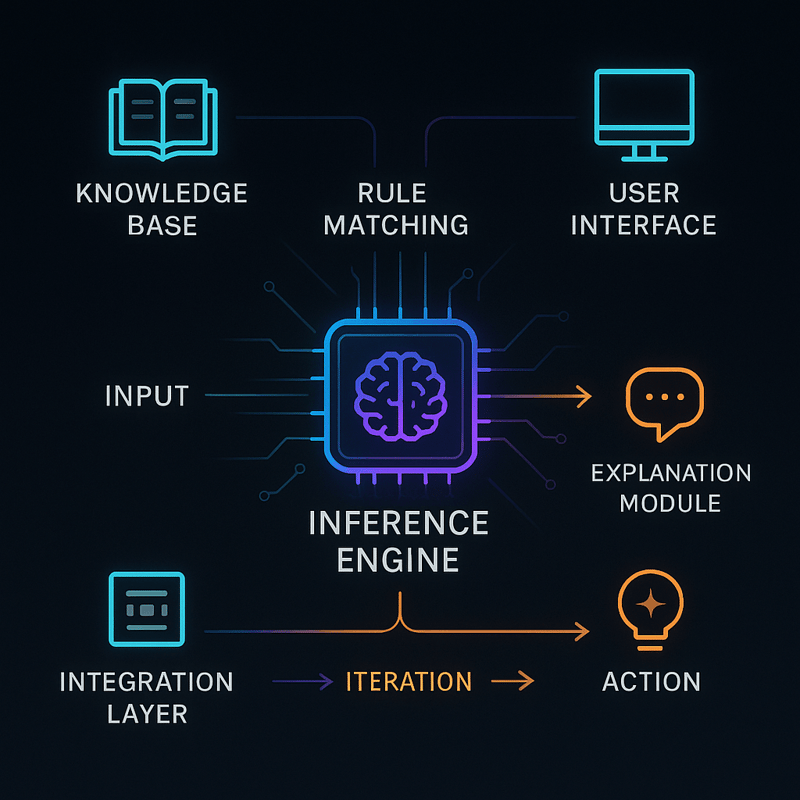
The problem we are solving is one of late fusion. We have multiple specialized "expert" models (for IP reputation, behavior, etc.), and we need a "master" model or system to weigh their opinions and make a final call.
2. Architecting the Fusion Engine
There are several architectural patterns for building this fusion engine, ranging from simple heuristics to complex machine learning models. As with any system design choice, there are trade-offs between simplicity, performance, and accuracy.
Approach 1: Weighted Scoring (Heuristic-based)
The simplest approach is to assign a static weight to each signal and calculate a weighted sum.
For example:Final Score = (0.4 * IP_Rep_Score) + (0.3 * Fingerprint_Score) + (0.3 * Behavioral_Score)
- Pros:
- Extremely simple to implement and understand.
- Very low computational overhead; fast inference.
- The contribution of each signal is interpretable.
- Cons:
- Brittle: It fails to capture non-linear interactions. For example, a bad IP score combined with a suspicious user-agent should perhaps have a much higher weight than the sum of their parts.
- Difficult to maintain: The weights are hand-tuned ("magic numbers") and may need constant adjustment as bot tactics evolve. What works today might not work tomorrow.
This approach is often a starting point but rarely sufficient for a mature, adversarial environment.
Approach 2: Ensemble Model (ML-based)
A more robust and adaptive approach is to train another machine learning model—an ensemble model—whose sole purpose is to learn the complex relationships between the input signals.
Instead of hand-tuning weights, we let a model learn them. The features for this model are the outputs of our other detection systems.
The following video provides an excellent walkthrough of designing an ML-powered bot detection system, focusing specifically on this fusion architecture.
Bot Detection | ML System Design Problem Breakdown
This video breaks down the design of a complete bot detection system. Pay close attention to the 'high level design' and 'modeling' sections, which detail how to build a fusion model that synthesizes various signals.
Please watch the following segments: High Level Design (00:15:26 - 00:21:07): This outlines the core components. Notice how the 'bot classifier' produces a score that feeds into a 'calibration layer' and then into different actions (ban, limit). This is the macro-level flow we're designing. Modeling - Late Fusion Architecture (00:33:00 - 00:40:55): This is the most critical part for our current topic. It details a 'late fusion' architecture where different branches (network/graph features, sequence features, dense features) are processed independently and then combined by a final set of layers (attention, MLP) to produce a single 'bot score'. This is a powerful and common pattern for signal synthesis.
As the video explains, the late fusion architecture is powerful because it allows specialized models to do what they do best, while a final set of layers learns how to best combine their outputs.
A research paper on the "CB-MTE" framework provides a concrete, published example of this approach. It fuses metadata, text, and graph features using a CatBoost model as the final decision layer.
CB-MTE: Social Bot Detection via Multi-Source Heterogeneous Feature Fusion
Let's look at an academic implementation of this fusion concept. This paper describes the CB-MTE framework for bot detection.
Please read the following parts to see how a real system is structured: Section 'Hierarchical double fusion detection framework': This introduces the two-tier fusion concept. Section 'Framework Architecture': Skim the descriptions of the four modules to understand the different signal sources (metadata, text, graph) and the final 'Data feature fusion and decision module'. Section 'CatBoost Classification': This details how the CatBoost gradient boosting model acts as the final decision layer, integrating the different features. Section 'Global Structure' (Algorithm 1): This algorithm summarizes the entire process, showing feature extraction (steps 2-9), fusion (step 12), and final classification (step 13).
The key takeaway from these resources is that a modern classification system often uses a dedicated model (like an MLP, attention layer, or a gradient-boosted tree like CatBoost) to synthesize signals, as it's far more powerful and adaptable than simple heuristics.
3. The Complete End-to-End Architecture
Now, let's assemble all the pieces into a cohesive, end-to-end system that performs classification and orchestrates the adaptive response.

Here is the step-by-step data flow of a request through our bot management platform:
-
Ingestion & Parallel Signal Extraction:
- A request arrives at an Enforcement Point at the edge (e.g., a reverse proxy like Nginx/Envoy, or a serverless function on a CDN).
- The Enforcement Point extracts basic request features (IP, headers, URL, etc.).
- It then makes parallel, low-latency calls to our various detection microservices:
- IP Reputation Service (Lesson 1)
- Fingerprinting Service (Lessons 3 & 4)
- Behavioral Telemetry Cache/Service (Lesson 5)
-
Signal Synthesis / Fusion:
- The collection of scores and features from the detection services is passed to the Fusion Engine.
- The Fusion Engine, using its ML-based late fusion model, synthesizes these inputs into a single, comprehensive
risk_score(e.g., a value from 0.0 to 1.0).
-
Score Calibration:
- The raw
risk_scorefrom the model is passed through a Calibration Layer. - As discussed in the video, model outputs are often not true probabilities. Calibration (e.g., using Platt scaling or isotonic regression) adjusts the score so that a value of
0.8genuinely means there is an ~80% probability of the request being from a bot. This is crucial for our policy thresholds to be meaningful and stable across model versions.
- The raw
-
Policy Evaluation:
- The calibrated
risk_scoreis fed into the Policy Engine we designed in the previous lesson. - The Policy Engine evaluates its rule set (e.g.,
if risk_score > 0.9 then BLOCK) and returns a discreteAction.
- The calibrated
-
Adaptive Response Enforcement:
- The Enforcement Point receives the
Actionfrom the Policy Engine and executes it:ALLOW: The request is proxied to the origin application server.CHALLENGE_INVISIBLE: The Enforcement Point serves a page with a Proof-of-Work challenge.CHALLENGE_INTERACTIVE: The Enforcement Point redirects the user to a CAPTCHA page.BLOCK: The Enforcement Point responds with a403 Forbiddenstatus code.
- The Enforcement Point receives the
-
Feedback Loop:
- Every signal, verdict, and action is logged to a centralized data lake or security information and event management (SIEM) system.
- This data is invaluable for:
- Analytics & Tuning: Security analysts can monitor the system's performance and tune policy thresholds.
- Model Retraining: The logged data, especially from challenged or blocked events, serves as a rich source of new training data for our ML models.
- Discovering New Threats: We can run unsupervised anomaly detection models (like Isolation Forests or Autoencoders, as mentioned in the video) on this stream of data offline to find new, unknown bot behaviors. These discoveries can then be used to create new features or labels for our supervised models.
This modular, microservices-based architecture is highly scalable and maintainable. You can upgrade the IP reputation model without touching the behavioral analysis service, or add a completely new detection signal by simply integrating it into the fusion engine.
Conclusion
In this lesson, and throughout this module, we have designed a complete, state-of-the-art bot management system from first principles.
Key Takeaways:
- Synthesis is Key: A robust bot verdict is not based on a single signal but is synthesized from multiple, diverse sources of evidence (network, device, behavior).
- ML-based Fusion is Superior: Using an ensemble model (late fusion) to combine signals is more powerful and adaptable than static, heuristic-based weighting.
- The System is a Pipeline: The architecture follows a logical flow: Signal Extraction -> Fusion -> Calibration -> Policy Evaluation -> Enforcement.
- Modularity Enables Evolution: Designing the system as a set of communicating microservices allows for independent development, scaling, and upgrading of each detection component.
- The Feedback Loop Drives Improvement: Continuously logging all data and using it for offline analysis and model retraining is essential for staying ahead in the adversarial cat-and-mouse game of bot detection.
Preview of the Next Module:
We now conclude our deep dive into architecting a bot management system. We've focused on the sophisticated, application-layer (L7) logic needed to distinguish human from machine.
In our next module, "Architecting DDoS Mitigation Systems," we will shift our focus. While related, DDoS mitigation addresses a different primary threat: overwhelming network volume. We will explore the architectures needed to handle massive floods of traffic, often at the network and transport layers (L3/L4), and design systems that can absorb terabits per second of malicious traffic while keeping services online.