Recommended resources
The freely available resources this lesson will direct you to.
Hello. This module begins with the raw material of a short comic: the small actions, relationships, and difficult questions that make you wonder what happens next. Later lessons will help you turn one of those sparks into a focused premise and, eventually, a complete one-shot. For now, the aim is to generate story seeds without demanding that each one already be a plot.
A seed can fit in a sentence: At a community event, a volunteer removes someone else’s name from the sign-up board just before that person arrives. You do not yet know why it happened or how it ends. That uncertainty is useful. Today you’ll learn four ways to find and develop such seeds: through observed behavior, relationships, dilemmas, and questions about how people treat one another.
Start with something a person does
A broad topic such as “jealousy” gives you a subject, but not yet something a reader can see. An action gives you a foothold. Someone hides a letter. Two people reach for the same chair. A person rehearses a greeting, then walks past without speaking. Each action invites the question: Why that, and why now?
Watch this Reedsy video for a method of taking an ordinary action seriously without pretending you already know the person behind it.
How to Come Up with ORIGINAL Story Ideas [Brainstorming Method]
Watch “How to Come Up with ORIGINAL Story Ideas [Brainstorming Method]” from Reedsy to see how an observed action can become several possible story seeds.
Begin with ordinary actions, where the speaker collects small observations rather than waiting for a spectacular event. In people and change, notice why a change in circumstances matters more than an unusual image alone. Then watch the questions: why might someone act this way, what might that suggest about them, and what event would put pressure on that possibility? Stop at 08:33; the later discussion of changing settings is not needed yet.
The crucial distinction is between what you notice and what you invent. “A volunteer pockets a name label taken from a sign-up board” is an action. “The volunteer is spiteful” is an interpretation—and only one of many. Perhaps the person whose name was removed begged not to be called up. Perhaps the volunteer wants the coveted slot. Perhaps the name belongs to someone the volunteer fears will be hurt by appearing.
Those possibilities can produce different comics from the same starting image. You need not decide which explanation is true about a real person. Observation supplies a gesture; fiction supplies an imagined motive and circumstance. That also makes everyday observation more responsible: notice public behavior without intruding on anyone’s privacy or treating guesses about strangers as facts.
For comics, keep an eye out for visible choices. A character’s hesitation can appear in a hand hovering over a label; a decision can appear when that hand peels it away. The image need not explain the whole story. It only needs to give a reader something concrete to notice and wonder about.
Look at what people want from one another
An isolated action becomes especially fertile when it affects a relationship. Two people may care about each other and still want incompatible things. One wants to help; the other wants the freedom to fail. One wants recognition; the other wants to keep a shared achievement private. Neither person needs to be a villain for the situation to become tense.
Read the short passages below for two ways comic creators draw on lived experience: not by copying events exactly, but by using familiar feelings and relationship dynamics as material.
How to Come Up With Comic Book Ideas: Tips From Comic Creators
Read “How to Come Up With Comic Book Ideas: Tips From Comic Creators” for its advice on finding the human relationship inside a story idea, regardless of genre.
In “04 Draw From Your Life,” read the creator's example. Focus on the difference between borrowing an emotional experience and reproducing your life literally. Then skip to “06 Focus on Characters and Relationships” and read the relationship advice. Notice that a dynamic between people can be a starting point, even before you know the plot.
Return to the sign-up board. Suppose the two volunteers are close friends. One believes that removing the other’s name is protection from an intimidating public role. The other has worked hard to volunteer for exactly that role. The seed is no longer merely someone removes a label. It is: A friend secretly prevents someone from taking a risk they have chosen for themselves.
The diagram below shows another way to find seeds: note what each person hopes to get from another. The desires need not match, and the mismatch is where an interaction may become interesting.
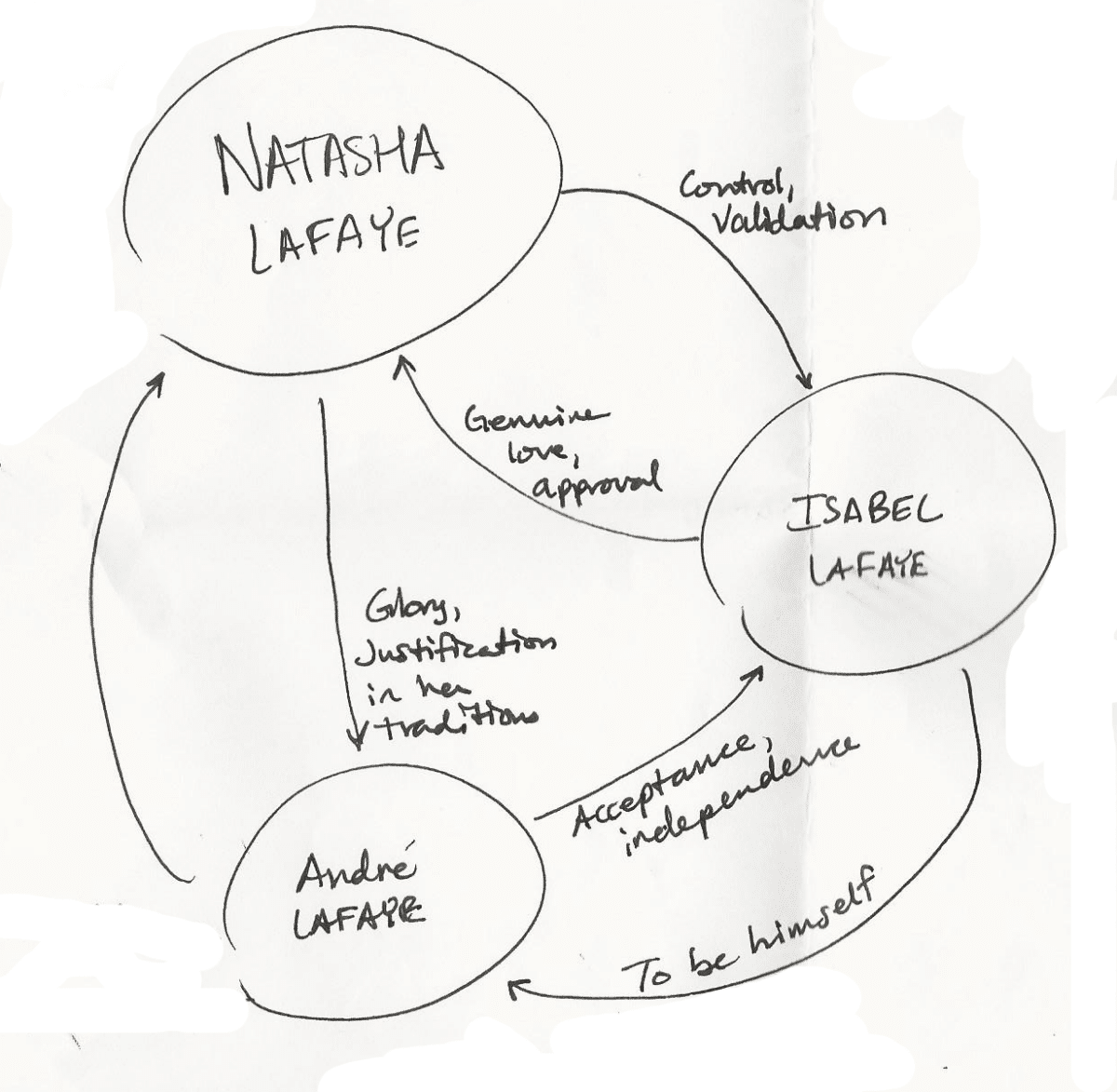
You do not need a full map for every short-comic idea. Even one mismatched pair can be enough: I want your approval; you want me to stop asking for it. The next useful thought is not necessarily “What is their entire history?” It may be “What small event would make both desires visible today?”
Begin with a difficult choice—or a human question
Sometimes no observed gesture starts the idea. Instead, you find yourself thinking about a choice: Would someone tell a painful truth if keeping quiet would preserve a friendship? A dilemma becomes a seed when you imagine a person who must act, rather than simply debate the options.
The final segment of this video briefly demonstrates that approach. Its earlier segment offers a practical way to hold onto fragments that have not found a story yet.
Watch selected parts of “How to Think of Story Ideas” from Write with Claire Fraise for a way to collect incomplete ideas and a way to start from a dilemma.
Watch the idea collection for the notion of keeping observations and fragments without forcing them into stories immediately. Then skip to a difficult choice, which asks what sort of person would face a dilemma and how they might arrive there.
A dilemma gives a character competing reasons to act. In the volunteer example, a friend might believe the public appearance will cause harm, yet also know that removing the name takes away the other person’s choice. Both reasons matter. If one option is obviously right and costs nothing, the dilemma has little force.
A question about the human condition is wider than a single decision. “When does protecting someone become controlling?” could lead to a quiet family comic, a workplace story, or something fantastical. Its value is not that you already have the answer. It helps you recognize situations where reasonable people might disagree—and where their disagreement could be shown through action. The volunteer removing the label is one possible image for that question.
Keep questions open at this stage. “People should always respect others’ choices” announces a conclusion. “Can taking away someone’s choice ever be an act of care?” makes room for characters to surprise you. You can investigate the question through different people and situations before deciding what, if anything, your eventual comic will say.
Keep a seed small enough to grow
These four starting points are connected, but they do different jobs:
- Observed behavior gives you a concrete moment: someone pockets a name label.
- A relationship gives the moment personal pressure: the person affected is a friend.
- A dilemma gives a reason to hesitate: intervene or respect the friend’s decision.
- A human question gives the situation wider interest: what separates care from control?
You can start with any one of them. A question may lead you to invent a relationship; a relationship may suggest a telling action. There is no required order, and a seed does not need all four parts before you save it. A simple record might preserve the image that caught your attention and one possible source of tension. Keep alternative explanations if more than one interests you.
For a short-comic portfolio, it is tempting to reject a small seed because it lacks an elaborate world or a final twist. Resist judging it by those standards yet. The label on a board is small; the choice to remove it could matter deeply to two people. Conversely, an impressive setting is not automatically a story seed until something in it makes a person wonder, choose, conceal, resist, or change.
Key takeaways
Story seeds can come from ordinary behavior, from what people want of one another, from choices with competing costs, or from open questions about being human. Record what is observable separately from the motives you invent. Look for a specific action that could carry the tension in a comic, but leave room for several possible stories to grow from it.
In the next lesson, you’ll take one such seed and give it firmer shape: a protagonist, a goal, opposition, and stakes. For now, a good seed is not a finished pitch. It is a small situation you want to understand better.