Recommended resources
The freely available resources this lesson will direct you to.
Hello! Welcome back to our course on architecting security products.
In our last lesson, we designed the heart of our WAF: a signature-based detection engine using the Aho-Corasick algorithm. We saw how this approach is theoretically sound and how production systems like Intel's Hyperscan push performance further with techniques like SIMD.
Today, we'll build directly on that foundation. A fast algorithm is a great start, but to handle enterprise-level traffic, we need to squeeze out every last drop of performance. This lesson is dedicated to the learning outcome: Design performance optimization strategies for a signature engine, such as caching, rule compilation, and hardware acceleration. We will systematically explore three major architectural strategies to make our engine not just fast, but exceptionally efficient.
1. The Dimensions of Performance
Before we dive into specific techniques, it's important to recognize that "performance" for a signature engine isn't just about raw matching speed. A well-architected system must balance multiple competing concerns.
Let's look at how a production-grade library like Hyperscan defines its performance goals.
Hyperscan, Turbo Network Security via SW Algorithm
This presentation slide from an overview of Hyperscan provides an excellent summary of the multiple dimensions of performance that a real-world signature engine must consider.
Please read the slide titled 'Many Dimensions of Performance Optimization'. It's a short but dense list. Pay attention to the fact that it includes not just speed, but also memory footprint and compile time.
As you can see, a holistic view of performance includes:
- Throughput: Raw matching speed for both large blocks of data and small, fragmented packets.
- Scalability: How well performance increases as we add more CPU cores.
- Memory Footprint: The size of the compiled rules (bytecode), the state required for streaming, and the temporary memory (scratch space) needed during a scan.
- Compile Time: How quickly the engine can parse and prepare a new set of rules. Fast compile times are crucial for dynamic environments where rules are updated frequently.
Our optimization strategies will touch on all of these dimensions. Let's start with the classic software engineering solution to performance problems: caching.
2. Caching: Avoiding Redundant Work
The most expensive computation is the one you don't have to do. In a WAF, many requests share common elements (e.g., the same User-Agent string, common API arguments). By caching the results of expensive rule evaluations, we can significantly reduce the load on the signature engine.
A research paper on a system called "RuleCache" provides a fantastic architectural blueprint for this.
RuleCache: Accelerating Web Application Firewalls by On-line ...
The paper 'RuleCache: Accelerating Web Application Firewalls by On-line Learning Traffic Patterns' explores the root causes of WAF performance issues and proposes a sophisticated caching system to address them. This aligns perfectly with your interest in first-principles understanding.
Please read the following sections: Section III: OBSERVATIONS FOR EXISTING WAFS: This section identifies the two main sources of inefficiency: 'Redundant Target Computation' and 'Redundant Rule Processing'. Understanding this is key to motivating the caching strategies. Section IV-A: Rule Result Cache: This section details the design of a cache for rule results. Focus on the cache replacement policy defined by the Weight formula.
Based on the insights from the paper, we can design two primary caching strategies for our engine.
Strategy 1: Rule Result Cache
This strategy targets the "redundant target computation" problem. Instead of re-evaluating the same request field against the entire ruleset repeatedly, we cache the outcome.
Architecture:
- Cache Key: The key is a specific target value, e.g.,
User-Agent: Mozilla/5.0...orARGS:q=search_term. - Cache Value: The result of processing that specific value (e.g.,
PASSorDENYwith the triggered rule ID). - Workflow:
- When a request comes in, the WAF extracts its targets (headers, args, etc.).
- For each target, it queries the cache.
- If a
DENYresult is found, the request can be blocked immediately. - If a
PASSresult is found, the engine can skip processing that specific target value, saving CPU cycles. - If it's a cache miss, the value is processed by the signature engine, and the result is stored in the cache for future requests.
Cache Replacement Policy:
The crucial design decision is what to keep in the limited cache memory. The RuleCache paper proposes an intelligent, weight-based policy:
This is a powerful concept. It prioritizes caching items that are not only frequently seen but also computationally expensive to process. This ensures the cache delivers the maximum performance benefit.
Strategy 2: Rule Ordering Cache (Dynamic Rule Optimization)
This strategy targets the "redundant rule processing" problem. In many rulesets, a small number of rules are responsible for blocking the vast majority of attacks. If we can check those "hot" rules first, we can achieve early termination and avoid processing hundreds of unnecessary rules.
This isn't a simple static cache but rather a dynamic optimization of the ruleset itself, based on live traffic patterns. The RuleCache paper suggests using a genetic algorithm to find an optimal rule order, but the core architectural idea is:
- Monitor Traffic: In an offline or side-band process, analyze traffic to determine which rules are being triggered most frequently.
- Calculate Priority: Assign a priority to each rule or rule group based on factors like trigger frequency and processing cost.
- Reorder Rules: Restructure the active ruleset to place higher-priority rules earlier in the inspection pipeline.
- Handle Dependencies: This is a critical challenge. Rules are not always independent. The reordering mechanism must understand and respect rule dependencies (e.g., a rule that sets a variable must run before a rule that reads it). This often means reordering rule groups rather than individual rules.
3. Advanced Rule Compilation
In our last lesson, we defined "compilation" as the process of building the Aho-Corasick automaton. We can take this concept much further. The goal is to perform as much analysis and optimization as possible in an offline "compile" step, leaving the online "runtime" path as simple and fast as possible.
From Automaton to Bytecode
Let's revisit Hyperscan. It doesn't just build a simple automaton; it compiles rules into a highly optimized, proprietary bytecode.
Hyperscan, Turbo Network Security via SW Algorithm
These slides from the Hyperscan overview illustrate the separation between the compile-time and run-time components, which is a core principle of this optimization strategy.
Please review the slides titled 'Hyperscan Operation: Compile Time' and 'Hyperscan Operation: Run-time'. Notice how the compiler takes human-readable patterns and produces a 'Database Bytecode'. The runtime then uses this compiled bytecode, which is read-only and highly optimized for scanning.
The architectural benefit here is clear:
- Compile Time (Heavy Lifting): The compiler analyzes patterns, decomposes complex regexes, builds optimized state machines, and outputs a compact binary format (the bytecode). This step can be slow and complex.
- Run Time (Lean & Fast): The runtime is a lean interpreter that executes this bytecode against input data. It's designed for pure speed and predictable memory usage, with no dynamic allocations.
Just-in-Time (JIT) Compilation
We can take this one step further. Instead of having a runtime interpret the bytecode, we can compile the bytecode directly into native machine code for the host CPU. This is Just-in-Time (JIT) compilation.
A fantastic modern example of this architecture in a security context is eBPF (extended Berkeley Packet Filter) in the Linux kernel.

The eBPF model provides a powerful architectural pattern for our WAF engine:
- The WAF's rule compiler generates an intermediate bytecode representing the matching logic.
- When rules are loaded, a JIT compiler within the WAF process translates this bytecode into highly optimized x86-64 (or ARM) machine code.
- The online inspection path simply calls this JIT-compiled function, achieving the highest possible performance in software.
4. Hardware Acceleration
When software optimizations hit their limit, we turn to specialized hardware. This involves offloading the most computationally intensive parts of the signature matching process from the general-purpose CPU to dedicated silicon.
CPU-Level Acceleration: SIMD
We touched on this in the last lesson. Single Instruction, Multiple Data (SIMD) instructions (like Intel's AVX) are a feature of modern CPUs that allow a single instruction to operate on multiple data points simultaneously.
Hyperscan, Turbo Network Security via SW Algorithm
This slide provides a concrete example of how SIMD is used within Hyperscan to accelerate a simple literal match, showing the performance benefits of processing data in parallel.
Review the slide 'SIMD Example: Literal Matching Acceleration'. You don't need to follow every instruction, but understand the concept: instead of comparing byte-by-byte, it uses 128-bit registers to compare 16 bytes at once, dramatically speeding up the search for a short string like 'foo'.
This is the most common form of hardware acceleration because it leverages capabilities already present in the server's CPU. A well-designed signature engine must use SIMD to be competitive.
Dedicated Hardware Offload: FPGAs and ASICs
For the ultimate in performance, we can move the entire matching logic off the CPU.
These Chips Are Better Than CPUs (ASICs and FPGAs)
To understand the trade-offs, we need to distinguish between different types of specialized chips. This video from Techquickie gives a great first-principles explanation of ASICs and FPGAs.
Please watch from 00:27 to 04:04. Focus on the key differences: ASIC (Application-Specific Integrated Circuit): Hardwired for one purpose. Highest performance and efficiency, but inflexible. FPGA (Field-Programmable Gate Array): Can be reprogrammed in the field. Sits between the performance of an ASIC and the flexibility of a CPU.
In the context of our WAF signature engine:
- An FPGA could be programmed to implement a highly parallel Aho-Corasick automaton. This is a common approach in high-end network security appliances. It offers a huge speedup over software and can be updated with new firmware if the matching algorithm needs to change.
- An ASIC represents the pinnacle of performance. A chip could be designed to only do multi-pattern matching. This is less common for WAF signatures because rule logic changes, but it's used for more stable functions like cryptographic operations or basic network packet processing.
How would this offload look architecturally?
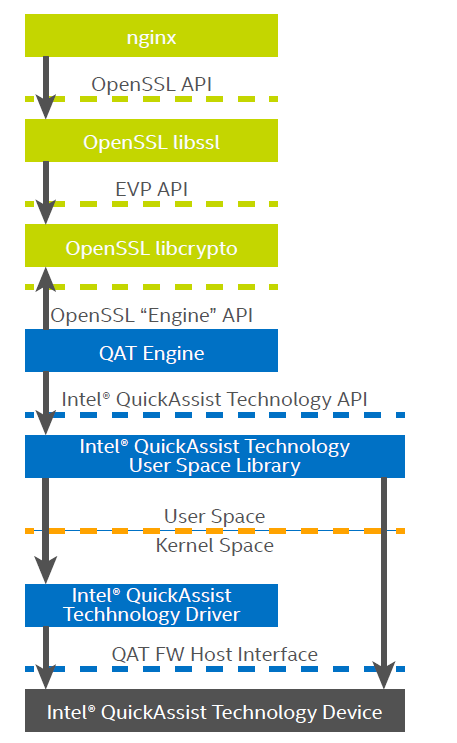
In this model, the WAF's main process would:
- Compile the ruleset.
- Use a specific driver to load the compiled rules onto the FPGA/ASIC accelerator card.
- During request processing, instead of running the scan on the CPU, it would send the request data to the accelerator card via the driver.
- The hardware would perform the scan at line rate and return only the match results to the CPU.
This frees up the CPU to handle application logic, logging, and other tasks, allowing the system to handle much higher traffic volumes.
Conclusion
In this lesson, we explored a range of powerful strategies for optimizing a WAF's signature engine, moving from software-level cleverness to silicon-level acceleration.
Key Takeaways:
- Caching is Crucial: Intelligent caching that considers both frequency and processing cost (like in RuleCache) can drastically reduce redundant work. Dynamically reordering rules based on traffic is an advanced form of caching.
- Compilation is Key: A robust compile step that creates optimized bytecode or even JIT-compiles to native machine code (inspired by eBPF) separates heavy offline analysis from the fast online path.
- Hardware is the Ultimate Accelerator: When software reaches its limits, offloading pattern matching to hardware is the path forward. This can range from using CPU-native SIMD instructions to employing dedicated FPGAs or ASICs via an offload architecture.
- A Hybrid Approach Wins: A real-world, high-performance WAF combines these strategies. It uses caching for common requests, a highly-optimized software engine (like Hyperscan) leveraging compilation and SIMD for the bulk of the work, and may integrate with hardware offload for tasks like TLS decryption.
Preview of Next Lesson:
We have now thoroughly designed the core detection and optimization components for our application-layer firewall. In the next module, we will shift our focus up the stack to a different class of threat: Distributed Denial of Service (DDoS) attacks. We will architect systems designed to absorb and mitigate massive volumetric attacks at the network layer (L3/L4), which requires a completely different set of architectural patterns and technologies.