Recommended resources
The freely available resources this lesson will direct you to.
Hello! Welcome to our next lesson on the contemporary relevance of the argument for an unmoved mover.
In our last session, we drew a crucial distinction between two types of causality: the linear, temporal series of events (like dominoes falling) and the hierarchical, simultaneous series of dependence (like a hand moving a stick that moves a stone). You'll recall we established that Aristotle's argument against an infinite regress targets only the hierarchical series, positing the need for a concurrently acting, sustaining first cause.
Today, we confront one of the most famous and seemingly powerful objections to this argument, drawn directly from classical mechanics. Our learning outcome is to assess whether the principle of inertia, as formulated by Newton, eliminates the need for a concurrent sustaining cause of motion.
This is a classic 'physics vs. metaphysics' debate. Given your background in physics, you are well-positioned to appreciate the nuances of the principles involved. We will dissect the apparent conflict and determine if it truly undermines the Aristotelian position.
1. The Principles at Odds
Let's begin by clearly defining the two principles that appear to be in direct opposition.
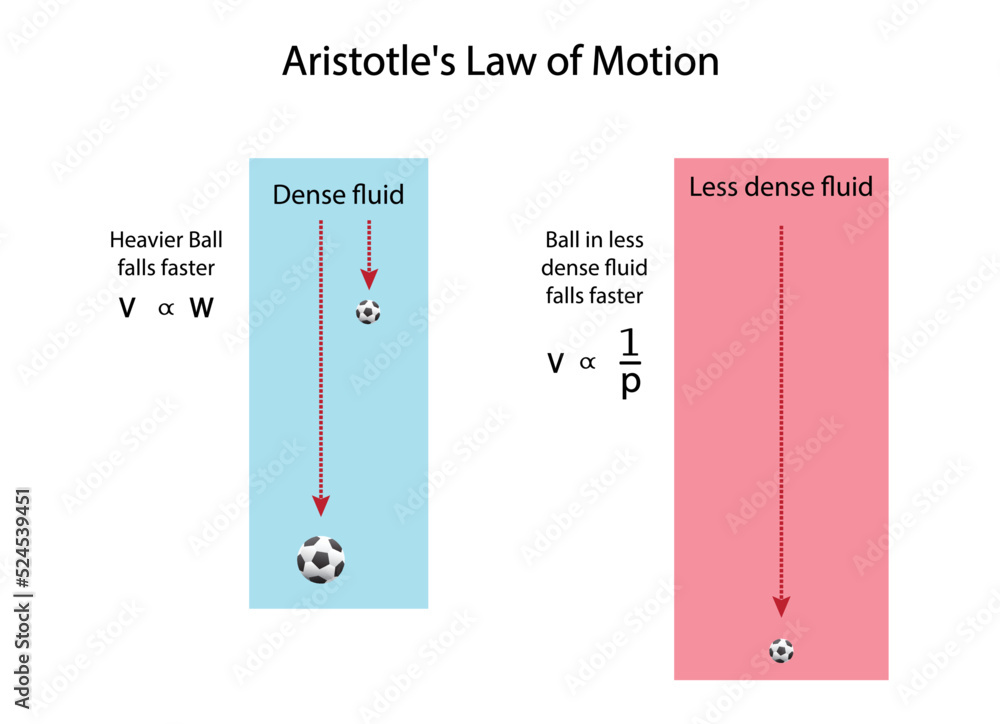
Aristotle's Principle of Motion
Aristotle's physics was built on the principle that "whatever is in motion is moved by another." For him, "motion" (kinesis) was a broad metaphysical concept referring to any change whatsoever—the actualization of a potentiality. This includes:
- Local motion: Change of place.
- Alteration: Change of quality (e.g., a leaf changing color).
- Growth/Diminution: Change of quantity.
- Generation/Corruption: Change of substance.
The principle asserts that a potential cannot actualize itself; it must be actualized by something already in a state of actuality.
Newton's Principle of Inertia
Centuries later, Isaac Newton's Principia Mathematica laid the foundation for classical mechanics with his three laws of motion. The first law, the principle of inertia, directly challenges the old physics.

Newton's First Law states: “Every body continues in its state of rest or of uniform motion in a straight line, unless it is compelled to change that state by forces impressed upon it.”
The Apparent Contradiction
The conflict seems stark.
- Aristotle: An object in motion must be continuously moved by something else.
- Newton: An object in uniform motion requires nothing to keep it moving. It continues in that state by default.
This has led many thinkers, as the philosopher Anthony Kenny wrote, to judge that "Newton’s law wrecks the argument of the First Way." Let's investigate if that judgment is correct.
2. Why the Conflict is Illusory
The philosopher Edward Feser has written extensively on this topic, arguing that the supposed conflict is based on a series of misunderstandings. His paper "The medieval principle of motion and the modern principle of inertia" provides a clear, point-by-point analysis.
The medieval principle of motion and the modern principle of inertia
This paper directly addresses our learning outcome. We will focus on the section where Feser outlines five key reasons why the perceived contradiction between Aristotle's principle and Newton's law is unfounded.
Please read Section II, 'Why the conflict is illusory', which begins on page 5 of the PDF and ends on page 10. Focus on understanding the five numbered points Feser makes.
Now that you've read the section, let's distill Feser's five points. This is the core of the counter-argument against the objection from inertia.
-
No Formal Contradiction: Newton's law is descriptive. It states that a body will continue in uniform motion, but it does not explain why it does so. It doesn't rule out a deeper, metaphysical cause that sustains the object and its properties (including its state of motion), as long as that cause is not a "force" in the Newtonian sense.
-
Equivocation on "Motion": This is the most crucial point. The two principles use the word "motion" differently.
- Aristotle's "motion" = Change, the actualization of a potential.
- Newton's "motion" = Specifically, change of location (local motion).
Furthermore, modern physics treats uniform motion not as an ongoing process of change, but as a stable state, dynamically equivalent to the state of rest. This leads directly to the next point.
-
The "State" of Motion: Since Newton treats uniform velocity as a stable state, the only thing that counts as a change is acceleration (a change in velocity). And what does Newton's system say about acceleration? It requires a cause—an impressed force (). In this respect, Newton agrees with the core of Aristotle's principle: change requires a changer (a mover). The disagreement is simply over whether uniform local motion counts as a "change" in the relevant sense.
-
Misunderstanding Aristotle's Physics: It's a common caricature that Aristotle thought every moving object needed something actively pushing it. As Feser points out, this wasn't the view of Aristotle or Aquinas. They believed "natural motion" (e.g., a heavy object falling) proceeded from the object's own form (its nature) given to it by its generator. No continuously conjoined mover was required for this type of motion. This is conceptually closer to the modern idea of motion being a natural state than is often admitted.
-
Different Levels of Explanation: The Aristotelian principle of motion is a claim in the philosophy of nature (a branch of metaphysics). It addresses what must be true for change itself to be intelligible. The principle of inertia is a law of natural science (physics). It describes, in mathematical terms, the contingent regularities we observe in our universe. Physics abstracts away from the underlying metaphysical reality to create predictive models. As Bertrand Russell noted, physics gives us the mathematical structure of events, but is silent on the intrinsic nature of what is changing.
These five points systematically dismantle the idea that Newton's First Law is a straightforward refutation of the Aristotelian argument. They show that the two principles are not even addressing the same question on the same level of analysis.
3. A Deeper Synthesis: Motion as a Composite
So, if the principles don't conflict, how do they relate? We can go a step further and argue that a complete physical account of motion in the real world is perfectly compatible with, and even requires, the Aristotelian framework.
For this, we turn to another scholar, Thomas McLaughlin. His insight is that no real motion in the universe is purely inertial.
Aristotelian Mover-Causality and the Principle of Inertia
In his paper 'Aristotelian Mover-Causality and the Principle of Inertia', Thomas McLaughlin offers a powerful synthesis. He argues that we must distinguish the principle of inertia as an idealization from the actual, composite motions of real objects.
Please read the section beginning 'The problem mentioned earlier must now be addressed.' on page 147 of the PDF, continuing to the end of the first full paragraph on page 149 ('...incomplete form or actuality.'). This short section presents McLaughlin's twofold solution.
McLaughlin's solution is elegant:
-
Inertia is a Principle, not a Motion: Purely inertial motion (uniform, rectilinear, force-free) is an idealization, a counterfactual. It describes one principle or component of how things move. We never observe a purely inertial motion in isolation, just as we never observe "pure gravity" without other factors.
-
All Real Motions are Composite: Any real moving object—a planet, a thrown ball, a subatomic particle—is subject to forces (gravity, friction, electromagnetism). Its actual trajectory is a composite of its inertial tendency and the changes induced by these forces.
This resolves the entire issue:
- The inertial component of the motion is the persistence of an already-actualized state. It doesn't involve a new actualization of potential, so it doesn't require a concurrent mover in the sense of a physical force causing change.
- The non-inertial components (accelerations caused by forces) are continuous actualizations of potential. A body's potential to have a different velocity is being actualized moment by moment by the gravitational or electromagnetic field it is in. This part of the motion absolutely requires a concurrent mover—namely, the body or field exerting the force.
Therefore, every real motion in the universe, when properly analyzed, exhibits both the persistence of a state (inertia) and the continuous actualization of potential (change caused by forces), which requires a concurrent mover. Newton's physics, far from eliminating the mover, actually helps us identify precisely where the mover's action is found: in the forces that cause acceleration.
Conclusion
We set out to assess whether the principle of inertia invalidates the need for a concurrent, sustaining cause of motion. Our analysis shows that it does not. The objection rests on a superficial reading of both Aristotelian metaphysics and Newtonian physics.
Key Takeaways:
- The apparent conflict between Aristotle's principle of motion and Newton's principle of inertia is illusory, primarily due to an equivocation on the term "motion" and a failure to distinguish between different levels of explanation (metaphysics vs. physics).
- Newton's laws align with Aristotle's principle in a crucial way: they agree that change (acceleration) requires a cause (a force).
- A sophisticated view sees any real motion as a composite of an inertial component (the persistence of a state) and non-inertial components (changes caused by forces). The changes caused by forces are ongoing actualizations of potentials that require a concurrent mover.
- Ultimately, the principle of inertia does not eliminate the need for a sustaining cause. Instead, it helps clarify the modern scientific description of motion, which, when analyzed metaphysically, still points toward a reality grounded in the continuous actualization of potential.
In our next lesson, we will escalate the challenge by moving from the world of classical mechanics to the far stranger realm of quantum physics. We will ask whether phenomena like quantum indeterminacy and virtual particles pose a more formidable threat to the classical causal principles that underpin the Aristotelian argument.