Recommended resources
The freely available resources this lesson will direct you to.
Introduction
In our last lesson, we designed the critical human-in-the-loop patterns that serve as the brakes and steering for our autonomous agents. We established that for high-stakes decisions, an agent must pause for approval gates, and we gave humans the power to override and redirect the agent's course. Every one of those human interventions—an approval, a denial, a correction—is a pivotal event in the agent's lifecycle. But an event is meaningless if it is not recorded.
This brings us to the core of this lesson, which directly addresses the learning outcome: Design robust logging and auditability mechanisms to create a decision trail for every agent action. We will construct the framework for an immutable record that captures not just what an agent did, but why it did it, what data it saw, which tools it used, and who approved or altered its path. For a financial institution, this decision trail is not a technical nicety; it is the fundamental requirement for compliance, risk management, and operational forensics under regulations like SOX.
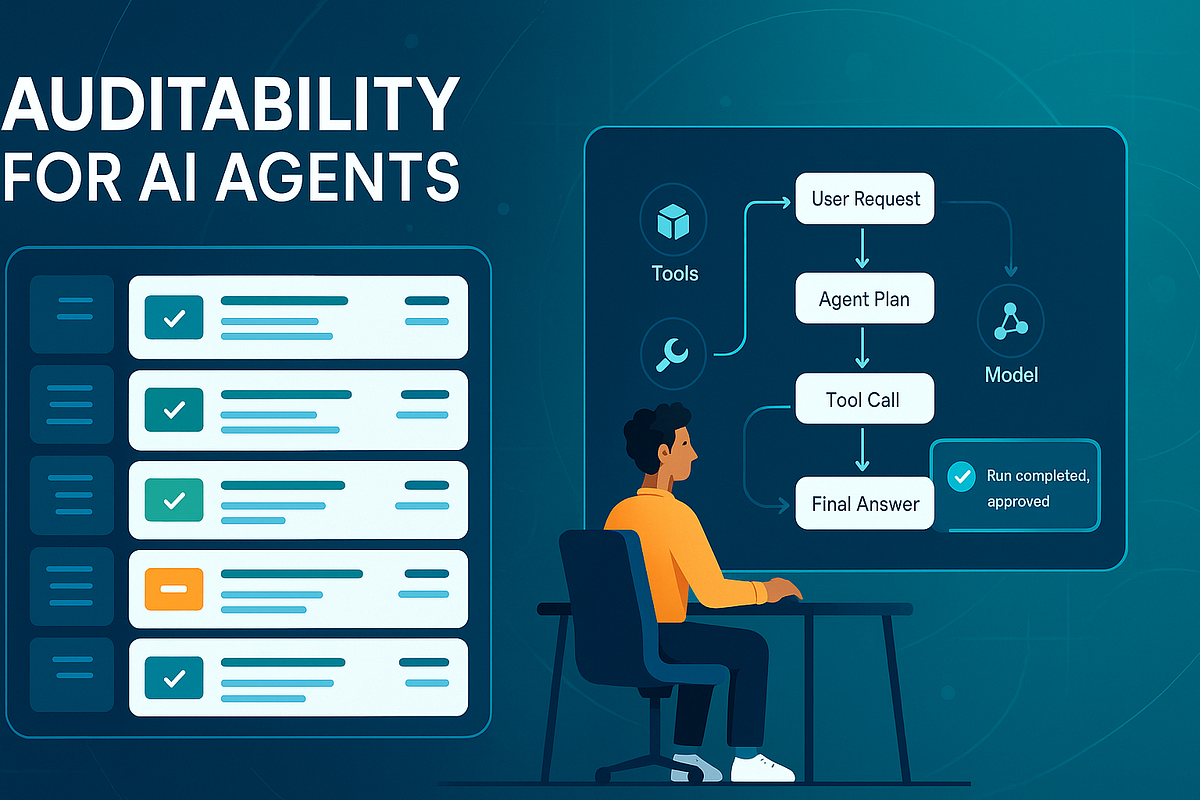
1. The Anatomy of a Decision Trail: Traces, Spans, and Runs
Before we design the content of our logs, we must establish a clear, structured vocabulary. Unstructured log files are difficult to parse and audit. Modern observability practices, adapted for AI, provide a hierarchical structure to make sense of complex agent behavior.
Building Better AI Agents: Observability and Evaluation
The LangChain team provides a clear conceptual breakdown of the core primitives of agent observability. Understanding these terms is the first step toward structured logging.
Watch the segment from 07:12 to 08:49, which introduces the concepts of 'runs,' 'traces,' and 'threads.' Pay close attention to how these components stack up from a single action to a full conversation.
Let's formalize these key primitives, which will form the backbone of our audit trail:
-
Run (or Span): This is the most granular unit of work. It represents a single, indivisible step in the agent's process. Think of it as one entry in the decision trail.
- Examples: A single call to an LLM, one invocation of a tool (like a database query), a data retrieval step.
-
Trace: This is a complete, end-to-end execution of a workflow for a single input or task. A trace is composed of a sequence of related runs (or spans), often nested. This is the full "decision trail" for one request.
- Example: A user asks a question, and the agent plans, searches the web, calls the LLM to synthesize an answer, and returns it. The entire sequence is one trace.
-
Thread (or Session): This is the highest level of organization, grouping multiple traces that belong to a single, continuous interaction with a user.
- Example: A multi-turn conversation with a chatbot, where each question-and-answer pair generates its own trace, but all are part of the same session thread.
By adopting this structured approach, we move from a flat list of events to a hierarchical, causally-linked record that can be surgically analyzed.
2. Designing the Audit Log: What to Capture
With our structure defined, we can now specify the exact data to capture. An incomplete log is a failed audit. Our goal is to create a record so complete that we can perfectly reconstruct the agent's "state of mind" at any decision point.
The following checklist, based on best practices for regulated industries, details the essential components of a comprehensive audit log entry for each run/span.
MCP Audit Logging: Tracing AI Agent Actions for Compliance - Tetrate
The article 'MCP Audit Logging' provides an exceptionally detailed and compliance-aware breakdown of what information must be logged. Its focus on regulatory needs makes it highly relevant for financial services.
Please read the section 'What to Log: Actions, Tools, and Data Access'. As you read, think of this not as a list of suggestions, but as a blueprint for the data schema of your logging system.
Synthesizing from that resource and our specific agent context, here is the minimum viable data set to capture for a robust decision trail:
-
Agent Actions & Decisions:
- The prompt sent to the LLM, including the system prompt and any context (from tools or memory).
- The raw LLM output, including any reasoning or "chain of thought."
- The agent's interpreted decision (e.g., "Decided to call
customer_lookuptool"). - Confidence scores or uncertainty estimates, if available.
-
Tool Invocations & Parameters:
- The name of the tool and function being called (e.g.,
execute_trade). - The exact parameters passed to the tool. Crucially, sensitive data like PII or financial details must be masked or redacted before logging.
- The outcome of the tool call: success, failure, error messages, and a summary of the result (e.g., "2 records returned" instead of the records themselves).
- The name of the tool and function being called (e.g.,
-
Data Access Patterns:
- The data source being accessed (e.g., database name, file path).
- The specific data elements accessed (e.g., table and column names).
- The type of access (read, write, delete).
-
Human-in-the-Loop Events:
- The trigger for the intervention (e.g., "Confidence score below 0.8," "High-risk action:
approve_loan"). - The identity of the human reviewer.
- The human's action:
approve,deny,update,feedback. - If
update, log the exact change made to the tool parameters. - If
feedback, log the natural language instruction provided.
- The trigger for the intervention (e.g., "Confidence score below 0.8," "High-risk action:
-
Contextual Metadata:
trace_id: The unique identifier for the entire trace. This is the key that links all runs together.run_id: The unique identifier for this specific step.parent_run_id: The ID of the run that initiated this one, creating the hierarchy.user_idandsession_id: To link the action back to a specific user and conversation.- Timestamps: Precise start and end times for every run.
- Versioning: The agent version, model version, and tool versions being used. This is critical for debugging regressions.
Capturing these elements provides an unbroken, auditable chain of custody for every decision.
3. Implementation in Practice: From Theory to Tracing
Knowing what to log is theory; how to log it is engineering. This process is called instrumentation—adding code to your application to generate and export trace data. Fortunately, modern frameworks and platforms significantly simplify this.
We will use LangSmith as a concrete example to see how this is done.
Getting Started with LangSmith (1/8): Tracing
Let's see how to instrument an application to produce these traces. The 'Getting Started with LangSmith' video clearly demonstrates two primary methods: manual instrumentation for custom code and automatic instrumentation for supported frameworks.
First, watch the segment on the 'traceable' decorator (01:47 - 03:52) to see how you can wrap any function to include it in a trace. Then, watch the segment on automatic tracing with LangGraph (06:28 - 08:21) to understand how frameworks can handle this for you out-of-the-box.
Once your application is instrumented, the trace data is sent to an observability platform. This is where the raw data is transformed into a navigable, human-readable decision trail.
Getting Started with LangSmith (1/8): Tracing
The real value is realized when you can visually inspect the trace. This next segment shows how a platform like LangSmith organizes the runs into a 'run tree,' which is a direct visualization of the decision trail.
Watch the section from 04:01 to 06:28. Focus on how the 'run tree' on the left allows you to see the sequence of operations and drill down into any specific 'run' to inspect its inputs (like the prompt) and outputs (like the AI's response or tool output). This UI is the primary interface for auditing and debugging.
As you saw, the UI allows you to click on any step in the trace and see the exact data that we specified in our design checklist: the LLM prompt, the tool parameters, the output, latency, and token counts. This is the practical fulfillment of creating a decision trail.
4. Ensuring Robustness: Security and Integrity of Audit Trails
For a decision trail to be useful for compliance and forensics, it must be trustworthy. An audit log that can be altered or deleted is worthless. This is where we design for robustness.
MCP Audit Logging: Tracing AI Agent Actions for Compliance - Tetrate
The 'MCP Audit Logging' article provides a rigorous overview of the architectural and security principles required to build a robust logging system, which is non-negotiable in a regulated environment.
Please read the section titled 'Storage, Retention, and Security for Audit Trails'. Focus on the key controls discussed: ensuring log integrity (immutability), implementing automated retention policies, and securing logs through encryption and strict access control.
Let's distill the core principles for a robust audit trail system:
- Integrity and Immutability: Logs must be tamper-evident. This is achieved through:
- Write-Once Read-Many (WORM) Storage: Storing logs in systems where they cannot be modified or deleted.
- Cryptographic Chaining: Hashing log entries and including the previous entry's hash in the next one, creating a chain where any modification would be immediately detectable.
- Retention Policies: Regulations (like SOX or HIPAA) mandate how long audit logs must be kept (often 7+ years). Your storage system must have automated, auditable lifecycle policies to move logs from fast, expensive "hot" storage to cheaper, long-term "cold" storage, and eventually delete them.
- Encryption and Access Control: Audit logs often contain sensitive metadata and must be protected.
- Encryption: Logs must be encrypted both in transit (while being sent from the agent) and at rest (in the database).
- Access Control: Access to audit logs must be strictly controlled on a need-to-know basis. A security analyst's access should be different from a developer's. Crucially, all access to the logs must itself be logged.
- Distributed Tracing: In complex systems, a single user request may involve multiple agents or microservices. Distributed tracing is the technique of propagating a single
trace_idacross all these services, allowing you to reconstruct the full, end-to-end journey of the request.
Building your logging system with these principles in mind ensures that the decision trail stands up to the scrutiny of auditors, regulators, and incident response teams.
5. From Audit Trail to Operational Insight
While audit trails are essential for compliance and post-mortem analysis, their value doesn't end there. In a mature system, these detailed logs are the raw material for real-time operational monitoring and governance. The data from individual traces is aggregated into high-level metrics that provide a continuous view of the agent's health, performance, and adherence to policy.
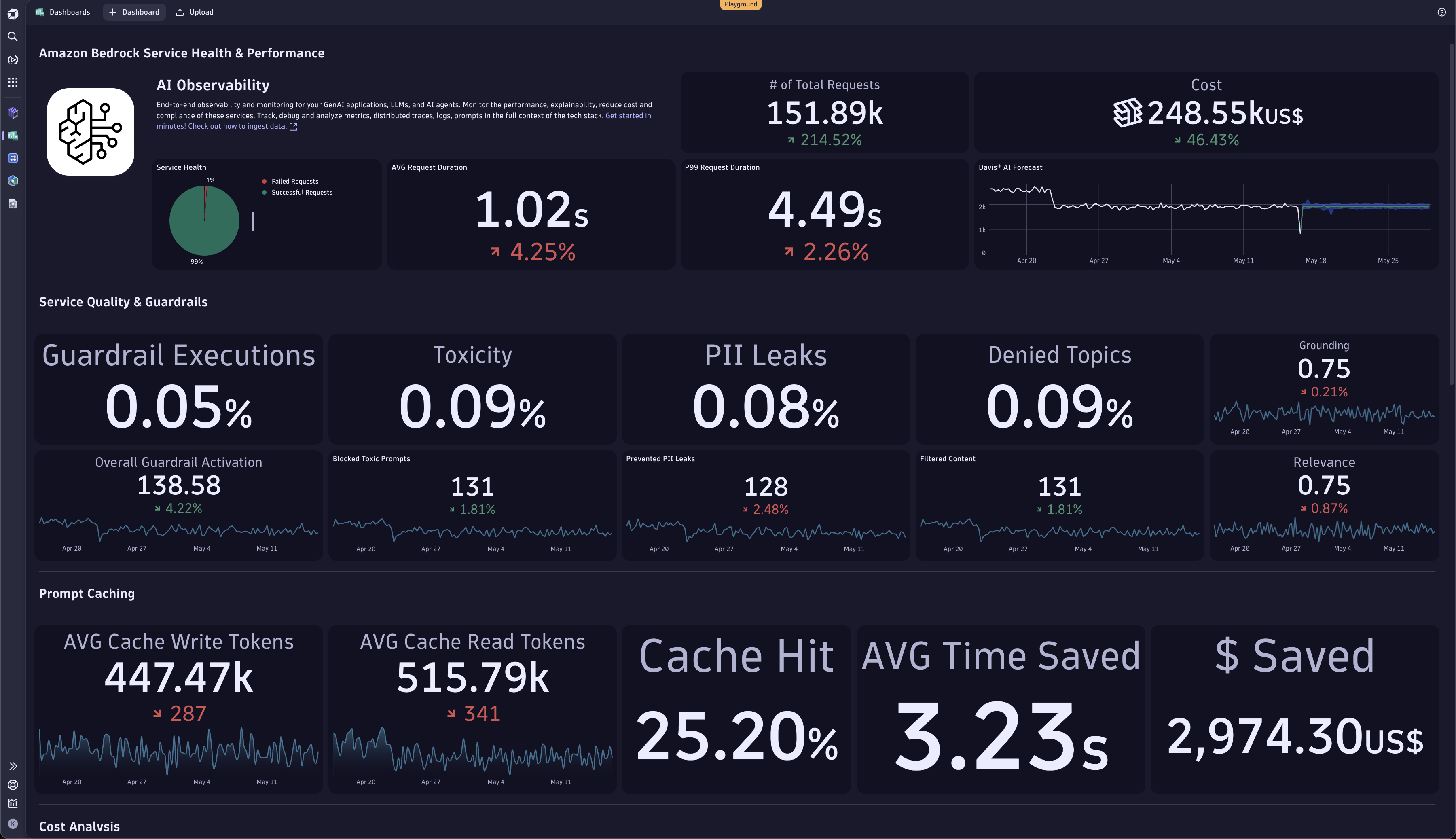
This view allows you to move from asking "What happened in this specific instance?" to "Are we seeing a systemic increase in PII leakage across all instances?" This transforms your logging mechanism from a passive, reactive tool into a proactive, strategic governance asset.
Conclusion
Designing a robust auditability mechanism is a foundational element of engineering autonomous systems, especially in finance. It is an exercise in meticulous systems design that transforms ephemeral agent decisions into a permanent, trustworthy record.
Key Takeaways:
- Structure is Key: Use the observability primitives of runs/spans, traces, and sessions to create a hierarchical, easily auditable decision trail.
- Log Comprehensively: Your logging schema must capture not just actions, but the full context: reasoning, tool usage, data access, human interventions, and system metadata.
- Prioritize Robustness: An audit trail's value depends on its integrity. Design your system for immutability, secure retention, and strict access control from day one.
- Leverage Modern Tooling: Platforms like LangSmith and standards like OpenTelemetry provide the practical means to instrument applications and visualize traces, turning design into reality.
- Logs Drive Insight: A well-designed audit trail is not just for compliance; it is the data source for real-time monitoring dashboards that track performance, cost, and safety, enabling proactive governance.
Preview of the Next Lesson:
The rich, detailed logs we've just designed are the primary source of evidence for when things go wrong. In our next lesson, we will focus on identifying and creating mitigation strategies for common agent failure modes. We will learn how to analyze these decision trails to diagnose issues like hallucination, tool errors, and prompt injection, and then design the guardrails to prevent them.