Hello! Welcome to the seventh lesson in our module on AI-Powered Content Generation.
In our last session, we brought your characters to life with detailed textual blueprints and consistent visual designs. Now, how do you introduce those characters—or your big idea—to the world in a way that makes readers desperate to know more?
This lesson focuses on exactly that. Our learning outcome is to write compelling book introductions that hook the reader and establish the book's promise. The introduction is your single most important opportunity to capture a reader's attention. Whether it's for a non-fiction guide, a children's story, or a comic book, a powerful opening is what turns a browser into a reader.
1. The Three Pillars of a Powerful Introduction
Before we start prompting an AI, it's essential to understand what makes an introduction effective. A great intro accomplishes three things, regardless of genre:
- The Hook: It grabs the reader's attention immediately. This can be a shocking statistic, a provocative question, a relatable personal story, or the start of an action-packed scene. Its only job is to make the reader ask, "What happens next?" or "Tell me more."
- The Context: It quickly orients the reader. What is this book about? Who is it for? What problem does it address or what world does it explore? This sets the stage and manages expectations.
- The Promise: It clearly states the book's value proposition. For non-fiction, this is the transformation the reader can expect (e.g., "By the end of this book, you will have a framework for..."). For fiction, it's the promise of an exciting journey, a mystery to be solved, or a character's emotional arc.
With these three pillars in mind, we can use structured approaches to guide our AI in crafting the perfect opening.
2. Formulas for High-Impact Non-Fiction Intros
For your non-fiction books on business, mentoring, and technology, a formulaic approach to writing the introduction can be incredibly effective. These formulas provide a logical structure that ensures you hit all the key psychological triggers to keep a reader engaged. Given your IT background, you can think of these as functions or algorithms for generating persuasive text.
The following article from the Content Marketing Institute details several proven formulas.
7 Proven Formulas for Writing Intros That Convert Skimmers Into Readers
The article '7 Proven Formulas for Writing Intros That Convert Skimmers Into Readers' by Olesia Filipenko breaks down several effective structures. We'll focus on a few that are particularly useful for your book projects.
Please read the entire article. As you read, pay special attention to these three formulas, as they are excellent starting points for non-fiction books: APP (Agree, Promise, Preview): Ideal for problem/solution books. It builds instant rapport by acknowledging a reader's pain point. AIDA (Attention, Interest, Desire, Action): A classic copywriting formula that's perfect for creating a sense of urgency and excitement. Storytelling (Concise yet emotional): Using a short, personal, or fictional story to create an immediate emotional connection.
These formulas are not just theoretical; they are blueprints for your AI prompts. For example, to use the APP (Agree, Promise, Preview) formula for your tech mentoring book, you would structure your prompt to instruct the AI to:
- Agree: Start with a paragraph that describes a common frustration for a senior developer who feels their career has stalled.
- Promise: Clearly state that the book contains the roadmap to transition from a technical role to an executive one.
- Preview: Briefly mention the key skills the book will cover, like financial literacy, strategic thinking, and team leadership.
3. Mastering the Narrative Hook
For your children's books, comics, and even the case studies in your business books, a formulaic intro might feel too rigid. Here, the goal is to drop the reader directly into a story.
A great narrative hook often starts in medias res (in the middle of things) or with a powerful emotional moment. Let's look at a key principle for achieving this.
10 Uncommon Writing Tips That Will Make Your Non-Fiction Book Impossible to Put Down
In this clip from '10 Uncommon Writing Tips' by Book Launchers, the speaker explains why you should start with your 'juiciest part' to immediately engage the reader.
Please watch two short segments: 'Open up with action and emotion' (06:00 - 06:57): Notice the powerful contrast between a dry, academic opening and one that starts with a personal, high-stakes story. 'Write to a specific person' (01:19 - 02:25): This is a fundamental concept. An introduction written for 'everyone' connects with no one. Imagining a specific reader makes your writing instantly more personal and compelling.
To see how this works across the various genres you're interested in, it's helpful to study real-world examples.
60 Examples of Hooks for Books | Elevator Pitches
The article '60 Examples of Hooks for Books' from Writer's Digest is a fantastic resource. It collects the 'elevator pitches' from recently published books across many genres.
You don't need to read every example. Skim the article and focus on the hooks in the genres that match your interests: Nonfiction (General) Hooks Middle Grade Fiction Hooks Picture Book Hooks Science Fiction Hooks (relevant for tech themes) For each example, try to identify the Hook, the Context, and the Promise.
4. AI in Action: Generating and Refining Your Introduction
Now let's put it all together. We'll use our knowledge of introduction structures and advanced prompting to generate a first draft.
First, let's see a simple, direct approach to generating an introduction.
How to ACTUALLY Write a Book with ChatGPT - Full Tutorial
The video 'How to ACTUALLY Write a Book with ChatGPT' by Sean Dollwet includes a brief segment where he generates a basic introduction. This shows how quickly you can get a first draft.
Watch the short clip from 07:19 to 08:06. The author simply asks for a '1000 words introduction chapter.' This is a good starting point, but we can be much more precise to get a better result.
That basic prompt is useful, but it leaves too much to chance. To get a truly compelling introduction, you need to provide the AI with a much more detailed set of instructions. A well-structured prompt is key.
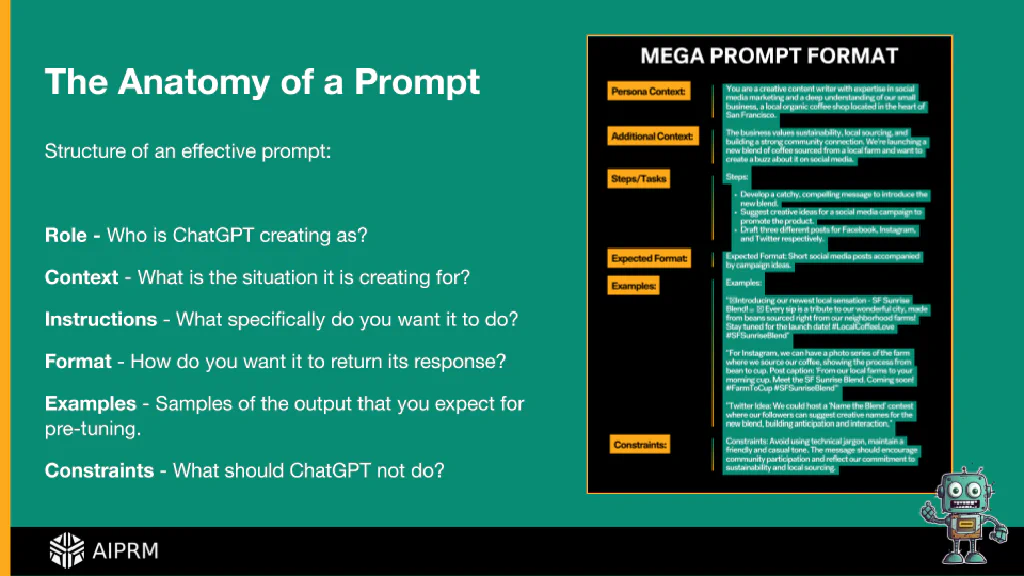
Let's create a "master prompt" for the introduction of your tech mentoring book, using the APP formula and the principles from the prompt anatomy guide.
Example Master Prompt:
`ROLE: Act as an expert non-fiction author and book coach who specializes in writing compelling introductions for career development books.
CONTEXT: You are writing the introduction for a book titled "The Senior Engineer's Leap: From Code to C-Suite." The target audience is experienced software developers (10+ years of experience) who are technically brilliant but feel stuck in their career progression. They are ambitious and want to move into leadership roles (Director, VP, CTO) but don't know how.
TASK: Write a 600-word introduction that hooks the reader, establishes the book's purpose, and makes a clear promise of the transformation they will experience.
FORMAT and STRUCTURE: Follow the 'Agree, Promise, Preview' (APP) formula precisely.
- AGREE (approx. 200 words): Start with a short, relatable anecdote. Describe the feeling of being the 'go-to' technical expert on a team, yet watching less technical colleagues get promoted into management. Use vivid language to capture the frustration and the feeling of hitting an invisible wall. Show, don't tell.
- PROMISE (approx. 200 words): Directly address the reader's pain. State that this "invisible wall" is not about technical skill, but about a different set of skills: communication, influence, and business acumen. Promise that this book is a practical, no-fluff guide that will teach them these exact skills, based on my 10 years of experience as a CTO.
- PREVIEW (approx. 200 words): Briefly lay out the journey the book will take them on. Mention the three main parts of the book: 'Part 1: The Mindset Shift,' 'Part 2: Speaking the Language of Business,' and 'Part 3: Leading People, Not Projects.' End with an inspiring sentence that motivates them to turn the page.
TONE: Authoritative, empathetic, and inspiring. Avoid corporate jargon. Write like a mentor speaking directly to a valued protégé.`
Test your understanding!
Now it's your turn. You want to write a children's picture book about a shy firefly who is afraid of the dark.
Using the principles we've discussed (Hook, Context, Promise) and the structured prompt format, write a prompt for an AI to generate the introduction (the first 1-2 pages) for this book. Focus on creating a narrative hook.
Show answer
Here is a strong example of a prompt for a narrative-driven introduction:
`ROLE: Act as a best-selling author of children's picture books, skilled at creating gentle and heartwarming stories for ages 3-5.
CONTEXT: You are writing the opening pages for a picture book titled "Leo the Lighthouse." The main character is Leo, a small, shy firefly who is, ironically, afraid of the dark. The book's theme is about finding your inner courage.
TASK: Write the text for the first two pages of the book (approx. 100 words total). Your goal is to introduce Leo, establish his core problem in a gentle way, and hook the young reader.
FORMAT and STRUCTURE:
- Page 1 (The Hook): Start in the middle of the action. Describe the other fireflies joyfully lighting up the evening sky, playing "twinkle-tag." Create a sense of fun and magic.
- Page 2 (The Problem/Context): Contrast the happy scene with our main character. Show Leo hiding under a large leaf, watching the other fireflies but not joining in. Explicitly state his fear: "But Leo didn't join them. Because as much as he loved the light... he was afraid of the dark." This sentence is the hook and establishes the story's central conflict.
TONE: Gentle, lyrical, and slightly magical. Use simple words and short sentences suitable for a read-aloud book.`
Conclusion
You now have a powerful toolkit for crafting introductions that grab readers from the very first sentence. By understanding the core components of an introduction and using structured formulas and narrative techniques, you can direct your AI to produce openings that are not just functional, but truly compelling.
Key Takeaways:
- A great introduction has three pillars: The Hook, The Context, and The Promise.
- For non-fiction, use proven copywriting formulas like APP and AIDA to structure your AI prompts for maximum impact.
- For fiction and narrative-driven books, focus on a narrative hook that starts with emotion or action and establishes a clear problem.
- Use detailed, structured prompts that define the role, context, task, format, and tone to move beyond generic AI output and create a powerful authorial voice.
Preview of the Next Lesson:
An amazing introduction needs an equally powerful conclusion to create a satisfying and memorable reading experience. In our next and final lesson of this module, we'll tackle just that: how to write powerful conclusions that summarize key takeaways and provide a clear call to action.