Hello! Welcome to the second lesson in Module 4: AI-Powered Content Generation.
In our previous lesson, we established a robust, section-by-section workflow for generating high-quality drafts of non-fiction chapters. We treated the AI like a systematic co-worker, feeding it a detailed outline to build a logical and structured piece of content.
Today, we shift from the world of facts and instruction to the realm of imagination and storytelling. Your goal includes writing for a wide range of genres, and children's literature is a unique and challenging one. Our learning outcome is to adapt AI prompting techniques to generate age-appropriate narratives for different children's book categories.
We'll see how the core principles from the last lesson—structure, context, and iterative refinement—can be creatively adapted to produce charming and engaging stories for young readers, moving us one step closer to your goal of publishing across diverse genres.
1. The Children's Book Landscape: It's Not One-Size-Fits-All
Before we can prompt an AI to write a children's story, we need to be specific. A book for a 3-year-old is fundamentally different from one for a 9-year-old in its vocabulary, sentence structure, themes, and length. Your prompt must reflect these differences.
To get a clear overview of these categories, let's watch a short video from Reedsy, a major platform in the self-publishing world.
Children's Book Categories | Early Reader, Middle Grade, and Young Adult
The video 'Children's Book Categories' provides an excellent breakdown of the key age groups in children's literature. This will form the foundation for our age-specific prompting.
Watch the video from the beginning until 04:40. Pay close attention to the descriptions of Picture Books, Early Readers, and Middle Grade books. Note the typical word counts, protagonist ages, and common themes for each category.
As you saw, the requirements change significantly with the age of the reader. Here's a helpful chart that summarizes the key metrics for each category.
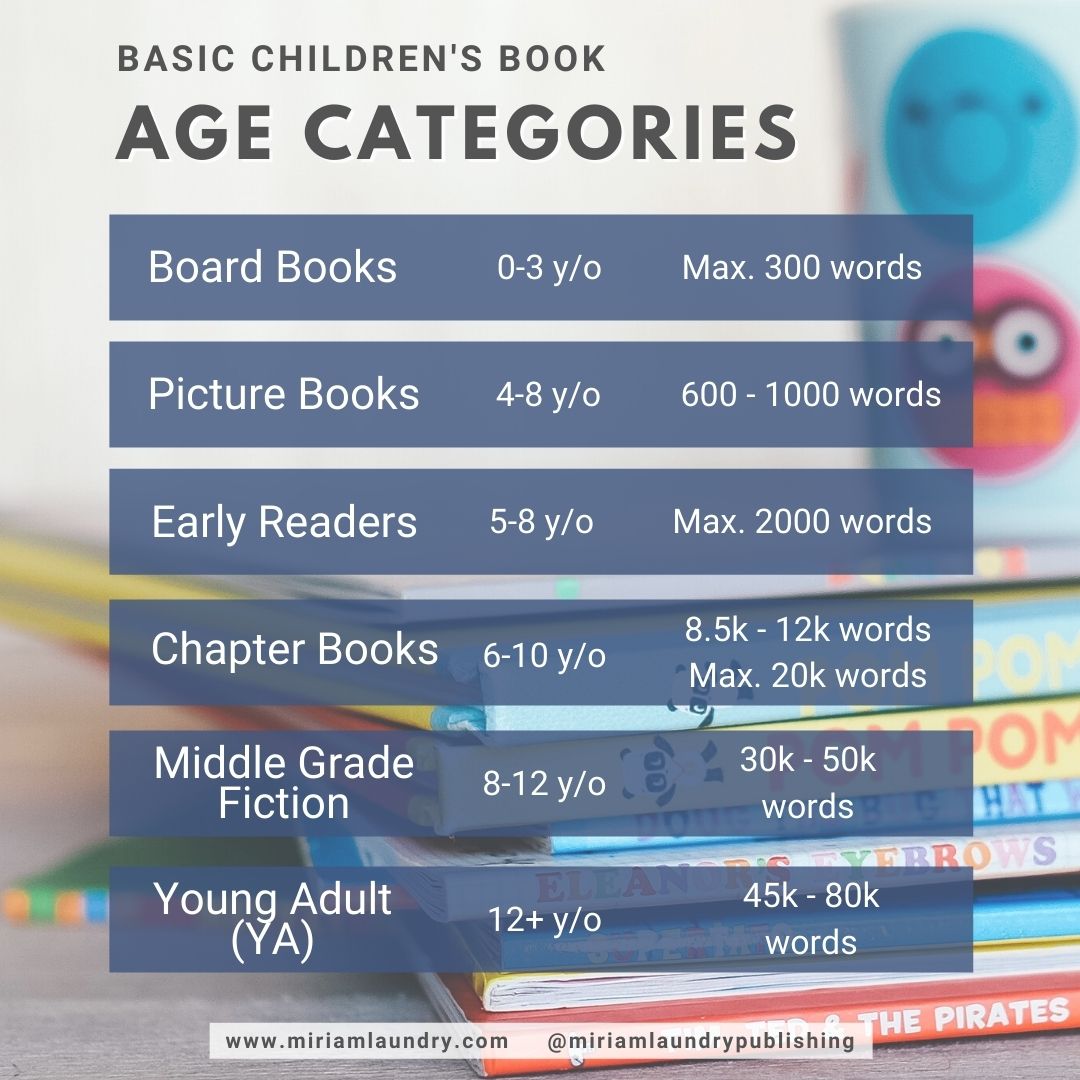
When prompting the AI, specifying "write a children's book" is too vague. You need to tell it, for example, to "write a 500-word picture book for ages 3-5" or "write a 5,000-word early reader chapter book for ages 6-8." This precision is the first step toward getting an age-appropriate narrative.
2. Adapting the Workflow: From Non-Fiction Sections to Story Pages
In the last lesson, we used a detailed outline to generate a non-fiction chapter section by section. The great news is that this exact workflow, with a few creative tweaks, is perfect for writing children's books.
The core idea remains the same: break the large task into small, manageable units.
- For a picture book, this means generating the text page by page.
- For an early reader or middle grade book, this means generating scene by scene or chapter by chapter.
The following video provides a fantastic, real-world demonstration of this process. It shows a creator writing a picture book from scratch, applying the same principles of structured prompting we've been learning.
Write a Children's Book in 10 Minutes With ChatGPT (My Full Process)
Let's watch 'Write a Children's Book in 10 Minutes With ChatGPT' by The Nerdy Novelist. This video is a practical case study that brings our concepts to life.
First, watch from 02:38 to 05:09, then jump to the segment from 06:31 to 09:27. Focus on two key things: How the creator's initial prompt clearly defines the AI's role ('world-class children's book author') and the target audience ('ages two to four'). The concept of creating a detailed, page-by-page outline with a repeatable 'framework' for each character encounter. This is the narrative equivalent of your non-fiction outline.
The creator's use of a "framework" for each animal encounter is a brilliant example of applying a logical structure to a creative task, much like you would define a function or loop in programming to handle a repeating process. This ensures consistency and makes the story easy for a young child to follow.
3. Generating and Refining the Narrative
Once you have your page-by-page outline, you can start generating the text, just as we did with non-fiction sections. However, this is where you'll need to be more adaptive to control the style of the narrative.
Let's see how this plays out in the same video.
Write a Children's Book in 10 Minutes With ChatGPT (My Full Process)
Continuing with the case study, we'll now focus on the actual text generation and refinement process.
Watch from 09:27 to 18:53. Pay special attention to these moments: The creator reminds the AI of its role and the audience constraints (09:27 - 14:01). At timestamp 15:08, the creator explicitly tells the AI 'don't rhyme.' This is a critical adaptation technique. The creator continues to feed the AI small chunks from the outline to generate the story piece by piece (16:03 - 18:53).
The "don't rhyme" instruction is a perfect example of adapting your prompting. AI models often default to rhyming for children's stories because it's a common pattern in their training data. By providing a negative constraint, you take control and force the AI to produce the specific prose style you want. You are actively steering the output, not just passively accepting it.
4. A Toolkit of Age-Specific Prompts
Beyond the main workflow, you can use targeted prompts to fine-tune specific aspects of your narrative. Think of these as specialized tools for ensuring your story is perfectly suited for its intended audience.
The article "30 ChatGPT Prompts for Writing a Children's Book" contains many useful templates. We won't read the whole thing, but I've extracted some of the most relevant prompt structures for you.
30 ChatGPT Prompts for Writing a Children's Book (Mystic ...
To help you build a library of useful prompts, we'll look at a few examples from the article '30 ChatGPT Prompts for Writing a Children's Book' from the Galaxy AI blog. These demonstrate how to ask for specific narrative qualities.
Briefly review the sample prompts under the headings 'Make sure the language is appropriate for the target age group,' 'Incorporate educational elements into the story,' 'Use repetition and rhythm to make the story memorable,' and 'Develop a resolution that teaches a valuable lesson.' You don't need to read the surrounding text, just focus on the structure of the prompts themselves.
Here are some templates inspired by those examples that you can adapt:
-
To Simplify Language:
Act as a children's book editor. Revise the following text to make it suitable for children aged 3-5. Simplify complex sentences, replace difficult words with easier synonyms, and ensure the tone is gentle and encouraging. Here is the text: [Paste your text here] -
To Add Repetition or Rhythm:
Take the following scene and rewrite it to include repetition and a simple rhythm, making it more memorable for a toddler. The key phrase to repeat is "[phrase]". Here is the scene: [Paste your text here] -
To Weave in a Moral:
I am writing a story about a rabbit who is always in a hurry. Based on the story so far, write a concluding scene where the rabbit learns the importance of slowing down and appreciating the world around him. Make the lesson clear but not preachy. Story so far: [Paste a summary or the last few paragraphs]
Test your understanding!
You want to write an Early Reader book (for ages 5-7) about a character you've brainstormed: "Tiko, a small, shy robot who is nervous about his first day at robot school."
Your goal is to write the opening scene (the first page or two of the first chapter). Draft a single, complete prompt for an AI model to generate this scene. Be sure to include:
- The AI's Role.
- The Specific Task, including the book category and target age.
- Context about the character and setting.
- Instructions & Constraints regarding tone, vocabulary, and style.
Show answer
Here is a strong example prompt. Your version can vary, but it should contain these key elements.
Prompt:
[Role] Act as a celebrated author of Early Reader chapter books.
[Specific Task] Write the opening scene (approximately 150 words) for the first chapter of an Early Reader book aimed at children ages 5-7.
[Context] The main character is Tiko, a small, shy robot who is very nervous about his first day at robot school. The scene should show Tiko at home getting ready for school.
[Instructions & Constraints] The tone should be warm and reassuring. Use simple sentences and basic vocabulary suitable for a child who is beginning to read independently. Avoid complex technical jargon about robots. Do not use rhyme. The scene should end with Tiko taking a deep breath and rolling out the door.
This prompt is effective because it clearly defines the audience, character, setting, and stylistic rules, giving the AI a precise set of instructions to follow.
Conclusion
Today you've learned how to pivot from the logical structure of non-fiction to the creative art of children's storytelling, all while using the same core AI prompting workflow.
Key Takeaways:
- Define Your Category First: Always specify the target age group (e.g., Picture Book, Early Reader) and corresponding constraints (word count, vocabulary) in your prompts.
- Adapt the Outline Workflow: Use a page-by-page or scene-by-scene outline as the blueprint for generating your narrative.
- Be an Active Director: Use specific instructions and negative constraints (like "don't rhyme") to control the AI's stylistic choices and steer it toward your creative vision.
- Use a Toolkit of Prompts: Employ targeted prompts to refine specific elements like language simplicity, rhythm, or the story's moral.
Preview of the Next Lesson:
Whether for a non-fiction guide or a children's story, the AI's output is a first draft. It lacks the most important ingredient: you. In our next lesson, we will focus on how to refine an AI-generated draft by integrating personal expertise, unique insights, and authorial voice, transforming the AI's text into a book that is truly your own.