Hello! Welcome to the fifth lesson in our module on "Legal and Ethical Foundations."
In our last lesson, we established a robust process for using AI as a research assistant, focusing on how to avoid plagiarism and verify facts to ensure the integrity of your content. You now have a framework for creating accurate and ethically sound work.
Today, we'll add another critical layer of legal protection, especially important for the non-fiction genres you're interested in—business, mentoring, and technology. This lesson is designed to help you manage reader expectations and limit your potential liability.
Our learning outcome for this session is to: Draft appropriate disclaimers for business, mentoring, and technical advice books.
We will cover:
- What disclaimers are and why they are a standard practice for professional authors.
- The different types of disclaimers relevant to your book projects.
- How to draft a strong, clear disclaimer for your advice-based books using proven templates.
- How to write a specific disclosure about your use of AI, ensuring transparency with both readers and publishing platforms.
By the end of this lesson, you will have ready-to-use text that you can place directly into the copyright page of your books.
1. What is a Disclaimer and Why Do You Need One?
A disclaimer is a formal statement intended to specify or limit the scope of rights and obligations that may be exercised and enforced by parties in a legally recognized relationship. In the context of your books, it's a statement that helps protect you, the author, from potential legal challenges by setting clear expectations for the reader.
As the legal guide from The Book Designer explains, while a disclaimer is not legally required, it's a wise inclusion.
Book Disclaimers: Everything You Need to Know
To understand the purpose and placement of disclaimers, please read a few short sections from the article "Book Disclaimers: Everything You Need to Know" by Helen Sedwick.
Please read the sections titled "What Is the Disclaimer at the Beginning of Every Book?", "Where Would a Book Disclaimer Go?", and "The Legal Effect of Disclaimers." These sections will clarify the role of a disclaimer and where it belongs in your manuscript.
The key takeaways are:
- A disclaimer helps absolve you from legal challenges by clarifying the nature of your content.
- It almost always goes on the copyright page.
- While it may not stop a lawsuit, it provides a layer of defense and demonstrates professionalism. Think of it as a standard safety feature.
Disclaimers can cover various aspects of your content. For your planned books on business, mentoring, and tech, the most relevant types will be those concerning liability, accuracy, and financial outcomes.
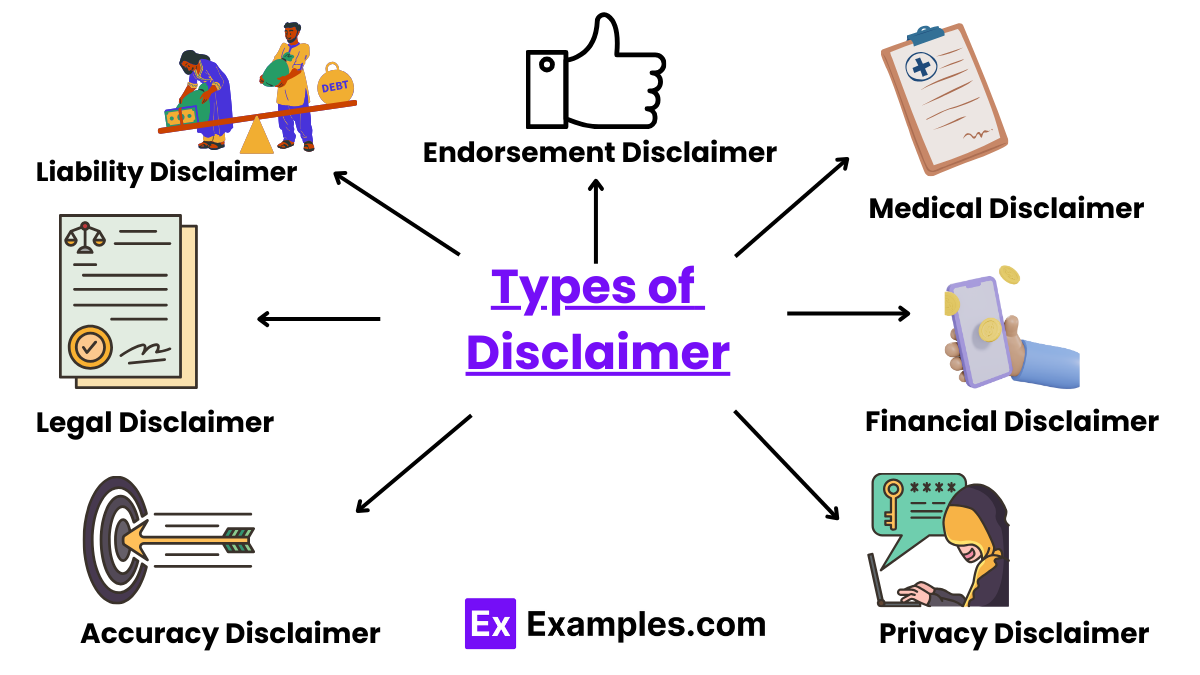
2. Drafting the Core Disclaimer for Your Advice Books
Now for the practical part. You don't need to invent this legal language from scratch. The publishing industry has established standard templates that you can adapt. Your goal is to make it clear that your book provides information and education, not professional, one-on-one advice.
This is especially critical when leveraging your 10 years of IT experience for a tech or mentoring book. You are sharing valuable knowledge, but you are not entering into a professional consulting relationship with every reader who buys your book. The disclaimer makes that boundary explicit.
How to Write a Book Copyright Page [With 6 Templates]
The Kindlepreneur website offers an excellent, comprehensive template for non-fiction books. This is a great starting point for all your advice-based projects.
Please find the heading "General Nonfiction Copyright Page Template". Read the paragraph-long disclaimer within that template carefully. We will break it down next.
Let's analyze the key components of that template, as each sentence serves a specific purpose:
This publication is designed to provide accurate and authoritative information...
This establishes your intent to be helpful and correct....it is provided with the understanding that neither the author nor the publisher is engaged in rendering legal, financial, medical, or other professional services.
This is the core of the disclaimer. It states that the book is not a substitute for a professional service....they make no representations or warranties with respect to the accuracy or completeness of the contents.
This protects you if information becomes outdated or if errors are present despite your best efforts.The advice and strategies contained herein may not be suitable for your specific situation.
This places the responsibility on the reader to evaluate the information for their own unique context.You should consult a qualified professional where appropriate.
This is a direct instruction to the reader to seek personalized advice when needed.Neither the author nor the publisher shall be liable for any losses or damages resulting from the use of this information.
This is the explicit limitation of liability.
This template is a powerful foundation. You can make it even more specific to your book's topic.
Test your understanding!
Imagine you've written a book titled Passive Profits: A Guide to Dropshipping on Walmart Marketplace. How would you adapt the general non-fiction disclaimer to be more specific to this book? Try rewriting the sentence "The advice and strategies contained herein may not be suitable for your specific situation" to be more tailored.
Show answer
A good adaptation would be something like:
"The e-commerce strategies, financial projections, and product selection advice contained herein may not be suitable for your specific business situation, market conditions, or financial standing. The world of online retail is constantly changing, and past results are not indicative of future performance. You are solely responsible for your own business decisions, choices, actions, and results."
This version directly addresses the topics of the book (e-commerce, finances) and reinforces the reader's personal responsibility.
3. Disclosing Your Use of Artificial Intelligence
Just as you need to be transparent about the nature of your advice, it's also a best practice—and a platform requirement on Amazon KDP—to be transparent about your use of AI in creating the book. This manages reader expectations and ensures you comply with publisher policies.

This disclosure also goes on the copyright page, typically alongside the other legal notices.
How to Write a Book Copyright Page [With 6 Templates]
Let's return to the Kindlepreneur article, which provides clear and simple templates for this exact purpose.
Find the section titled "AI Disclosure Copyright Page Template." Review the two examples provided: one for when AI tools were used, and one for when they were not.
For your projects, the most relevant template is:
Copyright © [Year] by [Author Name]
All rights reserved.
This book was written by the author with the assistance of artificial intelligence tools. All ideas, structure, and final editorial decisions are the author’s own.
This wording is excellent because it is both transparent and assertive. It discloses the use of AI while reinforcing that you are the author, responsible for the final work. This supports the claim to human authorship that we discussed in the copyright registration lesson.
Putting It All Together
Your final copyright page will contain several elements, including your copyright notice, rights reservation, the advice disclaimer, and the AI disclosure. They can be combined into one seamless block of text.
Here is an example of what this might look like for your dropshipping book:
Copyright © 2024 by [Your Name]
All rights reserved.
No portion of this book may be reproduced in any form without written permission from the publisher or author, except as permitted by U.S. copyright law.
This publication is designed to provide information about dropshipping on Walmart Marketplace. It is provided with the understanding that neither the author nor the publisher is engaged in rendering legal, financial, or professional business consulting. While the author and publisher have used their best efforts in preparing this book, they make no representations or warranties with respect to the accuracy or completeness of the contents. The strategies contained herein may not be suitable for your specific situation. You should consult a qualified professional where appropriate. Neither the author nor the publisher shall be liable for any business losses or other commercial damages resulting from the use of this information.
This book was written by the author with the assistance of artificial intelligence tools. All ideas, structure, and final editorial decisions are the author’s own.
Test your understanding!
You are about to publish a mentoring book for junior IT professionals based on your career experience. The book was outlined and drafted with assistance from Claude. Which two essential statements must you combine on your copyright page to be both legally prudent and transparent?
- A statement that the book is for entertainment only, and a statement that no AI was used.
- A detailed list of every AI prompt you used, and a statement guaranteeing the reader will get a promotion if they follow the advice.
- A disclaimer stating the book is informational and not a substitute for professional career coaching, and a disclosure that the book was created with the assistance of AI tools while asserting your final authorship.
Show answer
The correct answer is #3. This combination correctly addresses both liability for the advice given and transparency about the creation process, following the best practices we've discussed in this lesson.
Conclusion
You have now added a vital piece of professional armor to your author toolkit. A well-crafted disclaimer and a clear AI disclosure demonstrate that you are a serious author who respects both your readers and the legal conventions of publishing.
Key Takeaways:
- Disclaimers are essential for non-fiction books that give advice (business, financial, technical) to limit your liability.
- The standard location for all disclaimers and disclosures is the copyright page.
- Use and adapt industry-standard templates to clarify that your book is for informational purposes and not a substitute for personalized professional services.
- Always disclose your use of AI tools clearly, asserting your role as the final author responsible for the work.
Preview of the Next Lesson:
We've covered your rights (copyright), your responsibilities (plagiarism), and your protections (disclaimers). There's one more common legal topic to address: using other people's brand names. In our next lesson, we will navigate trademark considerations when discussing brands or products in your content, which will be very useful for your books on topics like dropshipping and tech.