Welcome to your second lesson. In our previous session, we laid out the "blueprint" for a powerful vertical jump, focusing on the biomechanics of the countermovement, triple extension, and arm swing. You now understand the why behind explosive leaping. Today, we move from the blueprint to the construction phase.
This lesson will introduce you to plyometrics, a training method designed to turn that theoretical knowledge into tangible explosive power. We will focus on executing the foundational plyometric drills—box jumps and depth jumps—with precise form. Mastering these is the fastest way to train your body's stretch-shortening cycle, making your jumps higher and more powerful. This is the core practical work that will get you closer to your goal of dunking.
1. What Are Plyometrics?
Before we start jumping, let's briefly define what plyometrics are and why they are so crucial for your goal. Plyometric training involves exercises where muscles exert maximum force in short intervals of time, with the goal of increasing power (speed-strength).
How I Got A 40 Inch VERT at 5'7 | Plyometrics Workout
This video, from a fellow athlete who significantly increased his vertical, offers a great, concise introduction to plyometrics.
Watch the first segment, from the beginning to the explanation. The key idea is the "principle of training specificity": to jump higher, you need to practice jumping in a way that prioritizes speed and power.
As the video explains, plyometrics train your muscles and tendons to act like springs. This directly trains the stretch-shortening cycle (SSC) we discussed in the last lesson, improving your ability to absorb force during the "dip" and convert it into upward explosion.
2. The Golden Rule: Land Softly
Before you can think about jumping up, you must master landing down. The most common cause of injury in plyometrics is improper landing. Furthermore, a poor landing means you are not effectively absorbing and redirecting force, which defeats the purpose of the exercise. The goal is always to land in a strong, stable, and quiet "athletic position."
The first drill we will learn, the depth drop, isolates the landing phase. It trains your body to absorb force correctly and reinforces the proper landing posture.
Box Jumps: The Definitive Guide - Lessons From An NFL Strength ...
This guide from Outperform Sports, featuring an NFL strength coach, is an excellent resource that we will use throughout this lesson. We'll start with the sections on landing and the depth drop drill.
First, read the section on the landing. Pay close attention to the critique of landing in a deep squat on an overly high box—this is a common mistake that prioritizes "showing off" over actual athletic development. Next, read the instructions for the first drill. This is your starting point.
Now, let's see the depth drop in action. Watching the correct form is crucial.
The RIGHT WAY To Do Box Jumps (For Speed and Power)
This video demonstrates the drills from the guide you just read.
Watch the section from the depth drops. Notice how the athlete lands in a balanced, athletic position with his arms back, ready to jump. The coach also points out common faults like knee caving and how to correct them. Your goal is to replicate this stable and controlled landing.
Practice this by stepping off a low step or curb. Focus on landing softly on the balls of your feet and immediately sinking into that athletic stance, with your hips back, chest up, and knees aligned over your feet.
3. Building Power with Box Jumps
With the landing mastered, we can now add the jump. Box jumps are the cornerstone of plyometric training for vertical leap. The purpose of the box is not to measure the height of your jump, but to reduce the landing forces, allowing you to focus on a maximum-effort jump without the stress of a high-impact landing.
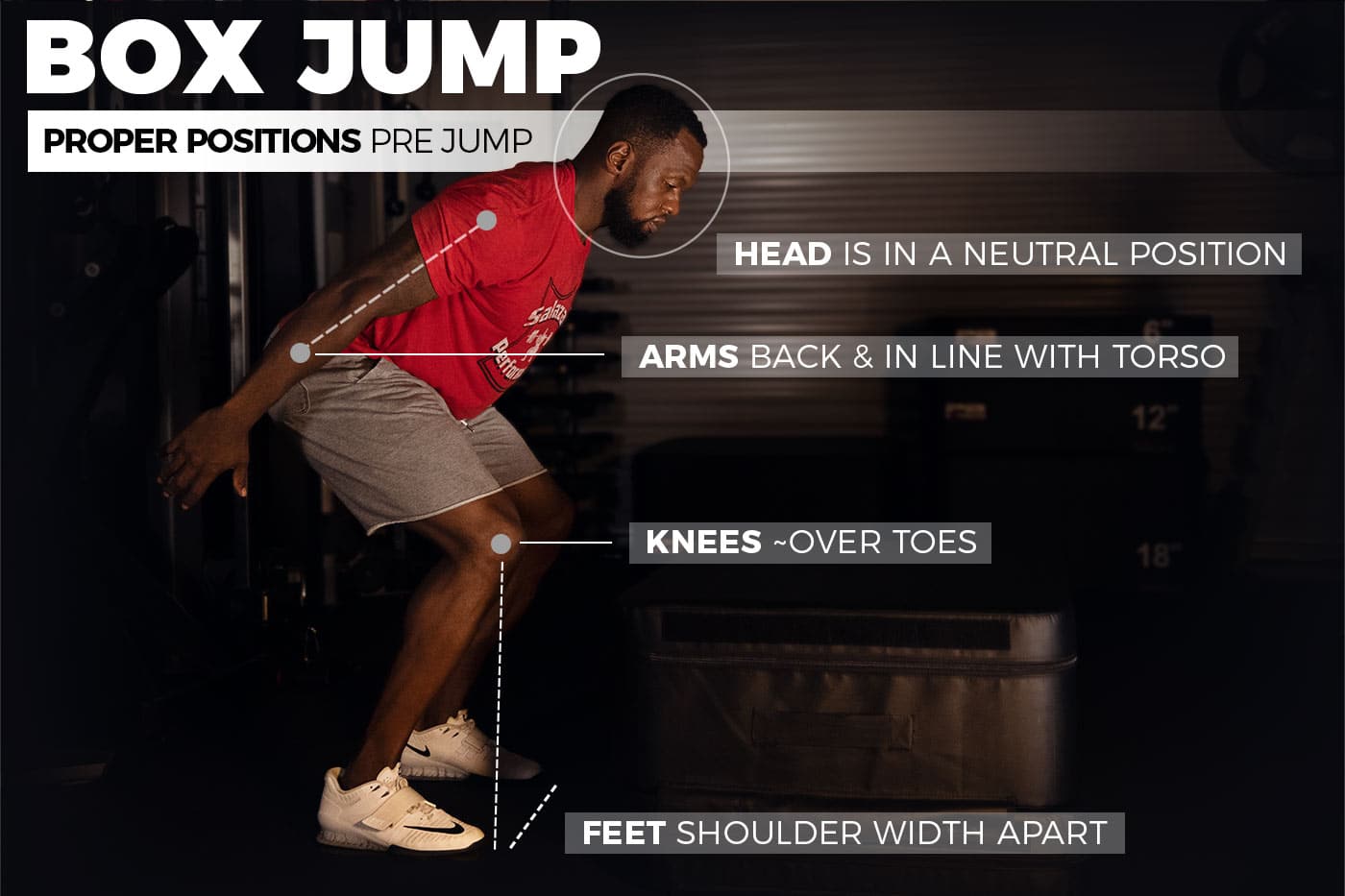
The Correct Starting Position
Every powerful jump begins from a solid base.
Progressive Box Jump Drills
You will learn the box jump in two stages to ensure perfect form. This progression is designed to first build pure strength and then integrate the stretch-shortening cycle.
Drill 1: Concentric Box Jump (or "Snap Down" Jump)
This first variation removes the countermovement (the "dip"). You will start from a static athletic position, hold it, and then explode upwards. This isolates the "concentric" or upward phase of the jump, building raw power without help from the stretch-shortening cycle.
Box Jumps: The Definitive Guide - Lessons From An NFL Strength ...
Return to the guide and read the instructions for the next drill in the progression.
Read the section for this drill. The 2-second hold is key; it kills all momentum, forcing your muscles to generate all the power for the jump.
Drill 2: Countermovement Box Jump
Now, we put it all together. This is the standard box jump. You will perform the same "snap down" motion as before, but instead of pausing, you will immediately reverse the motion and explode upward, taking full advantage of the stretch-shortening cycle you learned about in the last lesson.
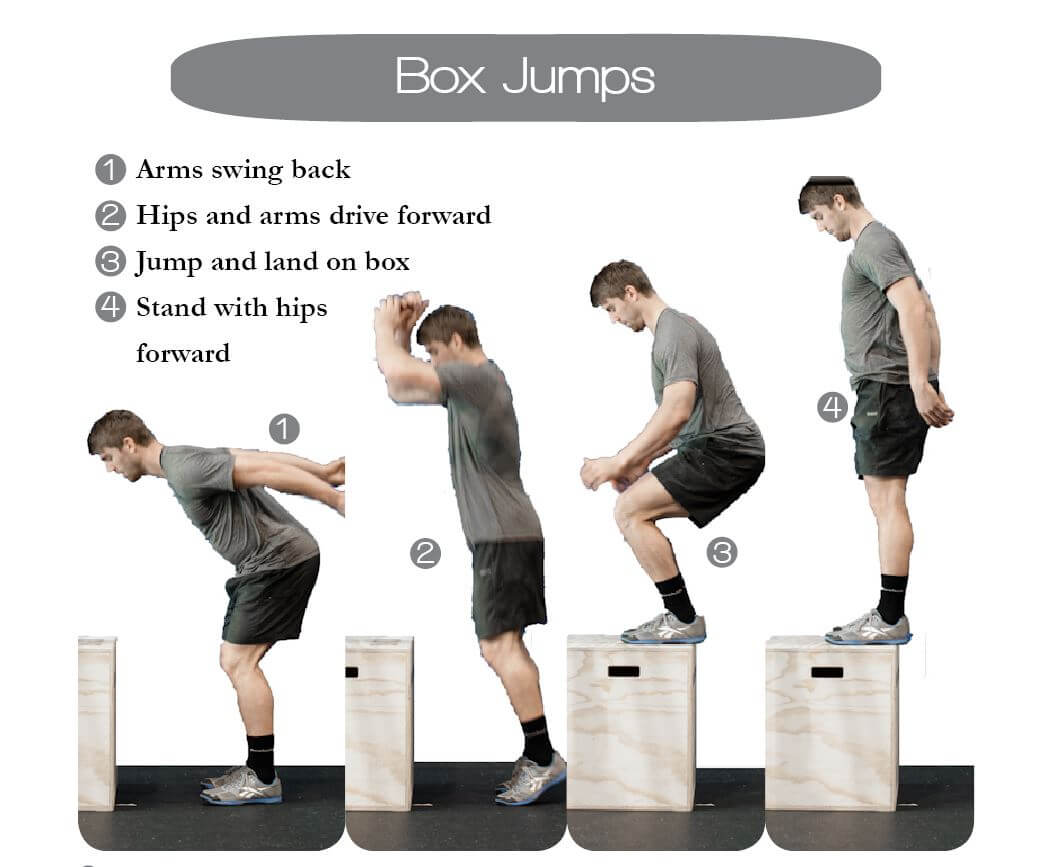
To see both drills performed correctly, refer back to the video.
The RIGHT WAY To Do Box Jumps (For Speed and Power)
Let's watch the video again to see the full box jump sequence.
First, watch the introduction from the right mindset, where the coach explains that the box is there to ensure a soft landing, not to test your maximum jump height. Next, watch the demonstration of the concentric jump. Note the "snap down, stick, freeze, and explode" sequence. Finally, see how this transitions into the countermovement jump, where the movement becomes fluid and continuous, generating more force and height.
4. Advanced Training: The Depth Jump
Once you have mastered box jumps with perfect form, you can move to a more advanced and powerful exercise: the depth jump.
- A depth drop is stepping off a box and sticking the landing.
- A box jump is jumping from the floor up onto a box.
- A depth jump is stepping off a box, landing, and immediately exploding into a maximal vertical jump.
The depth jump supercharges the stretch-shortening cycle. The drop from the box creates a faster and more forceful eccentric (loading) phase, leading to a much more powerful concentric (jumping) contraction.
Depth Jump Guide - Just Fly Sports
This guide provides a focused look at the depth jump.
Read the introduction defining the depth jump. Then, review the section on its benefits. Finally, make sure you understand the crucial difference between this and the first drill we learned: depth jumps vs. depth drops.
Crucial Note: Depth jumps are highly intensive. They should only be performed after you are comfortable with box jumps and have a solid strength base. Always start with a very low box (12 inches / 30 cm) and focus on minimizing your ground contact time—you want to spring off the floor as quickly as possible.
5. Your Plyometric Workout Plan
Given your 20-minute daily time slot, consistency and quality are more important than volume. Here is a progressive plan. Do not move to the next phase until you can perform the drills in the current phase with perfect, controlled form.
Phase 1: Mastering the Landing (Approx. 1 Week)
- Focus: Perfecting the landing form.
- Drill: Depth Drops (from a 12-18 inch / 30-45 cm box or step).
- Workout: 3 sets of 6 reps. Rest 60 seconds between sets.
Phase 2: Building Power (Approx. 2 Weeks)
- Focus: Developing explosive strength.
- Drills:
- Warm-up: Depth Drops (1 set x 6 reps)
- Concentric Box Jumps (18 inch / 45 cm box): 4 sets x 6 reps. Rest 90 seconds.
- Countermovement Box Jumps (18 inch / 45 cm box): 2 sets x 6 reps. Rest 90 seconds.
Phase 3: Introducing Advanced Plyos (After Mastering Phase 2)
- Focus: Maximizing reactive ability.
- Drills:
- Warm-up: Countermovement Box Jumps (1 set x 5 reps)
- Depth Jumps (from a 12-18 inch / 30-45 cm box): 4 sets x 5 reps. Focus on jumping for maximum height after the drop. Rest 2 minutes.
Always prioritize quality over quantity. Every jump should be a maximum-effort, perfect-form rep.
Conclusion
You have now moved from theory to practice. This lesson has equipped you with the fundamental exercises to build the explosive power needed to elevate your game—and your body—above the rim.
Here are the key takeaways:
- Plyometrics train your muscles to be more elastic and powerful by focusing on the stretch-shortening cycle.
- Proper landing technique is paramount for both safety and performance. Always land softly in a balanced athletic position.
- Box jumps are a foundational tool for building power. Progress from concentric (static-start) jumps to full countermovement jumps.
- Depth jumps are an advanced drill that uses a drop to overload the muscles for a more powerful rebound jump. They should be approached with caution and only after mastering the basics.
In our next lesson, we will continue building your athletic foundation by focusing on agility. You've started building your vertical explosiveness; next, we'll work on your ability to accelerate, decelerate, and change direction quickly. This will help you get to the right spot on the floor to use your newfound jumping ability in a game.