Hello!
In our last lesson, we followed the passionate rhetorical campaign of Demosthenes, who successfully rallied Athens and its old rival, Thebes, into a coalition to defend Greek liberty against the rising power of Macedon. You saw how the war of words set the stage for a physical confrontation.
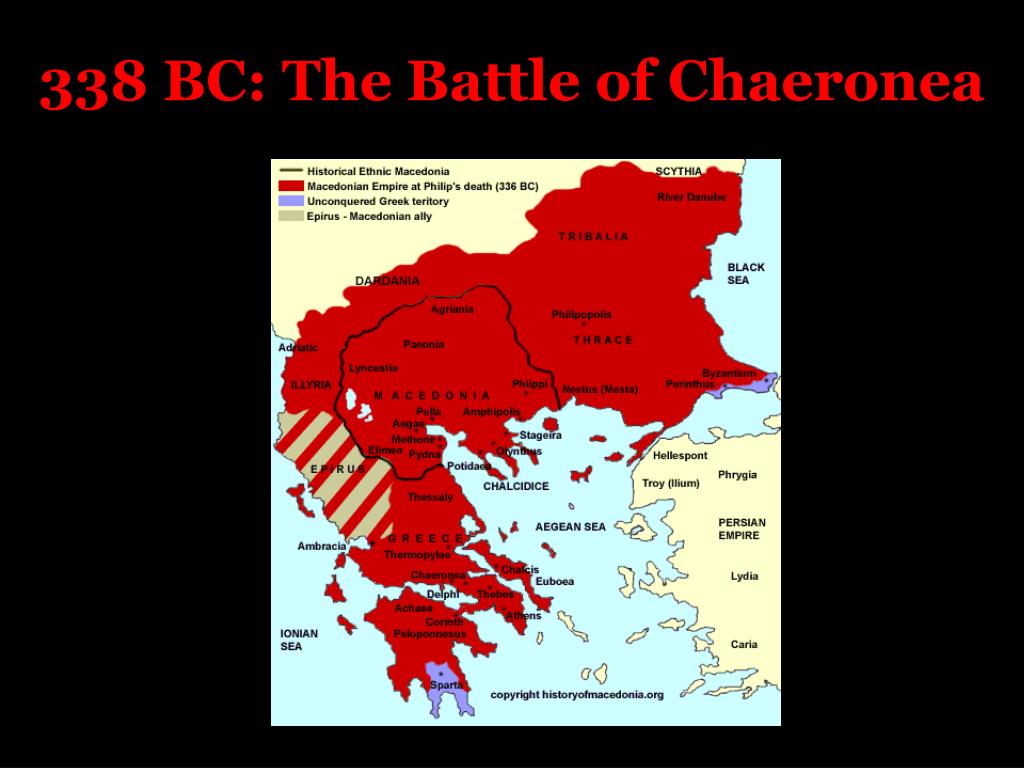
Today, we witness that confrontation. This lesson focuses on the Battle of Chaeronea in 338 BC, the military climax that decided the fate of Greece. We will dissect the battle itself, paying close attention to the innovative tactics that Philip II deployed. More importantly, we will analyze how this single battle was the key that unlocked Macedonian dominance—or hegemony—over the entire Greek peninsula, forever changing the political landscape of the ancient world. This event marks the definitive end of the Classical era of independent city-states.
The Stage is Set
As you know from our previous lesson, Demosthenes' diplomacy had borne fruit. An alliance, led by Athens and Thebes, was formed to block Philip's southward advance. After a series of strategic maneuvers, Philip used his authority from the Amphictyonic Council as a pretext to move his army into central Greece, forcing a decisive confrontation.
To understand the lead-up to the battle and the forces involved, let's start with a comprehensive video overview.
Battle of Chaeronea, 338 BC ⚔️ Philip & Alexander take on the Greek Coalition
This video from HistoryMarche, 'Battle of Chaeronea, 338 BC', provides an excellent animated account of the entire event. We'll watch it in segments. First, let's set the stage.
Please watch from 04:32 to 09:58. This section explains the final political maneuvers, including Philip's use of the Fourth Sacred War as a pretext, his strategic positioning at Elateia, and how Demosthenes ultimately convinced the allies to reject a final peace offer, making battle inevitable.
A New Kind of Army
The Greek coalition that gathered on the plain of Chaeronea relied on the traditional hoplite phalanx that had served them well for centuries. However, they were facing an army that had been forged into something new and far more formidable. Philip II was not just a clever diplomat; he was a revolutionary military reformer.
To appreciate the tactical imbalance, it's crucial to understand Philip's innovations. He had spent his reign creating a professional, national army and completely re-engineering its components.
Philip II of Macedon: The Battle of Chaeronea
The article 'Philip II of Macedon: The Battle of Chaeronea' from Warfare History Network gives a great summary of Philip's military genius. It explains how his time as a hostage in Thebes influenced his thinking.
Read the section that begins with 'In 359 bc, Philip II became king of Macedonia' and ends just before the heading 'Demosthenes’ Impassioned Speeches...'. Focus on three key innovations: the modified Theban tactics, the introduction of the long pike (sarissa) for the phalanx, and the well-timed coordination between infantry and cavalry.
These reforms created a combined-arms force unlike any seen before in Greece. The Macedonian phalanx, with its bristling wall of 13- to 16-foot pikes, could hold any enemy infantry at bay, acting as the "anvil." Meanwhile, the heavy Companion cavalry, a force Philip had perfected, could deliver a devastating charge as the "hammer." The Greek hoplites, with their shorter spears and less-integrated cavalry, were about to face a system designed to exploit their weaknesses.
The Battle of Chaeronea (338 BC)
In August of 338 BC, the two armies drew up on the plain near Chaeronea.

Now, let's see how Philip's tactical system and brilliant generalship unfolded on the battlefield.
Battle of Chaeronea, 338 BC ⚔️ Philip & Alexander take on the Greek Coalition
We'll return to the HistoryMarche video for a detailed, animated breakdown of the battle. This is where you'll see Philip's plan put into motion.
Watch from 09:58 to 18:55. Pay close attention to the two decisive maneuvers: Philip's feigned retreat on the right to lure the Athenians forward, and Alexander's perfectly timed cavalry charge that breaks the Greek line.
The battle was a masterpiece of command and control. Philip, knowing the Athenians were brave but inexperienced, used a feigned retreat to draw them out of position. This was an incredibly difficult maneuver to execute under pressure and speaks to the discipline of his professional army. As the Athenians surged forward, they created a gap between themselves and the center of the Greek line.
This was the moment Alexander was waiting for. He led his cavalry not against the front of the enemy, but straight into this gap, smashing into the flank and rear of the Theban contingent. With the Thebans pinned by Alexander's "hammer" against the Macedonian phalanx "anvil," their lines shattered. The heroic Sacred Band was surrounded and annihilated, fighting to the last man. Seeing the disaster on their right, the now-overextended and exhausted Athenians broke and fled.
Test your understanding!
The battle was won by the "Hammer and Anvil" tactic. Based on the description, which part of the Macedonian army served as the "anvil" and which as the "hammer"? What was Philip's key maneuver that made this tactic possible?
Show answer
The "anvil" was the Macedonian infantry phalanx. Its job was to hold the enemy in place, absorbing their charge and pinning them with its long sarissas. The "hammer" was the heavy Companion cavalry, led by Alexander. Its role was to deliver the decisive, crushing blow to the enemy's flank or rear.
Philip's key maneuver was the feigned retreat on his right wing. By pretending to fall back, he tempted the inexperienced Athenians to break formation and charge forward, which created the critical gap in the Greek line that Alexander's cavalry could exploit.
The Aftermath: Forging Hegemony
The victory was total. The independence of the Greek city-states died on that field with the 300 men of the Sacred Band. But Philip's goal was not simply destruction; it was control. His actions after the battle were as strategically brilliant as his tactics during it.
Philip II of Macedon (359 to 336 B.C.E.)
To understand the political fallout, let's watch a clip from Historia Civilis's video on Philip II. It clearly explains his shrewd post-battle strategy.
Watch from 00:32 to 02:18. Note the crucial difference in how Philip treated Thebes versus how he treated Athens, and think about his motivations for this distinction.
Philip punished Thebes harshly, installing a Macedonian garrison and dissolving their regional league. Athens, however, he treated with shocking leniency. He demanded they dissolve their own naval league but freed their prisoners without ransom and offered an alliance. Why? Philip knew he needed Athens' powerful navy for his ultimate ambition: the invasion of Persia.
With the major powers subdued, Philip summoned all Greek states (except an defiant but irrelevant Sparta) to a congress at Corinth. There, he unveiled his master plan for a new political order in Greece.
Philip II of Macedon (359 to 336 B.C.E.)
Let's continue with the Historia Civilis video to see how Philip formalized his control.
Watch from 02:18 to 04:52. This is the most important part for understanding the concept of 'hegemony'. Focus on the structure of the new 'League of Corinth' and how it gave Philip total control over Greece's military and foreign policy without formally annexing it.
The League of Corinth was a political masterstroke. By its terms:
- The Greek city-states would remain "free" and manage their internal affairs.
- They formed a league with a council and a combined army.
- Philip was appointed Hegemon (leader) of the league, giving him supreme command of that army.
- The league's first act was to declare a war of revenge against the Persian Empire, to be led by Philip.
Through this structure, Philip achieved hegemony. He became the undisputed master of Greece, ending centuries of inter-state warfare and uniting the peninsula's military might under his single command.
Conclusion
The Battle of Chaeronea was far more than just another Greek battle. Its significance was profound and multi-layered, marking a pivotal moment in history.
Key Takeaways:
- A Tactical Revolution: The battle was a showcase for Philip's reformed army. The combination of the sarissa-wielding phalanx (the anvil) and the heavy Companion cavalry (the hammer) proved decisively superior to the traditional Greek hoplite forces.
- The End of the Classical Era: The defeat of the allied Greek army, particularly the symbolic annihilation of the Theban Sacred Band, marked the death of the independent city-state as the primary political unit in Greece.
- The Birth of Hegemony: Philip masterfully translated his military victory into a durable political settlement. The League of Corinth created a new order where Greece was united, but under the firm control of a Macedonian leader.
- The Launchpad for Empire: The unification of Greece was not an end in itself. Philip's ultimate goal was to lead this combined Greco-Macedonian force against the Persian Empire, a plan that would now fall to his son.
Preview of the Next Module:
Philip II had achieved what no Greek leader ever could: he had unified Greece by force and prepared it for a war of conquest. But he would not be the one to lead it. In 336 BC, just two years after his greatest triumph, Philip was assassinated. This left his grand army and his even grander ambitions in the hands of his 20-year-old son. In our next module, we will begin the story of how that son, Alexander, would take his father's legacy and forge an empire that stretched to the ends of the known world.