Hello! Welcome to the next step in building your brand's strategic foundation.
In our last lesson, you crafted a brand story that weaves together heritage, craftsmanship, and authenticity. That story is the rich, emotional heart of your brand. Now, we need to distill its core strategic message into a single, powerful sentence.
This lesson addresses the learning outcome: Define brand positioning and create a concise positioning statement. We'll define what positioning is and then use a structured template to create a statement that will act as the "North Star" for all your future marketing and design decisions. This statement will ensure that you, and the designer you eventually hire, have a crystal-clear understanding of your brand's unique place in the market.
What is Brand Positioning?
Think of the premium furniture market in East Africa as a crowded landscape. Brand positioning is the art of choosing a specific, unoccupied, and valuable piece of "mental real estate" in your customer's mind that your brand will own. It’s the answer to the question: "Among all the choices, why should I choose you?"
A great way to get a quick overview of why this is so important is to watch the beginning of this video from HubSpot.
Brand Positioning: Make Your Brand Stand Out (FREE Guide!)
The video 'Brand Positioning: Make Your Brand Stand Out' explains why a great product isn't enough and defines positioning as the act of controlling the narrative around your brand.
Watch the first minute (00:00 - 01:05). Pay attention to the idea of a 'competitive advantage' and how positioning helps you craft that narrative.
Visualizing Your Position: The Perceptual Map
One of the most effective tools for understanding positioning is a perceptual map. This is a simple visual chart that plots brands against two key attributes. For your market, these attributes could be anything from 'Traditional vs. Contemporary Design' to 'Local vs. International Aesthetic'.
This map helps you see where competitors are clustered and, more importantly, where the open spaces—the opportunities—lie.
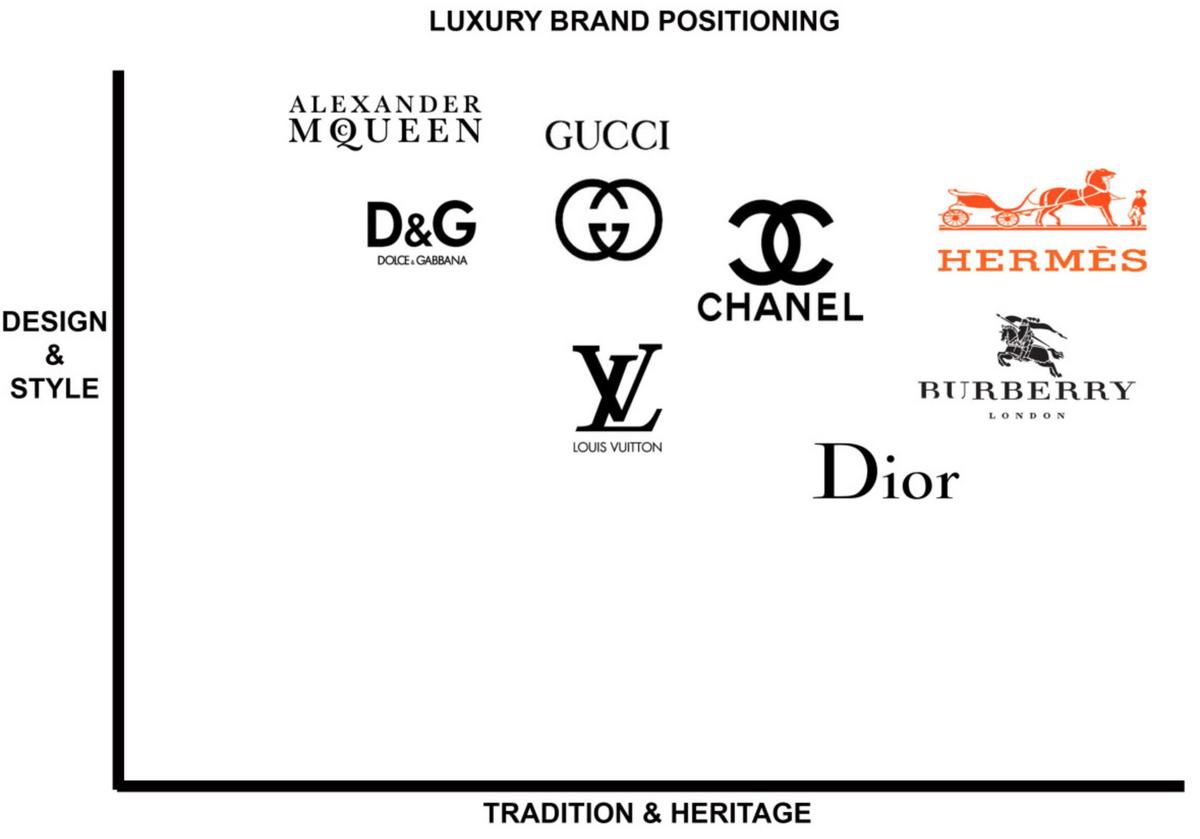
For your woodworking studio, what might the axes be? Perhaps:
- Axis 1: Handcrafted Artistry vs. Technological Precision
- Axis 2: East African Heritage vs. Global Modernism
Thinking about where you want to land on maps like this is the essence of positioning.
The Four Ingredients of a Positioning Statement
Your brand positioning is formalized in a positioning statement. This is an internal document, not a public-facing tagline. Its job is to provide clarity and guidance. According to most marketing frameworks, a strong positioning statement is built from four key ingredients.
How To Write A Positioning Statement (Brand Template + Example)
For a clear, step-by-step breakdown of these components, the video 'How To Write A Positioning Statement' from Brand Master Academy is excellent.
Watch from 02:44 to 05:20. The video clearly outlines the five key elements needed for a positioning statement. We will be using a slightly consolidated version of four of these elements: target market, competitive alternatives, differentiator, and the 'pain point/outcome' which we will call the 'unique value claim'.
Let's break down these four core components:
-
Target Market: Who is your ideal customer? We've already done significant work here when creating your customer profile. Be specific. "Premium furniture buyers" is good, but "Discerning homeowners and businesses in Tanzania and Kenya who value unique, story-rich design" is better.
-
Competitive Set (Frame of Reference): What are customers comparing you to? This defines the category you're in. Are you an alternative to imported luxury furniture, local artisan carpenters, or mass-market retailers? Defining this helps customers understand what you are.
-
Unique Value Claim (Point of Difference): This is your secret sauce. What is the single most compelling benefit you offer that your competitors don't? This should flow directly from your brand story—perhaps it's your blend of CNC precision and hand-craftsmanship, or your use of unique, local materials.
-
Reasons to Believe: What's your proof? These are the tangible facts that make your unique value claim believable. Examples could include: "sustainably sourced Mninga wood," "hand-finished by the founder," or "designs inspired by Maasai patterns."
Crafting Your Positioning Statement: The Template
Now, let's assemble these ingredients using a classic, robust template. The structured nature of this template provides a logical blueprint for your brand's core message.
How to Craft the Perfect Brand Positioning Statement
The article 'How to Craft the Perfect Brand Positioning Statement' from Harvard Business School Online provides an excellent template and clear examples that we will use.
Please read the sections '4. Craft Your Brand Positioning Statement' and '5. Inform Your Thinking with Real-World Examples'. Focus on the template provided and study how it's applied to the Voss, Perrier, and Ethos water brands. Notice how each statement clearly identifies the target, competition, and unique value.
The template is as follows:
For [target market], [your brand] is the only one among all [competitive set] that [unique value claim] because [reasons to believe].
Let's look at a hypothetical example for your business:
For discerning homeowners in East Africa who seek to express their modern identity through their living spaces, [Your Brand Name] is the only furniture maker among [mass-market importers and traditional carpenters] that delivers contemporary furniture with deep cultural resonance, because we fuse modern CNC-driven design with time-honored hand-finishing, using only locally sourced, sustainable hardwoods.
This single sentence tells a designer, a marketer, or a salesperson everything they need to know to represent your brand accurately.
Test your understanding!
Using the template, identify the "Unique Value Claim" in this example for a different type of business:
"For busy urban professionals in Nairobi, Java House is the only coffee shop among all local cafes and international chains that provides a reliable and welcoming 'third place' for work and socializing because of its consistent Wi-Fi, comfortable seating, and locally sourced coffee."
Show answer
The "Unique Value Claim" is: "provides a reliable and welcoming 'third place' for work and socializing." The other parts are the target market (busy urban professionals), the competitive set (local cafes and international chains), and the reasons to believe (consistent Wi-Fi, comfortable seating, etc.).
Activity: Draft Your Positioning Statement
Now it's your turn. Using the template and the thinking you've done in previous lessons, draft the first version of your positioning statement. Don't strive for perfection; aim for clarity.
Fill in the blanks:
For [Who is your specific target customer in Tanzania/Kenya?],
[Your Brand Name] is the only one among all [What are their other options? Imported furniture brands? Local craft markets?]
that [What is the single most important, unique benefit you offer? Think about the intersection of design, quality, and story.]
because [What are 2-3 concrete facts that prove your claim? (e.g., your process, your materials, your design philosophy).].
Take about 15 minutes to work on this. Refer back to your brand story and customer profile work.
Conclusion
Today, you've taken the expansive, emotional narrative of your brand story and forged it into a sharp, strategic tool. Your positioning statement is the compass that will guide every decision you make, from designing your logo to writing an Instagram post.
Key Takeaways:
- Brand positioning is about owning a specific and valuable space in your customer's mind.
- A positioning statement is an internal "North Star" that provides clarity and direction for your brand strategy.
- A strong statement is built on four pillars: Target Market, Competitive Set, Unique Value Claim, and Reasons to Believe.
- Using a structured template helps you create a concise and powerful statement.
Next Up:
In our next lesson, we will focus on "Articulate the brand promise and key differentiators." You'll see that the "unique value claim" and "reasons to believe" from your positioning statement are the seeds of your brand promise and differentiators. We will expand on them to create clear, customer-facing messages.