In our last lesson, we explored the cognitive science behind why storytelling is so persuasive, looking at how the brain's "make sense mandate" is hardwired to process information in a narrative format. We established that to be effective, you must provide information in a way the brain can easily digest.
This lesson moves from the 'why' to the 'what'. We will distinguish a true business narrative from a simple list of facts by identifying its two fundamental pillars: its structural skeleton and its emotional core. Understanding this architecture is the next crucial step in building the compelling pitches and brand stories you aim to master. By the end of this lesson, you'll be able to see how a collection of data points can be transformed into a narrative that moves an audience both intellectually and emotionally.
The Two Engines of Narrative: Structure and Emotion
A powerful narrative operates on two levels simultaneously. It has a logical structure that makes information coherent and easy to follow, and an emotional core that makes the audience connect with the information and care about the outcome. As Stanford's Jennifer Aaker notes, when you combine data and story, "audiences are moved both intellectually and emotionally."
Neuroscientist Paul Zak, who has studied the brain's response to stories extensively, provides a useful framework for this concept. He calls the state of being captivated by a story "immersion." Through his research, he's found that immersion is the product of two key ingredients:
- Attention: The story must grab and hold the audience's focus. This is the intellectual, structural component.
- Emotional Resonance: The story must make the audience care. It needs to connect with them on a human level.
A list of facts might command momentary attention, but it rarely creates emotional resonance. A true narrative does both. Let's break down how.
The Emotional Core: Making the Audience Care
Before anyone can be persuaded by your logic, they need to be invested. Emotion is the key that unlocks that investment. Storytelling is a powerful tool for intentionally generating specific emotional and neurochemical responses in your audience.
To see this in action, we'll watch a few clips from a popular TEDx talk that breaks down the "magical science" of this process.
The magical science of storytelling | David JP Phillips | TEDxStockholm
This talk by David JP Phillips demonstrates how stories can be used to induce specific hormones in the brain, creating powerful effects on the audience.
Watch the following clips, paying attention to the link between a storytelling technique and the specific neurochemical response it's designed to create. First, see a practical demonstration of how a story adds value in the significant object study. Next, the speaker introduces what he calls the "angels' cocktail" of hormones. Watch the segments where he explains and demonstrates how to trigger: Dopamine for focus and memory, using suspense and cliffhangers. Oxytocin for generosity, trust, and bonding, by creating empathy for a character. Endorphins for creativity and relaxation, by using humor. Finally, watch his conclusion on functional storytelling, where he suggests indexing your stories by the emotional response they create.
Phillips' "functional storytelling" is a powerful concept. It reframes storytelling from an art into a deliberate practice of crafting experiences that generate specific, predictable feelings and states of mind in your audience.
- Dopamine (Focus): You trigger this with suspense. By setting up a question, a mystery, or a challenge at the beginning of your narrative, you create an information gap that makes the brain pay close attention, waiting for the resolution.
- Oxytocin (Connection): You trigger this by creating empathy. By telling human-scale stories about relatable characters facing recognizable struggles, you foster a sense of connection and trust between you and the audience. This is the hormone of bonding.
- Endorphins (Relaxation & Creativity): You trigger this with humor. A well-placed moment of levity can make an audience feel more relaxed and open to new ideas.
This neurochemical cocktail is the engine of the emotional core. It's what separates an anecdote that is merely heard from a story that is felt.
The Structural Skeleton: Making the Information Make Sense
While emotion provides the 'why,' a clear structure provides the 'what.' It organizes the facts of your story into a logical sequence that the brain can easily follow. Without structure, you have an emotional but confusing mess. With structure but no emotion, you have a dry report.
A simple yet effective way to visualize the core structural elements of a story is with the following diagram.

This model visually represents the journey that distinguishes a narrative from a static description. The facts of your business case can be mapped onto these elements. For example:
- Characters: Your customers, your team, your founder.
- Conflict: The market problem, the customer's pain point, the competitive threat.
- Quest: Your company's mission, the search for a solution.
- Resolution: Your product, your proposed strategy, the successful outcome.
To put this into a practical, business-oriented framework, let's examine a method used by top consulting firms.
PowerPoint Storytelling: How McKinsey, Bain and BCG create compelling presentations
This video from Analyst Academy explains two key frameworks for structuring business presentations. We will focus on the first one, the SCQA framework.
Watch the section that introduces the SCQA framework (Situation, Complication, Question, Answer). Pay close attention to how this structure creates a logical flow and a sense of narrative tension. Then, watch the BCG example to see how it's applied in a real-world context.
The SCQA framework is a powerful tool because it forces you to turn a list of facts into a story with inherent drama.
- Situation: This is the status quo. It's a non-controversial truth that the audience can agree with. e.g., "The market for B2B payments is growing."
- Complication: This is the change or disruption to the situation that creates a problem or opportunity. This is where you introduce the Conflict. e.g., "However, cross-border settlement remains slow and expensive."
- Question: This is the implicit or explicit question that arises from the complication. This defines the Quest. e.g., "How can we make international payments as fast and cheap as domestic ones?"
- Answer: This is your solution, your idea, your main point. It is the Resolution. e.g., "Our platform uses a novel liquidity-pooling model to settle payments in real-time."
Using this structure transforms a series of bullet points into a compelling argument. It takes your audience on a journey from a shared reality to a problem, and finally, to your proposed solution.
Conclusion
In this lesson, we deconstructed the architecture of a business narrative, separating it from a mere list of facts. You now have a framework for thinking about both the emotional and structural integrity of a story.
Here are the key takeaways:
- Narrative = Structure + Emotion: A business narrative is not a report. It's an architecture that combines a logical structure (like SCQA) with an emotional core (driven by dopamine, oxytocin, etc.) to achieve "immersion."
- The Emotional Core Makes Them Care: Through techniques like creating empathy for characters and building suspense, you trigger neurochemical responses that foster trust, focus, and connection. This is what makes your message stick.
- The Structural Skeleton Makes It Clear: Frameworks like SCQA provide a logical path for the audience to follow. It organizes facts into a sequence with tension and resolution, making your core message both clear and compelling.
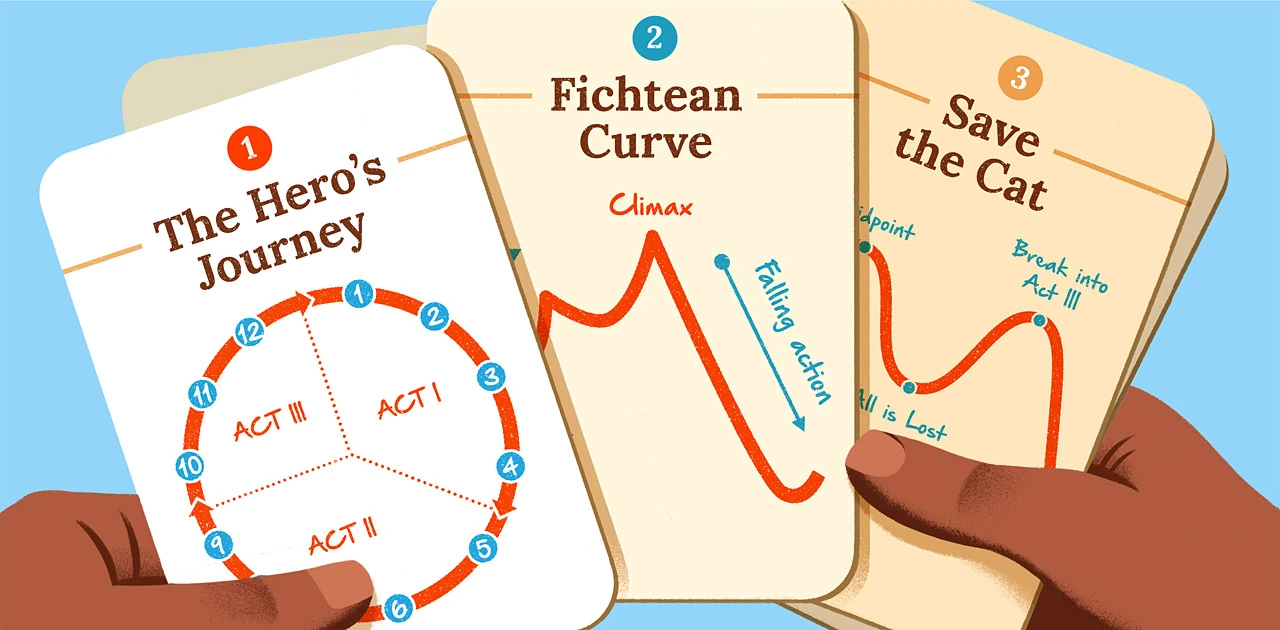
You now understand the fundamental components of a story. In our next lesson, we will explore how these components are assembled into larger, time-tested narrative patterns. We'll examine frameworks like The Hero's Journey and see how their universal structures can be mapped directly onto business scenarios like pitching a new venture or recruiting a key employee.