Hello! In our last lesson, we learned how to start and end a casual conversation with greetings and farewells. Now we'll take the next logical step. Once you've said "hello," you'll want to get to know the other person.
Today, you will learn how to ask and answer basic personal questions about your name, job, hometown, and family. This is a crucial skill for turning a simple greeting into a real conversation. We will focus on the key question words that unlock this information and see them used in natural dialogues.
The Building Blocks: WH- Question Words
To ask for information, you need a set of specific tools: the "WH-" question words. These words tell the listener what kind of information you are asking for. For our purposes today, the most important ones are:
- What? — Used for things, ideas, or actions (e.g., your name, your job).
- Where? — Used for places (e.g., your hometown).
- Who? — Used for people (e.g., your family).
This simple framework will help you form the right questions. Let's see a clear explanation.
✓ Identify countries and nationalities ✓ Give personal ...
This PDF from a textbook provides a very clear and concise summary of the main WH- question words.
Please scroll to page 13. Find the blue box titled "Wh- question words". Read through the examples for Who, What, Where, When, and Why to understand their basic function.
Asking About Name, Hometown, and Job
Now, let's use these question words to build the most common "getting-to-know-you" questions. We will use an article that organizes these questions by topic.
25 Getting-to-Know-You Conversation Questions (Talk ...
This article from "English with Alex" gives perfect examples of questions and typical answers for the topics we're covering.
Please read the following three sections from the article: Start with the "Warm-up" section to see how to ask for someone's name. You'll find the question What's your name?. Next, read the section on "Geography." Focus on the first two questions: "Where do you live?" and "Where were you born?". This is how you ask about someone's hometown. Finally, go to the section "Work and routines." Pay close attention to the first question: What do you do?. This is the most common and natural way to ask about someone's job. Since you are a Data Analyst, a simple answer would be, "I'm a data analyst" or "I work in IT."
Asking About Family
To ask about family, we can ask about siblings (brothers and sisters) or who someone lives with. The structure often uses "Do you have...?" or "Who do you...".
Let's return to the same article to see how this is done.
25 Getting-to-Know-You Conversation Questions (Talk ...
This section focuses specifically on family-related questions.
Find the heading "Family and home". Read the first two questions, about siblings and marital status. The article also provides useful vocabulary here, such as siblings for brothers and sisters.
See It in Action: A Natural Conversation
Reading questions is helpful, but listening to them in a real conversation is the best way to learn. The following short video shows two people meeting for the first time. It’s excellent listening practice because the speakers are very clear.
Basic Introductions - ESL - Adult Education - Learn English Conversation Practice
Watch this short dialogue from Sandi Rami's channel to hear how these personal questions flow naturally after an introduction.
Watch the conversation from the beginning until the end. Listen for the questions we've just learned: "What's your name?" (listen) "Where are you from?" (listen) "Do you have any siblings?" (listen)
Notice how the conversation moves smoothly from one topic to the next. After one person answers, they often ask the same question back: "Where are you from?" ... "I'm from Mexico. How about you?" or "Are you married?" ... "Yes, I am. Are you married?". This is a very common way to keep a conversation balanced.
Your Turn to Practice
Now it's time for you to use these questions. Below are two images with lists of conversation starters. Your task is to choose three questions—one about your job, one about your hometown, and one about your family—and write down your own answers in English.
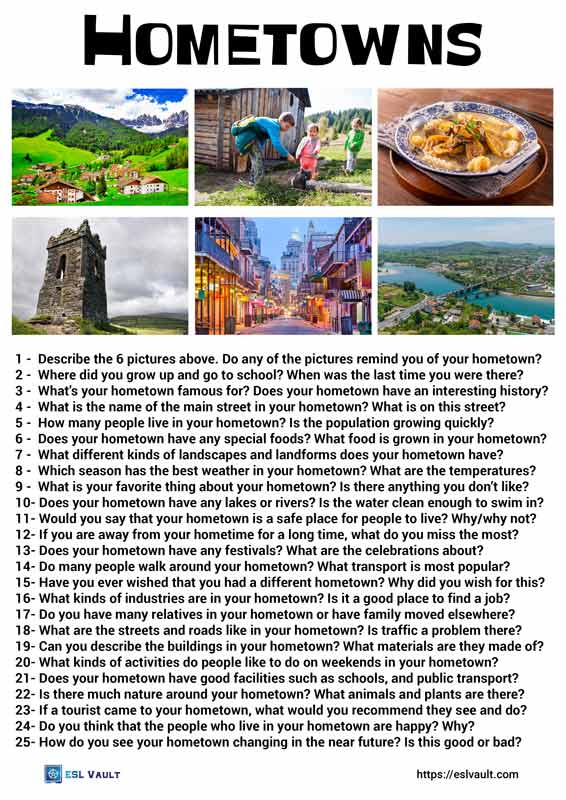
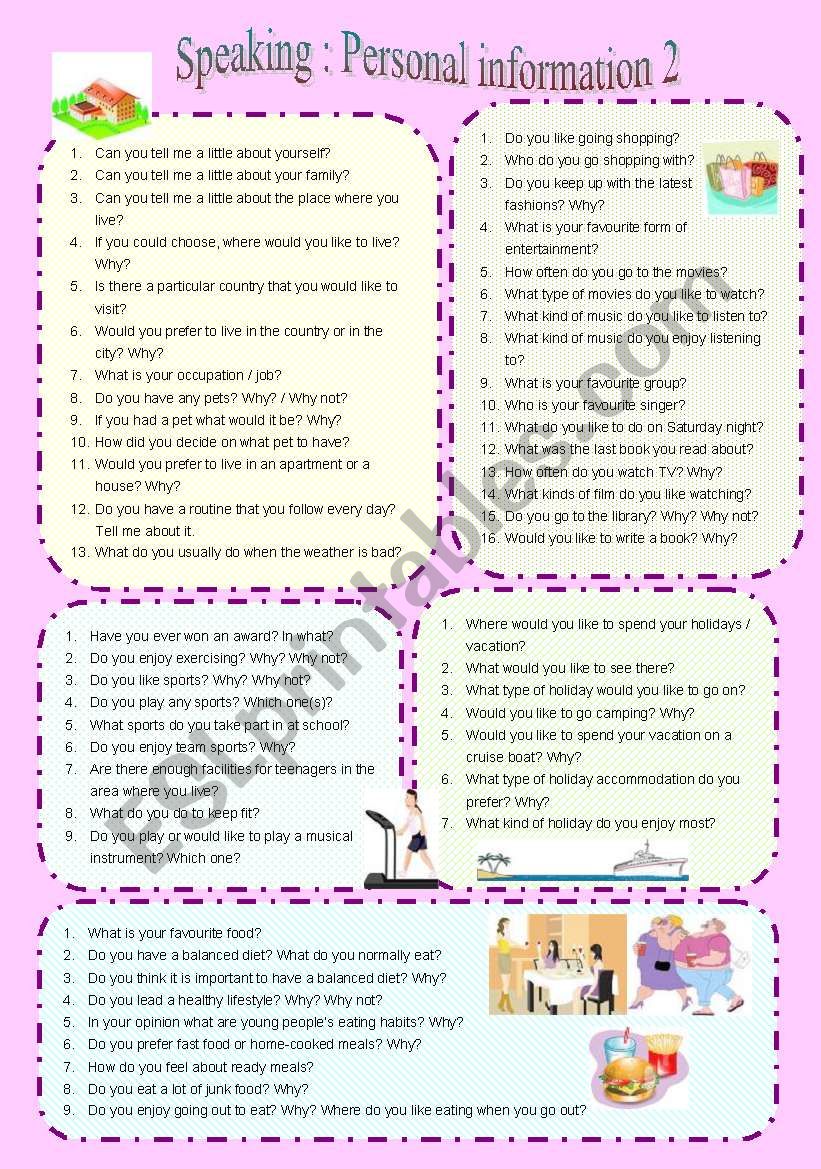
For example, you could choose and answer:
- "What is your occupation / job?" (From the second image)
- "Where did you grow up and go to school?" (From the first image)
- "Can you tell me a little about your family?" (From the second image)
Write your answers as complete sentences. This will help you prepare for real conversations.
Key Takeaways
In this lesson, we moved from greetings to the core of a first conversation. Here are the main points:
- Use WH- question words (
What,Where,Who) to ask for specific information. - Key questions to remember are: "What's your name?", "Where are you from?", "What do you do?", and "Do you have any brothers or sisters?".
- Answering these questions about yourself is excellent practice for improving your fluency and confidence.
In our next lesson, we will focus on a crucial piece of grammar that supports these conversations: using subject, object, and possessive pronouns correctly (I/me/my, they/them/their). This will help you talk about yourself and others with much greater accuracy.