Hello! Welcome back to our module on Line Editing: Voice and Style.
In our previous lesson, we broke down the foundational elements of prose style: word choice, sentence variety, and rhythm. We looked at them as the individual tools a line editor uses to shape a manuscript. Today, we'll see how an author's consistent use of these tools creates their unique signature on the page: their authorial voice.
This lesson directly addresses the learning outcome: Explain the concept of authorial voice and formulate a strategy to preserve versus refine it. This is one of the most nuanced and critical skills in editing. It marks the transition from a technician who corrects errors to a collaborative artist who helps another's work achieve its full potential.
1. What is Authorial Voice?
At its core, authorial voice is the personality, perspective, and style of the writer that comes through in the text. It's what makes one author's work feel distinct from another's, even when writing about the same subject. As a writer and editor yourself, you've likely developed a strong sense of this instinctively. Let's give it a more formal structure.
A helpful way to conceptualize authorial voice is to see it as a combination of two major components. The following article breaks this down clearly.
'Apt words' and the author's voice
The article ''Apt words' and the author's voice' by Sue of Apt Words provides an excellent framework for understanding the components of voice. We will focus on its central definition.
Please read the sections titled 'Big Thing 1: Who you are,' 'Big Thing 2: Who your audience is,' and 'Big Things 1 & 2 = the authorial voice.' Focus on how the author defines voice as a combination of the writer's identity and their awareness of the audience.
As the article explains, authorial voice is the sum of:
-
The Author's Identity: This is the writer's unique stylistic fingerprint. It's composed of all the elements we discussed in the last lesson:
- Diction: Their preferred vocabulary (e.g., simple or complex, formal or informal).
- Syntax: Their typical sentence structures (e.g., long and winding or short and punchy).
- Rhythm: The cadence and flow of their prose.
- Verbal Tics: Habitual words or phrases they might overuse (e.g., starting many sentences with "So," or a reliance on em-dashes).
-
Audience Awareness (Register): This is how the author intentionally adapts their style for a specific purpose and readership. A legal thriller will have a different register than a young adult fantasy novel. This adaptation—the choice of what to emphasize, what level of formality to use, and what knowledge to assume—is also a key part of the author's voice.
Voice vs. Tone
It's crucial to distinguish between voice and tone. Think of it this way: voice is the author's consistent personality; tone is the mood they adopt for a specific situation. An author's voice remains relatively constant across their work, but the tone can shift dramatically from a tense action scene to a quiet, reflective moment.
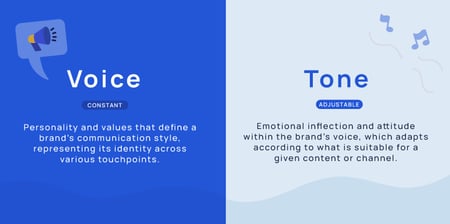
As a line editor, you will be working to ensure the tone is appropriate for each scene, while the overarching voice remains consistent and strong.
2. The Editor's Strategy: Preserve vs. Refine
Authors are often concerned that an editor will "change their voice." A good line editor doesn't change a voice; they clarify and strengthen it. Your primary goal is to help the author sound more like themselves.
This approach requires empathy—the ability to step into the writer's shoes and understand their intent.
Learning to Honour the Writer's Voice
This blog post, 'Learning to Honour the Writer's Voice' from The Editing Company, perfectly captures the mindset of an empathetic editor.
Please read the sections 'Empathy,' 'Tone,' 'Grammar,' and 'Query.' Pay close attention to the distinction between correcting objective errors and making stylistic changes based on personal preference. Notice the advice on when and how to query the author.
Based on these principles, here is a three-step strategy for navigating the delicate balance of preserving and refining authorial voice.
Step 1: Analyze and Understand the Voice
Before you change a single word, you must deeply understand the voice you're working with.
- Read widely before editing: Read a significant portion of the manuscript (ideally, the whole thing) to get a feel for the author’s style.
- Identify the stylistic fingerprint: Actively look for the patterns that define the voice.
- What are their go-to sentence structures?
- What kind of vocabulary do they favor?
- Are there recurring rhythms or verbal tics?
- What is the overall register?
- Distinguish choice from error: Is that sentence fragment an intentional stylistic choice to create a certain effect, or is it a grammatical mistake? Is the unusual word choice a brilliant moment of "defamiliarization" (as discussed in the ShaelinWrites video from our last lesson) or just an error? Understanding the voice helps you make this distinction.
Step 2: Determine When to Intervene
Your intervention should be purposeful, not preferential. You are not rewriting the book in your own voice. You intervene to refine the voice when you identify issues that weaken it.
The following video discusses this from the author's perspective but gives clear insight into what a line editor looks for. The goal is to elevate the authentic voice, not alter it.
LINE EDITING VS COPY EDITING | What is a line edit? Do I need a line edit? Line editing basics!
In this video, editor Natalia Leigh directly addresses the author's fear of their voice being changed. It clarifies the line editor's true objective.
Watch the segment from 04:04 to 05:15. Notice the list of issues a line editor addresses—such as filter words, repeated phrases, and clunky sentences—all in service of helping the author's authentic voice shine through.
You should intervene to:
- Correct objective errors: This includes typos, grammatical mistakes, and clear violations of the chosen style guide (e.g., The Chicago Manual of Style).
- Strengthen weak prose: This is where you refine. You target elements that dilute the voice's power, such as:
- Filtering and filler words ("she felt," "he saw," "just," "really").
- Repetitive sentence structures that create a monotonous rhythm.
- Clunky or awkward phrasing that disrupts the flow.
- Overused "verbal tics" that have become distracting.
- Fix inconsistencies: If the author's voice changes drastically from one chapter to another without a clear narrative reason, you should flag it. The goal is a cohesive voice throughout the manuscript.
Step 3: Choose How to Intervene
Your method of intervention is as important as your reason for it. The goal is to be as minimally invasive as possible while achieving the desired refinement.
- Suggest, Don't Command: Frame your edits as suggestions. Use the comments feature in your software to explain your reasoning. For example: "I suggest rephrasing this to avoid the passive voice, which might give the action more impact. What do you think?"
- Rearrange Before Replacing: As noted in "Learning to Honour the Writer's Voice," sometimes the best solution is to simply rearrange the author's own words to improve cadence or clarity, rather than substituting your own.
- Query for Major Changes: If a change is significant or subjective, query the author. Explain the issue you see and let them make the final decision. This builds trust and respects their ownership of the work. You are a guide, not a ghostwriter.
A Practical Thought Experiment
Let's apply this strategy. Imagine you are editing a literary fiction manuscript. The author's voice is established as sparse, direct, and emotionally reserved.
-
Scenario 1: You encounter a paragraph where the author suddenly uses elaborate, multi-clause sentences with a great deal of flowery, descriptive language to describe making a cup of coffee.
- Your Action: This is an issue of inconsistency. You would query the author, noting that the tone and style here diverge from the established voice. You might suggest revising it to be more direct and in line with the rest of the manuscript, to maintain that reserved emotional feel.
-
Scenario 2: The author frequently uses the phrase "he was a man who..." (e.g., "He was a man who liked his coffee black," "He was a man who never wasted words").
- Your Action: This is a verbal tic that weakens the prose. It's wordy and indirect. You would refine this by suggesting more direct constructions ("He liked his coffee black," "He never wasted words"), explaining that this strengthens the sparse, direct voice they've already established.
-
Scenario 3: To show a character's bluntness, the author intentionally uses a sentence fragment: "Not a chance." It's grammatically incomplete but stylistically effective.
- Your Action: You preserve this. It is a clear stylistic choice that serves the character and tone. "Correcting" it to "There was not a chance" would actively harm the author's voice.
Conclusion
Mastering the art of line editing authorial voice is about developing sophisticated judgment. It's about learning to listen to a manuscript and understand its unique identity.
Key Takeaways:
- Authorial voice is a combination of the writer's innate style and their intentional choices for a specific audience.
- Your primary role as a line editor is to preserve and elevate this voice, not replace it with your own.
- A sound strategy involves analyzing the voice first, intervening only to fix errors, weaknesses, or inconsistencies, and doing so with empathetic techniques like querying and minimal revision.
Next Up:
In our final lesson of this module, we will explore the cumulative impact of line-level patterns on narrative momentum. This will tie together everything we've learned about sentence structure, rhythm, and voice, showing how these small-scale choices build up to affect the reader's overall experience of pace and flow in the story.