Hello! Welcome to the final lesson in our module, Advanced Copyediting and Style Management.
In our last session, we navigated the complexities of copyediting fiction. We saw that while rules are important, the ultimate goal is to honor and enhance the author's unique voice. A key tool we touched upon was the author query, which allows for a collaborative discussion about stylistic choices. You drafted a sample query for a comma splice, recognizing its potential as a deliberate effect rather than a simple error.
Today, we will expand on that foundation. The learning outcome for this lesson is to write clear, professional, and diplomatic queries to authors regarding copyedits. This is one of the most crucial skills in an editor's toolkit. Effective queries are not just about flagging problems; they are about building trust, demonstrating professionalism, and fostering a collaborative relationship that elevates the manuscript.
1. The Philosophy of Querying: An Editorial Conversation
First, let's establish the mindset behind a good query. It's not a unilateral command or a red-pen correction. It is the start of a conversation between two professionals—the author (the subject matter expert) and the editor (the language and structure expert). Your role is to be a guide and a partner, not an adversary.
This approach requires empathy and a respect for the author's work. A well-phrased query shows that you are on the author's team, with the shared goal of making their book the best it can be.
The Art of Editorial Conversation
To build this foundational understanding, let's read an article from Milne Publishing titled 'The Art of Editorial Conversation.' It masterfully reframes querying from a corrective task to a relational one.
Please read the introduction and the section titled 'Editorial Conversation Guidelines.' This will introduce the editor-writer dynamic and outline four core principles for composing effective queries.
The article establishes a vital paradox: while the author is the primary voice in the final publication, they must temporarily yield the lead to the editor during the editing process. Your queries are the primary tool you use to lead this process respectfully and effectively.
2. The Four Pillars of an Effective Query
The resource you just read introduced four guidelines for writing author queries. Let's examine each one more closely. Mastering these pillars will transform your queries from simple questions into powerful editorial tools.
The article "The Art of Editorial Conversation" provides excellent examples for each of these pillars in its tables. I will refer to them as we go.
Pillar 1: Be Concise
An author reviewing edits is often processing hundreds of comments. Unnecessarily long queries can be overwhelming and obscure the main point.
- Goal: Get straight to the issue. Respect the author's time and focus their attention where it's needed.
- In Practice: As shown in Table 1 of the article, avoid filler or overly personal anecdotes. Instead of "The idea is interesting, but I believe it’s possible for you to include...", a more direct query like "To better orient readers..., what do you think about adding...?" is more efficient.
Pillar 2: Be Explanatory
While queries should be concise, they must also provide enough context for the author to understand the why behind your question. This is especially true when dealing with rules of style or grammar the author may not know.
- Goal: Briefly explain the underlying principle or problem. This empowers the author, demonstrates your expertise, and justifies your suggestion.
- In Practice: Look at Table 2. The query "This sentence doesn’t make sense, so please revise it" is unhelpful. The better query, "Please revise this sentence so there are fewer prepositions used," diagnoses the specific problem, giving the author a clear path to a solution.
Pillar 3: Be Specific
Vague queries lead to confusion and unhelpful responses. You must pinpoint the exact issue you are questioning.
- Goal: Eliminate ambiguity. Clearly state the problem and, when possible, offer specific, alternative solutions.
- In Practice: As seen in Table 3, "What do you mean by this?" is too broad. A query like, "Do you mean 'practice empathy' or 'show empathy' rather than 'accept empathy'?" is far more effective. It shows you've thought about the author's intent and provides concrete options, making the author's job easier.
Pillar 4: Be Diplomatic
Tone is everything. Because written communication lacks the nuances of voice and body language, your word choice must be carefully considered to avoid sounding accusatory or arrogant.
- Goal: Foster a positive, collaborative atmosphere. Frame your feedback constructively and with empathy.
- In Practice: Table 4 offers a great example. "The sentence isn’t clear because you didn’t provide the subject" can feel accusatory. "Recognized by whom? If you would identify the subject, I can help rephrase this sentence..." turns a criticism into a collaborative offer of help. Using "I" statements or focusing on the text itself, rather than the author's actions, is a key diplomatic technique.
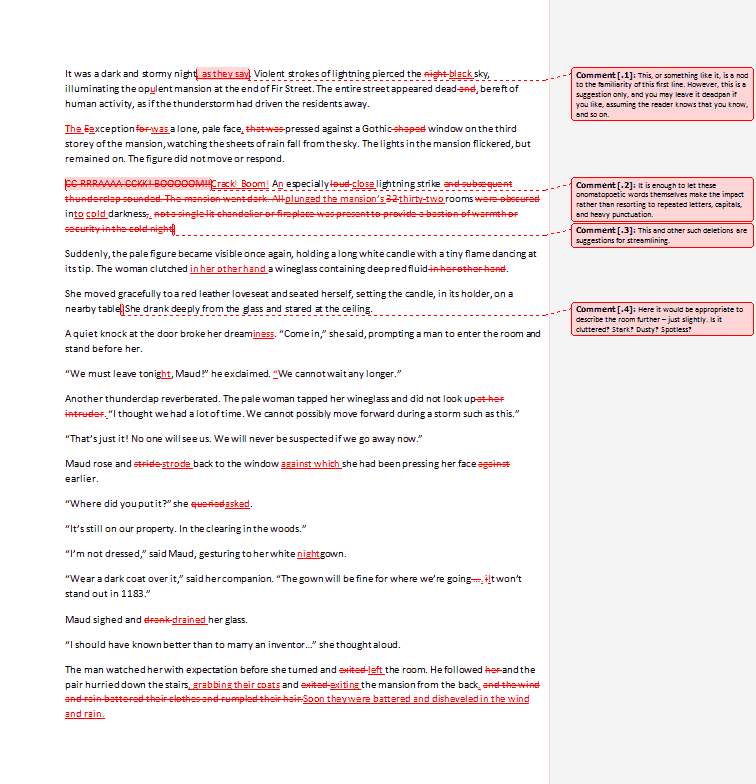
3. The Strategic Value of Queries
Beyond ensuring textual clarity, queries play a crucial strategic role, especially for freelance editors. Every query is a reflection of your professionalism and a marketing tool for your skills. A thoughtful, well-written query builds confidence and convinces both the author and the publisher that you are the right person for the job.
The Business of Editing: The Art of the Query
The blog post 'The Business of Editing: The Art of the Query' on An American Editor explores this strategic dimension. It discusses how queries function as a demonstration of your knowledge and a way to secure future work.
Please read from the beginning through the section 'To Demonstrate Why I am The Editor.' Pay close attention to how the author frames queries as a way to demonstrate knowledge, comfort the author, and market your skills.
As the article argues, a cryptic query like "AQ: Section title?" suggests laziness, while a comprehensive one that identifies the problem and offers solutions demonstrates professionalism. The examples provided—such as the query distinguishing "recur" from "reoccur"—show how a simple question can also be an opportunity to teach the author and showcase your expertise. Your queries are, in effect, your professional signature.
4. Practical Application: Writing Queries
Now it's your turn to put this theory into practice. Below is a short excerpt from a nonfiction manuscript. It contains several issues that require carefully crafted queries.
Excerpt:
The Treaty of Versailles, signed in 1919, officially ended World War I. One of its most controversial components was Article 231, often known as the "War Guilt Clause," which laid sole responsibility for the war on Germany and it’s allies. This led to significant territorial losses for Germany and crippling reparation payments. The economic strain was a major factor in the instability of the Weimar Republic. Some historians think this was a bad idea. Eventually, the failure to enforce the treaty’s terms reoccurred throughout the 1930s, contributing to the rise of Nazism.
Exercise (15 minutes):
Please take the next 15 minutes to write a professional query for each of the three issues identified below. For each one, aim to be concise, explanatory, specific, and diplomatic.
- Grammatical Error: There is a clear grammatical error in the second sentence ("it's allies"). How would you query this? Or would you make a silent change? Explain your reasoning.
- Vague Statement: The sentence "Some historians think this was a bad idea" is weak and non-specific. Draft a query to prompt the author for more detail and stronger phrasing.
- Word Choice: The word "reoccurred" in the final sentence is used incorrectly. Draft a query that explains the distinction (you can draw on the example from the American Editor article) and suggests alternatives.
5. Debrief and Analysis
Let's review how we might approach these queries. Remember, there are many correct ways to phrase them, but they should all adhere to the principles we've discussed.
1. The Grammatical Error ("it's allies")
- Your approach: This is a straightforward error of
it'svs.its. In most cases, a copyeditor would simply make this correction without a query. This is what's known as a "silent" or "stealth" edit. Querying every single typo would overwhelm the author. - When you might query: If the author repeatedly makes the same error throughout the manuscript, you might add a single, global comment at the beginning of your edit letter: "I have corrected 'it's' to 'its' throughout for possessive use, just to note." This is efficient and educational.
2. The Vague Statement ("Some historians think this was a bad idea.")
- Ineffective Query: "This is too vague. Be more specific." (Blunt, not helpful)
- Effective Query: "AU: This statement feels a little general. Could we strengthen it by being more specific? For instance, we could name a few of the key historians who hold this view or elaborate on why they considered it a bad idea (e.g., 'arguing that it created resentment...'). Please advise."
- Analysis: This query is diplomatic ("feels a little general"), explains the problem (weakness), is specific in its suggestions (name historians, elaborate on reasoning), and gives control back to the author ("Please advise").
3. The Word Choice ("reoccurred")
- Ineffective Query: "Wrong word." (Not explanatory)
- Effective Query: "AU: Quick check on word choice here. 'Reoccur' typically means to happen again once, while 'recur' means to happen repeatedly. Given the context of the 1930s, would 'recurred' be a better fit? Or perhaps a different verb like 'became a recurring problem' or 'was demonstrated repeatedly'? Please advise."
- Analysis: This query perfectly embodies the principles. It's concise. It's explanatory (defines reoccur/recur). It's specific (offers alternatives). And it's diplomatic ("Quick check on word choice," "Please advise"). It demonstrates your expertise without being condescending.
Conclusion
Today, we've delved into the art and strategy of writing author queries. You've learned that a great query goes far beyond simply pointing out an error; it's a foundational element of the author-editor relationship.
Key Takeaways:
- Author queries are best framed as a collaborative conversation, not a list of corrections.
- The most effective queries are concise, explanatory, specific, and diplomatic.
- Beyond improving the text, queries serve a strategic purpose: they build author trust, demonstrate your expertise, and market your professionalism.
- Knowing when not to query (e.g., for silent correction of minor, obvious errors) is as important as knowing when to ask.
Next Up:
We have now concluded the module on copyediting. You've learned to manage a style sheet, fact-check, edit for both fiction and nonfiction, and now, communicate your edits professionally.
In our next lesson, we will move into the final phase of the editorial workflow before a book is printed. We'll begin the module on The Final Proofing Stage, and our first lesson will be to differentiate the scope and objectives of proofreading from copyediting. We'll clarify exactly where one job ends and the next begins.