Hello! Welcome to the next lesson in our module, "Opportunities for System Improvement."
In our last lesson, we explored how DERMS acts as the "brain" for the local distribution grid, managing resources like EV chargers and solar panels. We also touched upon Virtual Power Plants (VPPs), which are commercial entities that group these resources together to sell services into energy markets. Today, we're going to follow that thread and look at the marketplace itself.
Our learning outcome for this lesson is to analyze how the digitalization of wholesale market platforms can improve liquidity, reduce barriers to entry, and lower operational costs. We'll break down what these markets are and see how modern digital platforms are making them faster, fairer, and more efficient.
What is a Wholesale Electricity Market?
Before electricity reaches your home, it's bought and sold in bulk in a wholesale market. Think of it like a massive, invisible stock exchange for power.
- Sellers: These are the large power generators (like nuclear, gas, or wind farms) and, increasingly, aggregators of smaller resources (like the VPPs we discussed).
- Buyers: These are primarily the electricity suppliers (who then sell the power to you in the retail market) and large industrial users.
Traditionally, much of this trading happened "over-the-counter" (OTC), involving private deals between large companies. This system was often slow, opaque, and difficult for smaller players to access. The big change has been the move towards digital power exchanges.
To understand the fundamentals of how these exchanges work, let's watch a short video.
Alberto Pototschnig | Electricity Markets: The Wholesale Markets
This video from the Florence School of Regulation provides an excellent introduction to wholesale electricity markets. It explains the shift from private bilateral trading to organized power exchanges and outlines the core benefits of this change.
Please watch the first two sections of the video (from the start up to 12:39): The first section (00:24 - 04:41) introduces the basic concepts of trading electricity bilaterally versus on a power exchange. The second section (04:41 - 12:39) is key. It explains why power exchanges are so beneficial, focusing on concepts like price discovery and the auction-based mechanism that ensures the most efficient power plants are used first (the 'merit order').
Digital Platforms in the UK Market
In the UK, the main power exchanges are Nord Pool and EPEX SPOT. These are the digital platforms where much of the day-ahead and intraday trading takes place.
Let's watch a quick video that explains these trading timeframes in a UK context.
Day-ahead and intraday electricity trading (The Energy Academy - S3 E7)
This video from Modo Energy clearly explains the difference between day-ahead and intraday trading and the role that power exchanges like Nord Pool and EPEX SPOT play.
Please watch the sections on power exchanges and intraday trading (01:53 - 03:31). Focus on how these platforms function as marketplaces that calculate a market price based on bids and offers, and how they facilitate trading closer to the time of delivery.
Now that we understand what these platforms are, let's analyze their impact based on our learning outcome.
Impact 1: Improved Liquidity
Liquidity refers to how easily an asset—in this case, electricity—can be bought or sold. A liquid market has many buyers and sellers, making it easy to trade quickly.
- Before Digitalization (OTC Markets): Finding a buyer or seller for a specific amount of power at a specific time could be difficult. It relied on personal relationships and phone calls. This is an illiquid market.
- With Digital Platforms: By centralizing all bids and offers in one place, the platform creates a large, active marketplace. Anyone who meets the criteria can see the offers and trade. This concentration of activity dramatically improves liquidity, making the market more efficient.
Impact 2: Reduced Barriers to Entry
Barriers to entry are obstacles that make it hard for new companies to participate in a market. In traditional electricity markets, these barriers were high.
Digital platforms help to lower these barriers in several crucial ways:
- Standardization: Everyone trades on the platform using the same rules and contracts. This removes the need for complex, bespoke legal agreements for every trade, saving time and money.
- Anonymity and Trust: The exchange often acts as a central counterparty, guaranteeing the trade. A small new player doesn't need to establish a credit history with every potential trading partner; they just need to be approved by the exchange.
- Enabling Aggregation: This is the most critical link to our previous lessons. Digital platforms are the key that unlocks the door for VPPs and other aggregators of Distributed Energy Resources (DERs). They can bundle the capacity from thousands of homes with solar panels or batteries and offer it into the wholesale market as a single, competitive block.
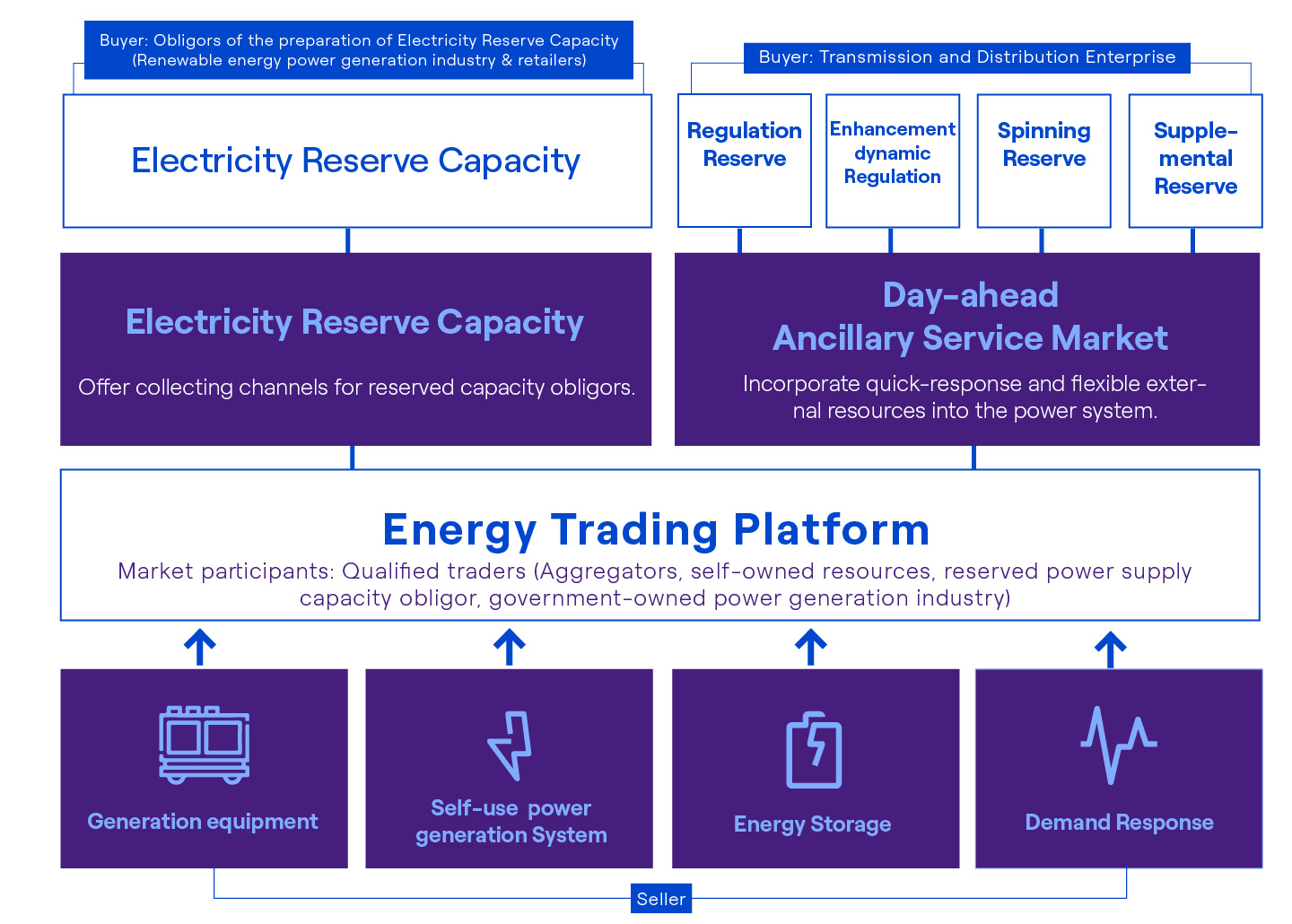
To explore these barriers and the role of digital platforms in more depth, the following reading is essential.
Working Paper 2: Digital energy platforms
This working paper from EnergyREV is a fantastic resource on digital energy platforms. It directly addresses the market barriers that new, flexible technologies face and how digital platforms can help overcome them.
Please read the following two subsections within Chapter 6, 'Policy and regulatory issue 2: Markets': 6.2.1 Barriers to entry (page 37): This section explains why it's difficult for non-traditional assets (like those managed by a VPP) to participate in the wholesale market. 6.2.2 Revenue stacking (page 38): This explains how digital platforms can help providers earn revenue from multiple services, which is crucial for making business models viable. Focus on understanding why the old market structures are a problem for new technologies and how digital platforms provide a solution.
Impact 3: Lower Operational Costs
Digitalizing wholesale markets also brings down the day-to-day costs of doing business for market participants.
- Automation: Trading algorithms and automated matching engines replace manual processes like phone calls and faxing bids. This is not only faster but also requires fewer human traders, reducing salary costs.
- Transparent Price Discovery: As the first video explained, the platform's auction mechanism reveals a single, public market-clearing price. This transparency means companies don't have to spend resources trying to figure out what a "fair" price is; the market tells them.
- System-Wide Efficiency: The merit order stack, where the cheapest generators are dispatched first, ensures that the system meets demand at the lowest possible cost. This efficiency ultimately benefits the end consumer.
Test your understanding!
A new company has created a Virtual Power Plant (VPP) by signing up 2,000 homes with batteries. They want to sell the combined energy from these batteries into the wholesale market. Why would a digital power exchange be a better venue for them than a traditional Over-The-Counter (OTC) market?
Show answer
A digital power exchange would be better for three main reasons:
- Reduced Barriers: As a new, smaller player, they can easily access a large pool of buyers through the standardized platform without needing to build individual relationships or credit lines with large suppliers.
- Improved Liquidity: The active market on the exchange ensures they can almost certainly find a buyer for their energy at a competitive price.
- Transparency: They can clearly see the market price and be confident they are getting a fair rate, rather than having to negotiate a price in an opaque private deal.
The Big Picture: Digitalization for Net Zero
The move towards digital market platforms is not just an incremental improvement. It is a fundamental enabler of the transition to a net-zero energy system.
The government and regulator's own strategy document, "Digitalising our energy system for net zero," envisions a future where:
"Greater data access in the marketplace will support new business models and services developing and new market entrants participating in the energy sector. These new entrants will be able to tailor energy services to consumers using sophisticated digital platforms..."
This highlights that digital markets are essential for integrating the vast number of new, small-scale flexible resources (EVs, batteries, smart heating) that are needed to balance a grid dominated by intermittent renewables like wind and solar.
Conclusion
Today, we've moved from the physical management of the grid to the commercial heart of the system—the wholesale market.
Key Takeaways:
- Wholesale electricity markets are where power is bought and sold in bulk. The shift from private, over-the-counter deals to digital power exchanges has been transformative.
- Digital platforms improve liquidity by creating a central marketplace with many buyers and sellers.
- They reduce barriers to entry through standardization and by enabling aggregators (VPPs) to participate, which is crucial for integrating small-scale renewables and flexible assets.
- They lower operational costs through automation and transparent price discovery, leading to greater system-wide efficiency.
Preview of the next lesson:
We've now seen how electricity is traded on these digital platforms. But how does the money actually change hands? And how does the system ensure that what was traded physically matches what is settled financially? In our next lesson, we will analyze how the digitalization of the electricity settlement process can reduce inefficiencies and improve data accuracy.