Hello! Welcome back to our course on the UK's electrical grids.
In our last lesson, we explored the high-level electricity settlement process. We learned that for every half-hour, Elexon financially reconciles what market participants contracted to do with what they actually did. The bedrock of this entire process—the "source of truth" for what actually happened—is the data from millions of electricity meters across the country.
This lesson focuses on that crucial starting point. We will address the learning outcome: Describe how metering data is collected, validated, and used in the settlement process. We'll follow the data on its journey from the meter in a home or factory all the way to Elexon's central settlement systems, meeting the key organisations that manage it along the way.
1. The Data Journey: From Meter to Settlement
Every financial calculation in the settlement process depends on accurate data about electricity consumption and generation. Without reliable meter readings, it would be impossible to determine who owes what. The journey this data takes is a multi-step process involving specialised equipment and organisations, all governed by the rules in the Balancing and Settlement Code (BSC).
Let's begin by understanding the different types of meters that form the starting point of this journey.
Meters, MOPs & DA/DC Explained: An Energy Broker's Guide
To understand how data is collected, we first need to know what it's being collected from. This guide from OnlineDIRECT, 'Meters, MOPs & DA/DC Explained', provides a clear overview of the different types of electricity meters used in the UK.
Please read the first section, 'Understanding meter types and profile classes'. Focus on the descriptions of the four main types of meters: Standard (non-half-hourly), Advanced (AMR), Smart, and Half-Hourly (HH).
As the article explains, meters can be broadly categorised by how they record and transmit data:
- Non-Half-Hourly (NHH) Meters: These are the traditional meters, often found in smaller businesses and homes, which require manual readings. Data is collected infrequently (e.g., monthly, quarterly).
- Half-Hourly (HH) Meters: These meters are mandatory for the largest energy users. They automatically record consumption or generation in 30-minute intervals and are designed for remote, automated data retrieval.
- Smart Meters: These are the modern equivalent of NHH meters, now being rolled out across the country. They also record usage in half-hour intervals and can transmit this data automatically to the supplier, eliminating the need for manual readings and enabling much more accurate settlement.
The distinction between Half-Hourly (HH) and Non-Half-Hourly (NHH) data collection is fundamental to the settlement process.
2. The Cast of Players: MOP, DC, and DA
Getting data from millions of meters to the central settlement system is a complex logistical task. It's not handled by a single entity but by a chain of specialists, each with a distinct role. The main players are the Meter Operator (MOP), the Data Collector (DC), and the Data Aggregator (DA).
Let's learn what each of them does.
Meters, MOPs & DA/DC Explained: An Energy Broker's Guide
The guide 'Meters, MOPs & DA/DC Explained' also clearly defines the roles of these key organisations. Understanding their individual responsibilities is crucial to seeing how the data chain works.
Please read the sections titled 'Meter Operators (MOPs)', 'The Meter Operators role in energy settlement and data processing', 'What is an energy Data Collector (DC)?', and 'What is an energy Data Aggregator (DA)?'. As you read, focus on the specific responsibility of each role.
Let's summarise their functions:
-
Meter Operator (MOP): The MOP is responsible for the physical hardware. They install, maintain, and repair the electricity meter, ensuring it meets regulatory standards and operates correctly. They make sure the source of the data is sound.
-
Data Collector (DC): The DC is responsible for retrieving the data from the meter. For HH and smart meters, this is an automated process, dialling into the meter via a communication link to download the readings. For older NHH meters, this process might involve managing the data from manual meter readers.
-
Data Aggregator (DA): The DA receives the raw data from the DC. Their job is to validate and aggregate this data. They check it for errors and then sum up the readings from all meters associated with a particular supplier to get a total consumption figure for that supplier for each half-hour. It is this final, aggregated figure that is submitted to Elexon for use in settlement.
This chain ensures a separation of duties and provides checks and balances to maintain data integrity.
Test your understanding!
A large supermarket's electricity meter has stopped sending data. Which organisation is responsible for fixing the physical meter?
Show answer
The Meter Operator (MOP) is responsible for the installation, maintenance, and repair of the physical meter.
3. Data Validation and Processing
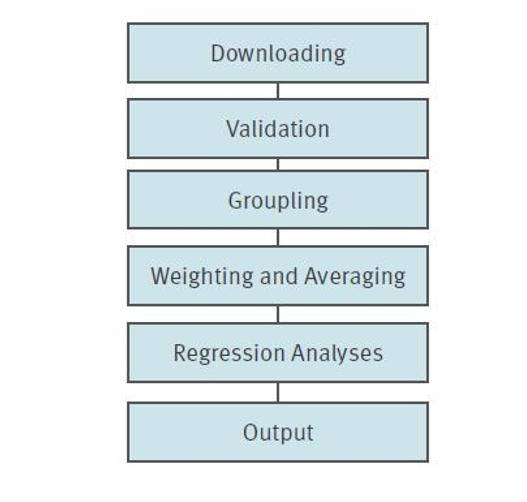
Before being used in settlement, the raw meter data must be checked and cleaned. This is the "validation" part of the process, primarily handled by the Data Aggregator.
The goal of validation is to identify and correct any errors, such as:
- Missing data: A meter might fail to communicate for a few hours.
- Spurious readings: A data transmission error could result in a wildly incorrect value.
- Inconsistent data: A reading might not align with historical patterns.
When errors are found, the DA uses approved estimation and correction techniques defined in the BSC to fill the gaps. This ensures that a complete and sensible dataset is passed to Elexon.
This overall data handling flow can be visualised as a simple process.
4. How Metering Data Is Used in Settlement
Once the validated, aggregated data is submitted to Elexon, it becomes the "Metered Volume" that we discussed in the last lesson. Elexon then uses this data to calculate the imbalance for each supplier and generator.
To understand this final step, let's revisit the core purpose of settlement as explained by Elexon.
The Balancing and Settlement Code
The 'Balancing and Settlement Code For Dummies' guide explains how meter readings are the backbone of the entire system. It ties together the data collection process with the financial settlement we learned about previously.
Please read the section 'How Does Electricity Settlement Work?' in Chapter 2 (starts on page 14). Pay close attention to how it describes the processing of meter readings to calculate an imbalance position and the difference between settling HH and NHH customers.
As the guide highlights, the way data is used depends heavily on whether it's from a Half-Hourly or Non-Half-Hourly meter:
-
For HH Customers: The data is straightforward. The meter provides a precise reading for each 30-minute Settlement Period. This value is used directly to calculate the supplier's actual demand.
-
For NHH Customers: The process is more complex. Since a meter reading might only be taken once a quarter, their consumption for each half-hour must be estimated. This is done using a "profile class", which is a standard pattern of energy use for a particular type of customer (e.g., a domestic household). The total consumption from the quarterly reading is then distributed across all the half-hours in that quarter according to this profile.
This estimation for NHH customers is why the settlement process takes so long. The initial settlement runs use mostly estimated data. As more actual meter readings become available over the following 14 months, the Reconciliation Runs replace the estimates with actual data, making the settlement progressively more accurate and leading to financial adjustments.
The rollout of smart meters and the planned move to Market-wide Half-Hourly Settlement (MHHS) aims to eliminate this estimation process, allowing the entire market to be settled based on actual half-hourly data. This will make settlement faster, more accurate, and fairer.
Conclusion
Today, we've traced the critical path of metering data from the wall of a building to the heart of the UK's electricity market settlement system.
Key Takeaways:
- Accurate metering data is the foundation of the entire settlement process, serving as the definitive record of energy consumption and generation.
- The data journey involves a chain of specialised organisations: Meter Operators (MOPs) maintain the meters, Data Collectors (DCs) retrieve the data, and Data Aggregators (DAs) validate and sum it up.
- Data undergoes a validation process to check for errors and inconsistencies before it is used for settlement.
- Half-Hourly (HH) data is used directly for settlement, while Non-Half-Hourly (NHH) data relies on estimation and profiling, which is why lengthy reconciliation runs are necessary.
- The industry-wide shift to smart meters and Market-wide Half-Hourly Settlement (MHHS) will make this process significantly more accurate and efficient.
Preview of the next lesson:
We've now seen that the distinction between Half-Hourly and Non-Half-Hourly systems is fundamental to metering and settlement. In our next lesson, we will dive deeper into this topic: "Explain the different categories of electricity meters and metering systems (Half-Hourly vs Non-Half-Hourly settlement)." We'll explore the historical reasons for this two-track system and the detailed implications of each.