Hello! Welcome back to our exploration of the history of Christmas.
In our last lesson, we delved into the profound theological reasons why the early Church established a feast for the Nativity. We saw that celebrating Christmas was a powerful way to affirm that Jesus was both fully God and fully human, a doctrine forged in the crucible of debates with Gnosticism and Arianism.
Now, we will leap forward into the Middle Ages (roughly 500-1500 CE) to see how this theological core blossomed into the central cultural event of the year. This lesson focuses on how the Church didn't just host Christmas but orchestrated it. You will learn about the central role of the Mass and the rich tapestry of the liturgy, which acted as the very framework for all medieval Christmas celebrations.
1. The Liturgical Blueprint
For medieval society, Christmas wasn't a day; it was a season, and the Church calendar was its blueprint. The entire celebration was built upon a liturgical template, beginning with a period of solemn preparation and culminating in twelve days of festivity.
To get an overview of this structure, let's start with a video that outlines this liturgical framework.
12 Days of Medieval Christmas | What They Actually Did
The video '12 Days of Medieval Christmas' by The Stache Chronicles provides an excellent introduction to how Christmas was structured. It explains that the entire season operated on a shared liturgical template.
Please watch from 0:27 to 1:59. Focus on the core ideas: Advent as the foundation, the 'Twelvetide' period from December 25th to January 6th, and the unique allowance of three masses on Christmas Day.
As the video explains, the season began with Advent, a period of four to six weeks of fasting and spiritual preparation. This built a sense of anticipation that made the feasting of Christmas all the more significant.
The Church was the central authority that shaped every aspect of the festival. It wasn't an optional part of the celebration; it was the main event.
Christmas in the Middle Ages: Traditions, Customs, and ...
The article 'Christmas in the Middle Ages' expands on this central role of the Church. It highlights how the liturgy didn't just mark time but gave the festival its religious and social meaning.
First, read the section '1.2. Significance of Christmas in Medieval Europe' to understand the festival's religious and social importance. Then, read section '5.3. Significance of Christmas Liturgy' which emphasizes the liturgy's role in structuring the festive days and bringing the community together.
This central role meant that church attendance was not merely encouraged—in many places and times, it was compulsory. The Church, in turn, made the services worthy of the occasion.
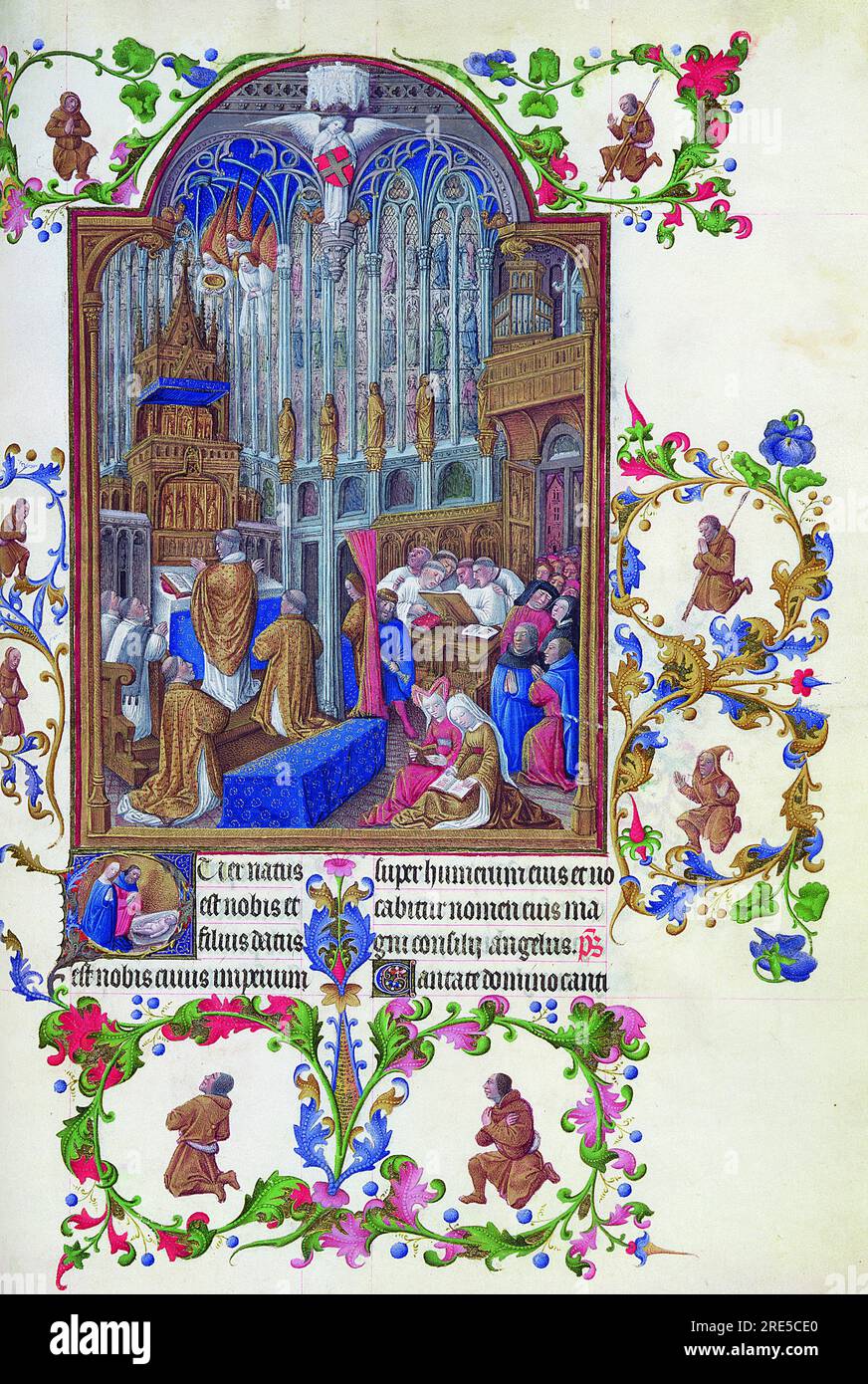
2. The Three Masses of Christmas Day
A unique feature of the Christmas liturgy, mentioned in the first video, was the permission for priests to celebrate three distinct Masses on Christmas Day itself. This practice dates back to at least the 6th century in Rome and reflects the deep theological significance of the day. Each Mass had its own timing, character, and theological focus, guiding the faithful through the mystery of the Incarnation.
The three Masses were:
- The Angel's Mass (Missa in nocte): Celebrated at midnight, in darkness illuminated by candlelight. It commemorated the birth of Christ in the quiet of the night and the angels' announcement to the shepherds. This Mass was mysterious and full of awe.
- The Shepherd's Mass (Missa in aurora): Celebrated at dawn. As the first light of day appeared, this Mass focused on the shepherds' journey to Bethlehem to adore the newborn Christ. It symbolized the light of Christ coming into the world.
- The King's Mass (Missa in die): Celebrated in the full light of day. This was the most solemn and magnificent of the three, celebrating the eternal divinity of Christ the King, the Word who was with God from the beginning.
This sequence wasn't just repetitive; it was a liturgical journey. Worshippers experienced the Nativity story unfolding through the night and into the day, moving from the historical event to its profound theological meaning.
3. From Liturgy to Drama: Making the Story Real
While the Mass was the formal heart of worship, the Church also developed innovative ways to make the biblical stories more accessible and vivid for a largely illiterate population. Over time, elements of the liturgy itself evolved into theatrical performances, known as liturgical dramas.
These weren't separate plays performed in a theater; they were dramatized religious services that unfolded within the church as part of the Christmas celebration.
The Liturgical Drama of Christmas
The article 'The Liturgical Drama of Christmas' from Medievalists.net provides a fascinating look at this development. We'll read a few sections to understand where these dramas came from and what they looked like.
Please read the following three sections: Start just after the first image and read the two paragraphs beginning 'The music of Christmastide...'. This defines liturgical drama. Continue to the section titled 'Quem quaeritis?'. This explains how the Christmas plays evolved from a similar tradition at Easter. Finally, read the section 'Officium Pastorum' to see a detailed description of the most important Christmas drama.
To summarize the key points from that reading:
- Origin: Liturgical drama grew out of the practice of adding musical and textual elaborations (called "tropes") to the existing chants of the Mass.
- Adaptation: The most famous trope was the Quem quaeritis? ("Whom do you seek?") dialogue from the Easter liturgy, representing the exchange between the angels and the women at the empty tomb. For Christmas, this was cleverly adapted. Instead of angels and the Three Marys, the dialogue was between midwives at the manger and the approaching shepherds:
- Midwives: "Whom do you seek in the manger, shepherds, say?"
- Shepherds: "The saviour Christ the Lord, the child wrapped in swaddling clothes, just as the angel said."
- Officium Pastorum: This "Play of the Shepherds" was the main Christmas drama. As described in the reading, the performance in Rouen, France, was particularly elaborate. Choristers dressed as shepherds would process through the church, an "angel" would announce the birth, and priests playing midwives would present a statue of the infant Christ.
This evolution from a simple chanted dialogue to a costumed performance with stage directions shows the Church using music and drama to deepen the congregation's emotional and spiritual connection to the Nativity story.
Test your understanding!
Given what you've learned, why do you think the Church fostered the development of liturgical dramas like the Officium Pastorum? What purpose did they serve that the standard Mass alone might not have?
Show answer
The standard Mass was in Latin and focused on deep, abstract theology. For a largely illiterate congregation, the complex prayers and readings could be difficult to follow. Liturgical dramas served an educational and devotional purpose. They translated the biblical narrative into a vivid, sensory experience with costumes, movement, and dramatic dialogue. This made the story of the Nativity more immediate, understandable, and emotionally engaging for everyone, regardless of their level of education.
4. The Sights and Sounds of Christmas Mass
The liturgy was a feast for the senses. Churches were specially decorated, and music was an essential element that conveyed the joy and solemnity of the season.
The History of Christmas Through the Ages
Let's watch a short clip that describes the atmosphere inside the churches during Christmas.
Watch the segment from 3:45 to 4:36 from the World History Encyclopedia video. Note the specific ways churches made the service special for Christmas Day.
As the video highlights, churches went to great lengths to create a special atmosphere:
- Light: Abundant candles were lit to pierce the winter darkness, symbolizing Christ as the Light of the World.
- Art: Gilded altarpieces, which might remain closed for most of the year, were opened on Christmas Day to reveal brilliant scenes of the Nativity.
- Music: Music was not just an accompaniment but a core part of the liturgy. The services featured special chants composed for the Christmas season. In the early Middle Ages, this was primarily monophonic Gregorian chant. By the late Middle Ages, complex polyphonic compositions for choirs enriched the musical landscape, turning major cathedrals into centers of musical artistry.

Conclusion
In this lesson, we have placed the church, with its Mass and liturgy, at the absolute center of the medieval Christmas. It was the institution that gave the season its structure, its meaning, and its most profound moments of celebration.
Key Takeaways:
- Medieval Christmas was a liturgical season framed by the Church, beginning with the fast of Advent and lasting for the twelve days of "Christmastide."
- Attending Mass was the central activity, and on Christmas Day, a unique cycle of three Masses (Angel's, Shepherd's, King's) guided worshippers through the Nativity story.
- The liturgy was a rich sensory experience filled with light, art, and music, from Gregorian chant to later polyphony.
- Over time, the Church developed liturgical dramas like the Officium Pastorum, which evolved from chanted dialogues into theatrical re-enactments of the Christmas story within the church service itself.
While the church provided the solemn, theological heart of the festival, a parallel world of celebration was taking place outside its walls—in the great halls of lords and the homes of common people. In our next lesson, we will explore the social significance of the Twelve Days of Christmas, focusing on the traditions of feasting, gift-giving, and revelry that complemented the sacred liturgy.