Welcome to the first lesson of your course on professional communication. Our goal today is to build the foundational skill of choosing the right tone for your writing. You'll learn to distinguish between formal, semi-formal, and informal registers, and how to select the most appropriate one for your specific audience and purpose.
In your Company Secretarial role, you communicate with a wide range of people—from board members and regulators to internal colleagues. Mastering the right register is the first step toward achieving the professional polish you're aiming for, ensuring your messages are not just understood, but also received with the intended level of respect and seriousness. This lesson will equip you with the principles to make that choice confidently every time.
The Three Registers of Communication
In professional writing, we generally think in terms of three "registers" or levels of formality: formal, semi-formal, and informal. Your choice of register affects everything from your greeting and word choice to your sentence structure and closing.
The image below provides a great at-a-glance comparison of the two ends of the spectrum: formal and informal English.
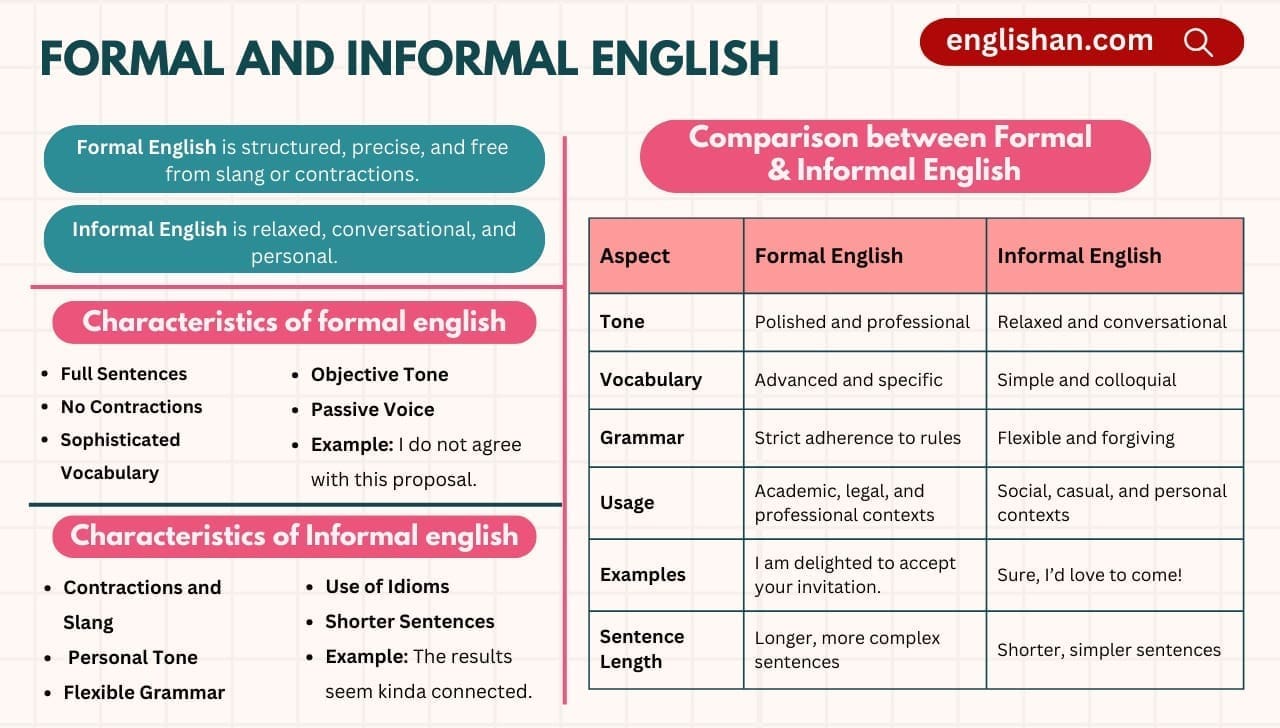
This chart contrasts the key characteristics of formal and informal English, highlighting differences in tone, vocabulary, grammar, and sentence structure.
However, much of modern business communication, especially internal emails, happens in the space between these two extremes. This middle ground is called the semi-formal register. It blends professionalism with a more conversational and approachable tone.
To get a clear sense of these three styles and when to use them, watch the first part of the following video. It does an excellent job of defining each register and explaining which audiences they are best suited for.
Writing Emails In English - Formal, Semi-Formal or Informal?
This video, from the "English for Professionals" channel, provides a concise breakdown of formal, semi-formal, and informal email styles.
Please watch the segment from the beginning until the end of the explanation on company culture. Pay close attention to the examples of who you would write to in each style.
As the video explains, the correct choice depends on:
- Your relationship with the recipient (Are they a new client, a close colleague, or your CEO?)
- The purpose of your message (Are you sending a board notice, requesting information, or confirming a casual meeting?)
- The context and company culture (Is your workplace environment highly traditional or more relaxed?)
In your role, a document like a formal notice for a board meeting is a perfect example of the formal register. It's structured, uses precise legal language, and leaves no room for ambiguity.
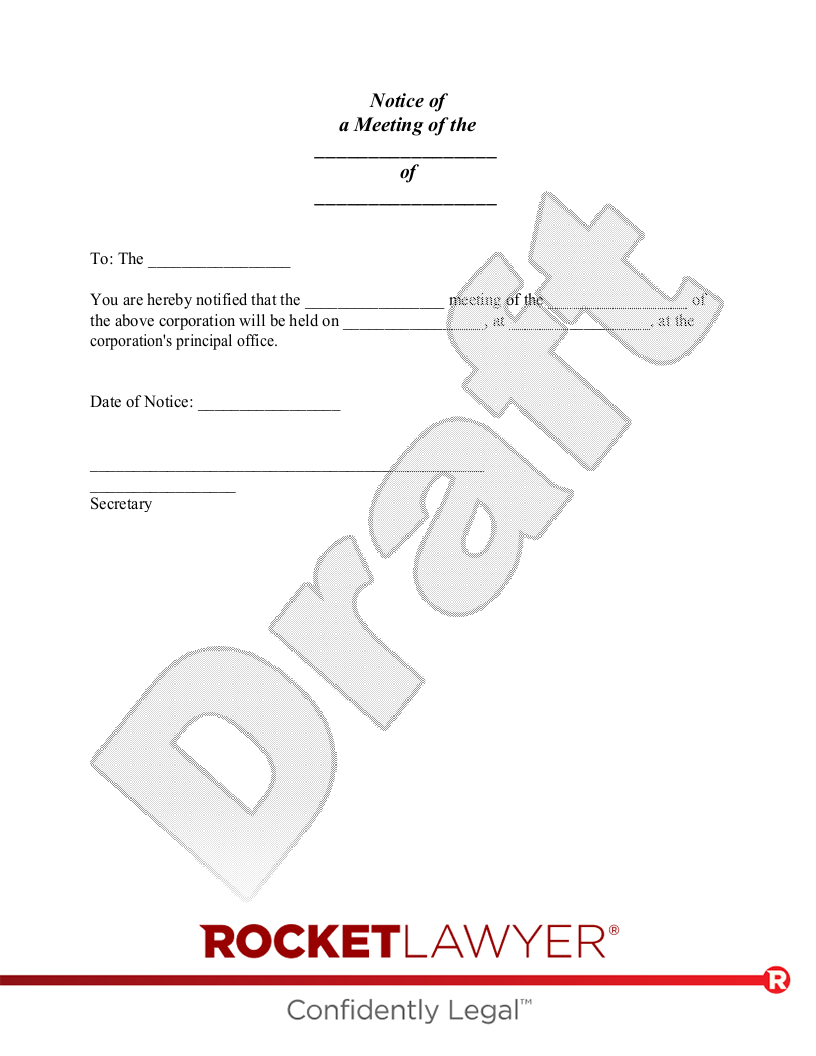
This is a template for a "Notice of a Meeting," a classic example of a formal document used in corporate governance, which requires a specific, structured, and unambiguous register.
When to Use Each Register: Practical Guidelines
Now that you have a framework for the three registers, let's establish some clear rules for when to use them. Knowing these guidelines will help you avoid common mistakes, like being too casual with a senior stakeholder or too stiff with a teammate.
The next video offers a set of excellent, easy-to-remember rules for choosing between formal and informal styles. A key takeaway is: when in doubt, start formal. You can always become less formal later, but it's much harder to regain professionalism after being too casual.
Formal versus Informal Emails: Email Writing Tips for Business English
In this video, leadership coach Kara Ronin outlines clear situations where formal and informal emails are appropriate.
Watch the section on when to use formal emails, followed by the section on when to use informal emails. Notice the advice about contacting new people and communicating with those from more formal cultures.
A Note on UK vs. US Business English
A crucial factor for you is the cultural context of working in a UK firm. While global business communication is increasingly connected, some nuances remain, particularly between British and American English. Generally, British professional communication can lean slightly more formal than its American counterpart.
The following reading explains some of these subtle but important differences. Understanding them will help you tailor your communication effectively, especially when dealing with international contacts.
Formal vs Informal Email Examples Explained - Write With English
This article from "Write With English" touches upon the different expectations in British and American professional correspondence.
Please read the section titled British vs American Email Style Differences. Pay attention to the notes on greetings and the use of direct versus indirect language.
Putting it into Practice: Finding the Right Words
Distinguishing between registers isn't just theory; it comes down to the specific words and phrases you choose. This is where you can truly start to add "polish" to your writing.
Let's look at some direct comparisons. The following video segment is incredibly useful as it shows the same common email phrases written in formal, semi-formal, and informal styles.
Writing Emails In English - Formal, Semi-Formal or Informal?
This part of the "English for Professionals" video provides a side-by-side comparison of phrases for various email functions.
Watch the final section of the video from the beginning of the phrase comparison to the end. This will give you a bank of alternatives for things like making requests, giving information, and closing your emails.
To expand your vocabulary even further, the next resource provides extensive tables of formal and informal expressions, including common idioms. These tables are an excellent reference tool to help you move beyond basic phrases.
Topic 1.2.1 Writing formal and informal emails | SAT Idiomas
This guide from SAT Idiomas offers comprehensive lists of phrases that you can incorporate into your writing immediately.
First, review the tables under the heading KEY FORMAL EMAIL EXPRESSIONS. Then, look at the section on idioms for formal and informal writing. Don't try to memorize everything; instead, identify a few new phrases that you feel comfortable trying out in your next email.
Your Turn: A Quick Exercise
Let's apply what you've learned. Consider the following simple, neutral request:
"I need the project update by the end of the day."
How would you rewrite this sentence for the following three audiences?
- Formal: Sending a request to an external consultant you have never met.
- Semi-formal: Sending a request to a colleague in another department with whom you work occasionally.
- Informal: Sending a request to a close teammate you work with daily.
Take a moment to think about your answers before revealing the suggestions below.
Click to see suggested answers
- Formal: "I would be grateful if you could provide the project update by the end of the day." or "Could you please send the project update by close of business today?"
- Semi-formal: "Hi [Name], could you please send me the project update by the end of the day?" or "Just following up on the project update—would you be able to send it over today?"
- Informal: "Hey [Name], just a reminder, can you send me the project update by EOD?" or "Any chance you can get the project update to me today?"
Notice how the changes in phrasing—from "I need" to "I would be grateful if you could"—soften the tone and adjust the level of formality.
Conclusion
In this lesson, we have established the foundation for elevating your professional writing. You've learned how to distinguish between formal, semi-formal, and informal registers and, most importantly, how to select the right one based on your audience, purpose, and context.
Here are the key takeaways:
- Three Registers: Your writing can be formal (structured, objective), informal (conversational, personal), or semi-formal (a professional yet friendly blend).
- Context is King: The right choice always depends on your relationship with the reader and the goal of your communication.
- When in Doubt, Be Formal: It is always safer to start with a more formal tone and adjust later if the relationship allows.
- Word Choice Creates Tone: Small changes in greetings, requests, and closings significantly impact how your message is perceived.
By consciously choosing your register, you are taking control of your professional voice and ensuring your communications are not just effective, but also polished and appropriate for every situation you encounter in your role.
In our next lesson, we will build directly on this foundation. We will zoom in from the overall register to the level of individual words, focusing on how to identify and replace informal or vague words with precise, professional alternatives.