Introduction
Welcome to your second lesson. In our previous session, we traced the evolution of formal education in 19th-century Europe, identifying the distinct Prussian, French, and German models that became templates for schooling worldwide. We noted that these systems spread globally through colonialism, competition, and imitation.
Today, we will examine a direct and profound example of this process. Our focus is on the learning outcome: Analyze the impact of colonial education models on schooling in Africa, focusing on the contrasting legacies of British and French systems. We will move from the theoretical models we discussed last time to their forceful implementation in a colonial context. We'll explore how the fundamentally different philosophies of British and French rule created two divergent educational paths, the effects of which are still visible across the African continent today.
The Colonization of Africa: Setting the Stage
To understand the imposition of European education systems, we must first appreciate the scale and nature of the colonial project in Africa. By the early 20th century, nearly the entire continent had been partitioned among European powers.

The motivations for this "Scramble for Africa" were complex. To get a concise overview of this historical context, let's watch a brief video.
The Difference Between French and British Colonialism in Africa
The video 'The Difference Between French and British Colonialism in Africa' by HistoryVille provides the essential background on why and how European powers divided the continent.
Please watch the historical context starting just past the one-minute mark, and then skip ahead to the colonial distribution around five and a half minutes in. As you watch, focus on: The economic and political motives behind colonization. The role of the 1884 Berlin Conference in formalizing the partition of Africa. The geographical distribution of French and British colonies.
The key takeaway here is that Africa was divided without any African representation, based on European geopolitical interests. This act of drawing arbitrary lines on a map not only created new states but also set the stage for implanting foreign systems of governance and education.
Two Colonial Philosophies: Indirect vs. Direct Rule
The most significant factor shaping colonial education was the overarching philosophy of governance. Britain and France, the two largest colonial powers in Africa, adopted starkly different approaches. Understanding these differences is crucial because their educational policies were direct extensions of their political goals.
| Feature | British Model: Indirect Rule | French Model: Direct Rule / Assimilation |
|---|---|---|
| Core Idea | Govern through existing local power structures (chiefs, emirs). | Impose a centralized French administrative system, replacing local rulers. |
| Goal | Maintain order and extract resources with minimal cost and disruption. Preserve local institutions as long as they served British interests. | Absorb colonies into a "Greater France." Create an elite of Africans who were culturally French (évolués). |
| View of Subjects | Subjects were distinct peoples of the Empire, not future British citizens. A clear separation was maintained. | Subjects were potential French citizens, provided they assimilated to French language, culture, and law. |
| Cultural Impact | Allowed for (or was indifferent to) the continuation of local cultures and languages, as long as they didn't challenge British authority. | Actively sought to replace local cultures and languages with French ones. Assimilation was the path to rights and status. |
The following video segments provide a clear explanation of these contrasting approaches.
The Difference Between French and British Colonialism in Africa
Let's return to the HistoryVille video, which expertly contrasts the administrative and philosophical underpinnings of French and British rule.
Please watch the segment on French policy just past the seven-minute mark, and the detailed comparison starting around twelve minutes in. Note the definitions of assimilation, indirect rule, and their practical differences in administration.
This contrast between ruling through local structures versus replacing them is the foundational difference that explains the divergent educational legacies we will explore next.
Education as a Tool of Colonial Policy
With these philosophies in mind, let's analyze how they translated into specific educational policies. Colonial education was not primarily about altruism or intellectual development for its own sake; it was a functional tool designed to support the colonial administration.
To get a comparative overview, watch this segment from "A brief History of Education in Africa".
A brief History of Education in Africa
This video from the Sankofa Pan African Series discusses the general characteristics of colonial education and then compares the policies of the different European powers.
Starting around the three-minute mark, please watch the section on colonial education policies. Focus on: The general aims of colonial education: to create a low-level workforce and erase African cultures. The specific comparison of the British model ('adapted education' largely left to missionaries) and the French model (state-run schools aimed at assimilation).
Now, let's use a detailed academic paper to examine these two systems more closely, using Nigeria (British) and Senegal (French) as case studies. This will provide the specific details that, as an educator, you'll find essential for curriculum analysis.
[PDF] British and French Colonial Influence on African Education
The paper 'British and French Colonial Influence on African Education' provides an excellent comparative analysis. We'll focus on the sections dealing with curriculum, administration, and funding.
Please locate the sections titled 'British and French Colonial Influences on the Curriculum in Nigeria and Senegal' and 'British and French Colonial Influences on Administration and Funding of Education in Nigeria and Senegal'. Below the first heading, read about the curriculum influences. Then, in the following section, read about administration and funding. As you read, note the key differences regarding: Language of Instruction: The role of the 'mother-tongue' in Nigerian primary schools versus the immediate focus on French in Senegal. Curriculum Content: The British-tailored curriculum in Nigeria versus the assimilationist French curriculum. Administration: The decentralized structure in Nigeria (reflecting indirect rule) versus the centralized system in Senegal (reflecting direct rule).
This deep dive reveals a pattern:
-
The British Legacy: A decentralized system, heavily reliant on Christian missions, which led to uneven development. Education was often "adapted" to create clerks and low-level administrators. While it used English as the language of power, it allowed for the use of local languages in early education, often for evangelical purposes. This created a system that was less uniform but perhaps more integrated with local structures. Higher education was limited and designed to produce a local ruling elite, as seen at institutions like Makerere College.
-
The French Legacy: A centralized, state-run, secular system designed for cultural assimilation. The curriculum, standards, and language (French) were imported directly from the metropole. The goal was to produce a small, highly educated elite who were culturally French in every way. Local languages and cultures were actively suppressed in the educational sphere. This resulted in a more uniform system but one that was profoundly disconnected from the local context.
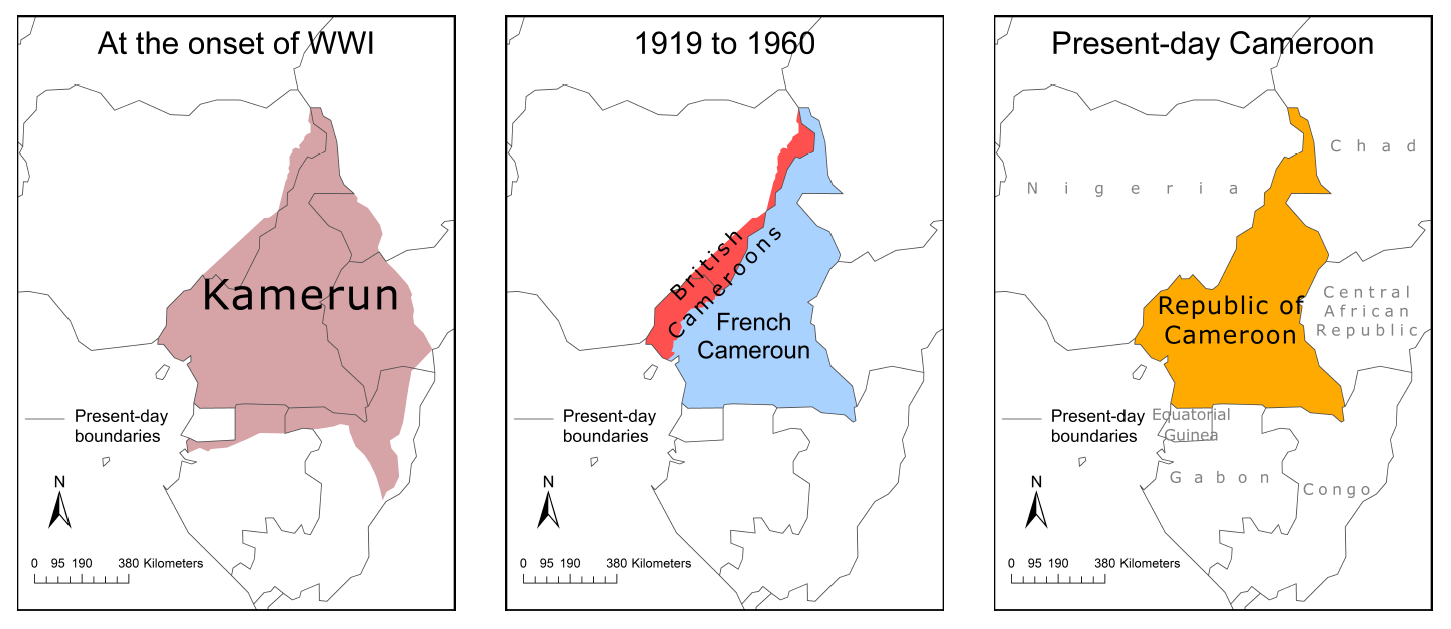
The case of Cameroon provides a vivid real-world experiment of these two systems operating side-by-side. After Germany lost its colonies in WWI, the territory of Kamerun was split between Britain and France.
Lasting Consequences
The educational systems inherited by African nations at independence were not neutral. They were designed to serve colonial interests and carried significant baggage.
- Eurocentric Curricula: History, literature, and science were taught from a European perspective, marginalizing African knowledge systems, arts, and history. As a literature specialist, you can imagine the impact of a curriculum that exclusively promotes European literary canons while ignoring rich local oral and written traditions.
- Language and Identity: The choice of colonial language as the official language of instruction created a linguistic elite and often devalued indigenous languages, a major challenge in post-colonial education policy.
- Purpose of Education: Colonial education was, as one video noted, "essentially literary" and not designed to foster industrial or technological development. It trained people to be clerks and administrators in a colonial bureaucracy, not innovators or critical thinkers. This has had long-term consequences for economic development.
This final clip reflects on this problematic legacy.
The Difference Between French and British Colonialism in Africa
Let's watch one last segment from the HistoryVille video, which summarizes the argument that colonial education contributed to Africa's underdevelopment.
Starting around 18 minutes and 50 seconds in, please watch colonial education's impact and consider the argument that colonial education was 'not rooted in african culture' and was aimed at producing functionaries rather than fostering broad development.
Conclusion
In this lesson, we have moved from the abstract models of European education to their concrete application in colonial Africa. We analyzed how the political goals of Britain and France directly shaped two distinct educational approaches.
Key Takeaways:
- British Indirect Rule led to a more decentralized educational system, heavily reliant on missionaries, which used local languages in early schooling but ultimately aimed to create an English-speaking administrative class that was separate from the British themselves.
- French Direct Rule and its policy of assimilation produced a highly centralized, state-controlled system that imposed the French language and curriculum to create a culturally French African elite (évolués).
- Both systems, despite their differences, left legacies of Eurocentric curricula, created a divide between a Western-educated elite and the wider population, and promoted a literary/administrative education over technical and scientific training.
- These colonial foundations are not just historical footnotes; they continue to influence contemporary debates in Africa about language policy, curriculum reform, and the very purpose of education.
Preview of the Next Lesson:
Having examined the colonial impact in Africa, we will broaden our comparative lens in the next lesson: "Analyze the impact of colonial and post-colonial influences on the development of national school systems in Asia." This will allow us to see how similar colonial dynamics played out in a different part of the world, and how post-colonial nations there have navigated these legacies.